

How Retailers Can Source Nail Clippers Customers Will Rebuy
Nail clippers are small, familiar and easy to overlook, but for retailers they can be a dependable personal care category when selected carefully. A clipper that feels sharp, comfortable and clean in the hand earns repeat purchases, while a poor-quality one quickly becomes a return risk. For supermarkets, pharmacies, beauty stores, online resellers, travel shops and salon supply buyers, the goal is not simply to find the lowest-cost item. The stronger approach is to choose nail clippers that match the customer, retail channel and expected use case.
This guide focuses on practical sourcing decisions for retailers considering nail clippers for resale, including feature selection, import preparation, quality review and supplier communication. Olimor Beauty supplies precision beauty tools for retail and trade buyers, and retailers can explore related beauty tool products or review broader product collections when building a complete grooming category.
Why Nail Clippers Remain a Strong Retail Personal Care Item
Nail clippers appeal to a wide range of shoppers because they solve a regular, practical grooming need. They are purchased for home bathrooms, travel kits, handbags, workplace drawers, salons, hotels and gift sets. Unlike trend-based beauty items, nail clippers are not limited to one season or a narrow demographic. This makes them useful for retailers who want steady inventory in the grooming and personal care aisle.
For resellers, the category also offers flexibility. A single clipper can serve as an entry-level impulse item near checkout, while a more refined clipper or multi-piece grooming set can fit a higher-value display. Retailers can position nail clippers alongside tweezers, scissors, nail files, cuticle tools and other accessories to increase basket size. The important decision is to stock products that match shopper expectations for performance and hygiene, not just appearance.
Key Product Features Retailers Should Evaluate
The best nail clipper for retailers is the one that performs consistently across repeated use. Customers may not study technical details before buying, but they immediately notice when a clipper is difficult to press, leaves rough edges or feels flimsy. During product selection, review the clipper as a user would: open the package, hold it, test the lever, check alignment and consider how easy it will be to clean.
- Cutting edge alignment: The upper and lower blades should meet evenly. Poor alignment can bend or tear nails instead of cutting cleanly.
- Sharpness and pressure: A good clipper should cut without excessive force. This matters for older users, frequent travelers and everyday grooming customers.
- Material and finish: Stainless steel construction is valued for rust resistance, long-lasting sharpness and easy cleaning. Inspect the surface for rough areas, discoloration or burrs.
- Ergonomic feel: The lever should be comfortable to press, and the body should be easy to control. Ergonomic designs help customers feel the difference immediately.
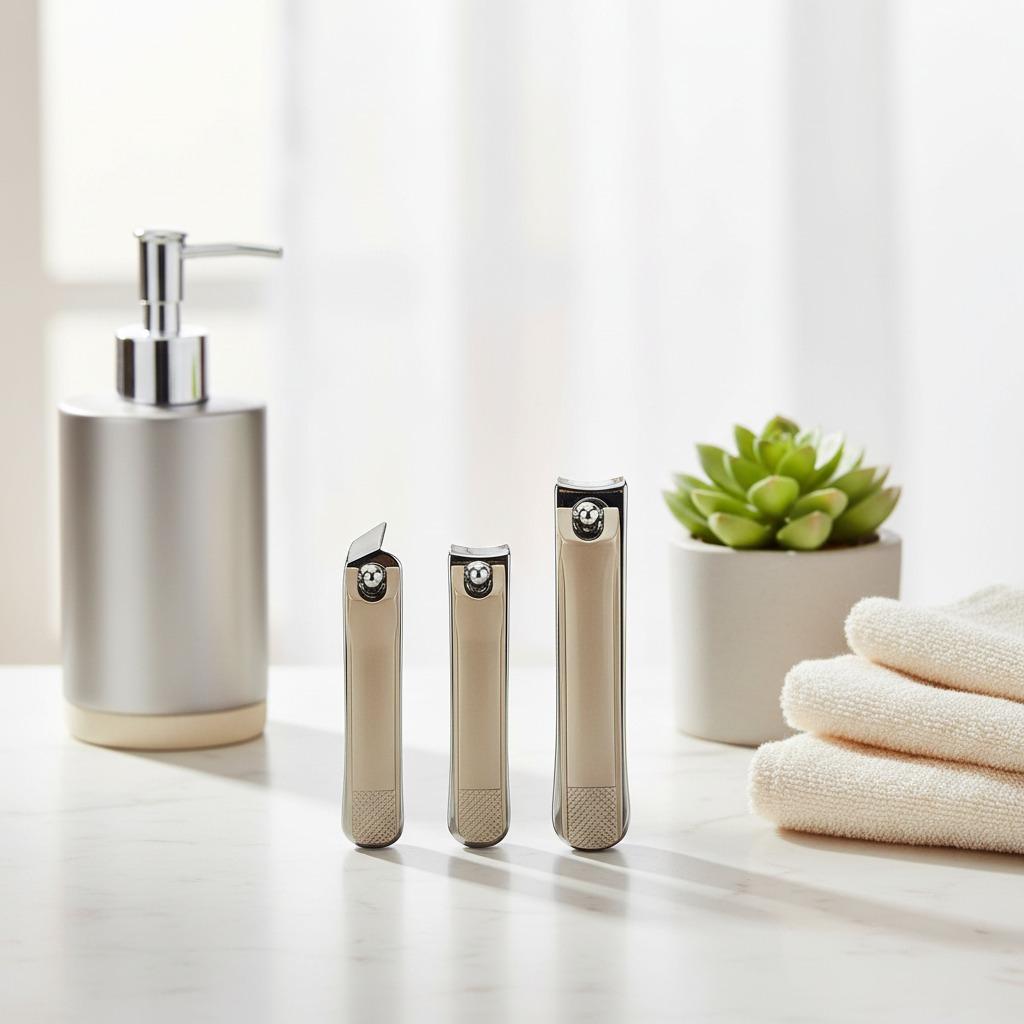
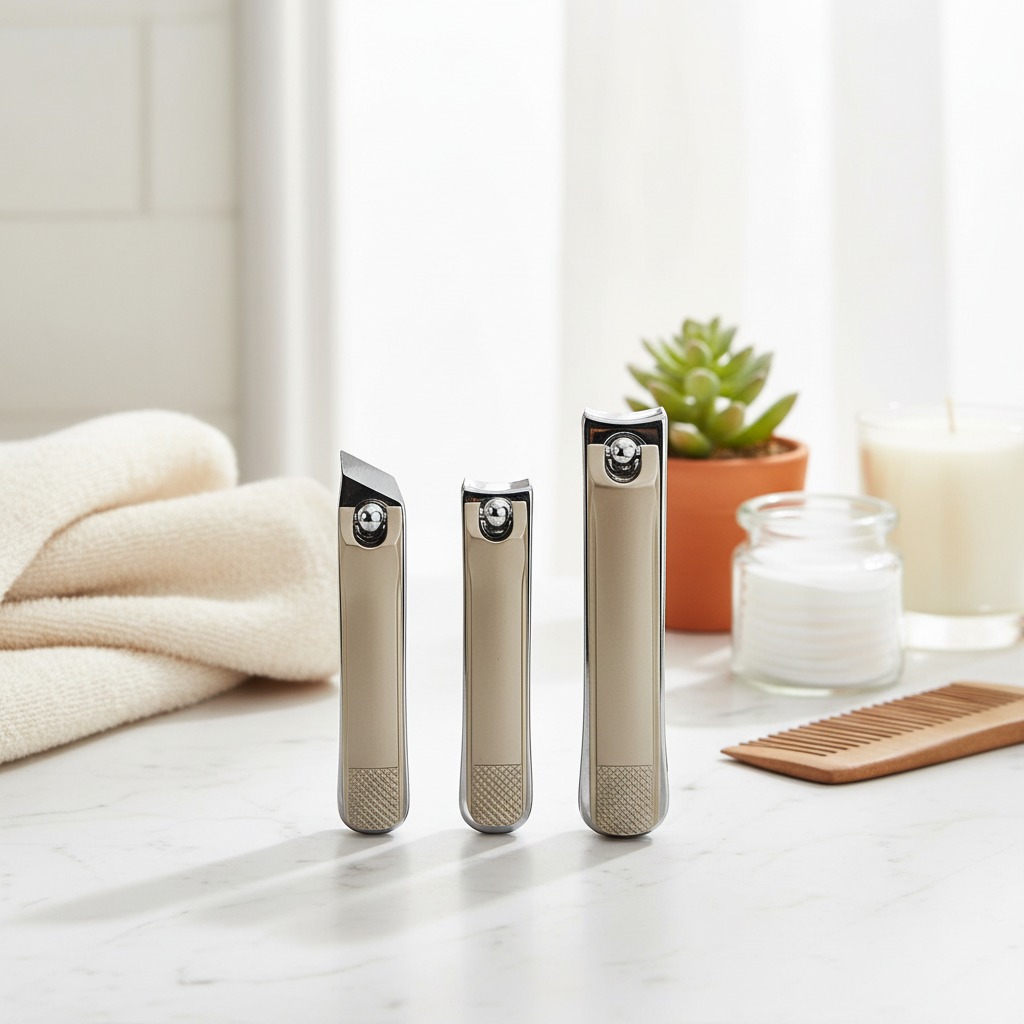
- Use case coverage: Fingernail clippers, toenail clippers, angled-edge options and heavy-duty styles may serve different shopper needs. Retailers should avoid assuming one size fits every customer.
- Visual presentation: Modern two-tone designs can improve shelf appeal, but appearance should support, not replace, cutting performance.
When reviewing samples, test more than one piece. A single good sample is useful, but consistency across several units is a better indicator of retail reliability.
Matching Nail Clippers to Retail Channels
Different retail channels need different merchandising logic. A pharmacy shopper may prioritize hygiene, comfort and trust. A discount retailer may focus on clear value. An online marketplace buyer depends heavily on photos, specifications and reviews. A salon supply store may need stronger tools for frequent use. Before placing a bulk order, define where and how the clippers will be sold.
For everyday retail shelves, simple packaging and clear product claims are often more effective than overly decorative presentation. Customers want to know whether the clipper is for fingernails, toenails or both, whether it is easy to clean and whether it feels durable. For e-commerce, close-up images of the cutting edge, side profile, lever and packaging help reduce uncertainty. For resellers building gift sets, visual consistency with other grooming tools can matter more.
If your store serves multiple customer segments, consider a small assortment rather than a single SKU. A basic fingernail clipper, a larger toenail clipper and an angled-edge or heavy-duty option can cover more needs without creating an overly complex range.
Importing Nail Clippers from China: Retail Buyer Checklist
Sourcing nail clipper export from China can support cost-effective and higher-volume buying, but successful importing depends on preparation. Retailers should consider the product, packaging, documentation and logistics together. A low unit cost may not help if the packaging is unsuitable for the market, if barcodes are missing, or if the product description does not match the retail channel.
- Define the assortment: Decide whether you need fingernail clippers, toenail clippers, angled-edge clippers, heavy-duty options or sets.
- Confirm packaging requirements: Review retail hanging holes, blister cards, boxes, language, warnings, barcode placement and carton markings.
- Review product samples: Test cutting performance, lever comfort, finish quality, edge alignment and cleaning convenience.
- Check import requirements: Confirm the regulations and documentation needed in your destination market for stainless steel personal care tools.
- Clarify order details: Align on product description, quantity, packaging version, inspection expectations and shipment terms before production.
- Plan retail content: Prepare product titles, photos, feature copy and care instructions that accurately describe the item.
Olimor Beauty is positioned as a nail clipper global supplier with attention to internal quality control from raw materials to packaging. Retail buyers still benefit from documenting their own requirements clearly, especially when the order will be sold across multiple channels or countries.
Quality Control Points Before a Bulk Order
Quality control for nail clippers should be practical and repeatable. Retailers do not need overly complex testing to identify many problems. A structured incoming check can reveal whether products are suitable for sale and whether packaging is ready for the shelf.
| Inspection point | What to look for | Why it matters |
|---|---|---|
| Blade alignment | Edges meet evenly without gaps or twisting | Supports clean cutting and reduces customer complaints |
| Lever movement | Smooth opening and pressing without sticking | Affects comfort and perceived quality |
| Surface finish | No sharp burrs, stains or rough contact points | Improves safety, appearance and hygiene perception |
| Packaging | Correct item, readable text, secure closure | Protects the product and helps retail presentation |
| Carton labeling | Consistent item references and quantity markings | Reduces warehouse and fulfillment errors |
For e-commerce sellers, it is also worth checking whether each unit arrives clean, centered in its packaging and photo-ready. Product reviews are often influenced by first impressions, especially for small grooming tools where the shopper expects neatness and precision.
Merchandising Nail Clippers for Better Sell-Through
Once the product is selected, merchandising determines how easily shoppers understand it. Retailers should avoid vague labels that say only “nail clipper” when a product has a specific use. If a clipper is better for toenails, say so. If it is compact for travel, make that clear. If the design is angled or heavy-duty, explain the benefit in plain language without exaggeration.
In physical stores, nail clippers sell well near related personal care categories such as nail files, manicure scissors, tweezers and grooming kits. In online stores, use comparison copy to help shoppers choose between sizes or types. For example, a standard clipper may be described as suitable for routine fingernail care, while a larger clipper may be better for thicker toenails. Clear distinctions reduce returns and help customers feel they selected the right item.
Care instructions can also support satisfaction. Recommend wiping the clipper clean after use, drying it before storage and keeping it away from prolonged moisture. These simple instructions reinforce hygiene and help protect the finish.
Choosing a Nail Clipper Supplier for Long-Term Retail Growth
A supplier relationship is more than a one-time purchase order. Retailers need consistent product quality, clear communication and the ability to review samples before scaling. When comparing suppliers, look for whether they understand retail packaging, whether they can discuss product differences clearly and whether they can support your channel’s expectations.
Useful questions include: Which clipper types are available for fingernails and toenails? What packaging formats can be reviewed? How is quality checked from material preparation to finished packaging? Can product images, sample evaluation and order details be confirmed before production? These questions help retailers reduce uncertainty without relying on assumptions.
Olimor Beauty works with beauty and grooming tools, including nail clippers designed around practical use, durable stainless steel construction, ergonomic comfort and modern presentation. Retailers planning a new personal care range can contact Olimor to discuss product direction or send an inquiry with target market, channel and packaging needs.
Final Buying Advice for Retailers and Resellers
Nail clippers are a dependable retail item when buyers treat them as precision tools rather than generic accessories. Focus on clean cutting, comfortable handling, rust-resistant stainless steel, suitable packaging and a product mix that matches your customer base. A thoughtful assortment can serve everyday household shoppers, salon users, travel buyers and online customers without requiring an oversized category.
Before committing to a bulk order, evaluate samples, define the retail channel, confirm packaging details and document quality expectations. By combining practical product testing with a reliable supplier relationship, retailers can build a nail clipper offering that earns customer trust and supports repeat sales in the personal care aisle.
Tag: