

How to Source Quality Nail Clippers for Retailers
For retailers, nail clippers are small products with important consequences. A good clipper can become a repeat-purchase grooming essential, while a poor one can create returns, complaints, and weak customer trust. Whether you sell through a beauty store, pharmacy, supermarket, online shop, salon supply channel, or private label assortment, the goal is the same: choose nail clippers that cut cleanly, feel comfortable, look suitable for your market, and can be supplied consistently.
Olimor Beauty works with stainless steel beauty tools, including nail clippers for retailers and resellers. This guide focuses on what buyers should evaluate before adding nail clippers to a retail range, especially when sourcing for resale or international trade. It avoids one-size-fits-all advice and instead looks at practical details: blade performance, handle feel, set composition, packaging, quality checks, and sourcing communication.
What Retail Buyers Should Look For First
The first sourcing mistake is treating all nail clippers as interchangeable. They may look similar in a product listing, but their retail performance depends on the details. A clipper that is too light may feel cheap. A blade that is not aligned can crush the nail instead of cutting it. A lever that is uncomfortable may discourage repeat use. Before comparing prices, retailers should define the product role in the assortment.
For a basic daily-use SKU, the most important factors are clean cutting, simple packaging, and dependable replenishment. For a premium grooming set, buyers may prioritize polished finish, coordinated tools, giftable presentation, and a higher perceived value. For travel, compact size and secure storage become more important. For professional or salon-adjacent retail, durability and consistent cutting feel matter strongly.
Useful selection criteria include:
- Blade alignment: The cutting edges should meet evenly, without visible gaps or uneven pressure.
- Cutting sharpness: A quality clipper should trim smoothly without excessive force or nail splitting.
- Lever comfort: The lever should press down securely and return without looseness.
- Grip and control: Textured or ergonomic surfaces can help users handle the clipper more confidently.
- Finish quality: Surfaces should be smooth, clean, and appropriate for the intended retail price point.
- Assortment fit: Decide whether you need a single clipper, a toenail clipper, an angled clipper, or a multi-piece set.
Matching Nail Clipper Types to Retail Customers
A retailer sourcing nail clippers should think in terms of customer use cases rather than only product size. Different shoppers buy nail clippers for different reasons: replacing a household item, building a travel kit, gifting a grooming set, preparing for salon use, or adding an affordable checkout product. The best assortment may include more than one style.
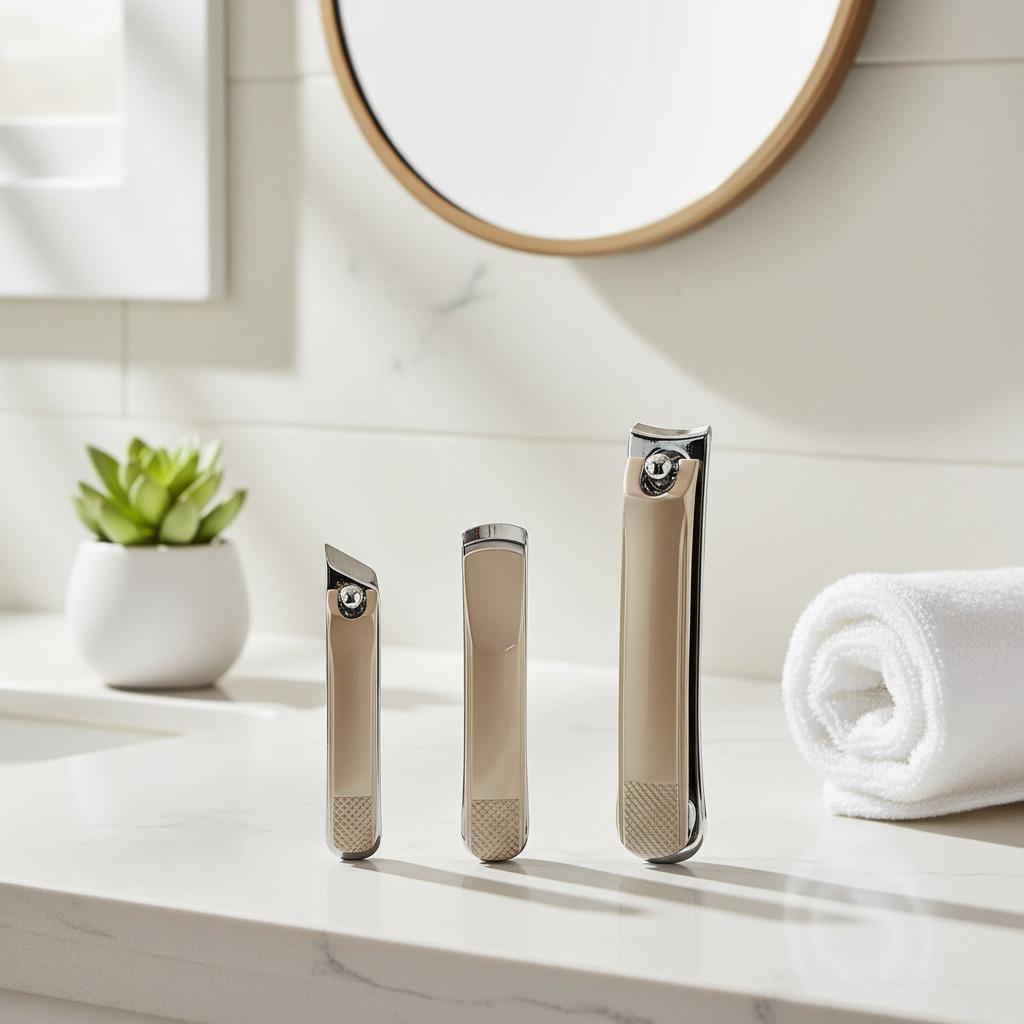
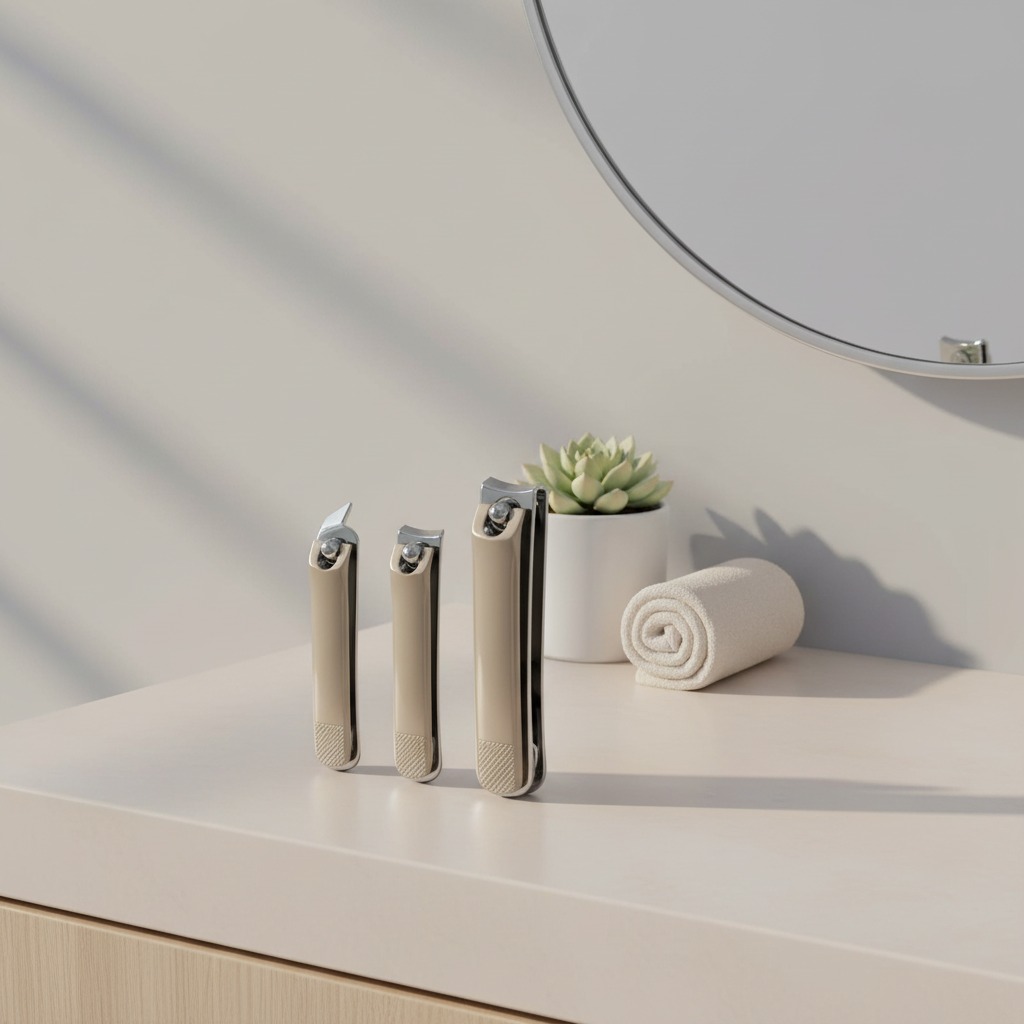
Standard nail clippers are familiar and easy to sell because customers understand their purpose immediately. Larger clippers can be positioned for toenails or thicker nails, provided the product is comfortable and strong enough for that use. Angled clippers may appeal to shoppers who want better access to nail corners, although clear usage instructions can help prevent misuse. Sets can combine several tools and often work well for gifting, online bundles, and higher average order value.
Retailers should also consider who will make the buying decision. In pharmacies and supermarkets, customers may want a reliable, affordable tool with clear packaging. In beauty retail, shoppers may respond to a more refined appearance and coordinated personal care presentation. In online resale, product photos, descriptions, and review-driven quality become especially important because the customer cannot test the grip or lever before purchase.
Stainless Steel, Finish, and Construction Details
The original appeal of stainless steel nail clippers is practical: they are associated with strength, corrosion resistance, and a clean grooming-tool appearance. For retailers, stainless steel also supports a more durable impression than low-quality alternatives. However, “stainless steel” alone is not enough information to make a sourcing decision. Buyers should inspect how the clipper is formed, finished, assembled, and packaged.
Look closely at the cutting edge, hinge area, lever, and underside. Rough edges can make the product feel unfinished. A loose pin or unstable lever can affect user confidence. A mirror-like polished finish may suit some markets, while a matte or brushed look may be preferred in others. The finish should be consistent across a batch, especially when products are displayed together in retail packaging.
Because nail clippers are handled near the body, shoppers notice small imperfections. Even if the clipper cuts acceptably, visible scratches, burrs, uneven plating, or packaging dust can reduce perceived value. Retail buyers should set clear visual standards before confirming bulk supply. This is especially important for resellers building a private label or a store-brand grooming line, where the product must reflect the retailer’s own reputation.
Quality Checks Before Committing to Bulk Orders
Quality assurance should happen before the product reaches the shelf. Olimor Beauty emphasizes quality checks for stainless steel beauty tools, and retailers should also create their own receiving and approval checklist. The purpose is not to overcomplicate sourcing; it is to prevent avoidable issues such as dull blades, inconsistent packaging, or mixed finishes.
A practical retail inspection plan can include:
- Sample comparison: Compare several samples, not just one, to identify variation in cutting feel, lever tension, and finish.
- Cut test: Test the clipper on suitable nail-like test material or approved sample use to check clean cutting and pressure required.
- Visual inspection: Review the blade edge, handle surface, logo area if applicable, packaging print, and any included accessories.
- Function test: Open, rotate, and press the lever repeatedly to check for looseness or irregular movement.
- Packaging review: Confirm that the product is secure, clean, scannable if retail barcodes are used, and appropriate for shipping.
- Batch consistency: When receiving goods, inspect multiple cartons rather than only the top layer.
For imported nail clippers, it is also wise to clarify documentation, packaging language, destination-market labeling expectations, and any retailer-specific compliance requirements. Requirements vary by market and sales channel, so buyers should prepare their checklist early rather than solving packaging or labeling issues after production.
Packaging Choices That Affect Sell-Through
Packaging is not just decoration. It influences how the nail clipper is displayed, protected, explained, and sold. A simple blister card may work well for high-volume retail because it shows the product and can hang on a peg. A box may feel more suitable for a grooming set or gift-oriented item. A pouch may support travel use or multi-piece sets, depending on the product configuration.
When choosing packaging, consider the sales environment. In physical retail, the package must be easy to scan, hang, stack, or place in a countertop display. It should also protect the lever and cutting edge from damage. In e-commerce, packaging must survive parcel shipping and still look presentable when the customer opens it. For resellers, packaging should also leave enough room for clear product information without making the item appear cluttered.
Useful packaging questions include whether the customer can see the product, whether the cutting edge is protected, whether the package supports the target price point, and whether the product description is clear enough for the intended buyer. If the nail clipper is part of a broader grooming range, keep color, typography, and product naming consistent so shoppers can recognize the collection on the shelf.
Sourcing Nail Clippers for Export and Resale
When looking for a nail clipper global supplier, retailers should evaluate more than a quote. Price matters, but the lowest price is not always the best business outcome if it leads to inconsistent quality, delayed replenishment, or packaging revisions. Strong sourcing starts with a clear specification sheet and a realistic understanding of the target customer.
Your sourcing brief should describe the product type, intended market, packaging format, finish preference, expected retail positioning, and any destination-market requirements. If you are comparing suppliers, use the same brief for each one. This makes samples and quotations easier to compare and reduces confusion.
Retailers exploring nail clipper export from China should also plan shipping, import duties, carton labeling, and delivery timelines. Small grooming tools are usually compact, but packaging style can significantly affect carton volume and freight efficiency. If you sell across multiple channels, confirm whether each channel has different labeling, barcode, packaging, or carton requirements.
Olimor Beauty offers stainless steel beauty tools for business buyers, and you can browse related beauty tool products or review broader product collections when planning a complete grooming assortment. For product questions, customization discussion, or sourcing communication, retailers can contact Olimor or send an inquiry.
Building a Retail Assortment That Sells Consistently
After sourcing, the next challenge is assortment management. Nail clippers are often low-consideration purchases, but that does not mean merchandising should be careless. Clear product naming helps customers choose quickly. For example, distinguish between fingernail clippers, toenail clippers, angled clippers, and grooming sets when applicable. If all items look similar, shoppers may default to the cheapest option or delay the purchase.
Use product descriptions to explain practical benefits without exaggeration. Instead of vague claims, describe the tool’s intended use, grip, finish, and packaging contents. For online listings, show the clipper from multiple angles and include scale references where possible. For physical retail, place nail clippers near related grooming tools such as tweezers, nail files, cuticle tools, or travel care items.
Retailers should also track returns and customer feedback. If shoppers mention dullness, difficult handling, or packaging damage, treat that as sourcing data. If one style sells faster than another, adjust the assortment rather than simply reordering every SKU equally. Nail clippers may be small, but they provide useful signals about what your customers value: price, durability, appearance, convenience, or giftability.
Maintenance and Customer Education
Basic care guidance can improve customer satisfaction and reduce complaints. Retailers can include short care instructions on packaging, product pages, or after-sales materials. Customers should keep the clipper clean and dry, avoid using it on unsuitable materials, and store it safely so the cutting edge is protected. For sets, a pouch or case can help keep tools together and reduce damage during travel.
Education is especially useful for multi-piece sets. If a set includes different clipper sizes or shapes, explain the intended purpose of each tool. This helps customers use the right clipper for the right nail type and may reduce accidental damage or dissatisfaction. Clear instructions can also make a standard grooming tool feel more considered and trustworthy.
For retailers and resellers, quality nail clippers can be dependable inventory when selected carefully. Focus on cutting performance, stainless steel construction, finish consistency, packaging suitability, and supplier communication. With a clear sourcing checklist and a product range matched to real customer needs, nail clippers can become a steady part of a profitable beauty and grooming assortment.
Tag: