

Custom Tweezers for Beauty Brands: What to Check Before OEM Production
Custom tweezers look simple, but small design choices can decide whether the tool feels precise, comfortable and suitable for retail sale. For beauty brands, salons, distributors and private-label buyers, the right tweezer is not only a grooming accessory. It is a product that must grip consistently, resist daily wear, match the brand’s visual direction and arrive with dependable quality control.
Olimor Beauty supplies beauty tools for buyers looking at custom and OEM options, including tweezers for eyebrow shaping and delicate grooming tasks. This guide explains how to evaluate custom tweezers before placing an order, with attention to tip alignment, handle comfort, surface finish, branding areas, packaging and sourcing communication. If you are comparing beauty tool products for a new range or refreshing an existing kit, these criteria will help you make a more practical decision.
Why Custom Tweezers Need More Than a Good Appearance
A tweezer may catch attention through color, plating or packaging, but repeat customers judge it by performance. The tips must meet evenly, the tension must feel controlled, and the edges should grip fine hairs without cutting or slipping. A tool that looks attractive but performs inconsistently can create product returns, poor reviews and lost trust in the wider beauty line.
Custom tweezers are often selected for eyebrow grooming, facial hair removal, lash application support, splinter removal or general personal-care kits. Each use has slightly different requirements. A salon professional may prioritize exact tip alignment and hand fatigue reduction. A retail customer may notice the finish, protective cap and packaging first, but will still expect clean grip once the product is used. OEM development should balance both buying moments: shelf appeal and long-term function.
Key Tweezer Features to Define Before Customization
Before discussing logos or colors, define the functional structure of the tweezer. This prevents a common sourcing mistake: designing the decoration first and then trying to force performance requirements into a finished shape.
| Feature | Why It Matters | Buyer Checkpoint |
|---|---|---|
| Tip shape | Controls the type of hair or detail work the tweezer handles best. | Match slanted, pointed or precision tips to the intended user and task. |
| Tip alignment | Determines whether the tweezer can grip fine hairs cleanly. | Check that both tips meet evenly across the contact point. |
| Handle tension | Affects comfort, control and fatigue during repeated use. | Test whether the tweezer closes smoothly without feeling too stiff or loose. |
| Grip texture | Improves control when hands are damp or when working on small areas. | Consider textured grips, grooves or matte areas where fingers naturally rest. |
| Material and finish | Influence durability, cleaning and visual positioning. | Confirm the selected metal, surface treatment and care instructions. |
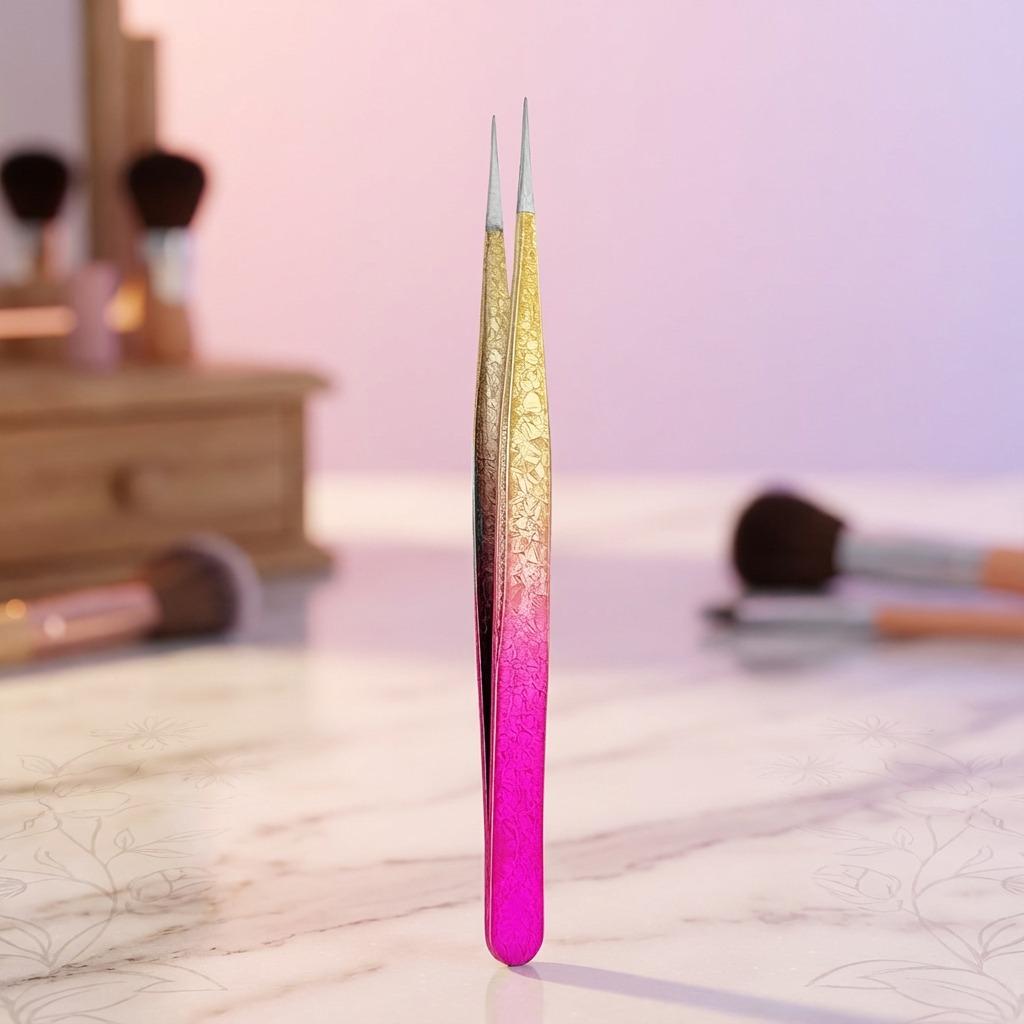
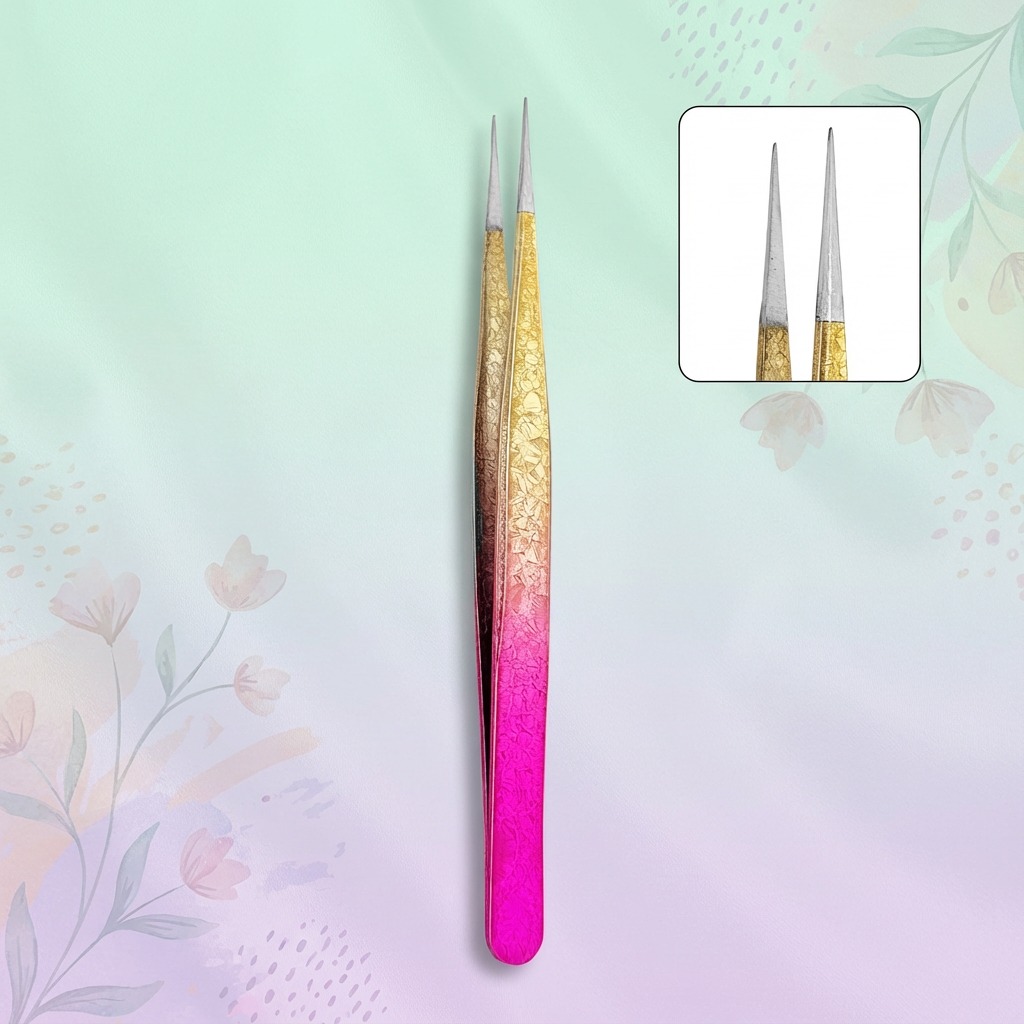
The original product information highlights stainless steel construction, finely pointed tips, ergonomic design, textured grips and a gradient finish from gold to pink. Those details are useful starting points when building a custom tweezer concept. Stainless steel is commonly used for beauty tools because it can support durability and cleaning, while a textured grip helps the user maintain control during close work.
Choosing Tip Styles for Eyebrow and Beauty Use
Tip style should reflect the main use case. For eyebrow shaping, many customers prefer a slanted tip because it can follow the brow line and remove individual hairs at a comfortable angle. A pointed tip is better for highly detailed work, such as isolating very fine hairs or handling delicate cosmetic tasks. Flat tips can grip larger areas but may feel less precise for brow definition.
For OEM custom tweezers, it is worth preparing a simple use-case brief before production discussions. Identify whether the tool is for professional brow shaping, daily home grooming, travel kits, lash accessories or gift sets. This brief helps determine whether the product should feel lightweight or more substantial, whether a protective cap is necessary, and whether the handle should prioritize decoration or grip security.
- For brow-focused products: prioritize clean tip alignment, controlled tension and an angle that supports visibility near the skin.
- For precision grooming: consider finely pointed tips and a protective cover to reduce tip damage during storage.
- For beauty retail sets: coordinate finish, packaging and instructions with other tools in the range.
- For professional use: focus on repeatable grip performance, easy cleaning and comfortable handling over long sessions.
Branding and Finish Options That Still Support Function
Customization can include color, finish, logo placement, packaging and grip treatment. The Gradient Elegance Precision Tweezers mentioned in the product information use a gold-to-pink gradient finish and textured grip, which shows how visual design and handling can work together. For a brand buyer, the key question is whether the finish improves recognition without compromising the contact surfaces or making the tool slippery.
Logo placement should be readable but not placed where it interferes with finger comfort. If the handle includes grooves, dimples or a textured panel, avoid positioning artwork in a way that becomes distorted. For retail presentation, the tweezer should also be easy to understand at a glance. Packaging copy can explain the tip style, intended use, material and care guidance, rather than relying only on decorative language.
When planning a private-label item, compare the tweezer with your wider product collections. A bold gradient finish may fit a trend-led beauty line, while a matte or minimal finish may suit a professional toolkit. Consistency matters: a tweezer that looks disconnected from the rest of the range can weaken the perceived value of the set.
Quality Checks for OEM Custom Tweezers
Quality control for tweezers should be specific. General claims about high quality are less useful than defined inspection points that relate directly to performance. Buyers should consider creating a checklist for samples and production batches. This can be shared internally with merchandising, product development and quality teams.
- Visual inspection: check surface finish, plating consistency, scratches, color variation and logo clarity.
- Tip inspection: confirm that the tips are symmetrical, properly aligned and free from visible burrs.
- Grip test: test fine hair or a similar thin fiber to evaluate whether the tips hold securely.
- Tension test: open and close the tweezer repeatedly to judge spring feel and hand comfort.
- Packaging check: confirm that caps, sleeves or cartons protect the tips during storage and transport.
- Cleaning guidance: review whether the care instructions match the finish and intended use.
These checks are especially important when sourcing from a China tweezers exporter because buyers may be managing production remotely. Clear sample approval, inspection standards and packaging requirements help reduce misunderstandings. Olimor Beauty’s role as an exporter is relevant for businesses that need OEM custom tweezers prepared for branded beauty lines, but buyers should still document the exact criteria for their project.
How to Prepare an OEM Tweezer Brief
A strong OEM brief saves time and improves sample accuracy. Instead of starting with a vague request for custom tweezers, organize the information into functional, visual and commercial requirements. You do not need to know every manufacturing detail at the beginning, but you should define the intended customer and the non-negotiable product characteristics.
Useful details to prepare include target use, preferred tip shape, color direction, logo file, packaging concept, sales channel and any regulatory or labeling requirements for your market. If you are unsure which tip or finish is best, prepare reference photos and describe what you like about them. Avoid copying another brand’s protected design; use references to communicate direction, not to duplicate.
For a first development conversation, you can send an inquiry with your intended quantity range, target market and desired customization areas. If your project includes several tools or you need help comparing options, contact Olimor with a short product brief and any artwork files available.
Care and User Instructions Add Retail Value
Care instructions are often overlooked, yet they help customers keep the tweezer working properly. Even a well-made stainless steel tool can lose effectiveness if the tips are dropped, bent or stored without protection. A small instruction card or packaging panel can reduce misuse and make the product feel more complete.
Recommended consumer guidance can include cleaning the tips after use, drying the tool before storage, replacing the protective cap when provided, and avoiding hard impacts on the tip. For pointed tweezers, a cap is particularly useful because the tips can be more vulnerable than broader styles. If the tweezer has a special surface finish, the care copy should avoid harsh cleaning advice that could damage the appearance.
Building a Better Custom Tweezer Product
The best custom tweezers begin with a clear purpose. Decide who will use the tool, what task it must perform, and which design details support that use. Then choose customization elements that reinforce the brand without weakening grip, comfort or durability. For beauty brands, the difference between an average tweezer and a reliable private-label product is usually found in small details: tip alignment, tension, texture, packaging protection and honest usage information.
Olimor Beauty supports buyers exploring OEM custom tweezers for retail, professional and personal-care applications. By approaching the project with a practical checklist and clear design priorities, you can develop tweezers that look aligned with your brand and perform well in everyday grooming routines.
Tag: