

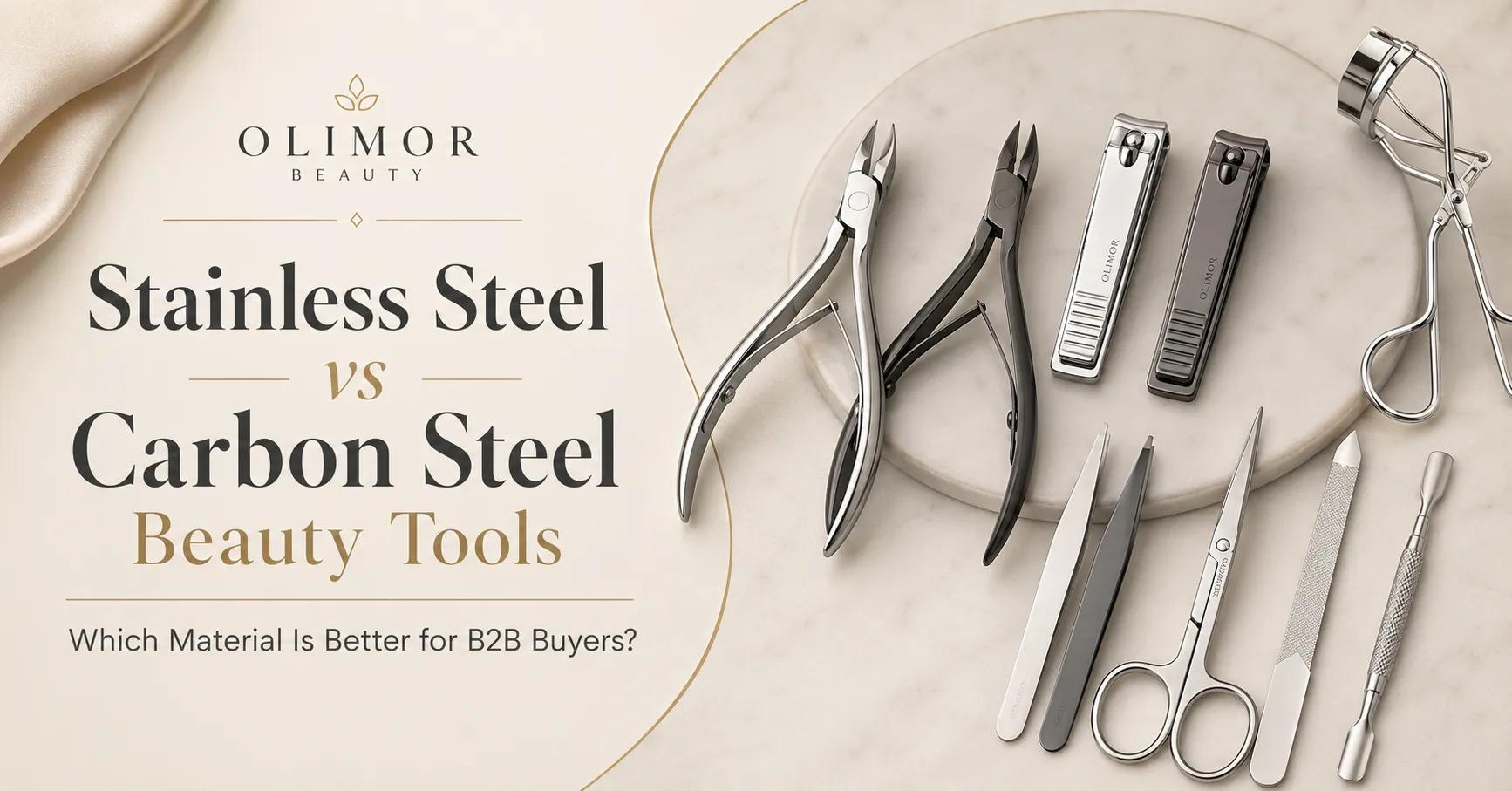
When beauty brands, salon suppliers, and ecommerce sellers source manicure tools, tweezers, scissors, nippers, or grooming kits, material choice is one of the first quality questions. Two materials often appear in buyer discussions: stainless steel and carbon steel. Both can be used for beauty tools, but they do not serve the same market need.
Understanding stainless steel vs carbon steel beauty tools helps buyers choose the right material for product performance, customer expectations, packaging, maintenance, and long-term brand value.
OLIMOR supplies beauty and personal care tools for global B2B buyers, including nail clippers, cuticle nippers, tweezers, eyelash curlers, eyebrow razors, manicure sets, foot files, nail files, and facial tools. You can explore related product categories here: https://www.olimor.com/products
The Quick Difference Buyers Should Know
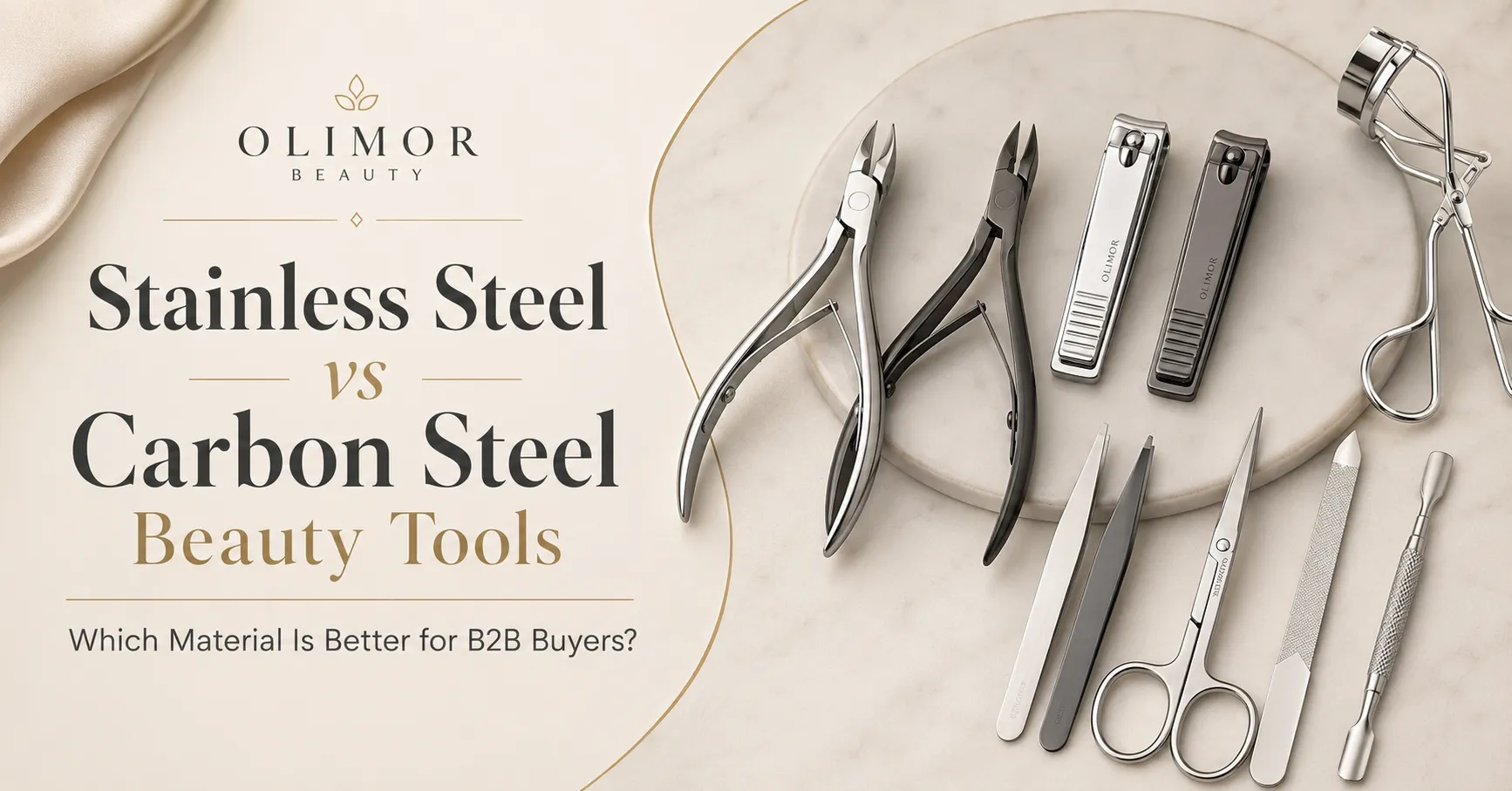
Stainless steel is widely used in beauty tools because it offers a clean appearance, corrosion resistance, and easier daily maintenance. It is suitable for products that may be used in bathrooms, salons, travel kits, or humid environments.
Carbon steel can offer strong hardness and sharp cutting performance in some tool applications, but it is more sensitive to rust and usually requires better protection, coating, or maintenance. For beauty tools that touch moisture, skincare products, or cleaning routines, this becomes an important consideration.
In simple terms:
| Material | Main Strength | Main Concern |
|---|---|---|
| Stainless Steel | Corrosion resistance, clean look, easy maintenance | May require proper processing to maintain sharpness |
| Carbon Steel | Hardness and potential edge performance | More rust-sensitive and maintenance-dependent |
For most B2B beauty tool buyers, the better choice depends on the product type, sales channel, and customer use environment.
Why Stainless Steel Is Common in Beauty Tools
Stainless steel is often preferred for manicure, pedicure, brow, facial, and grooming tools because beauty tools are frequently used near water, cosmetics, lotions, or cleaning solutions. For end users, the product should look clean and remain presentable after repeated handling.
For salons, stainless steel tools create a professional impression. For ecommerce sellers, stainless steel products are easier to present as durable and premium in photos. For private label brands, stainless steel also supports a wide range of finishes, including polished, matte, brushed, plated, or colored surfaces.
Common stainless steel beauty tools include:
- Nail clippers
- Cuticle nippers
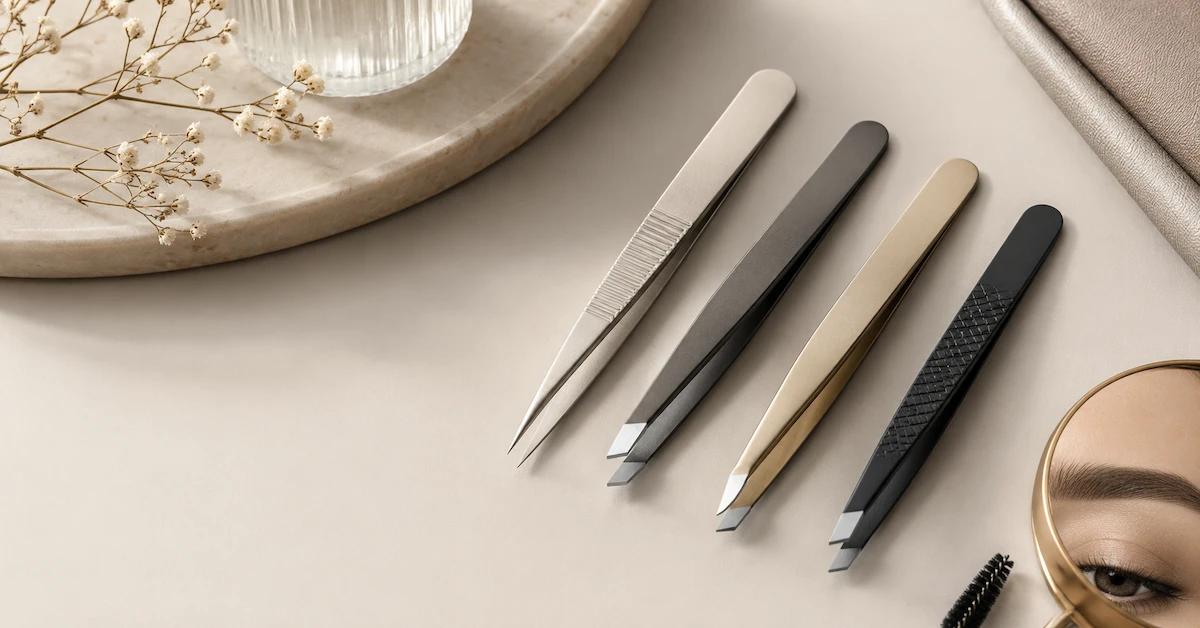
- Tweezers
- Manicure scissors
- Nail files
- Facial tools
- Cuticle pushers
- Grooming set tools
This does not mean every stainless steel tool is automatically high quality. Buyers still need to check blade alignment, polishing, spring rebound, surface finish, packaging protection, and batch consistency.
Where Carbon Steel May Be Considered
Carbon steel may be considered when buyers prioritize hardness or sharp edge performance. In some cutting tools, carbon steel can provide strong sharpness when processed correctly. However, beauty tools are not only judged by sharpness. They are also judged by appearance, maintenance, hygiene perception, and resistance to rust.
For example, a tool with a sharp edge may still create customer complaints if it stains, corrodes, or requires too much care. This is especially risky for ecommerce and retail buyers because customers may not understand how to maintain the product properly.
Carbon steel beauty tools may need extra surface treatment, protective coating, careful packaging, or user instructions. Without proper protection, moisture exposure can affect appearance and customer satisfaction.
Material Choice by Product Type
Different beauty tools have different performance priorities. A cuticle nipper and a foot file should not be judged by the same standard.
| Product Type | Better Material Direction | Buyer Reason |
| Tweezers | Stainless steel is commonly preferred | Clean finish, precision, corrosion resistance |
| Cuticle Nippers | Stainless steel is practical for salons and retail | Durability, hygiene perception, repeated handling |
| Nail Clippers | Stainless steel is suitable for broad markets | Easy maintenance and professional look |
| Beauty Scissors | Depends on sharpness and finish requirements | Cutting performance and surface protection both matter |
| Facial Tools | Stainless steel is usually more suitable | Clean appearance and skincare-use environment |
| Manicure Sets | Stainless steel is more market-friendly | Consistent appearance and easier packaging |
| Foot Files | Stainless steel or coated surfaces may be used | Surface texture and corrosion resistance matter |
For OLIMOR buyers, the most practical approach is not simply choosing one material name. It is to match the material, finish, packaging, and use case to the final market.
Compare by Sales Channel
Material choice also depends on where the product will be sold.
For nail salons, stainless steel is usually easier to position because technicians need tools that look clean, feel professional, and support repeated use. Sharpness is important, but so is durability and maintenance.
For retail stores, appearance matters. A stainless steel beauty tool with a polished finish and clean packaging can look more trustworthy on shelves.
For ecommerce sellers, material affects reviews. Customers may complain about rust, scratches, dull cutting, or poor finish. Stainless steel can reduce some of these risks when paired with good production and packaging.
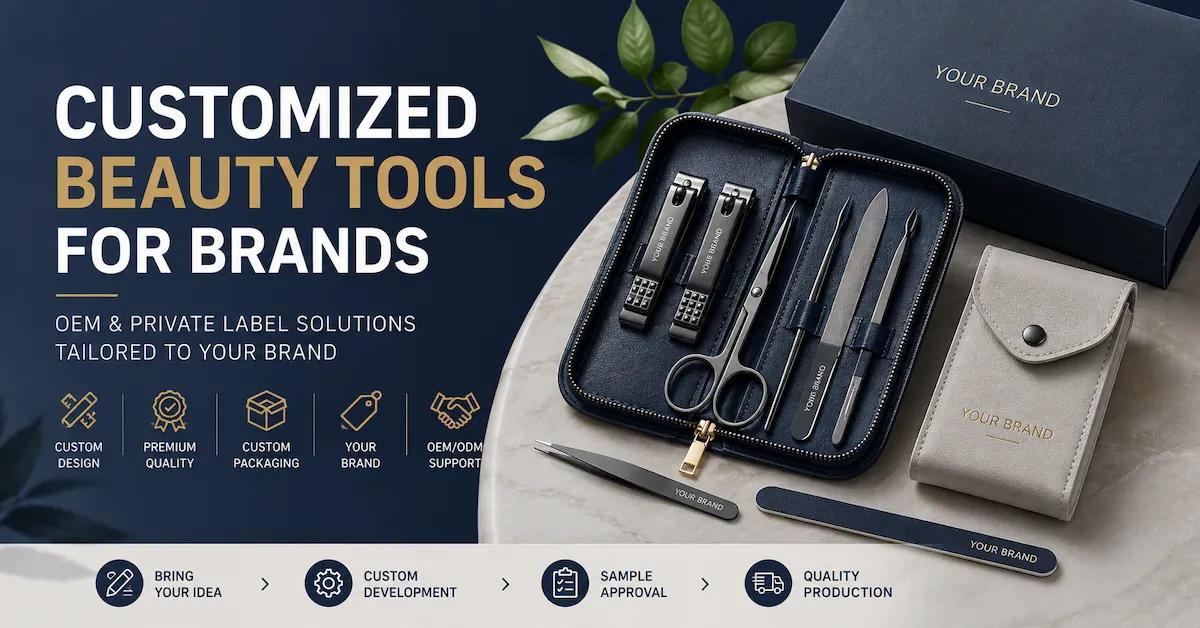
For private label beauty brands, stainless steel often supports a stronger brand image because it can match premium packaging, gift sets, and consistent product-line design.
For low-cost promotional products, carbon steel may sometimes be considered if the product is protected and the buyer understands the trade-off. However, it should not be chosen only because of price.
Maintenance and Customer Experience
A material that works in a factory sample may not always work in real customer use. Beauty tools are often stored in bathrooms, cosmetic bags, salon drawers, or travel kits. They may contact moisture, skincare products, or other metal tools.
Stainless steel generally requires less maintenance for ordinary users. This is useful for retail and ecommerce markets, where customers expect convenience.
Carbon steel may require more care. If users do not dry it properly or if packaging traps moisture, the tool may develop surface problems. For a B2B buyer, that creates risk after the product reaches the customer.
This is why material selection should include the full product journey: production, packaging, shipping, storage, customer use, and after-sale feedback.
Packaging Can Reduce or Increase Material Risk
Even a good material can be damaged by poor packaging. Metal tools may scratch each other during shipping. Moisture exposure can also affect appearance.
For stainless steel tools, packaging should protect the polish, prevent scratches, and keep the product organized. For carbon steel tools, packaging protection becomes even more important because moisture and surface damage may create higher risk.
Useful packaging options include:
- Protective sleeves
- Paper cards
- Blister packs
- Retail boxes
- PU cases
- Inner trays
- Pouches
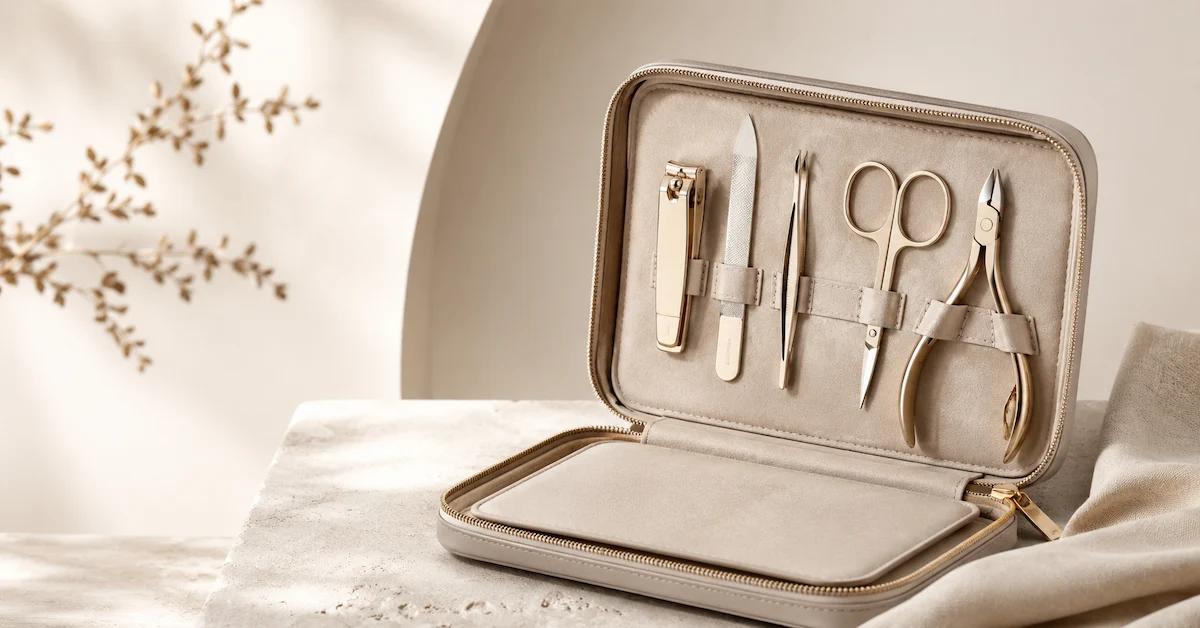
- Manicure set cases
For ecommerce sellers and private label buyers, packaging should be discussed early, not after the tool is selected.
How Buyers Should Choose
A practical sourcing decision should answer these questions:
- Will the tool be exposed to moisture or frequent cleaning?
- Is the product for salons, retail, ecommerce, or promotion?
- Does the customer expect low maintenance?
- Is the product positioned as premium or budget?
- Does the packaging protect the tool during shipping?
- Will the same quality be repeated in future orders?
- Does the material support your brand image?
If the product is for salons, ecommerce, retail, or private label beauty kits, stainless steel is often the safer and more market-friendly option. If carbon steel is being considered, buyers should confirm coating, maintenance instructions, packaging protection, and the real use environment.
How OLIMOR Supports Material Selection
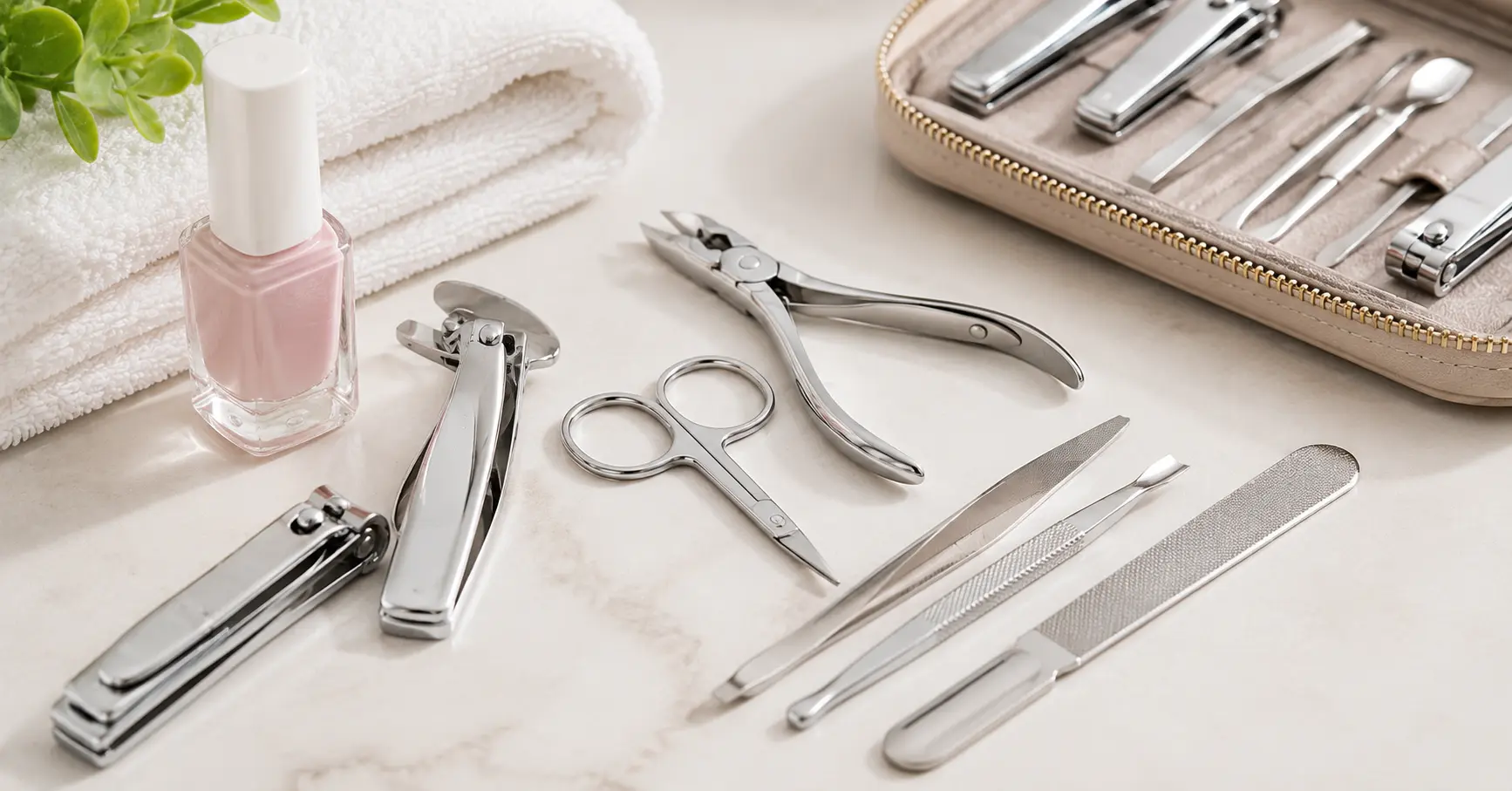
OLIMOR helps buyers select beauty tools based on product category, target market, packaging needs, and brand positioning. Instead of choosing material only by cost, buyers can compare how each option affects appearance, comfort, durability, and customer satisfaction.
A typical sourcing process may include:
- Confirm product category and sales channel
- Discuss material and finish options
- Review samples for function and appearance
- Confirm packaging protection
- Check branding and private label requirements
- Plan bulk production and repeat orders
You can learn more about OLIMOR’s company background here: https://www.olimor.com/about-us
For product selection, visit: https://www.olimor.com/products
For custom sourcing or quotation requests, contact OLIMOR here: https://www.olimor.com/contact-us
FAQ
Is stainless steel better than carbon steel for beauty tools?
For many beauty tools, stainless steel is more practical because it offers corrosion resistance, clean appearance, and easier maintenance. Carbon steel may offer sharpness advantages in some tools but needs more protection.
Are carbon steel beauty tools easy to rust?
Carbon steel is generally more sensitive to rust than stainless steel, especially when exposed to moisture or poor storage conditions.
Which material is better for salon tools?
Stainless steel is often preferred for salon tools because it is easier to maintain and presents a professional appearance.
Can stainless steel beauty tools be customized?
Yes. Stainless steel tools can often support logo branding, polished or matte finishes, color options, packaging customization, and private label sets.
Should ecommerce sellers avoid carbon steel tools?
Not always, but ecommerce sellers should be careful. If customers do not maintain the tool properly, rust or surface issues may affect reviews.
How can I request material recommendations from OLIMOR?
Send your product type, target market, sales channel, order quantity, packaging needs, and branding requirements through the OLIMOR contact page.
Choose the Material That Fits Your Market
The comparison of stainless steel vs carbon steel beauty tools is not only a technical question. It is a business decision. Buyers should consider durability, corrosion resistance, sharpness, packaging, customer maintenance habits, and brand positioning.
For salons, ecommerce sellers, retail buyers, and private label brands, stainless steel is often the more practical choice for long-term customer satisfaction. OLIMOR can help you choose suitable beauty tools and build a product line that matches your target market.
Visit https://www.olimor.com/ to explore more beauty and grooming tool options.
Tag:
Related articles
- Beauty Tools Sourcing Guide
- OEM & Private Label
Private Label Grooming Kit Manufacturer: How Brands Build Custom Personal Care Sets
- Beauty Tools Sourcing Guide
- Lash & Brow Tools
Tweezers for Eyrow Grooming Supplier: B2B Buying Guide for Beauty Brands
- Beauty Tools Sourcing Guide
- OEM & Private Label