

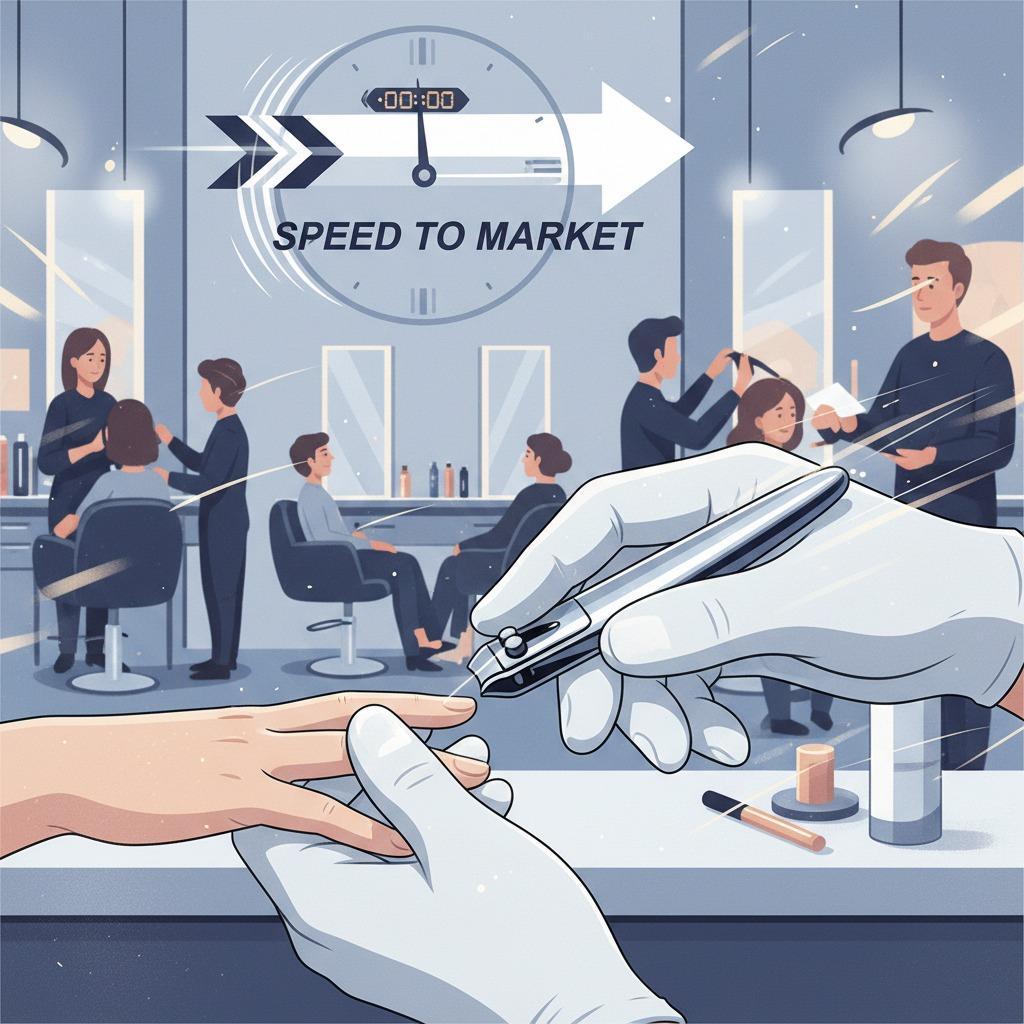
Speed to Market Nail Clippers: A Practical Launch Guide for Beauty Brands

For beauty brands, retailers, salon supply companies, and gift set buyers, nail clippers can look simple at first glance. In reality, a successful nail clipper launch depends on several decisions: cutting performance, hand feel, finish, packaging, inspection standards, and how much customization is truly necessary before the product reaches the shelf. Speed to market nail clippers are not just about rushing production. They are about reducing avoidable delays while still building a product that customers can trust.
A fast launch is especially valuable when you are testing a new grooming category, preparing seasonal kits, expanding a private label assortment, or responding to demand from retailers. The goal is to make smart choices early, avoid overcomplicated development, and align the product, branding, packaging, and order documentation before production begins. Olimor Beauty supports beauty tool buyers with nail clipper sourcing and customization options for brand programs, promotional sets, and everyday grooming assortments. You can view related beauty tool products or explore broader product collections when planning a complete line.
What “Speed to Market” Means for Nail Clippers
Speed to market means shortening the time between product planning and commercial availability. For nail clippers, this usually involves choosing a proven tool structure, confirming realistic branding options, preparing packaging artwork early, and setting clear quality expectations before production. It does not mean ignoring product performance or accepting vague specifications.
A nail clipper must perform reliably because customers notice immediately when a clipper feels weak, slips in the hand, tears the nail edge, or loses alignment. Even when your launch calendar is tight, your team should still evaluate the basics: blade alignment, lever action, comfort, finish consistency, and packaging protection. A faster path is built by focusing on decisions that matter most to the buyer experience instead of changing every detail at once.
For many brands, the fastest route is to begin with an existing nail clipper design and apply brand-specific packaging or logo treatment. More complex changes, such as a unique body shape, special finish, or multi-piece set configuration, may require additional development time. Knowing the difference helps prevent delays and keeps expectations realistic from the first inquiry.
Choosing the Right Nail Clipper for Your Brand Position
The best nail clipper for your line depends on the customer and the sales channel. A salon-oriented buyer may prioritize a clean cut and durable feel. A retail buyer may care about shelf presentation and price point. A travel kit customer may prefer compact size and protective packaging. Before selecting a product, define where it will be sold and how it will be used.
Use the following checklist to narrow your nail clipper direction before discussing customization:
- Target user: adults, families, salon clients, travelers, gift set recipients, or value shoppers.
- Use case: fingernails, toenails, travel grooming, retail peg display, e-commerce bundle, or manicure kit.
- Grip and handling: consider whether the lever feels stable, easy to press, and comfortable for repeated use.
- Cutting expectation: evaluate whether the clipper cuts smoothly without crushing or leaving jagged edges.
- Visual style: decide whether your brand needs a simple metallic look, a modern finish, or coordinated packaging.
- Packaging format: choose packaging that supports retail display, online shipping, or kit assembly.
- Branding level: determine whether logo placement, printed card, sleeve, pouch, or full custom packaging is enough for launch.
When a launch is urgent, avoid making every element custom at the same time. A clear product choice plus thoughtful packaging can often create a professional private label presentation without extending the development schedule unnecessarily.
Private Label Nail Clippers: Faster Branding Without Building Production from Scratch
Private label nail clippers are a practical choice for brands that want to enter or expand the grooming category without developing a tool from the ground up. Instead of investing time in engineering a completely new product, buyers can select an existing clipper structure and focus on brand presentation, packaging, and assortment strategy.
This approach is useful for beauty retailers, subscription boxes, nail care brands, hotel amenity suppliers, and personal care companies that want a dependable grooming tool under their own brand. The private label route can also help you test demand before committing to more complex custom development.
To make private label sourcing efficient, prepare your brand assets and commercial requirements early. Useful materials include logo files, packaging dimensions if already determined, brand color references, barcode or labeling requirements, and any retailer compliance instructions. If you do not have finished artwork yet, begin with the packaging structure and information hierarchy: product name, key usage message, warning text, country or market labeling requirements, and your brand contact information.
Olimor Beauty can be considered when your team is reviewing nail clippers alongside other grooming items. For a coordinated product line, compare nail clippers with complementary beauty tools through Olimor beauty tool products, then decide whether a single item, a grooming set, or a retail collection fits your launch strategy.
Custom Nail Clippers: When More Differentiation Is Worth the Extra Planning
Custom nail clippers can help your brand stand apart, but customization should match the business objective. If the goal is to launch quickly for a seasonal promotion, full structural customization may not be necessary. If the goal is a long-term signature tool or a premium grooming line, deeper customization may be worth the additional planning.
Common customization decisions may include logo application, packaging design, finish direction, set configuration, or presentation for a specific retail channel. The important question is not simply “Can this be customized?” but “Will this customization improve customer preference, retail acceptance, or repeat purchase?”
Brand teams should separate essential custom features from optional ones. Essential features are those required for the product to match your brand promise or retail channel. Optional features are nice additions that may be delayed to a second production run if time is limited. This distinction can protect your launch schedule and reduce back-and-forth during sampling.
A practical custom development brief should answer these questions:
- What customer problem should this nail clipper solve?
- Will it be sold alone, in a kit, or as part of a broader nail care range?
- What visual elements must match existing brand guidelines?
- Which packaging format is required for the intended sales channel?
- What quality checks are most important for customer satisfaction?
- Which details can remain standard to save time?
If you need help clarifying the best route for a launch, you can send an inquiry with your target market, packaging preference, and expected sales channel so the discussion starts with practical sourcing details.
Quality Points Buyers Should Check Before Approving a Launch
Speed is only valuable if the final nail clipper is acceptable to customers. A poor cutting experience can lead to returns, negative reviews, or retailer complaints. Before approving a nail clipper program, buyers should review both the product and packaging with a repeatable checklist.
| Check Area | What to Review | Why It Matters |
|---|---|---|
| Blade alignment | Confirm that the cutting edges meet evenly and do not shift during use. | Misalignment can cause tearing, uneven cuts, or customer dissatisfaction. |
| Lever action | Press the lever several times to assess smoothness and resistance. | A stable lever improves comfort and perceived quality. |
| Surface finish | Look for visible scratches, rough edges, stains, or inconsistent appearance. | Finish affects shelf appeal and trust in the product. |
| Hand feel | Hold the clipper as a customer would and test ease of control. | Comfort matters for both everyday use and salon-style grooming. |
| Packaging fit | Check whether the clipper is secured and protected inside packaging. | Poor packaging can cause damage, rattling, or weak retail presentation. |
| Brand accuracy | Review logo placement, spelling, colors, and printed product information. | Artwork errors can delay shipment or create unsellable stock. |
These checks are especially important when ordering private label or custom nail clippers because the product represents your brand. A buyer sample should be reviewed not only by the sourcing team but also by marketing, quality, and sales stakeholders when possible.
Packaging and Retail Readiness Can Make or Break the Timeline
Many launch delays happen after the product is selected, not before. Packaging artwork, labeling requirements, barcode placement, retailer instructions, and shipment preparation can take longer than expected if they are handled late. For speed to market, packaging should be discussed at the same time as the clipper itself.
For e-commerce, packaging should protect the clipper during handling and look clean in product photography. For retail shelves, buyers may need hanging cards, blister-style presentation, compact cartons, or set packaging depending on the channel. For gift sets, the clipper should fit securely with other tools and avoid scratching adjacent items.
Keep the packaging message clear. Customers want to know what the product is, how it is used, and why it belongs in their grooming routine. Avoid overcrowding a small package with too many claims. A simple product name, brand identity, usage description, and necessary warnings or labeling information can be more effective than excessive promotional copy.
How to Prepare a Faster Nail Clipper Sourcing Inquiry
A well-prepared inquiry saves time for both the buyer and the supplier. Instead of starting with a general request, provide the practical details that influence product selection, customization, and packaging. You do not need every answer finalized, but a structured brief helps identify the shortest realistic path to launch.
Include your preferred product type, target customer, sales channel, approximate launch timing, packaging idea, branding needs, and whether you are looking for a standard private label solution or a more customized nail clipper. If you are comparing nail clippers with other tools, mention whether they will be sold as a set so size, finish, and packaging can be considered together.
Buyers who are still shaping a grooming assortment can review Olimor Beauty’s product collections for category planning, then contact Olimor to discuss which nail clipper direction may best fit the launch. Clear communication at the beginning is one of the simplest ways to avoid preventable revisions later.
Building a Nail Clipper Launch That Is Fast and Credible
Speed to market nail clippers work best when the project is focused. Choose a reliable clipper structure, define the buyer experience, keep customization purposeful, and move packaging preparation forward early. This approach allows your brand to respond to market opportunities while still protecting quality and presentation.
Whether you need private label nail clippers for a retail program or custom nail clippers for a more differentiated grooming line, the strongest launch plan balances timing with practical product decisions. Start with the customer, confirm the channel requirements, and build only the customization that supports the commercial goal. A faster launch should still feel deliberate, well-made, and ready for real customers to use.
Tag: