

Reliable Tweezers Supplier: How to Source Precision Tools With Confidence

For beauty brands, distributors, salons, and private-label buyers, tweezers are small tools with a large impact on customer trust. A pair that feels balanced, grips cleanly, and keeps its alignment can encourage repeat purchases. A pair with rough edges, weak tension, or inconsistent tips can quickly damage a product line’s reputation. Choosing a reliable tweezers supplier is therefore not only a purchasing decision; it is a quality decision that affects packaging claims, customer reviews, returns, and long-term brand positioning.
Olimor Beauty works with buyers who need dependable beauty instruments rather than generic accessories. The goal is not simply to produce tweezers, but to help customers build a stable supply of tools that support precision, durability, and a professional user experience. Whether you are developing a new private-label beauty line, expanding an existing assortment, or comparing tweezers ODM options, the right supplier evaluation process will help you avoid costly sourcing mistakes.
What Makes a Tweezers Supplier Reliable?
Reliability begins before production. A capable supplier should understand how tweezer performance is created through material choice, shaping, tip alignment, polishing, grip design, and inspection. A buyer should be able to discuss not only appearance, but also how the tool feels in the hand and how consistently it can remove fine hair or perform close-detail beauty tasks.
In the original product context, stainless steel is an important material reference because tweezers must resist corrosion and maintain structural stability through repeated use. While the final material selection should match your positioning and compliance needs, buyers should always assess how the supplier controls incoming materials, surface finishing, and the consistency of each production batch.
Reliability also means clear communication. Beauty tool projects often involve many small decisions: tip shape, tension feel, handle width, grip texture, polishing level, logo placement, and packaging fit. A strong supplier helps organize those decisions so the final product is not left to chance. If you are comparing suppliers for a broader product program, you can review Olimor’s beauty tool products to understand how different tool categories may fit into one sourcing plan.
Precision Details That Matter in Tweezers
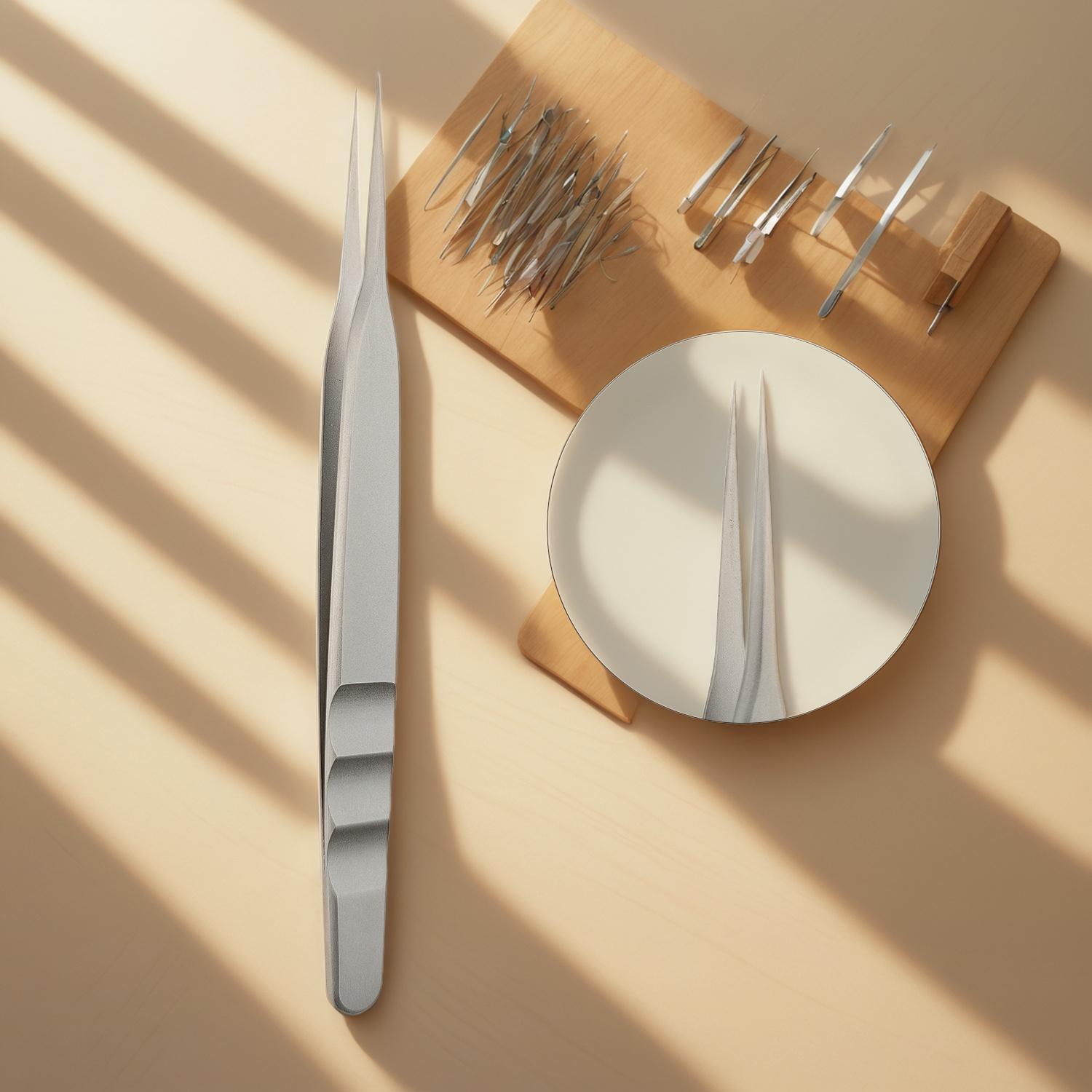
Many tweezers look similar in photographs, but the user experience can vary widely. A well-made pair should close evenly, meet at the tips without visible gaps, and provide enough tension to grip hair without forcing the user to squeeze too hard. For beauty applications, comfort and control are just as important as visual finish.
When reviewing samples, buyers should pay close attention to the following details:
- Tip alignment: The two tips should meet accurately so fine hair can be gripped without slipping.
- Edge smoothness: The working area should be precise but not rough, sharp in the wrong places, or uncomfortable against skin.
- Tension consistency: Tweezers should not feel too loose or too stiff across a batch of samples.
- Surface finish: Polishing, coating, or other finishes should be even, clean, and appropriate for the target retail positioning.
- Grip and handling: Features such as grooved or non-slip grip areas can improve control, especially for professional or frequent use.
- Ergonomic feel: Handle shape and width should support stable finger placement and reduce hand fatigue during detailed work.
These details are especially important for brands that want to compete on quality rather than price alone. Customers may not know the technical reason a tweezer works well, but they immediately notice when it grips cleanly and feels comfortable.
How Tweezers ODM Supports Private-Label Beauty Brands
Tweezers ODM is valuable when a buyer wants more than a standard catalog item. Original Design Manufacturing can support a distinct product direction by adapting tool shape, finish, grip concept, and packaging approach to suit a brand’s audience. For example, a salon-focused line may prioritize firm tension and practical handling, while a retail beauty set may place additional emphasis on finish, presentation, and compatibility with other tools in the range.
Olimor Beauty’s ODM approach is centered on transforming product ideas into usable, manufacturable beauty instruments. The most effective projects start with a clear brief. Instead of requesting “premium tweezers” in general terms, buyers should define the intended customer, the retail channel, the expected use case, and the visual direction. This helps the supplier recommend realistic design choices and avoid unnecessary changes later.
A useful ODM brief may include:
- The main use case, such as brow grooming, lash work, salon use, retail kits, or travel sets.
- Preferred tweezer type and tip direction, if already known.
- Target feel, such as light tension, firm tension, compact handle, or enhanced grip control.
- Desired finish, color direction, or logo placement concept.
- Packaging format, especially if the tweezers must fit into a pouch, box, card, or multi-tool set.
- Any market requirements, retailer standards, or internal quality expectations that must be considered.
Buyers planning a coordinated launch can also explore product collections to think about how tweezers may be paired with other beauty tools for a more complete assortment.
Quality Control Questions Buyers Should Ask
A reliable tweezers supplier should be able to explain how quality is checked during production and before shipment. Quality control is not a single final inspection; it is a sequence of checks that help prevent visible and functional defects from reaching customers. For tweezers, the smallest inconsistency can affect performance, so inspection needs to focus on both appearance and function.
The following table can help buyers structure supplier discussions and sample reviews:
| Quality Area | What to Check | Why It Matters |
|---|---|---|
| Material and surface | Clean finish, corrosion resistance considerations, no visible contamination or uneven polishing | Supports durability and a professional retail appearance |
| Tip performance | Even meeting point, no obvious gaps, reliable grip on fine hair or test fibers | Directly affects customer satisfaction and perceived precision |
| Tension | Consistent closing force across samples | Prevents user fatigue and reduces performance variation |
| Grip design | Grooved, textured, or smooth surfaces matched to the intended use | Improves control and helps position the product for its audience |
| Logo and packaging fit | Clear branding, correct placement, no rubbing or misalignment in packaging | Protects the final retail presentation |
During sample approval, buyers should avoid judging only one “perfect” sample. It is better to review several pieces and compare consistency. If the supplier’s samples vary too much in tension, finish, or alignment, the same issue may become more visible in bulk production. A well-organized supplier will treat sample feedback as part of the production planning process, not as a formality.
Choosing the Right Tweezer Type for Your Market
Before finalizing an order, match the tweezer design to the customer’s actual need. A beauty beginner may value comfort, simple handling, and attractive packaging. A salon or professional user may focus more heavily on tip precision, grip security, and repeatable performance. A gift set may require a balanced design that works well for general brow grooming while looking cohesive with other items.
Consider how the product will be sold. Online listings need clear photography and product claims that match real performance. Retail displays often require strong visual recognition and protective packaging. Professional channels may demand more practical handling and less decorative complexity. A reliable supplier should help you think through these differences so the tool is appropriate for its channel.
It is also important to plan assortment logic. A brand may choose one versatile tweezer for a simple launch, or multiple styles for a more advanced line. If expanding slowly, start with the tool that addresses the broadest customer need, then add variations only when there is a clear reason. Too many similar products can confuse buyers and increase inventory risk.
Maintenance Guidance to Improve End-User Satisfaction
Even well-made tweezers need proper care. Including simple maintenance guidance in packaging inserts, product pages, or retail training materials can reduce complaints and help customers get better results. The instructions do not need to be complicated, but they should be practical.
- Keep tweezer tips clean and dry after use.
- Store tweezers with tip protection when possible to prevent impact damage.
- Avoid dropping the tool, as impact can affect alignment.
- Do not use beauty tweezers as general household tools, because hard materials can damage the tips.
- Clean according to the intended use environment and any applicable retailer or market expectations.
For private-label brands, maintenance wording should match the product design and packaging space. Clear care instructions can make a modest difference in product longevity and customer perception, especially when the tool is sold as part of a higher-quality grooming range.
Partnering With Olimor Beauty for Tweezers Sourcing
Olimor Beauty focuses on beauty tools that combine manufacturing discipline with customer-focused design support. For tweezers, that means paying attention to stainless steel material selection, precise manufacturing steps, ergonomic considerations, surface finishing, tip alignment, and quality checks. For ODM projects, it also means helping buyers translate a product idea into a practical tool that can be produced consistently.
The best sourcing relationships are built on clear expectations. Before placing an order, define the target customer, preferred performance feel, visual style, packaging direction, and inspection priorities. This gives both sides a better foundation for sample development and production planning. If you are preparing a new tweezers project or comparing supplier options, you can send an inquiry with your product requirements or contact Olimor for sourcing support.
A reliable tweezers supplier should help your brand reduce uncertainty, not add to it. By focusing on precision details, practical ODM decisions, and consistent quality control, you can create tweezers that meet customer expectations and support a stronger beauty tool program over time.
Tag: