

How to Choose a Reliable Tweezers Supplier for Beauty Tool Lines
For a beauty brand, distributor or salon supply business, tweezers are small tools with a large influence on customer trust. A pair that feels balanced, grips cleanly and keeps its alignment can become a repeat-purchase item. A poorly finished pair can lead to complaints, returns and weak reviews, even if the packaging looks attractive. That is why choosing a reliable tweezers supplier should be treated as a sourcing decision, not just a price comparison.
Olimor Beauty works with buyers who need dependable beauty tools for retail, professional and private-label channels. Whether you are sourcing a standard tweezer line or exploring tweezers ODM for a more tailored product, the most important question is not simply who can make the tool. It is who can control the details that affect daily use: tip precision, surface finish, spring tension, edge safety, packaging consistency and shipment communication.
What Makes a Tweezers Supplier Reliable?
A reliable supplier is one that can repeatedly deliver the same user experience across production batches. For tweezers, that means the tool should close evenly, meet at the tip without obvious gaps, remove hair or handle small beauty tasks with control, and feel comfortable in the hand. Buyers often focus on the visible design first, but the hidden details are what determine whether a tweezer performs well after the first use.
When evaluating a supplier, look for clear answers about inspection points, product handling and communication. The supplier should understand the difference between a cosmetic tool that only looks good in photos and one that performs well in a customer's hand. For beauty brands, consistency matters because one weak batch can damage confidence across an entire product range.
Useful reliability indicators include:
- Tip alignment control: the two arms should meet accurately at the working edge.
- Consistent tension: the tweezer should open and close smoothly without feeling too loose or too stiff.
- Surface finishing discipline: edges should be clean and comfortable, with no rough burrs where the fingers grip.
- Packaging care: finished tools should be protected from scratches, pressure and contamination during packing and shipping.
- Order communication: buyers should receive practical updates about samples, artwork, packaging and production status.
You can review Olimor Beauty's wider range of beauty tool products to compare how different tool categories require different sourcing priorities.
Key Tweezer Types and Buyer Use Cases
Not every tweezer should be sourced for the same purpose. A retail brow tweezer, a professional salon tool and a specialty tool for lash or precision work may need different tip shapes and handling characteristics. Before requesting samples, define the intended user and the most common application. This avoids choosing a design because it looks familiar while missing the performance required by your market.
Common tweezer selection considerations include:
| Selection Area | Why It Matters | What Buyers Should Check |
|---|---|---|
| Tip shape | Controls accuracy and suitability for different grooming tasks. | Check whether the tip shape matches eyebrow grooming, detail work or general beauty use. |
| Grip feel | Affects user control, especially during repeated use. | Evaluate hand comfort, surface texture and whether the tweezer slips during handling. |
| Closing tension | Influences precision and fatigue. | Compare samples for smooth closing and consistent rebound. |
| Finish | Impacts perceived value and customer satisfaction. | Inspect edges, coating appearance, polishing and protection during packing. |
| Packaging format | Supports retail display, e-commerce delivery and brand presentation. | Confirm the package protects the tips and fits your sales channel. |
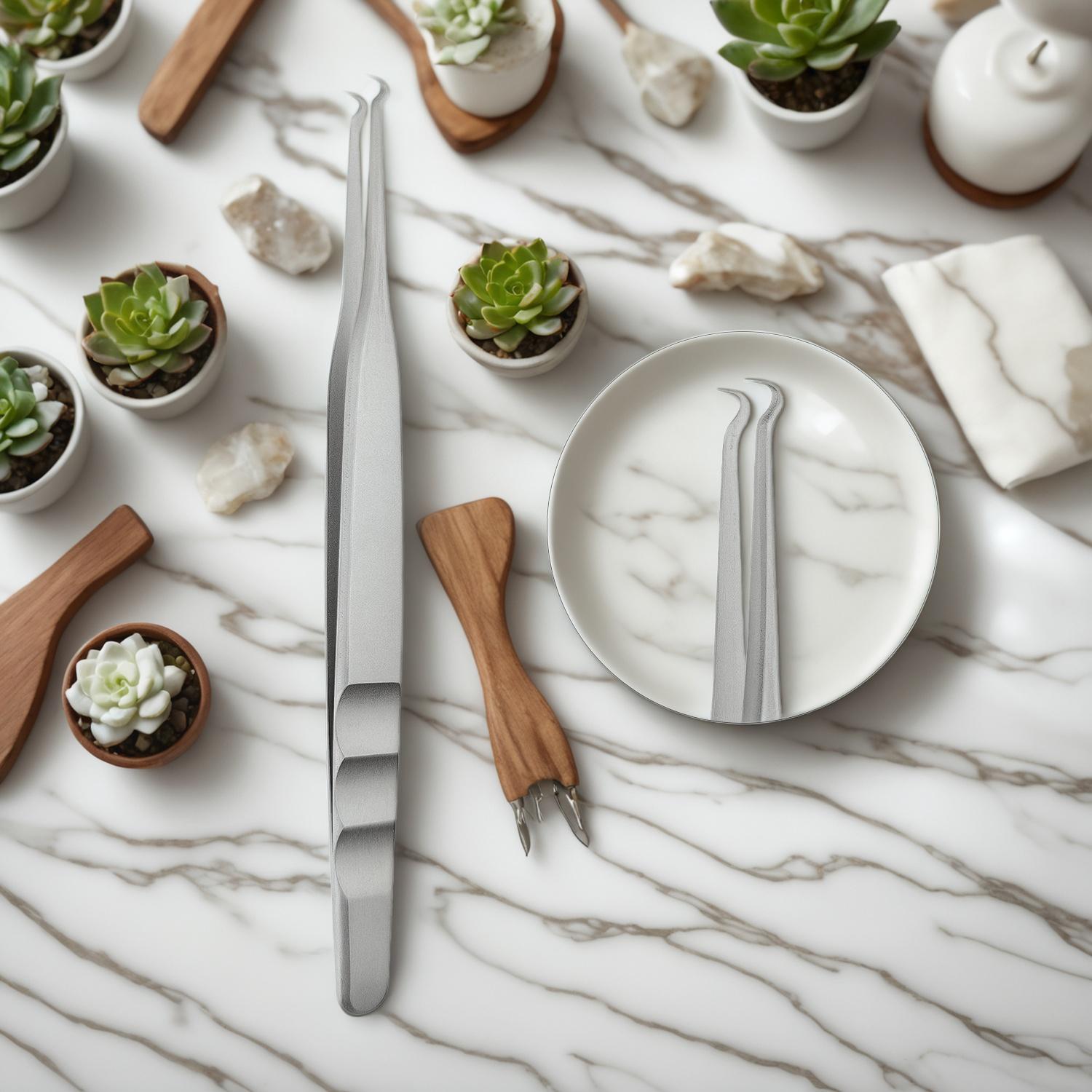
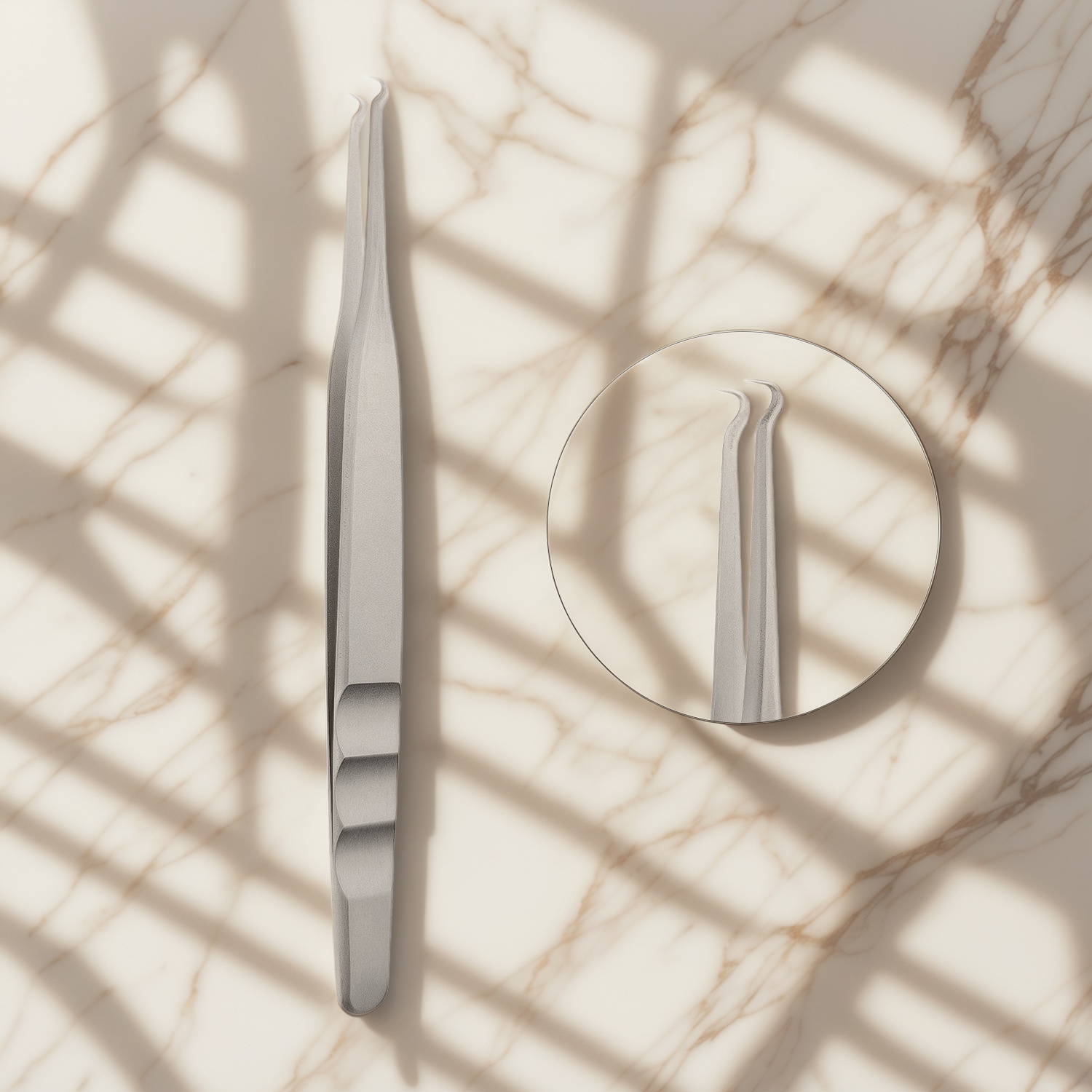
The original product focus includes Curved Tip Tweezers, a design direction that can suit buyers looking for controlled access around delicate areas or detailed grooming tasks. When assessing curved tip options, pay attention to visibility, angle comfort and how easily the tips meet during use. The curve should support control, not make the tool harder to position.
ODM Tweezers: When Custom Development Makes Sense
Tweezers ODM can be valuable when your brand needs more than a standard item with packaging. ODM may involve adapting the tool shape, finish, grip area, color direction, packaging concept or set configuration to suit a target audience. For example, a brand focused on brow care may want a precise, premium-feel tweezer packaged with clear usage guidance. A distributor serving salons may prioritize durable handling, easy identification and practical multi-piece assortments.
ODM is most useful when you have a clear reason for customization. If the goal is only to reduce cost, a standard product may be more efficient. If the goal is to serve a specific customer, fill a gap in your catalog or create a more coherent beauty tool range, ODM can help align product design with commercial strategy.
Before starting ODM discussions, prepare a simple brief. It should include the target user, expected sales channel, preferred finish direction, packaging requirements, any logo or artwork needs, and the performance issues you want to avoid. This makes sampling more productive and reduces revisions.
- Define the market position: value, mid-range, professional or giftable retail.
- Select the intended use: brow shaping, lash work, travel kits, salon resale or general grooming.
- Compare sample handling: tip contact, grip comfort, tension and edge safety.
- Review packaging protection: especially tip covers, trays, pouches or retail cards where applicable.
- Confirm artwork and labeling needs before production planning begins.
If you are building a coordinated line, browsing Olimor Beauty's product collections can help you think about how tweezers may sit alongside other beauty tools in a retail or wholesale offering.
Quality Checks That Matter Before You Place an Order
Quality control for tweezers should not be limited to appearance. A tool can look clean but fail at the tip. For that reason, buyer-side sample review should include both visual inspection and functional testing. Even without laboratory equipment, a careful buyer can identify many issues before approving an order.
Start with the tip. Hold the tweezer against a light background and close it gently. The meeting point should appear even, without a visible twist or one side extending too far beyond the other. Next, test the tension by opening and closing the tool several times. The movement should feel controlled rather than crunchy, sticky or weak. Then examine the grip and edges. Areas touched by the fingers should not feel sharp or unfinished.
For private-label orders, packaging should receive the same attention. Poorly fitted packaging can press against the tips, scratch the finish or make the product look lower quality when received by the final customer. E-commerce buyers should also consider how the item survives small parcel delivery, while retail buyers may focus more on display clarity and barcode or labeling space.
A practical pre-order checklist includes:
- Tip alignment checked from multiple angles.
- Opening and closing tension compared across several samples.
- Surface finish inspected for scratches, rough edges and inconsistent color.
- Logo placement and packaging artwork reviewed for accuracy.
- Tip protection considered for transport and retail handling.
- Carton packing plan reviewed for pressure, movement and moisture exposure where relevant.
Export Readiness and Communication for Global Buyers
Businesses searching for top tweezers exporters usually need more than a factory that can produce a tool. They need a partner who understands the importance of timelines, documentation, sample approval, packaging coordination and order follow-up. Export buying involves many steps, and each step needs clear communication to keep the project moving.
For global buyers, the supplier should be able to discuss product details in a structured way. That means separating sample confirmation, packaging approval, production preparation and shipment planning. When all details are mixed together in one conversation, errors become more likely. Good communication reduces the chance of mismatched colors, wrong artwork versions or unclear packaging expectations.
Olimor Beauty emphasizes careful production handling and inspection from raw stainless steel review through final packaging, as stated in the product information supplied for this page. For buyers, this kind of process awareness is important because tweezers depend on both material handling and finishing skill. The final product is small, but the tolerances that affect performance are noticeable to users.
If you need to discuss a sourcing plan, private-label project or sample direction, you can contact Olimor or send an inquiry with your intended product type, quantity planning and packaging goals.
How to Compare Suppliers Without Choosing on Price Alone
Price is part of every sourcing decision, but tweezers should not be purchased by unit cost alone. A low-cost tweezer that needs rework, replacement or customer service attention can become more expensive than a better-controlled option. Instead, compare suppliers through a balanced scorecard that includes product feel, defect risk, packaging support and communication quality.
When reviewing quotations, make sure the compared items are truly equivalent. Tip shape, finish, packaging, branding requirements and inspection expectations can all affect cost. A quote for an unpackaged standard tweezer should not be compared directly with a quote for a branded, protected retail-ready item. Clear comparison protects your budget and helps suppliers provide realistic information.
Ask yourself these questions during supplier review:
- Do the samples match the intended customer and sales channel?
- Does the supplier understand the functional difference between tweezer styles?
- Are packaging and logo details handled carefully before production?
- Is communication organized enough for repeat orders?
- Does the final product support your brand's quality promise?
The best supplier for your business is the one that can support repeatable quality, not only the first attractive sample. Tweezers may be compact, but they are highly tactile products. Customers judge them by feel, grip and precision within seconds. Choosing a reliable tweezers supplier helps protect your brand from avoidable complaints and gives your product line a stronger foundation for repeat sales.
Building a Better Tweezers Program with Olimor Beauty
Whether you are adding a single curved tip tweezer to a beauty catalog or developing a broader private-label tool program, the sourcing process should begin with clear product expectations. Define the use case, test the sample carefully, confirm packaging protection and evaluate whether the supplier can communicate reliably through each stage.
Olimor Beauty supports buyers looking for dependable beauty tools with practical attention to design, inspection and packaging. For brands exploring tweezers ODM or comparing suppliers for export orders, the goal is simple: create tools that look appropriate for the market and perform consistently in the customer's hand. That combination is what turns a small beauty tool into a product buyers can confidently reorder.
Tag: