

How to Choose a Reliable Tweezers Supplier in China
For beauty brands, salons, distributors and private label buyers, tweezers look simple at first glance. In practice, they are precision tools. A small difference in tip alignment, grip tension, surface finishing or packaging protection can decide whether a customer keeps using the tool or complains after the first use. Choosing a reliable tweezers supplier is therefore not only about finding a low unit cost. It is about sourcing a product that performs consistently, feels comfortable in the hand and arrives ready for retail, salon or professional use.
Olimor Beauty works with buyers who need dependable beauty tools, including stainless steel tweezers and custom made tweezers for different applications. The most useful sourcing approach is to evaluate the product and the manufacturer together: material choice, production control, inspection habits, customization ability and communication all matter. This guide explains what to check before selecting a tweezers manufacturer in China and how to compare samples in a structured way.
Why Supplier Reliability Matters for Tweezers
Tweezers are used close to the skin and often for detailed work such as brow shaping, lash handling, facial hair removal, crafting or technical picking tasks. Users expect the tips to meet cleanly, hold fine objects securely and release smoothly. If the tool slips, pinches unevenly or loses tension, the problem is immediately noticeable. For a distributor or brand owner, that means returns, inconsistent reviews and difficulty building repeat business.
A reliable supplier reduces those risks by controlling the details that are not always obvious in product photos. The angle of the tips, the symmetry of both arms, the resistance when pressing, the smoothness of the edges and the final cleaning process all affect user experience. A dependable manufacturing partner should also be able to repeat the same result across batches instead of only producing one attractive sample.
When comparing beauty tool products, buyers should look beyond shape and color. A tweezer may appear correct online, but quality depends on whether the factory can maintain precision through material preparation, forming, grinding, polishing, inspection and packing. That is why serious buyers often treat tweezers as precision instruments rather than simple accessories.
Core Product Criteria: Material, Alignment and Hand Feel
The supplied product information highlights stainless steel, rust-resistant performance, ergonomic handling and perfectly aligned tips. These are the correct starting points for evaluation. Stainless steel is widely used for tweezers because it can provide strength, hygiene-friendly cleaning and corrosion resistance when properly selected and processed. Buyers should not rely only on the phrase stainless steel, however. They should check how the finished tool behaves after normal handling, cleaning and storage conditions.
Tip alignment is the most important functional point. The two tips should meet evenly without crossing, leaving gaps or touching only at one corner. For hair removal, fine tips need enough accuracy to grip short or thin hairs. For general beauty work, the tweezer should hold firmly without requiring excessive pressure. Poor alignment usually cannot be fixed by packaging or branding; it is a manufacturing and inspection issue.
Hand feel is also important. A tweezer that is too stiff can cause fatigue, while one that is too soft may lack control. Edges should be smooth enough for comfortable handling, and the surface finish should support both appearance and practical cleaning. For retail lines, finish consistency matters because customers often compare multiple units on the same display or in online review photos.
- Tip closure: Tips should meet evenly from the intended contact point without visible gaps.
- Grip performance: The tweezer should grasp fine objects repeatedly without slipping.
- Spring tension: Pressure should feel controlled, not harsh or weak.
- Surface finish: Polishing or coating should look even and feel smooth.
- Edge comfort: Outer edges should not feel sharp during normal use.
- Clean packaging: Tips should be protected so alignment is not damaged in transport.
What Makes a Strong Tweezers Manufacturer in China
A strong tweezers manufacturer in China is not defined by one claim. It is defined by a repeatable production process and a practical quality control system. Olimor Beauty describes a process involving careful sourcing of rust-resistant stainless steel, ergonomic design considerations and inspections at production stages. For buyers, the key question is whether that discipline is visible in samples, documentation, packing and communication.
Manufacturing tweezers requires several controlled steps. Material must be suitable for the intended use. The tweezer body must be shaped accurately. Tips must be ground and aligned carefully. Surfaces need finishing so the tool looks clean and feels safe to handle. Finally, finished products need inspection and packaging protection. If any of these steps is rushed, the result can be a product that looks acceptable but performs poorly.
Buyers should also consider how a manufacturer responds to technical requests. A capable supplier can discuss intended use, target users, tip style, size, surface finish, packaging needs and inspection priorities. For example, a salon-focused tweezer may prioritize grip accuracy and durability, while a retail beauty set may need consistent appearance across several tools. You can browse related product collections to consider how tweezers may fit into a broader beauty tool range.
Custom Made Tweezers: Decisions to Prepare Before Production
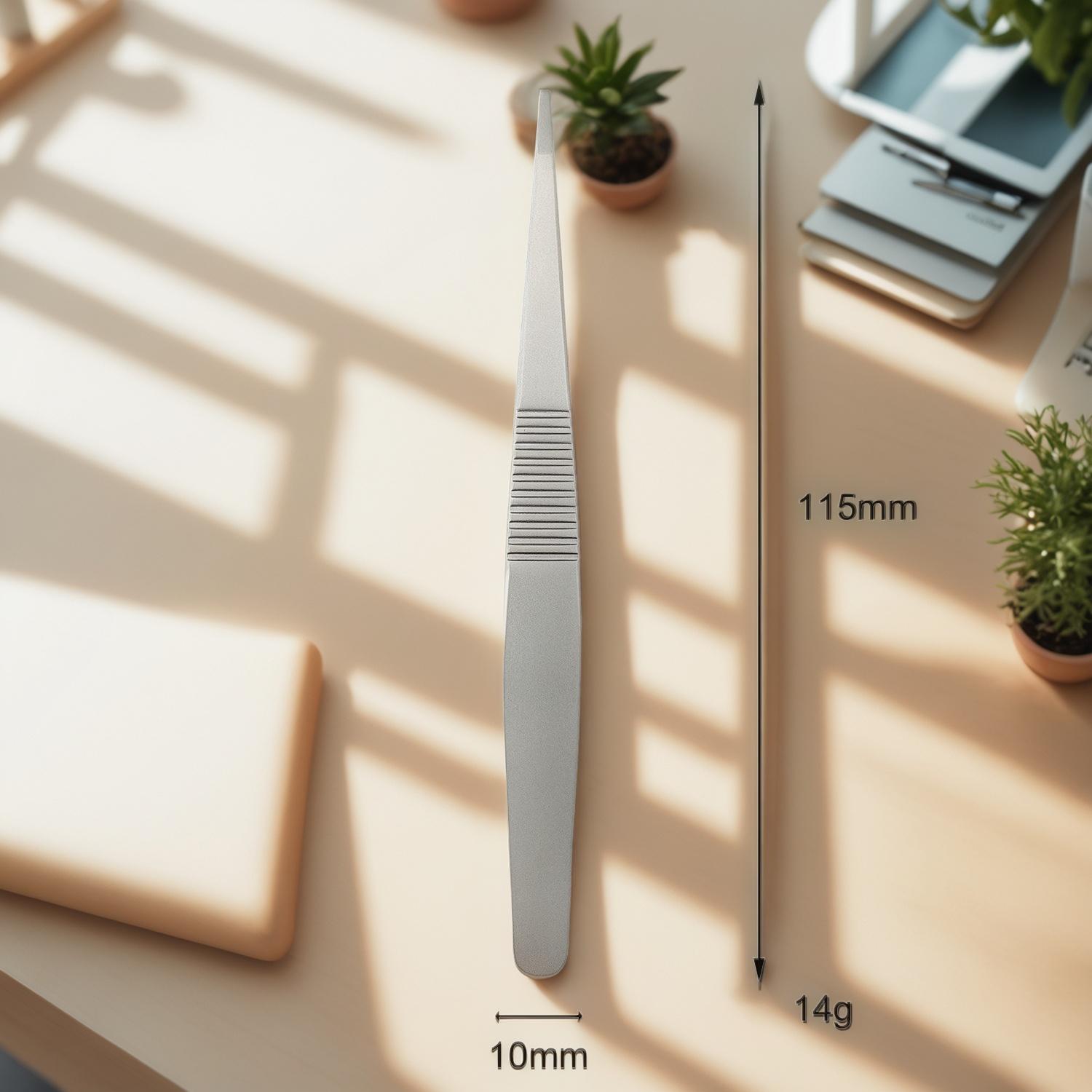
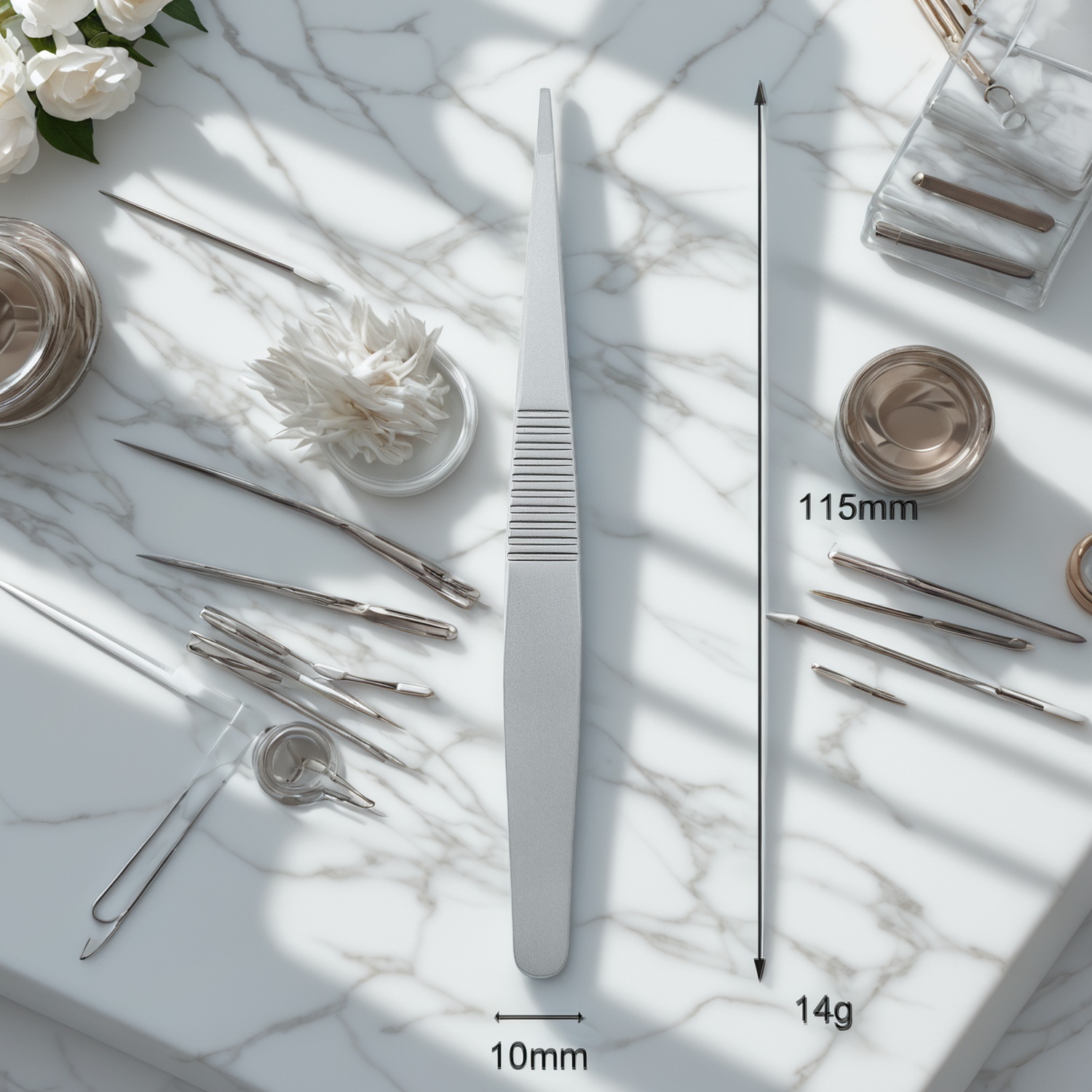
Custom made tweezers can help a brand stand out, but customization should be planned carefully. The original product information mentions refined 115mm stainless steel tweezers as an example of standard quality, with aligned tips for grasping fine objects. That type of known reference is useful when discussing a custom project because it gives both buyer and supplier a physical benchmark for size, hand feel and precision.
Before starting a custom tweezer order, buyers should prepare a clear specification. This does not need to be overly complicated, but it should describe the real use case. A brow tweezer, lash tweezer, crafting tweezer and general grooming tweezer may have different requirements. The more clearly the application is defined, the easier it is to judge samples objectively.
- Define the end user. Decide whether the tool is for professional salons, home beauty users, retail gift sets, crafting users or technical handling.
- Choose the functional style. Identify the desired tip shape, body length, grip area and tension preference based on the task.
- Set appearance requirements. Consider finish, color, logo placement and packaging style without compromising tip precision.
- Create an inspection checklist. Include alignment, grip test, surface finish, edge smoothness and packaging condition.
- Approve against a physical sample. Keep an approved sample as a reference for future production comparisons.
Customization should never focus only on branding. A logo cannot compensate for poor tip contact or uncomfortable tension. A good supplier will treat decorative requirements and functional requirements separately, ensuring that appearance choices do not interfere with performance.
Sample Testing Checklist for Buyers
Sampling is where many sourcing problems can be prevented. Instead of only looking at the sample, use it. Test the tweezer under realistic conditions and compare several units, not just one. If possible, have different users try the same sample because hand strength and technique vary. A tool that feels comfortable to one user may feel too stiff to another.
A practical sample review can be done with simple checks. Look at the tips under good lighting. Press the arms slowly and watch whether the tips meet evenly. Try gripping a fine hair, a thin thread or a small paper edge several times. Check whether the tool holds securely and releases predictably. Run a fingertip carefully along the outside edges to identify rough spots. Inspect the finish for scratches, uneven polishing or discoloration. Finally, check whether the packaging protects the tips from impact.
For bulk sourcing, buyers should also think about batch consistency. Ask for multiple samples when possible and compare them side by side. Consistency across units is often more important than one perfect piece. If a supplier can explain how alignment and final inspection are controlled, that is a positive sign. If communication stays vague when you discuss defects, tolerances or packaging protection, the risk is higher.
Maintenance Guidance That Helps Customers Use Tweezers Longer
Good product quality should be supported by clear use and care guidance. Even well-made stainless steel tweezers can be damaged by misuse, poor storage or impact to the tips. Brands and distributors can reduce complaints by including simple care instructions in packaging, product pages or after-sales materials.
Customers should keep tweezer tips clean and dry after use. The tips should not be used to pry hard objects, cut materials or scrape surfaces, because those actions can alter alignment. If the tweezer has a protective cap or sleeve, it should be used during storage and travel. Dropping the tool on a hard floor can damage the tips even when the body appears unchanged. For beauty use, cleaning practices should match the environment and local hygiene expectations.
These instructions may seem basic, but they help protect the most sensitive part of the product: the tip. A tweezer can be made from durable material and still lose performance if the tip is bent. For a brand, educating users is part of maintaining product reputation.
Building a Better Sourcing Conversation
The best sourcing conversations are specific. Instead of asking only for the best price, explain the market, user expectations and quality priorities. If you need a 115mm stainless steel tweezer reference, aligned tips for fine gripping, ergonomic handling or custom made tweezers for a retail line, state those needs clearly. A reliable supplier can then respond with suitable options and realistic production considerations.
It is also useful to prepare questions around packaging, inspection and repeat orders. How are tips protected? What points are checked before packing? How should approved samples be stored for comparison? What information is needed for logo or packaging customization? These questions help both sides avoid assumptions.
Olimor Beauty focuses on dependable beauty tools for buyers who value precision, durability and practical manufacturing support. If you are comparing stainless steel tweezers, planning a private label project or building a wider product range, you can contact Olimor to discuss suitable directions or send an inquiry with your required application, target market and sample expectations.
A reliable tweezers supplier should help you protect both product performance and brand trust. By checking material, alignment, hand feel, customization details, inspection habits and care guidance, buyers can make better decisions and avoid common sourcing problems. The right tweezer is not only attractive in a catalog; it performs accurately in the user’s hand, again and again.
Tag: