

Reliable Nail Clipper Supplier for B2B Beauty Buyers
A reliable nail clipper supplier should help you reduce complaint risk, protect shelf presentation, and keep repeat orders consistent. For salon suppliers, retailers, distributors, private-label planners, and grooming-kit brands, the decision is not only about unit cost. It is about whether the clipper cuts cleanly, feels stable in hand, resists rust in normal use, and arrives in packaging that matches your channel.
Olimor Beauty supplies beauty tools for business buyers who need practical options for professional and retail use. If you are comparing nail clipper manufacturers in China or building a broader assortment of grooming tools, start with the product itself, then evaluate the supplier behind it. You can browse the product range while you compare specifications and fit for your market.
What makes a nail clipper supplier reliable?
Reliability starts before the first purchase order. A dependable supplier communicates clearly about materials, finishing, packaging, and inspection. That matters because nail clippers are small, but buyers order them in volume and sell them through channels where consistency is visible immediately.
One good sample is not enough. B2B buyers should expect repeatable performance across sample units, production lots, and replenishment orders. The main signs of a reliable supplier are practical, not promotional:
- Clear explanation of intended use and product structure
- Consistent cutting feel across samples
- Stable lever movement and proper jaw alignment
- Clean finishing with no rough edges or distracting surface flaws
- Reasonable packaging protection for retail or wholesale handling
- Inspection steps that cover the product from raw materials to final packing
If the supplier can only describe a product in broad terms, the buying process becomes harder to control. A good B2B partner should make the next decision easier, not more uncertain.
Nail clipper features that matter most
Even a simple grooming tool has several details that affect end-user satisfaction. Buyers should review both function and presentation, because the right product for a salon may not be the right product for a gift set or retail shelf.
Stainless steel construction and finish
Stainless steel is a practical material choice for nail clippers because it supports durability and rust resistance under normal use and storage. That does not mean the tool will perform well by material alone. The quality of the finish matters too. Olimor Beauty product information highlights stainless steel construction and a polished or clean finish, which can help the tool look more presentable in retail or kit settings.
Buyers should inspect whether the surface looks even, whether edges feel smooth, and whether the finish seems suitable for the intended market. A clipper sold as a daily grooming essential needs a clean, trustworthy appearance as well as functional performance.
Cutting edge alignment and lever feel
The most important job of the tool is simple: trim nails cleanly. If the cutting edges do not meet evenly, the user may need repeated pressure, which can lead to tearing, crushing, or an unpleasant cutting feel. Lever tension also matters. A lever that is too loose feels cheap, while one that is too stiff can be uncomfortable to use.
When you review samples, test the clipper under good light and look closely at alignment. The movement should feel controlled and steady, not gritty or unstable. This is especially important for professional buyers who need a dependable grooming tool for repeated use.
Grip comfort and handling
Olimor Beauty notes ergonomic grips and textured coatings on some nail clipper options. That is useful for buyers because grip quality affects handling during normal grooming, salon resale, and travel use. A better grip can improve control without making the tool feel bulky.
For B2B selection, ask whether the grip suits the intended user group. A compact clipper for travel kits may need a different hand feel than a tool designed for salon counters or home-grooming retail shelves.
Packaging readiness
Packaging should protect the tool and support the sales channel. A nail clipper that looks good in a catalog can still disappoint if it arrives scratched, loose, or poorly presented. Buyers should think about whether the item needs hang-sell packaging, boxed presentation, carton efficiency, or compatibility with manicure sets and travel kits.
For broader assortment planning, it can help to review related beauty tool collections so the clipper fits visually and functionally beside files, tweezers, and other grooming accessories.
Match the clipper to the right sales channel
Different buyers need different product priorities. The table below helps separate the main commercial use cases from the checks that matter most.
| Buyer type | Main priority | What to check first |
|---|---|---|
| Salon and spa suppliers | Comfort during repeated use | Grip texture, lever feel, clean cutting action |
| Retail buyers | Shelf appeal and customer trust | Finish, packaging, presentation consistency |
| Distributors | Repeatable reorder quality | Sample-to-production consistency and inspection process |
| Private-label planners | Assortment fit | Product style, packaging options, branding space |
| Travel and kit assemblers | Compactness and integration | Size, packaging protection, compatibility with other tools |
| Wholesale beauty suppliers | Stable bulk supply | Quality consistency across lots and carton presentation |
This channel-first approach keeps you from buying the wrong design for your market. A minimalist stainless steel clipper may work well for everyday retail. A more controlled hand feel may be better for professional supply. A compact version may fit travel kits more naturally.
How to evaluate supplier quality control
Quality assurance is one of the main reasons buyers work with an established manufacturer instead of focusing only on price. Olimor Beauty describes inspections from raw materials to final packaging, which is the kind of end-to-end control buyers should ask about during sourcing.
Use a practical checklist when reviewing samples or discussing a potential order:
- Compare several samples, not just one
- Check whether cutting feel and lever movement stay consistent across units
- Inspect jaw alignment under good light
- Look for scratches, discoloration, rough edges, or visible finishing flaws
- Test the grip for comfort and control
- Review how well the packaging protects the tool during handling and transport
- Consider storage conditions, because even rust-resistant tools benefit from dry handling
These checks help you compare products based on real use rather than broad claims. They also give your supplier clearer feedback, which can improve the result for repeat business.
Inspection points buyers should ask about
| Checkpoint | Buyer question | Why it matters |
|---|---|---|
| Material input | How are incoming materials reviewed? | Helps reduce variation before assembly begins |
| Cutting edge formation | How is edge alignment checked? | Supports a clean cut and better user satisfaction |
| Surface finishing | What finishing defects are screened out? | Protects retail presentation and perceived value |
| Assembly | How is lever stability verified? | Reduces loose or inconsistent performance |
| Final packing | How is product cleanliness and protection maintained? | Helps the product arrive ready for sale |
Cost factors that influence sourcing decisions
B2B buyers often ask what drives nail clipper cost. The answer depends on several variables rather than one single factor. Clear product specifications usually help suppliers quote more accurately and reduce surprises later.
- Material choice: Stainless steel is a practical base, but the exact construction still affects sourcing complexity.
- Finish requirements: A more refined surface can increase production attention and inspection work.
- Packaging format: Retail packaging, boxed sets, and kit-ready packaging each create different cost structures.
- Customization: Branding, layout changes, and special presentation details may affect lead time and price structure.
- Order complexity: Multiple SKUs, mixed packaging, or special assortments can add coordination work.
- Inspection and handling: More detailed checking and protective packing can improve consistency but also change the supply setup.
For buyers building a long-term assortment, the lowest unit cost is not always the best commercial choice. A more consistent clipper can protect customer reviews, reduce returns, and support repeat orders more effectively.
Intended use matters more than appearance
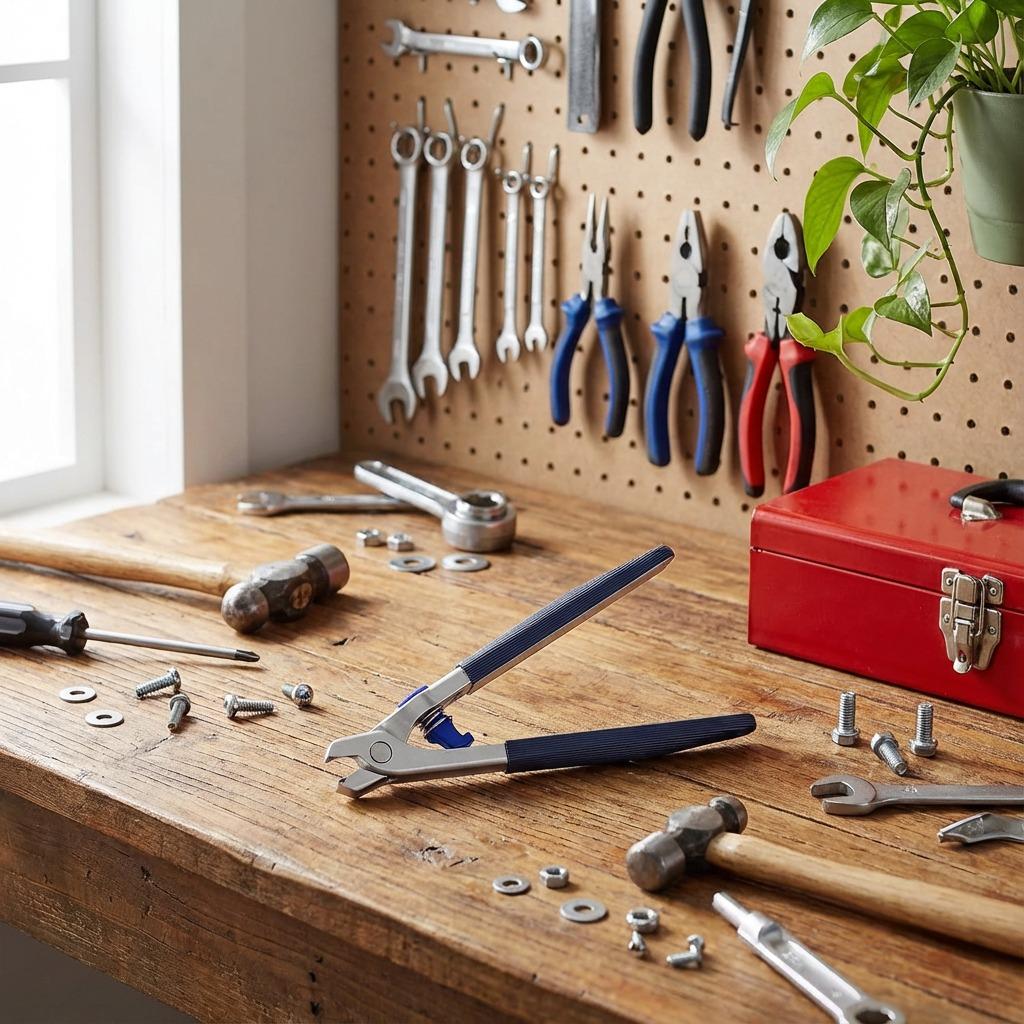
A nail clipper should never be judged by appearance alone. One example from the broader tool category is a hoof clincher variant used in equestrian care, which can feature dual-action jaws for secure gripping and accurate clinching of horse shoe nails. That tool is not a standard beauty clipper, and it should only be evaluated for its intended task.
The lesson for buyers is simple: confirm the use case before purchasing. Fingernail grooming, toenail grooming, salon resale, travel kits, and specialty care tools all require different jaw shape, leverage, and handling characteristics. A reliable supplier should help you match the product to the application instead of treating every tool as interchangeable.
Questions to ask before you place an order
Before you commit to a production run, ask direct sourcing questions. This improves supplier comparison and helps you judge whether the partner understands B2B expectations.
- Can you explain the intended use of this nail clipper in practical terms?
- How do you check cutting alignment, lever movement, and surface finish?
- What packaging formats are available for retail, wholesale, or kit use?
- Can samples reflect the same structure and appearance as later production?
- What customization options are available for branding or assortment fit?
- How are quality issues handled before final packing and shipment?
If you want to discuss a specific assortment plan, you can send a sourcing inquiry or contact the team directly with your target channel, packaging needs, and product priorities.
Standards and documentation buyers may reference
For supplier evaluation, buyers often ask for documentation that aligns with widely recognized quality-management practices such as ISO 9001, along with any applicable consumer-product rules in the destination market. The correct version and scope depend on your market and product use, so verify the current applicable requirement and request the supplier’s own records rather than assuming compliance.
This is especially useful when you are comparing multiple nail clipper manufacturers in China or preparing a private-label program. Good documentation does not replace sample testing, but it helps organize the sourcing decision.
A practical buying path for B2B teams
A simple sourcing flow helps teams avoid confusion and keep evaluation focused.
- Define the sales channel: salon, retail, wholesale, travel kit, or private label.
- Confirm the desired material, finish, and packaging style.
- Request samples and compare more than one unit.
- Review cutting action, alignment, grip, and appearance.
- Ask how inspection is handled from material input to final packing.
- Confirm customization and documentation needs before scaling up.
This process works whether you are sourcing a single nail clipper SKU or planning a larger beauty tool assortment. It also helps buyers compare suppliers more objectively.
FAQ
Can I request samples before placing a larger order?
Yes, that is one of the most useful first steps. Samples let you compare cutting feel, finish, grip, and packaging before you commit to a larger order.
What should I ask about MOQ?
Ask the supplier to explain the minimum order expectation for the specific product, packaging, and any customization you need. MOQ can vary by configuration, so confirm it for your exact request.
Can a nail clipper be customized for my brand?
Often, yes. Ask about branding options, packaging layouts, and whether the design fits your retail or kit strategy. Make sure the customization does not weaken the product’s function or packaging protection.
How do I check quality before ordering?
Review several samples, inspect alignment and surface finish, test the lever feel, and ask how inspections are handled during production and final packaging.
What should I ask about lead time?
Ask the supplier to confirm lead time for your specific product, order size, and packaging needs. Lead time can change with customization and production workload, so it should be verified for each order.
Choose a supplier that fits both product and channel
The best nail clipper supplier is the one that can provide repeatable quality, clear communication, and a product that matches your sales channel. For B2B buyers, that usually means stainless steel construction, dependable finishing, practical packaging, and inspection discipline that goes beyond a single sample.
If your team is building or refreshing a grooming assortment, Olimor Beauty can be a useful starting point for comparing beauty tool options and aligning product selection with your market goals.
Tag: