

Professional Tweezers Wholesale: How to Choose Quality and Precision
Buying tweezers wholesale is not only a price comparison. For beauty retailers, salons, lash artists, nail studios, gift-kit companies and hospitality buyers, tweezers are small tools that can strongly affect customer confidence. A tweezer that looks acceptable in packaging may still disappoint if the tips do not meet evenly, if the tension feels harsh, or if the finish scratches easily during handling.
Professional tweezers need to feel controlled in the hand and perform consistently across a batch. When purchasing for resale, salon use, private label manicure tools or amenity kits, buyers should evaluate precision, comfort, finishing, packaging options and supplier communication before committing to a larger order. Olimor Beauty focuses on beauty tools where practical function and production consistency matter, including items for buyers comparing wholesale sourcing options from regions such as Guangdong, a well-known manicure tools export base.
This guide explains how to assess tweezers wholesale with a professional buyer’s mindset, so your selection supports quality expectations rather than only filling inventory.
Who Needs Professional Tweezers Wholesale?
Different buyers use tweezers in different ways, so the best wholesale choice depends on the end user. A salon may need durable tools for repeated service use, while a retailer may care about shelf presentation and customer reviews. A hospitality buyer may need clean, compact grooming tools suitable for guest amenity sets. A lash-focused business may prioritize fine tips for accurate handling, while general grooming kits may require a balanced slant tip for eyebrow shaping and personal care.
Common wholesale buyers include:
- Beauty retailers stocking everyday grooming tools for consumers.
- Salons and brow studios needing consistent grip and comfortable control.
- Lash technicians looking for fine, accurate tips for delicate application tasks.
- Private label brands building coordinated beauty tool lines.
- Hotels and travel amenity suppliers adding grooming tools to compact kits.
- Nail and manicure tool distributors expanding their catalog with complementary beauty accessories.
Before choosing a supplier, define the use case clearly. A tweezer for retail eyebrow grooming does not need the exact same shape, packaging or tension as a tweezer selected for professional lash work. When the use case is clear, it becomes easier to compare samples and avoid selecting only by appearance.
Precision Starts With Tip Alignment
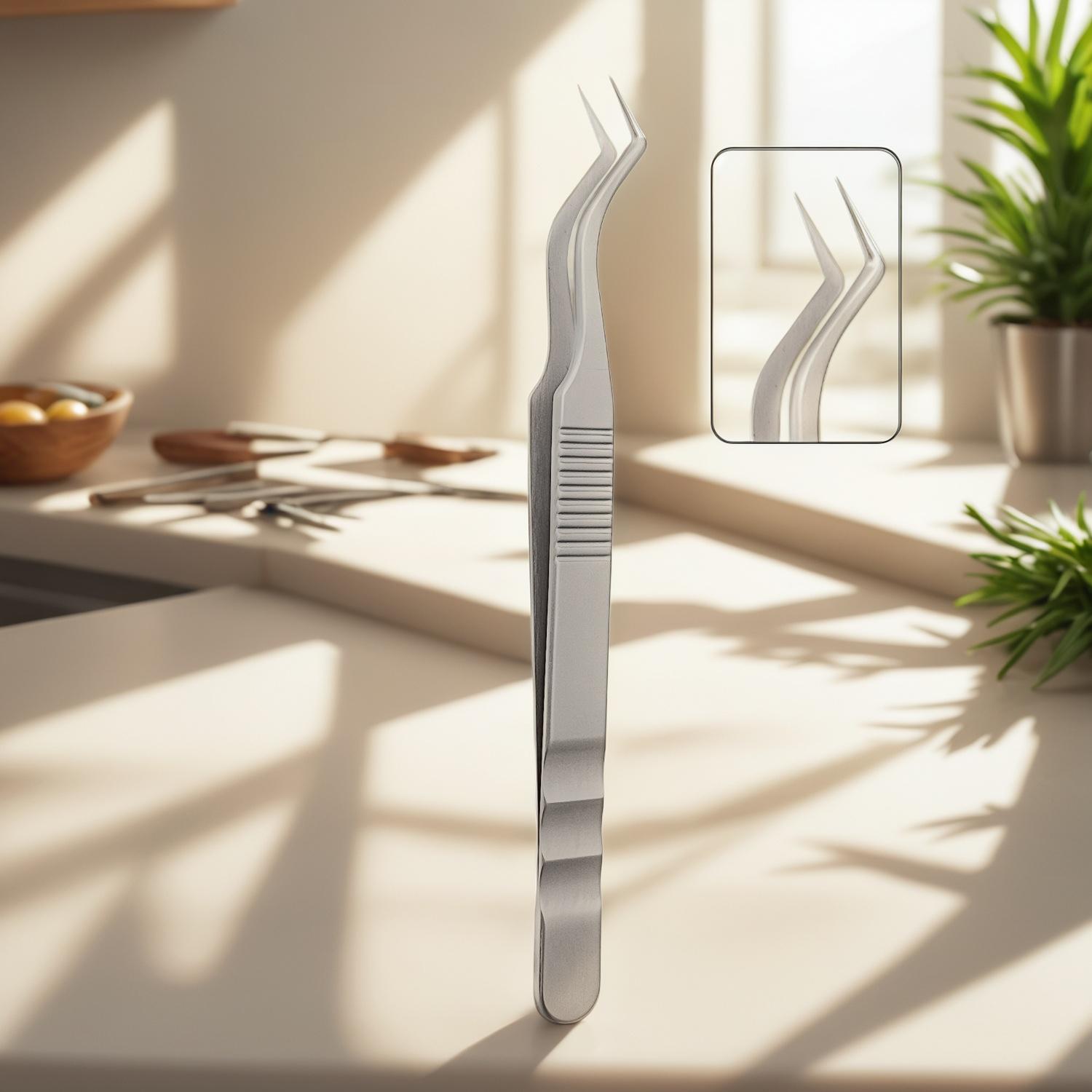
The most important performance feature of tweezers is the meeting point of the tips. Professional users notice immediately when the tips close unevenly, cross over, leave a gap, or require too much hand pressure. Poor alignment makes it harder to grip fine hairs or small lash materials and may cause frustration even if the tool looks polished.
When checking samples, examine the tips from multiple angles. Close the tweezer slowly and confirm whether both sides meet at the same time. Test whether the contact area is suitable for the intended use. For brow grooming, a slanted edge can provide practical surface contact. For detailed lash application, ultra-thin or fine tips may be preferred for meticulous placement, provided they are well finished and not too fragile for the intended handling.
Tip precision should be judged across several pieces, not only one sample. A single good sample is helpful, but wholesale quality depends on repeatability. If a buyer receives ten sample pieces, all ten should be inspected for alignment, tension and finish. This gives a more realistic view of batch consistency before moving to a larger purchase.
Quality Versus Quantity in Wholesale Beauty Tools
Wholesale purchasing often creates pressure to prioritize quantity. However, with tweezers, low unit cost can become expensive if the tools lead to returns, poor reviews or salon dissatisfaction. Quality and quantity should not be treated as opposites. A serious buyer should aim for a supplier process that can support both a practical price and consistent inspection.
Useful quality checkpoints include:
- Tip contact: The tips should close cleanly without obvious gaps or twisting.
- Hand tension: The tweezer should not feel too loose or too stiff for repeated use.
- Edge comfort: The body and tip area should be smooth enough for safe handling.
- Surface finish: The finish should look even, without visible rough marks, stains or inconsistent polishing.
- Shape consistency: Pieces within the same batch should have the same general profile and size impression.
- Packaging fit: The tool should sit securely in its package or sleeve without damaging the tips.
For retailers and private label buyers, consistency is part of brand protection. A customer does not evaluate the supplier’s factory process; they evaluate the tool in their hand. That is why wholesale buyers should request clear sample review steps and define acceptable workmanship criteria before confirming packaging and order details.
Material, Finish and Ergonomics: What Buyers Should Compare
When product specifications are not fully listed, buyers can still compare samples intelligently. Material choice affects durability, corrosion resistance and how the tool feels during use, but buyers should avoid assuming a material grade unless it is stated clearly in the product information or confirmed in documentation. Instead, build a neutral evaluation checklist that focuses on visible and functional results.
Finish is especially important for tweezers because the tool is handled directly and often used close to the face. A smooth body, clean edges and controlled tip finishing create a better user impression. Decorative coatings or colors may be attractive for retail, but they should not interfere with tip performance or make defects harder to detect.
Ergonomics also deserve attention. The tweezer body should allow a stable pinch without causing hand fatigue. For professional use, tension matters because technicians may repeat the same motion many times in one service. A tweezer that is too stiff can be tiring; one that is too soft may lack control. Buyers should test samples with the intended user group when possible, especially for salon or lash-focused applications.
| Feature | Why It Matters | What to Check in Samples |
|---|---|---|
| Tip alignment | Controls gripping accuracy | Close slowly and check even contact |
| Tension | Affects comfort and control | Test repeated opening and closing |
| Finish | Influences appearance and handling | Look for smooth edges and even surface |
| Shape | Matches use case | Compare slant, straight or fine-tip needs |
| Packaging | Protects tips and supports retail display | Confirm secure fit and presentation |
Private Label and Packaging Considerations
Private label manicure tools and beauty accessories require more than placing a logo on packaging. The tool, protective insert, instruction text, barcode area and retail presentation should work together. For tweezers, packaging also has a protective function: the tips must be shielded from impact during shipping, storage and display.
Buyers planning a private label program should prepare artwork requirements, packaging size preferences and target sales channel information early. Retail display packaging may differ from a compact hotel amenity pack or an online marketplace bundle. If the tweezers will be sold as part of a grooming set, the finish and shape should coordinate with other tools in the kit.
Olimor Beauty buyers can explore broader beauty tool products to compare how tweezers may fit alongside nail tools, grooming accessories and other beauty items. For assortment planning, it can also be useful to review product collections and decide whether tweezers should be sold individually, bundled with manicure tools, or included in travel-friendly kits.
Choosing a Professional Tweezers Supplier
A professional supplier stands out through consistency, communication and understanding of the beauty tool market. For tweezers wholesale, the supplier should be able to discuss sample evaluation, packaging requirements, basic inspection priorities and appropriate options for the buyer’s channel. This is especially important when sourcing overseas, where clear expectations reduce misunderstandings.
Guangdong is widely recognized as an export region for manicure and beauty tools, but location alone does not guarantee performance. Buyers should compare supplier experience, sample quality, responsiveness and ability to support the intended product type. A supplier serving professional beauty, retail and hospitality customers should understand that different channels have different requirements.
Before confirming a wholesale order, prepare a concise purchasing brief that includes intended use, target customer, preferred tweezer shape, packaging type, branding needs and inspection concerns. If you need help narrowing the selection, you can contact Olimor with your project details or send an inquiry for sourcing discussion.
Inspection and Maintenance Guidance for End Users
Wholesale buyers should think beyond the purchase order. Simple care information can reduce misuse and improve customer satisfaction. Even a well-made tweezer can lose performance if the tips are dropped, bent or stored without protection. For retail or kit packaging, short care guidance can be valuable.
Useful maintenance advice includes storing tweezers with the tips protected, keeping them dry after cleaning, avoiding forceful twisting, and not using fine-tip tweezers for tasks they were not designed to perform. Salons should follow their own hygiene procedures and select tools suitable for repeated professional handling. Retail customers should be reminded that precision tips need careful storage, especially in cosmetic bags or travel cases.
For wholesale buyers, a final pre-shipment or receiving inspection should focus on practical performance: sample pieces from the batch should be checked for tip closure, surface appearance, packaging condition and quantity accuracy. This does not need to be complicated, but it should be consistent. A documented checklist helps purchasing teams compare future orders and maintain stable quality expectations.
Building a Better Wholesale Tweezer Assortment
The strongest wholesale assortment is usually not based on one tweezer style for every customer. A balanced selection may include a general grooming shape for everyday retail, a more precise option for brow or lash-focused users, and a compact packaged version for kits or hospitality use. The key is to avoid unnecessary complexity while still matching real customer needs.
When comparing professional tweezers wholesale options, focus on the details that users can feel immediately: clean alignment, comfortable tension, smooth finish and packaging that protects the tips. These qualities help beauty retailers, salons and hospitality buyers offer tools that feel dependable from the first use. With a clear buying brief and careful sample review, tweezers can become a reliable part of a professional beauty tool range rather than a low-consideration accessory.
Tag: