Professional Eyelash Curler: How to Choose, Use and Source a Better Lash Tool
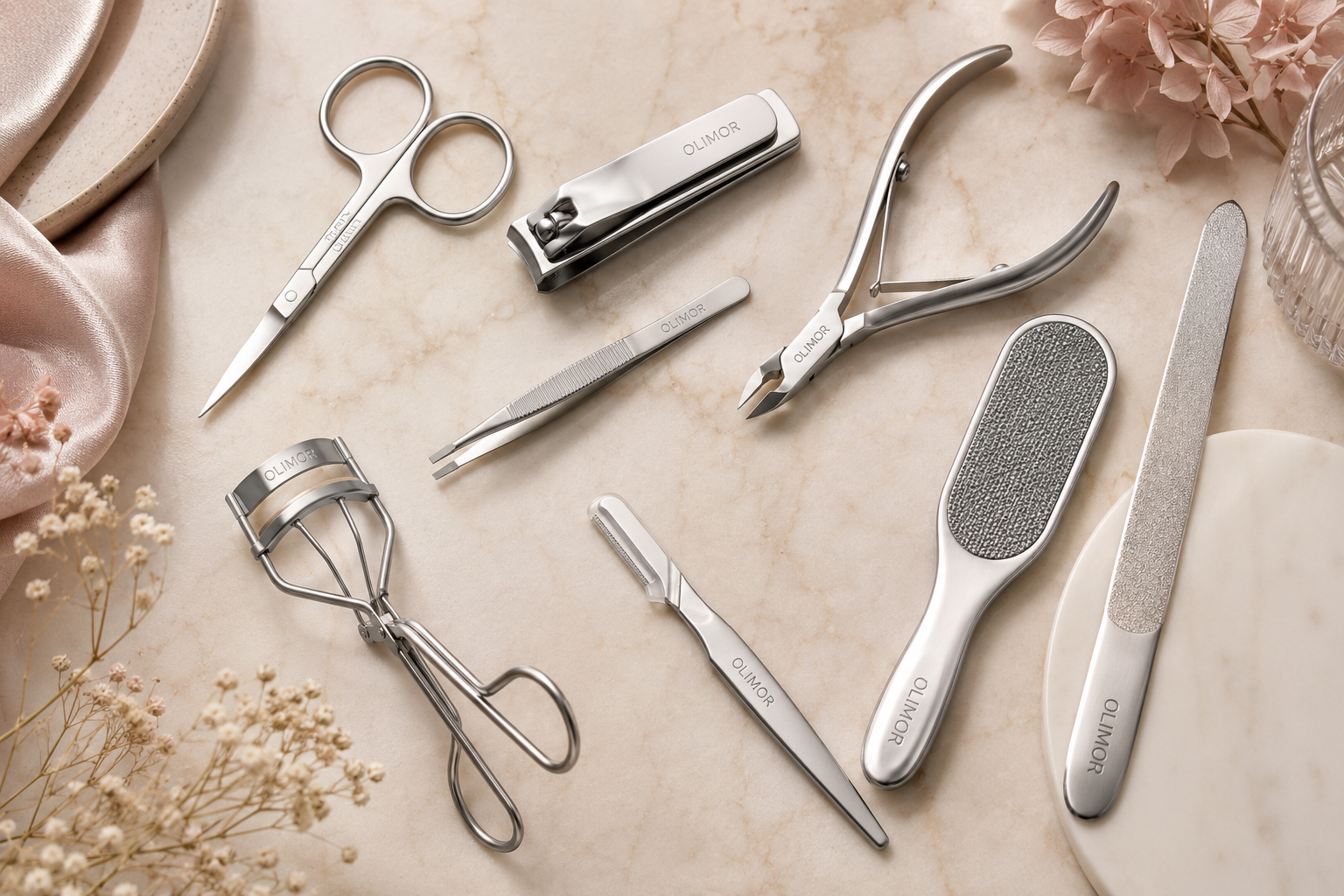
A professional eyelash curler looks simple, but small design decisions determine whether it creates a clean lift or leaves lashes bent, pinched or uneven. For makeup users, salons, retailers and beauty-tool buyers, the right curler should feel controlled in the hand, sit comfortably near the lash line and press with enough stability to shape the lashes without pulling. Olimor Beauty’s eyelash curler is presented with sleek black handles, a golden curler head, a high-tension spring, an ergonomically contoured shape and an ultra-soft silicone pad, making it a useful reference point for understanding what to look for in this category.
This guide explains how to evaluate a professional eyelash curler for daily makeup, salon use and product sourcing. It focuses on practical factors: curve fit, pad softness, handle control, spring response, suitability for short lashes, care routines and buying questions that help avoid low-quality tools.
What Makes a Professional Eyelash Curler Different?
A professional eyelash curler is not defined only by its appearance. It is defined by how predictably it positions the lashes and how evenly it distributes pressure. A weak or poorly aligned curler may clamp harder at one side, creating an angular bend instead of a smooth curl. A tool with an uncomfortable handle may also cause the user to press too quickly or at the wrong angle.
Key details to assess include the shape of the curler head, the cushion of the pad, the steadiness of the hinge or spring and the ease of holding the tool close to the lash base. Olimor Beauty’s design highlights several features buyers commonly seek in a premium-feel lash tool: black handles for grip, a gold-toned curler head for a polished appearance, a high-tension spring for controlled pressure and an ergonomic contour intended to improve comfort.
For brands and retailers comparing beauty tool products, it is worth treating an eyelash curler as a performance product rather than a simple accessory. Customers notice immediately if a curler pinches, slips or fails to reach the inner and outer corners. A reliable curler can become a repeat-purchase item because replacement pads, gift sets and travel kits often build around tools that users already trust.
How to Judge the Curve, Pad and Handle Before Buying
The best eyelash curler for one person may not be the best for another, because eye shapes and lash lengths vary. A good product page or sourcing sample should allow buyers to examine the structure closely. If you are evaluating a curler for personal use, retail selection or a private-label program, use the following checklist.
- Curler head curve: The head should sit near the lash line without forcing the eyelid into an uncomfortable position. A curve that is too flat may miss corner lashes; a curve that is too deep may feel awkward on some eye shapes.
- Pad softness: An ultra-soft silicone pad helps cushion lashes during pressure. It should feel resilient rather than mushy, and it should recover its shape after each press.
- Pressure control: A high-tension spring can support a smoother closing action when the tool is well made. The goal is controlled pressure, not excessive force.
- Handle grip: Handles should be easy to hold with dry or lightly product-covered fingers. Olimor Beauty’s black handles are designed for grip and visual contrast with the gold-toned head.
- Alignment: The upper clamp and silicone pad should meet evenly. Uneven alignment can create inconsistent curls or pressure points.
- Finish quality: Edges should feel smooth. Any roughness near the eye area is a reason to reject a sample.
For wholesale or assortment planning, examine several samples from the same production run when possible. Consistency matters as much as the first impression. A curler that performs well only in one sample but varies across others can create returns and customer dissatisfaction.
Using a Professional Eyelash Curler on Different Lash Types
People often search for eyelash curlers for short lashes because shorter lashes can be harder to catch cleanly. The tool must get close enough to the lash base while still leaving room for safe control. A contoured head and soft pad are especially important here because the user may need to make several small presses rather than one heavy clamp.
For straight lashes, the goal is usually lift at the base and a soft bend through the mid-lengths. For long lashes, the user may need to curl in stages so the result looks rounded rather than crimped. For sparse lashes, gentle pressure helps avoid over-stressing the hair. For downward-facing lashes, starting close to the root can visually open the eye, but the tool should never catch skin.
A practical method is to work in three light steps:
- Position at the base: Place the curler close to the lash line while keeping the eyelid relaxed. Press gently for a few seconds.
- Move to the middle: Open the curler fully, move slightly outward along the lashes and press again with less force.
- Soften the tips: If the lashes are long enough, add a very light press near the tips to avoid a sharp angle.
This method is more forgiving than one hard squeeze. It also helps users judge how much pressure their lashes need. Mascara should generally be applied after curling, not before, because dried mascara can make lashes more rigid and easier to pull or break during clamping.
Comfort and Safety: What Users Should Expect
A well-designed professional eyelash curler should not pinch the eyelid, tug out lashes or leave a harsh crease. Some discomfort comes from technique, but tool design plays a major role. The silicone pad should cushion the lash line, and the clamp should close smoothly. Users should stop immediately if they feel skin caught between the head and pad.
It is also important to keep the curler clean. Eye makeup, skin oil and mascara residue can build up on the pad and metal head. This buildup can reduce grip, affect curl quality and increase hygiene concerns, especially in salon or shared-use environments. Wipe the pad after use with a clean tissue or appropriate cosmetic-tool cleaner, then let it dry before storage. If the pad develops cuts, deep grooves or stickiness, replace it rather than continuing to use it.
For salons, makeup artists and training studios, hygiene protocols should be written into the workflow. A lash curler used on multiple clients requires careful cleaning between uses and should be inspected frequently. Even a premium tool becomes unreliable if the pad is worn down or the hinge action becomes dirty.
Sourcing Considerations for Retailers and Beauty Brands
When adding an eyelash curler to a retail line, gift set or beauty-tool range, buyers should consider more than color and packaging. The product must meet the expectations of users who compare it directly with their previous curlers. A sleek black-and-gold design may create shelf appeal, but performance will decide whether customers recommend it.
Useful sourcing questions include:
- Does the curve suit the customer base you are targeting, such as everyday users, makeup artists or beginners?
- How consistent is the clamp alignment across multiple samples?
- Does the silicone pad keep its shape after repeated use?
- Is the handle comfortable for different hand sizes?
- Does the spring action feel controlled, or does it close too abruptly?
- Are replacement pads, packaging options or assortment planning needed for your sales channel?
- What inspection steps are used from raw materials to final packaging?
Olimor Beauty emphasizes attention from raw materials through final packaging, which is important for a tool used near the eye. If you are developing a broader tool range, compare this curler with related product collections so the finish, handle style and packaging direction feel consistent. For custom sourcing discussions, you can also send an inquiry with your target channel, preferred packaging format and sample evaluation needs.
Maintenance Tips That Extend Tool Life
Even the best eyelash curler performs poorly when neglected. Maintenance is straightforward, but many users skip it until the pad is visibly damaged. A clean pad supports even pressure, while a worn pad can create a groove that bends lashes too sharply.
- Wipe the silicone pad and curler head after each use to remove makeup residue.
- Store the curler in a dry place to protect the spring and metal finish.
- Avoid dropping the tool, as impact can misalign the head or hinge.
- Check the pad regularly for splits, deep marks or loss of bounce.
- Do not press with excessive force; controlled, repeated light pressure is safer and often more effective.
For retailers, care instructions are a small but valuable addition to packaging or product pages. They reduce misuse and help customers get better results from the first application. For salons, a maintenance schedule helps staff identify when a tool should be cleaned, serviced or replaced.
Choosing the Right Professional Eyelash Curler for Your Needs
The right eyelash curler should match the way it will be used. A daily user may prioritize comfort, grip and a natural-looking lift. A makeup artist may prioritize sanitation, consistency and the ability to work across different eye shapes. A beauty brand may prioritize reliable sample quality, coherent design and packaging that fits a wider tool assortment.
Olimor Beauty’s professional eyelash curler combines a contoured shape, high-tension spring, soft silicone pad, black handles and a gold-toned head to address both performance and presentation. For users, those details can support a smoother curl routine. For buyers, they offer practical points to inspect when comparing samples and planning a product range.
If you are selecting a curler for a store, salon kit or beauty-tool project, focus on the details that affect the eye area directly: curve fit, pad feel, pressure control and alignment. A well-chosen professional eyelash curler should help create lifted lashes with less effort, less pinching and more consistent results. To discuss beauty tool selection or sourcing direction, contact Olimor with your application and buyer requirements.