

Why Launch a Private Label Tongue Scraper?
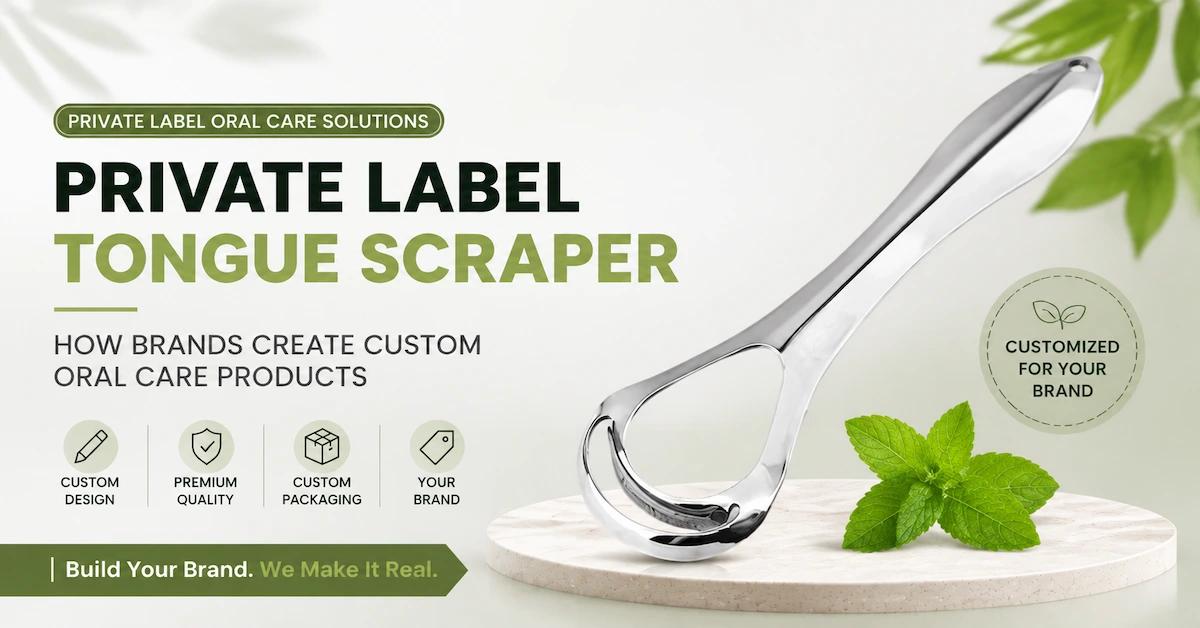
A private label tongue scraper allows a brand to take an existing oral care concept and develop it into a product with its own positioning, visual identity, packaging, and quality requirements.
For B2B buyers, the opportunity is not simply adding a logo to a standard product. A successful private label program should connect the product itself with the target customer and sales channel.
A buyer may need to decide:
- Which material best matches the brand?
- What product shape and curvature are appropriate?
- How should the logo appear?
- What type of packaging fits the retail position?
- Which quality details should be inspected?
- Should the tongue scraper be sold alone or inside a larger oral care collection?
These decisions determine whether the finished product feels like a generic accessory or part of a coherent private label range.
OLIMOR BEAUTY offers tongue scrapers within its broader beauty and personal care tool portfolio. Buyers can review current Tongue Scraper products or explore the complete OLIMOR product range.
What Is a Private Label Tongue Scraper?
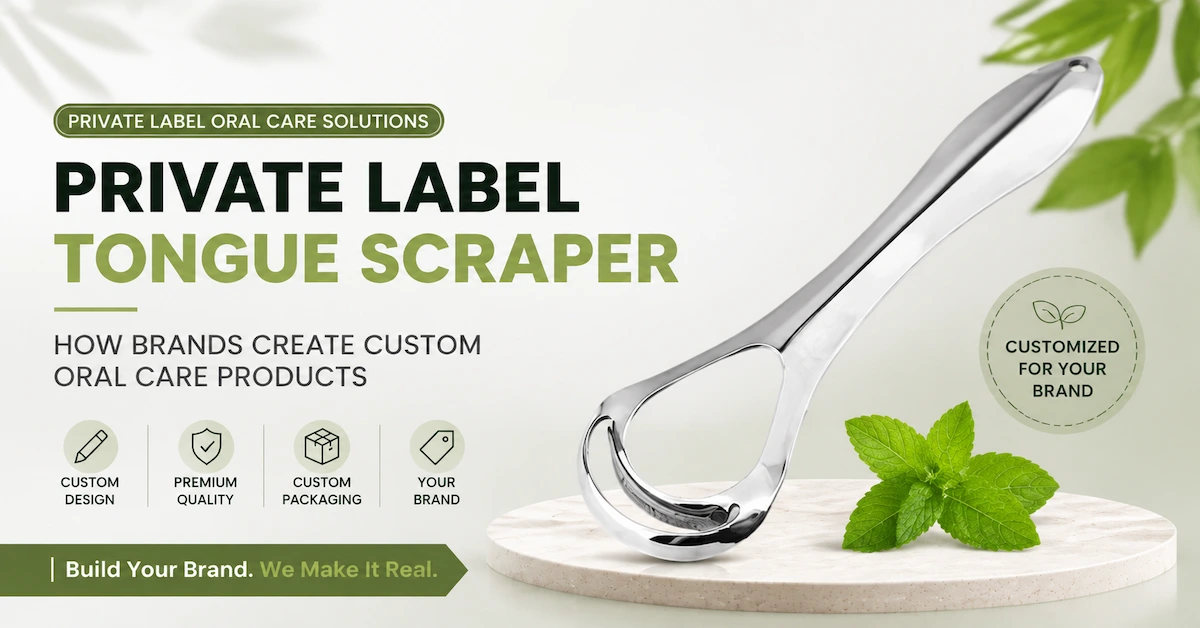
A private label tongue scraper is a tongue-cleaning tool manufactured or supplied for a business and sold under that buyer's own brand.
Depending on the selected product and project, customization may include:
- Material
- Product shape
- Surface appearance
- Logo
- Packaging
- Product inserts
- Set configuration
Private label should therefore be viewed as a product-development process rather than only a branding step.
A buyer needs to define what the product should represent in the market before deciding how much customization is necessary.
Step 1: Define Your Target Customer and Sales Channel
The first decision should be commercial positioning.
The same tongue scraper may require different specifications depending on whether it is sold by an oral care brand, ecommerce store, wellness company, retailer, or gift business.
Oral Care Brands
An oral care brand may prioritize:
- Consistent product quality
- Clean, professional presentation
- Clear care instructions
- Coordinated packaging
- Compatibility with a broader oral hygiene line
The product should feel like part of an intentional system rather than an unrelated accessory.
Ecommerce Brands
Online sellers often need stronger visual differentiation because customers compare many similar products on the same screen.
Important considerations include:
- Product appearance
- Packaging size
- Photography potential
- Shipping protection
- Clear branding
- Review-sensitive product quality
Small surface defects or inconsistent finishes may become highly visible in close-up product images and customer reviews.
Wellness and Personal Care Brands
Wellness-oriented brands may focus more heavily on:
- Material story
- Reusable positioning
- Minimal packaging
- Premium visual identity
- Gift presentation
The product choice should still be based on actual specifications rather than unsupported health claims.
Retailers
Retail buyers may need:
- Clear shelf presentation
- Barcode and label space
- Compact packaging
- Consistent brand architecture
- Easy product identification
Defining the channel first makes later customization decisions much easier.
Step 2: Choose the Right Tongue Scraper Material
Material affects appearance, care requirements, perceived positioning, and packaging.
Two common metal directions are stainless steel and copper.
Stainless Steel Tongue Scrapers
Stainless steel offers a clean, modern appearance and is suitable for many mainstream private label oral care programs.
Buyers should pay attention to:
- Surface smoothness
- Edge condition
- Curvature
- Product symmetry
- Finish consistency
- Visible scratches or marks
A stainless steel tongue scraper can fit minimalist, professional, or modern oral care branding.
Copper Tongue Scrapers
Copper provides a warmer and more distinctive metallic appearance.
It may suit brands looking for:
- Strong visual differentiation
- Wellness-oriented presentation
- Natural-tone packaging
- Premium or traditional product positioning
Copper products also require clear care communication because the surface may change over time depending on use and maintenance.
Brands should avoid building marketing claims around unverified medical or therapeutic benefits.
Stainless Steel vs Copper for Private Label Brands
| Factor | Stainless Steel | Copper |
|---|---|---|
| Visual style | Modern and clean | Warm and distinctive |
| Brand positioning | Broad oral care market | Wellness or premium concept |
| Packaging direction | Minimal or clinical | Natural or premium |
| Surface appearance | Bright metallic finish | Characteristic copper tone |
| Care communication | Generally simple | More important |
| Differentiation | Moderate | Visually stronger |
Neither material is automatically better.
The better choice is the one that matches the brand's target customer, positioning, packaging, and product strategy.
Step 3: Select the Product Shape and User Experience
Tongue scrapers may look simple, but small dimensional differences can affect the feel of the finished product.
Important variables include:
- Overall width
- Curvature
- Handle length
- Handle shape
- Product flexibility
- Edge smoothness
U-Shaped Designs
U-shaped tongue scrapers allow users to hold both sides of the tool.
Buyers should check:
- Whether both sides are symmetrical
- Whether the curve is consistent
- Whether the handle areas feel smooth
- Whether the working edge is evenly finished
Handle-Style Designs
Handle-oriented products may provide:
- More defined grip
- Compact storage
- Different packaging options
- Alternative retail positioning
The right structure depends on the intended customer and product concept.
Step 4: Build a Consistent Private Label Identity
A private label tongue scraper should visually belong to the brand.
Customization should therefore be coordinated across product, logo, packaging, and related SKUs.
Custom Logo
Depending on the selected material and product structure, branding requirements may include:
- Logo position
- Logo size
- Product marking
- Printing
- Engraving where applicable
- Packaging branding
The exact process should be confirmed with the supplier during development.
A logo method suitable for one product may not be suitable for another.
Surface Appearance
Buyers may also discuss:
- Polished appearance
- Matte appearance
- Metallic finish
- Custom color where technically applicable
The goal is not necessarily maximum customization.
A consistent product collection is often more valuable than adding many decorative features to a single SKU.
Step 5: Design Packaging Around the Product and Channel
Packaging has a major influence on how a private label oral care product is perceived.
It must protect the tongue scraper while also communicating the brand.
Retail Boxes
Retail boxes can provide space for:
- Brand identity
- Product information
- Care instructions
- Barcode
- Usage guidance
They are suitable for both physical retail and ecommerce.
Pouches
Pouches can support:
- Travel positioning
- Minimal packaging
- Reusable storage
- Premium presentation
The material and closure should be appropriate for the product.
Gift Packaging
A tongue scraper can also be positioned within:
- Wellness gifts
- Self-care sets
- Subscription boxes
- Promotional collections
In this case, presentation becomes especially important.
Product Inserts
An insert may include:
- Product name
- Basic use instructions
- Care guidance
- Brand story
- Contact information
- Appropriate warnings
Private label brands should avoid unsupported medical claims on packaging.
Step 6: Approve a Physical Sample Before Bulk Production
Sample approval is one of the most important stages in a private label project.
A digital rendering or product photo cannot fully show:
- Edge feel
- Product weight
- Curvature
- Flexibility
- Surface smoothness
- Actual logo appearance
- Packaging fit
A physical sample gives the buyer a more realistic basis for approval.
Private Label Tongue Scraper Sample Checklist
| Item | What to Confirm |
| Material | Correct approved specification |
| Shape | Matches selected model |
| Curvature | Symmetrical and consistent |
| Edge | Smooth and free from obvious burrs |
| Surface | Consistent finish |
| Logo | Correct size, position and clarity |
| Packaging | Correct structure and artwork |
| Product fit | Secure inside the package |
| Insert | Correct content and placement |
The approved sample should become a practical reference for bulk production.
Step 7: Define Quality Standards Before Production
“High quality” is not a useful manufacturing specification by itself.
Private label buyers should convert expectations into inspectable requirements.
Functional Quality
Important checks may include:
- Edge smoothness
- Product shape
- Curvature consistency
- Handle stability
- Product symmetry
Cosmetic Quality
Inspect for:
- Scratches
- Uneven polishing
- Surface marks
- Discoloration
- Visible manufacturing defects
Branding Quality
Check:
- Logo position
- Logo clarity
- Correct artwork
- Correct product version
- Consistent branding
Packaging Quality
Inspect:
- Product protection
- Packaging structure
- Correct labels
- Inserts
- Product orientation
- Barcode placement
- Set completeness
These standards should be agreed before bulk production whenever possible.
Step 8: Decide Between a Single Product and a Product Collection
A tongue scraper can be sold alone or become part of a larger private label line.
Standalone Tongue Scraper
Advantages include:
- Simple SKU management
- Easier product positioning
- Lower development complexity
- Clear marketing message
This is often suitable for brands testing a new category.
Oral Care or Personal Care Set
A brand may also combine a tongue scraper with compatible personal care products where appropriate.
Possible concepts include:
- Travel care set
- Wellness gift set
- Personal hygiene collection
- Grooming accessory set
For brands expanding beyond oral care, OLIMOR's broader beauty and personal care tool range can support additional categories such as manicure tools, tweezers, foot files, facial tools, and other grooming accessories.
Private Label Tongue Scraper vs Standard Wholesale
Both sourcing models can be useful.
| Factor | Private Label | Standard Wholesale |
| Brand identity | Buyer's own brand | Standard or existing |
| Logo | Customized where available | Usually fixed or absent |
| Packaging | Customized | Standard |
| Differentiation | Higher | Lower |
| Development effort | More | Less |
| Launch speed | Longer | Faster |
| Best for | Brand building | Quick resale |
A buyer who simply needs stock quickly may prefer standard wholesale.
A brand investing in repeat sales, packaging consistency, and long-term differentiation may gain more value from a private label program.
Private Label vs OEM Tongue Scrapers
The terms are often used together, but they are not exactly the same.
Private Label
Private label generally focuses on selling a manufacturer's or supplier's product under the buyer's own brand.
Customization may center on:
- Logo
- Finish
- Packaging
- Product configuration
OEM
OEM projects may involve deeper product specifications or custom requirements.
Depending on the project, this can include:
- Modified product structure
- Different dimensions
- Custom components
- More extensive development work
The exact boundary varies by supplier.
Buyers should therefore discuss the required level of customization rather than relying only on terminology.
Common Private Label Tongue Scraper Mistakes
Adding a Logo Without Defining the Product Position
A logo does not automatically create differentiation.
The buyer should first decide:
- Who is the customer?
- What price position is intended?
- Why would the customer choose this version?
Branding should support that decision.
Choosing Material Only by Appearance
Material selection should also consider:
- Target market
- Care requirements
- Packaging
- Brand positioning
- Product specification
Ignoring the Working Edge
The scraping edge is one of the most important functional areas.
It should be checked for:
- Smoothness
- Consistency
- Burrs
- Unintended sharp points
Over-Customizing the First Launch
A new brand may not need:
- Fully custom tooling
- Too many colors
- Multiple package formats
- Too many SKUs
Starting with controlled customization can make sampling, inventory, and quality management easier.
Approving Packaging but Not the Product
Artwork approval does not replace physical product approval.
The tongue scraper itself still needs to be checked for:
- Function
- Finish
- Shape
- Logo
- Packaging fit
How to Prepare a Private Label Tongue Scraper RFQ
When contacting a supplier, provide enough information to receive a relevant quotation.
A useful RFQ should include:
- Preferred tongue scraper model
- Material
- Target market
- Estimated quantity
- Logo requirements
- Packaging type
- Sales channel
- Target positioning
- Sample requirements
- Quality expectations
- Delivery destination
For specifications such as MOQ, production time, material details, and available customization, buyers should confirm them for the actual model and project rather than relying on generic assumptions.
How OLIMOR Supports Private Label Tongue Scraper Projects
OLIMOR BEAUTY supplies beauty and personal care tools for B2B customers, including tongue scrapers within its broader product portfolio.
A private label tongue scraper project can involve:
- Product selection
- Branding requirements
- Packaging development
- Sample confirmation
- Production
- Quality inspection
Depending on the buyer's strategy, tongue scrapers can also be developed alongside other personal care categories.
Explore the current OLIMOR Tongue Scraper collection, browse all OLIMOR products, learn more about OLIMOR BEAUTY, or submit your requirements through the contact page.
FAQ About Private Label Tongue Scrapers
What is a private label tongue scraper?
A private label tongue scraper is produced or supplied for a business and sold under that buyer's own brand. Customization may include branding, packaging, finish, material, or product configuration depending on the selected model.
Can I put my own logo on a tongue scraper?
Yes, depending on the product material and design. Logo placement and the appropriate marking method should be confirmed during sample development.
What materials are available for private label tongue scrapers?
Common metal options include stainless steel and copper. The exact material specification and available models should be confirmed with the supplier.
Is stainless steel or copper better for a private label tongue scraper?
Neither is universally better. Stainless steel offers a modern mainstream appearance, while copper provides a more distinctive visual identity. Selection should depend on brand positioning, care requirements, packaging, and target customers.
Can tongue scraper packaging be customized?
Yes, depending on the project. Potential options include retail boxes, pouches, cards, gift packaging, and branded inserts.
What should I check in a tongue scraper sample?
Check material, curvature, edge smoothness, surface finish, product symmetry, branding, packaging, and the fit of the product inside the package.
Can the size or shape be customized?
Possibly, depending on the product and manufacturing requirements. Changes to dimensions or structure should be discussed with the supplier before quotation and sampling.
Can tongue scrapers be included in oral care or gift sets?
Yes, where appropriate products and packaging are available. Tongue scrapers can be used in oral care, personal care, travel, wellness, and gift-oriented product concepts.
What is the difference between private label and OEM tongue scrapers?
Private label usually focuses on branding and packaging an existing or adapted product under the buyer's brand. OEM can involve deeper product customization. Actual capabilities depend on the supplier and project.
What information should I provide for a private label quotation?
Provide the target model, material, quantity, logo, packaging requirements, target market, delivery destination, and any important functional or cosmetic quality requirements.
Conclusion
Building a successful private label tongue scraper requires more than adding a brand name to a standard oral care tool.
The strongest product development process connects:
- Target customer
- Material
- Product shape
- User experience
- Branding
- Packaging
- Sample approval
- Quality control
By defining these elements before bulk production, brands can create a more consistent product, reduce sourcing uncertainty, and build a tongue scraper that fits naturally within a wider oral care or personal care collection.
OLIMOR BEAUTY supports B2B buyers developing branded beauty and personal care tools. Explore the Tongue Scraper collection or contact OLIMOR BEAUTY with your product, quantity, branding, and packaging requirements.
Tag: