

What Is a Private Label Grooming Kit Manufacturer?
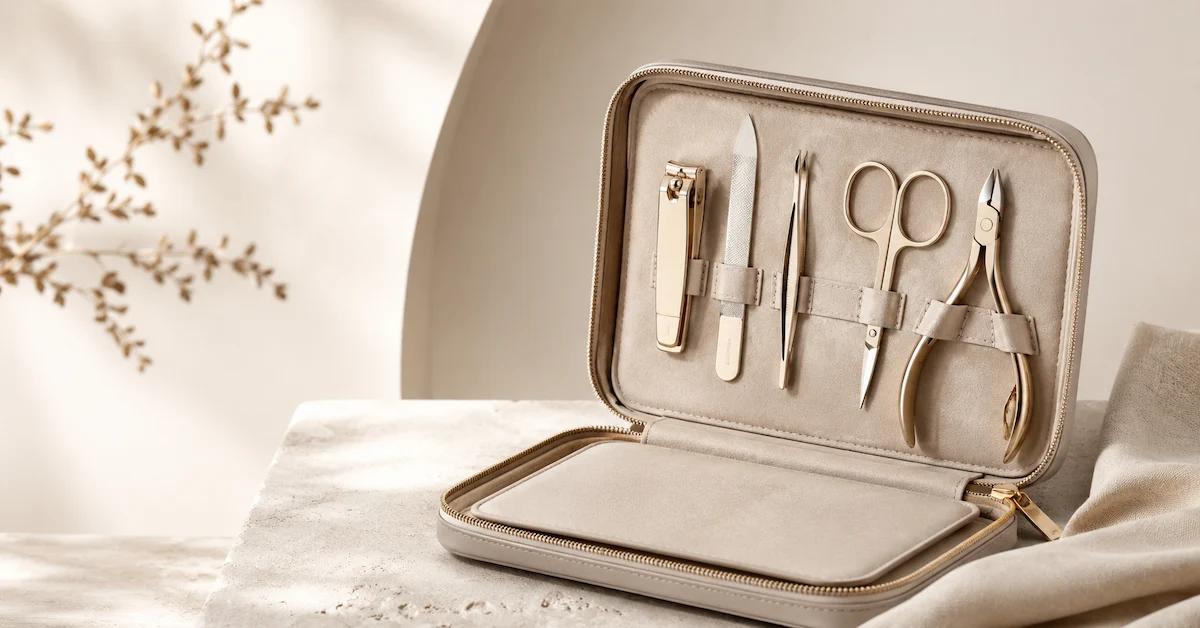
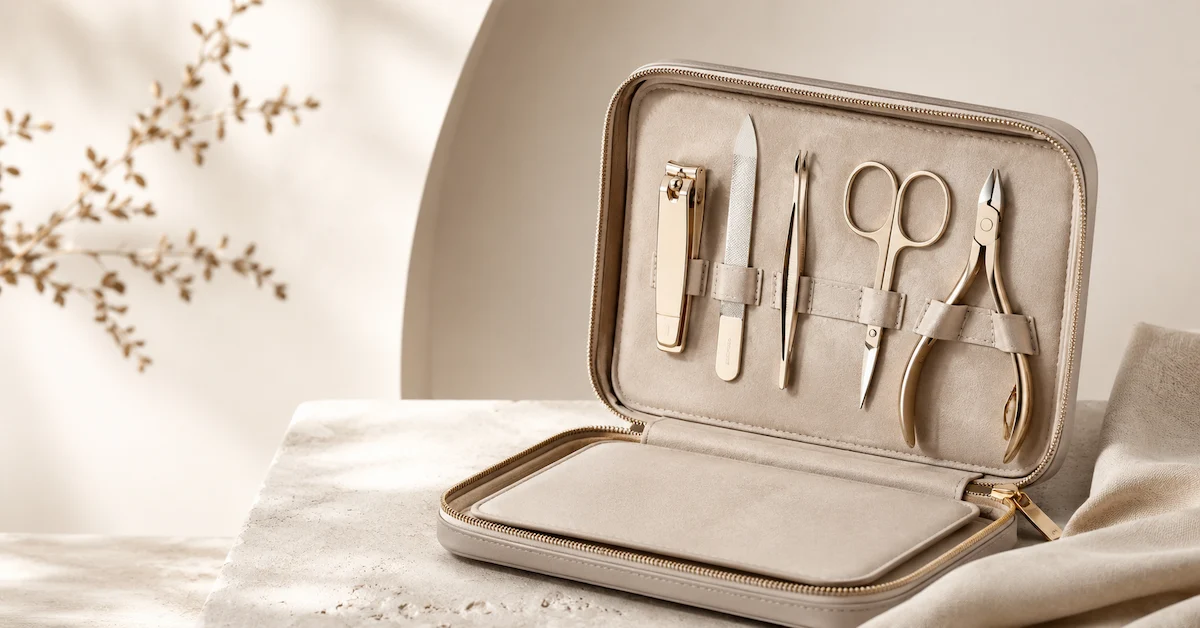
A private label grooming kit manufacturer develops multi-tool personal care sets for brands that want to sell grooming products under their own name. Depending on the selected products and project, cooperation may cover tool selection, kit configuration, branding, packaging, samples, production, inspection, and final assembly.
A grooming kit project is more complex than sourcing one nail clipper or one pair of tweezers because quality must be controlled at two levels:
1. Every individual tool must perform correctly.
2. The complete kit must be assembled, protected, branded, and packed correctly.
For B2B buyers, this means a good grooming kit manufacturer should help control more than appearance.Important project variables include:
- Tool combination
- Product specifications
- Functional performance
- Finish consistency
- Logo placement
- Case design
- Product fit
- Packaging
- Set completeness
- Repeat-order consistency
A successful private label grooming kit therefore combines:
Useful Tools + Consistent Quality + Brand Identity + Functional Packaging
Beauty and personal-care businesses can review the OLIMOR product portfolio when planning a single grooming product or a broader multi-tool collection.
Who Buys Private Label Grooming Kits?
Private label grooming kits can serve several B2B customer groups, but each buyer type has different priorities.
| Buyer Type | Main Requirement | Key Development Focus |
|---|---|---|
| Beauty brands | Product differentiation | Brand identity and coordinated tools |
| Personal care brands | Functional collections | Tool combination and usability |
| Ecommerce sellers | Strong product listing | Packaging, visual appeal,protection |
| Retailers | Shelf-ready products | Assortment, labels, consistency |
| Gift companies | High perceived value | Case and presentation |
| Distributors | Repeatable supply | Specifications and batch consistency |
| Travel brands | Compact solutions | Tool size and case efficiency |
| Private label companies | Scalable collections | Multi-SKU development |
A retailer may prioritize shelf presentation and barcode space,while an ecommerce brand may place more emphasis on shipping protection,close-up product photography, and customer reviews.
The right grooming kit should therefore be designed around the buyer's customer and sales channel rather than around the maximum number of tools available.
What Tools Can Be Included in a Private Label Grooming Kit?
A grooming kit can combine products from different personal-care categories. However, every tool should have a clear reason for being included.
Nail Care Tools
Common options include:
- Nail clippers
- Nail files
- Cuticle nippers
- Nail scissors
- Other manicure tools
These products can form the foundation of:
- Everyday grooming kits
- Travel kits
- Personal care sets
- Retail manicure collections
Brands interested in nail-related kits can also review OLIMOR's Nail Care Tools and Manicure Sets.
Precision Grooming Tools
Depending on the target market, a kit may also include:
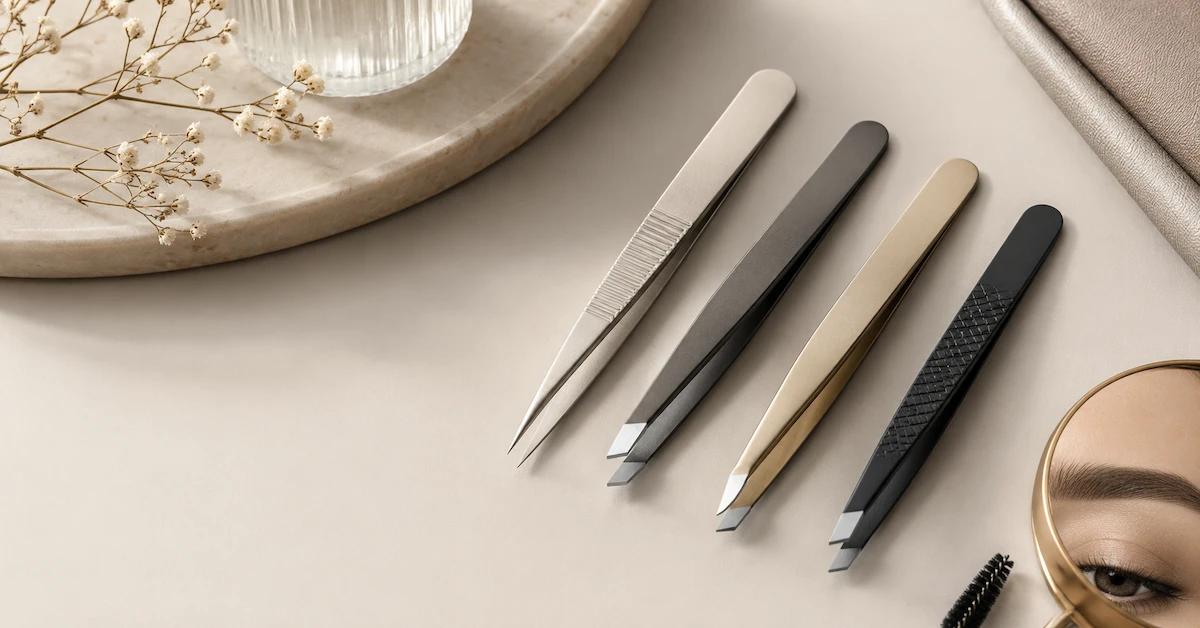
- Tweezers
- Beauty scissors
- Eyebrow razors
These products can support:
- Brow grooming kits
- Beauty accessory sets
- Precision grooming collections
- Salon-oriented product lines
Foot Care Tools
Larger personal-care collections may include foot-care products such as:
- Foot files
- Pedicure accessories
These are generally more suitable for home-care or broader grooming kits because they may require more packaging space than compact nail and brow tools.
Other Personal Care Tools
Depending on the intended use and product compatibility, broader personal-care projects may also consider:
- Tongue scrapers
- Facial tools
- Other grooming accessories
The goal should not be to mix unrelated products simply to increase the tool count.
How to Choose the Right Grooming Kit Combination
The strongest grooming kits are usually built around a clear use case.
Essential Grooming Kit
A simple kit may include:
- Nail clipper
- Nail file
- Tweezers
This format can work well for:
- Everyday personal care
- Retail
- Ecommerce
- Travel
Its main advantages are simplicity, compact size, and easy customer understanding.
Professional Grooming Kit
A more advanced kit may add:
- Cuticle nipper
- Precision tweezers
- Beauty scissors
This can suit:
- Premium personal-care brands
- Salon supply businesses
- Professional beauty channels
The quality standard is generally more demanding because precision tools require tighter functional control.
Travel Grooming Kit
A travel-oriented set should focus on:
- Compact tools
- Efficient case design
- Secure tool placement
- Lightweight packaging
- Clear essential functions
The buyer should avoid adding unnecessary products that make the kit bulky.
Gift Grooming Kit
A gift-oriented project may prioritize:
- Coordinated finishes
- Premium case
- Gift box
- Branded insert
- Strong presentation
In this case, packaging becomes a major part of the product's perceived value.
Brow and Personal Grooming Kit
A beauty-focused combination may include:
- Tweezers
- Eyebrow razor
- Beauty scissors
- Nail clipper
This approach can help brands create a product that sits between personal care and beauty accessories.
More Tools Do Not Automatically Create More Value
One of the most common kit-development mistakes is assuming:
More tools = a better grooming kit.
Adding unnecessary tools can increase:
- Product cost
- Sample complexity
- Packaging dimensions
- Inspection workload
- Inventory exposure
- Customer confusion
A better question is:
Does every tool solve a clear grooming need for the target customer?
For new brands, a focused three- to five-tool kit can sometimes be easier to position and manage than a large set with many overlapping functions.
Private Label Grooming Kit Customization Options
Private label development can happen at several levels.
Tool Combination
The buyer can define the intended collection around:
- Tool category
- Number of tools
- Use case
- Customer type
- Retail position
The exact combinations available should be confirmed according to the selected products.
Product Appearance
Depending on the product model and manufacturing process, appearance discussions may include:
- Polished finish
- Matte finish
- Metallic appearance
- Color options where applicable
A coordinated finish across several tools can help the complete kit look more intentional.
Logo Branding
Brand identity can potentially appear on:
- Individual tools
- Storage case
- Pouch
- Retail box
- Insert card
- Product label
Suitable branding methods depend on the product material, surface, available marking area, and selected model.
Actual logo appearance should be confirmed on samples rather than approved only from digital artwork.
Case Customization
The case is particularly important because it physically connects all tools into one finished product.
Possible directions may include:
- Zipper case
- Pouch
- Compact travel case
- Structured case
- Gift-oriented case
Specific formats and customization options should be confirmed for the actual project.
Outer Packaging
Outer packaging may include:
- Retail box
- Gift box
- Sleeve
- Product card
- Insert
- Label area
- Barcode space
The packaging concept should match the intended sales channel.
Why Multi-Tool QC Is More Complex Than Single-Product QC
A grooming kit may contain tools with completely different functional requirements.
A nail clipper, tweezer, nipper, nail file, and eyebrow razor cannot be inspected with one generic checklist.
| Tool | Critical Functional QC Point |
|---|---|
| Nail Clipper | Blade alignment and cutting action |
| Cuticle Nipper | Jaw alignment and spring response |
| Tweezers | Tip alignment,contact and tension |
| Nail Scissors | Blade contact and pivot movement |
| Nail File | Filing surface consistency |
| Eyebrow Razor | Assembly and finishing |
| Foot File | Filing surface and handle stability |
After individual tool inspection, the complete grooming kit must also be checked.
Kit-Level QC
Buyers should confirm:
- Correct number of tools
- Correct product models
- Correct finishes
- Tool placement
- Secure case fit
- Correct logo
- Correct packaging
- Set completeness
- Consistent final presentation
A grooming kit is only as strong as its weakest component. One poorly functioning tool can affect the customer's opinion of the entire set.
Grooming Kit Sample Approval Checklist
A complete sample should be evaluated as a finished retail product, not simply as several loose tools placed together.
| Approval Area | Buyer Should Confirm |
|---|---|
| Individual tools | Function and surface finish |
| Tool combination | Correct SKUs and quantity |
| Branding | Logo position and appearance |
| Case | Fit,closure and product protection |
| Tool placement | Secure and easy to remove |
| Packaging | Artwork and structural accuracy |
| Inserts/labels | Correct information |
| Overall presentation | Matches intended brand position |
Functional Approval
Test the relevant function of each tool.
Examples include:
- Nail clipper cutting action
- Nipper jaw movement
- Tweezer grip
- Scissor operation
- Nail file surface
Cosmetic Approval
Inspect:
- Scratches
- Finish consistency
- Color consistency where applicable
- Logo accuracy
- Visible defects
Kit-Level Approval
Confirm that:
- Every required tool is present
- Tools remain secure
- The case opens and closes correctly
- Packaging protects the product
- The overall set matches the intended retail position
Why Case Fit Matters
Case design can create problems even when every tool is individually acceptable.
If the Fit Is Too Loose
Tools may:
- Move during transport
- Rub against each other
- Create scratches
- Look disorganized when opened
If the Fit Is Too Tight
Customers may find tools:
- Difficult to remove
- Difficult to replace
- Uncomfortable to use with the case
Overly tight inserts may also create unnecessary pressure on products or packaging components.
A representative assembled sample is therefore important.
How a Private Label Grooming Kit Project Works
A controlled workflow can reduce project misunderstandings.
Step 1: Define the Target Market
Start with:
- Target customer
- Sales channel
- Price position
- Intended use
- Target region
A travel kit for ecommerce should not automatically use the same configuration as a premium retail gift set.
Step 2: Select Core Tools
Identify:
- Essential tools
- Optional tools
- Professional upgrades
Each tool should support the product concept.
Step 3: Confirm Kit Configuration
Define:
- Tool models
- Number of tools
- Finish
- Position inside the case
- Branding requirements
Step 4: Confirm Case and Packaging Direction
Case and outer packaging should be planned after the product combination is clear.
This helps avoid designing packaging that later does not fit the final product structure.
Step 5: Develop a Complete Sample Kit
The sample should represent:
- Tool combination
- Case
- Branding
- Packaging
- Layout
Step 6: Evaluate Every Tool and the Complete Set
Approval should cover:
Function + Cosmetic Quality + Branding + Case Fit + Packaging
Step 7: Establish the Approved Reference
Document:
- Tool list
- Tool models
- Quantity per set
- Finish
- Branding
- Case
- Packaging
- Critical QC points
Step 8: Bulk Production and Final Inspection
Bulk production should be evaluated against the approved requirements.
Specific MOQ, sampling time, production lead time, and commercial terms should be confirmed according to the actual tool combination, case, packaging, and customization level.
Private Label Grooming Kit vs Ready-Made Grooming Set
Both approaches have valid use cases.
| Factor | Private Label Grooming Kit | Ready-Made Grooming Set |
|---|---|---|
| Tool combination | Flexible | Fixed |
| Branding | Buyer-controlled | Limited |
| Case options | Custom/project-based | Standard |
| Packaging | Custom | Standard |
| Development work | More | Minimal |
| Launch speed | Slower | Faster |
| Differentiation | Higher | Lower |
| Best suited for | Long-term brand building | Market testing |
When Ready-Made Makes Sense
Ready-made sets can be useful for buyers who want to:
- Test demand
- Launch quickly
- Minimize development work
- Purchase existing configurations
When Private Label Makes More Sense
Private label is more useful when the buyer needs:
- Brand differentiation
- Custom tool combinations
- Branded case
- Custom packaging
- Repeatable specifications
- Long-term product development
What Affects the Cost of a Private Label Grooming Kit?
A grooming kit quotation depends on more than the number of tools.
Cost can vary according to:
- Number of tools
- Product type
- Product specification
- Finish
- Branding
- Case
- Outer packaging
- Quantity
- Inspection requirements
- Customization level
Why Grooming Kit Quotations Are Easy to Compare Incorrectly
Imagine two suppliers quoting a grooming kit.
Supplier A includes:
- Five tools
- Branded case
- Product logo
- Retail box
- Complete assembled kit
Supplier B includes:
- Four standard tools
- Basic pouch
- No outer packaging
The lower unit price does not necessarily represent the same product.
Buyers should compare:
Same Tool List + Same Finish + Same Branding + Same Case + Same Packaging + Same QC Scope
How to Choose a Private Label Grooming Kit Manufacturer
A multi-tool project requires broader capabilities than a simple single-SKU order.
1. Multi-Category Product Capability
The manufacturer should understand several relevant grooming categories rather than only one item.
2. Functional Product Knowledge
The supplier should be able to discuss why different tools require different QC, including:
- Blade alignment
- Jaw alignment
- Tip alignment
- Tension
- Filing consistency
3. Kit Assembly Understanding
The manufacturer should also consider:
- Tool combinations
- Set quantity
- Product placement
- Case fit
- Set completeness
4.Packaging Support
Ask about support for:
- Cases
- Pouches
- Boxes
- Inserts
- Retail presentation
5. Sample Process
A useful workflow should include:
Kit Requirement → Sample → Feedback → Revision → Approval
6. Multi-Level QC
The inspection process should cover both:
- Individual products
- Complete finished kit
7.Repeat-Order Consistency
For future orders, a supplier should be able to reference the approved:
- Tool list
- Product models
- Specifications
- Branding
- Case
- Packaging
8. Communication
Grooming kits involve many components, so specification communication is especially important.
The supplier should confirm:
- Tool list
- Finish
- Logo
- Placement
- Case
- Artwork
- Packaging
- QC requirements
before bulk production.
Common Private Label Grooming Kit Sourcing Risks
Adding Too Many Tools
An oversized kit increases costs and complexity without necessarily improving customer value.
Mixing Products Without a Clear Use Case
A random collection of grooming products may look less professional than a focused kit designed around a clear customer need.
Inspecting Only One or Two Tools
Every tool matters.
If four tools work well but the fifth performs poorly, the customer still experiences a poor kit.
Ignoring Case Fit
Tool movement or poor placement can damage the perceived quality of the product.
Finalizing Packaging Too Early
The tool combination should be stable before final packaging dimensions and insert structures are confirmed.
No Documented Tool List
A repeat order should clearly define the kit's bill of materials or tool list.
This may include:
- Tool model
- Quantity
- Finish
- Branding
- Position
- Packaging requirement
How to Increase the Commercial Value of a Grooming Kit
The strongest kit strategy starts with a use case.
Travel Grooming Kit
Focus on:
- Compact size
- Essential tools
- Efficient case
- Portable packaging
Professional Grooming Kit
Focus on:
- Precision tools
- Functional performance
- Reliable handling
- Practical storage
Gift Grooming Kit
Focus on:
- Coordinated appearance
- Premium presentation
- Attractive case
- Gift packaging
Retail Grooming Kit
Focus on:
- Clear tool functions
- Shelf-ready package
- Easy product communication
- Brand recognition
Consider Good-Better-Best Product Tiers
A brand can also build several levels of grooming kits.
Essential
Three or four core tools.
Premium
Additional precision tools and an upgraded case.
Gift
Premium tool combination with stronger presentation and outer packaging.
This strategy can help brands address different price points without creating completely unrelated products.
How OLIMOR Supports Private Label Grooming Kit Projects
OLIMOR BEAUTY's current product portfolio covers multiple categories relevant to grooming kit development, including:
- Nail Clippers
- Nippers
- Tweezers
- Beauty Scissors
- Eyebrow Razors
- Manicure Sets
- Foot Files
- Tongue Scrapers
- Facial Tools
- Nail Care Tools
- Nail Files
This allows B2B buyers to discuss either individual products or coordinated grooming collections.
Depending on the selected products and project, discussions can cover:
- Tool selection
- Kit configuration
- Private label branding
- Case and packaging requirements
- Sample confirmation
- Quality inspection
- Multi-product development
Explore the OLIMOR product portfolio, review OLIMOR Manicure Sets, or browse OLIMOR Nail Care Tools.
Buyers can also learn more about OLIMOR BEAUTY.
What Should Buyers Send for a Grooming Kit Quotation?
A detailed inquiry helps the manufacturer understand the complete project and prepare a more relevant response.
Include:
- Target grooming kit type
- Required tools
- Number of tools per set
- Estimated order quantity
- Target market
- Sales channel
- Preferred finishes
- Logo artwork
- Case requirements
- Outer packaging
- Sample requirements
- Critical QC points
- Delivery destination
Example Private Label Grooming Kit Inquiry
Project: Private label travel grooming kit
Tools: Nail clipper, nail file, tweezers,scissors and cuticle nipper
Target Market: US retail and ecommerce
Branding: Custom logo on case and packaging
Case: Compact travel case
Packaging: Retail-ready outer box
Quantity: Please quote according to our planned order volume
Sample: Complete assembled kit required before mass production
QC Focus: Tool function, finish consistency, set completeness, case fit and packaging protection
This type of inquiry gives the manufacturer enough information to discuss an actual project rather than reply only with a generic catalog and price range.
Brands with an active grooming kit project can send their requirements through the OLIMOR contact page.
FAQ About Private Label Grooming Kit Manufacturers
What is a private label grooming kit manufacturer?
A private label grooming kit manufacturer develops multi-tool personal care sets for businesses that sell products under their own brand and may support tool selection, kit configuration, branding, packaging, sampling, production, and quality inspection.
What tools can be included in a grooming kit?
Depending on the target market and supplier portfolio, grooming kits may include nail clippers, nail files, cuticle nippers, tweezers, scissors, eyebrow razors, foot-care tools, and other personal-care accessories.
Can I choose my own tool combination?
Yes, where the selected products and project support the required configuration. The tool list should be confirmed before case and packaging development.
Can each grooming tool carry my brand logo?
Potentially, depending on each tool's material, surface, size, and available branding process. Some projects may brand individual tools, while others focus branding on the case and packaging.
Can the grooming kit case be customized?
Depending on the project, buyers may discuss case type, appearance, logo, internal layout, and other requirements. Exact customization options should be confirmed with the manufacturer.
Can outer retail packaging be customized?
Yes, depending on project requirements. Potential formats include retail boxes, gift boxes, sleeves, inserts, labels, and other brand-oriented packaging.
How should I approve a grooming kit sample?
Inspect every tool individually for function and appearance, then inspect the complete set for tool count, placement, case fit, branding, packaging, and overall presentation.
How do manufacturers control quality across multiple tools?
Each tool category should have its own functional QC criteria. The finished kit should then receive an additional completeness, assembly, branding, case-fit, and packaging inspection.
What affects the cost of a private label grooming kit?
Major factors include the number and type of tools, specifications, finishes, branding, case, outer packaging, quantity, inspection requirements, and customization level.
What information should I provide when requesting a quote?
Provide the target kit type, required tool list, quantities, market, sales channel, finishes, logo requirements, case concept, packaging needs, sample requirements, critical QC expectations, and destination.
Conclusion
The right private label grooming kit manufacturer should help a brand control not only each individual tool but the complete product system:
- Tool selection
- Functional performance
- Finish consistency
- Branding
- Case fit
- Packaging
- Set completeness
- Repeat-order consistency
For beauty brands, personal care companies, retailers, ecommerce sellers, distributors, and gift businesses, a well-designed grooming kit can create more commercial value than a random collection of products.
The strongest projects start with a clear customer use case, select only relevant tools, approve a complete physical sample, and establish product-specific quality standards before bulk production.
Planning a private label grooming kit? Contact OLIMOR BEAUTY with your target tool list, number of tools per set, estimated quantities, branding requirements, case concept, packaging, target market, and critical QC expectations for a more specific project discussion.
Tag:
Related articles
- Beauty Tools Sourcing Guide
- Lash & Brow Tools
Tweezers for Eyrow Grooming Supplier: B2B Buying Guide for Beauty Brands
- Beauty Tools Sourcing Guide
- OEM & Private Label
Customized Beauty Tools for Brands: OEM & Private Label Product Development Guide
- Beauty Tools Sourcing Guide
- OEM & Private Label