

B2B Nail Clippers and Precision Grooming Tools for Beauty Buyers
For salons, beauty distributors, chain retailers, and private-label buyers, nail and precision grooming tools are small items with a large effect on customer trust. A clipper that cuts cleanly, feels stable in the hand, and holds up through repeated use is easier to sell, easier to reorder, and easier for professionals to recommend. When the tool is poorly selected, the problems are equally visible: rough cuts, uncomfortable handling, inconsistent packaging, and higher after-sale complaints.
Olimor Beauty supplies professional beauty tools for B2B purchasing needs, including nail clipper ODM options and precision grooming tools suitable for detailed work such as eyebrow trimming. This guide explains how to evaluate these products for wholesale, salon, retail, and custom-brand programs without relying on vague claims. It focuses on the practical details buyers can compare before building a product line or placing a repeat order.
What B2B Buyers Should Expect from Beauty Tool Supplies
B2B beauty supplies are different from one-off consumer purchases. A salon may care most about comfort during repeated appointments, while a distributor may prioritize consistent appearance across cartons, barcode-ready packaging, and fewer mixed-quality items. A private-label brand may need a tool that can be adapted to its visual identity without compromising function. The best purchasing decision starts with the use case, not only the price.
For nail clippers and precision grooming tools, buyers should review the tool as both a working instrument and a retail product. The cutting edge, handle shape, spring response, surface finish, packaging, and replacement planning all matter. A clipper may look attractive in a product photo, but its real value depends on how well it performs across many units and many users.
Olimor Beauty positions its offering for business customers who need dependable beauty tools rather than novelty items. Buyers reviewing beauty tool products should compare each option against the needs of their sales channel: professional use, retail resale, gift sets, grooming kits, or branded private-label programs.
Nail Clipper ODM: When Customization Makes Business Sense
Nail clipper ODM is useful when a buyer wants a product that matches a brand concept, sales channel, or specific market preference. ODM does not simply mean adding a logo. It can involve decisions about handle appearance, finish, packaging presentation, set configuration, and how the product will be positioned in a wider beauty or grooming range.
Before starting an ODM nail clipper project, define the commercial goal clearly. A salon chain may want a durable working tool for internal use. A distributor may want a retail-ready product with clear packaging and a universal design. A grooming brand may want a compact precision tool that fits into an eyebrow or facial-care category. Each goal leads to different priorities in design, quality control, and packaging.
- Target user: Decide whether the clipper is intended for salon technicians, retail consumers, men’s grooming, travel kits, or eyebrow detailing.
- Grip and control: Consider whether the handle needs a non-slip feel, a wider contact area, or a compact profile for fine grooming.
- Cutting task: Identify whether the tool is mainly for fingernails, toenails, fine hairs, eyebrow trimming, or multipurpose grooming.
- Brand presentation: Plan how the product will appear on shelf, online, or in a kit, including color direction and packaging expectations.
- Reorder consistency: Confirm how appearance, packaging details, and inspection standards will remain stable across repeat production.
For custom projects, the strongest outcomes come from early alignment. Instead of requesting a broad “premium clipper,” buyers should provide a short product brief with intended market, retail positioning, target user, preferred visual direction, and any compliance or packaging needs for their market.
Evaluating a Nail Clipper for Eyebrow and Precision Grooming
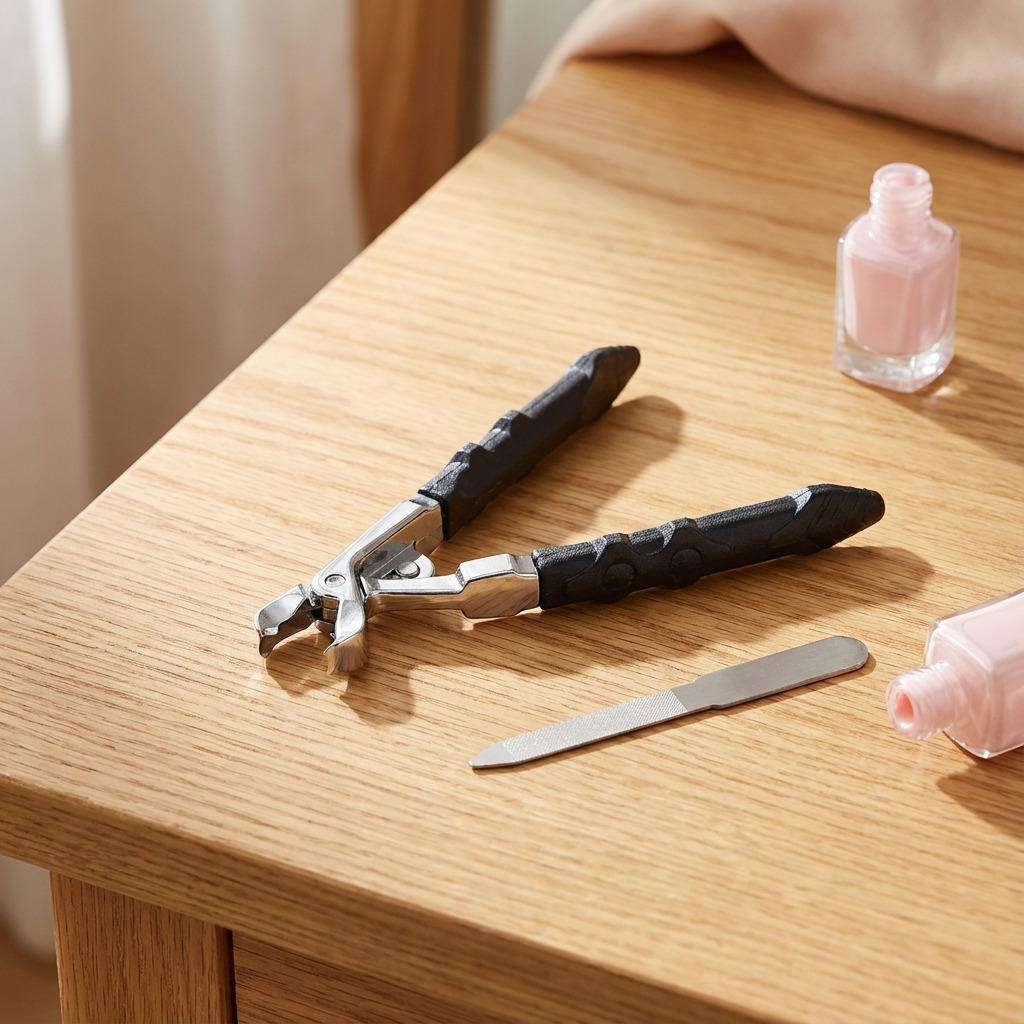
A nail clipper for eyebrow grooming is chosen for control and fine handling. The original product description highlights ergonomic, non-slip black handles and a spring mechanism designed for comfortable, controlled cuts. Those features are important because eyebrow and facial grooming require smaller movements than standard nail trimming. A tool that feels secure reduces the chance of over-cutting and helps users manage detailed areas more confidently.
When sourcing a precision grooming clipper, buyers should inspect how the tool behaves in the hand. Does the handle allow a steady pinch grip? Does the spring return smoothly? Is the cutting action controlled rather than abrupt? These questions are especially relevant for salons, brow studios, and retailers serving customers who value grooming accuracy.
For retail buyers, it is also important to communicate the product use clearly. If a tool is suitable for precision grooming, eyebrow trimming, or detailed nail work, the packaging and online listing should explain that use in plain language. Avoid making unsupported medical or treatment claims. Focus instead on control, handling, and appropriate grooming tasks.
Material, Build, and Inspection Points That Matter
The supplied product information states that Olimor Beauty nail clipper ODM manufacturing uses stainless steel for lasting sharpness and durability. Stainless steel is a common choice for beauty tools because it supports a clean appearance and practical daily use. However, B2B buyers should not stop at the material name. They should also review construction, surface finish, cutting alignment, and unit-to-unit consistency.
A practical inspection plan helps buyers separate acceptable samples from risky products. This is especially important when the same item will be sold under a brand name or distributed to multiple retail customers. A single sample can show design direction, but multiple units are needed to understand consistency.
| Inspection area | What to check | Why it matters |
|---|---|---|
| Cutting edge | Clean alignment, no obvious gaps, smooth closing action | Supports precise cutting and reduces pulling or crushing |
| Handle grip | Stable feel, comfortable leverage, non-slip surface where applicable | Improves control during repeated salon or personal use |
| Spring mechanism | Consistent rebound and no loose or harsh movement | Helps reduce hand fatigue and supports controlled trimming |
| Surface finish | No sharp burrs, visible defects, stains, or uneven coating | Affects safety perception and retail presentation |
| Packaging | Correct labeling space, protective structure, consistent appearance | Reduces transit issues and supports brand credibility |
This type of checklist is useful for salon procurement teams, wholesalers, and private-label buyers. It creates a shared standard for sample approval and repeat-order review without requiring exaggerated product claims.
How Salons, Distributors, and Retailers Use These Tools Differently
The same nail clipper can have different value depending on the buyer. A salon may purchase tools for service stations, where repeated use and comfortable handling are the top priorities. A distributor may need a balanced product that can serve many retailers without being too niche. A private-label brand may need the tool to fit a visual identity and sit naturally beside other grooming products.
For salons, the most relevant questions are: does the clipper feel stable during longer work periods, is it easy to clean according to the salon’s internal hygiene process, and does the tool support consistent service quality? For distributors, questions shift toward carton consistency, packaging durability, and whether the product can be explained easily to downstream customers. For retailers, the focus is often on shelf appeal, product education, and whether the tool solves a clear grooming need.
Buyers building a broader range can review Olimor Beauty product collections to think about assortment planning. A precision eyebrow clipper may work well as a single SKU, but it can also be paired with other nail or grooming tools when the product story is clear and the quality level is consistent.
Sourcing Questions to Settle Before Ordering
A smooth B2B beauty supply order depends on more than product interest. Buyers should prepare questions that clarify design, quality, packaging, documentation, and reorder expectations. The goal is not to slow down the process, but to prevent misunderstandings that become expensive later.
- Define the sales channel. Confirm whether the product is for salon professional use, wholesale distribution, e-commerce retail, private label, or kits.
- Confirm the exact grooming purpose. Decide whether the tool will be marketed for nails, eyebrow trimming, fine hair grooming, or multi-use precision tasks.
- Review samples carefully. Test grip, spring feel, cutting action, finish, and packaging appearance across more than one unit when possible.
- Prepare branding requirements. Provide logo files, packaging text, color references, and market labeling needs early in the ODM process.
- Set inspection expectations. Agree on the key points that must remain consistent, such as edge alignment, handle finish, and packaging condition.
- Plan reorders. Keep approved samples, artwork, and specifications organized so future orders match the accepted standard.
If your team is comparing tools for a wholesale program or a custom project, you can send an inquiry with your intended use, target market, and packaging requirements. For broader purchasing discussions or questions about available options, you may also contact Olimor.
Maintenance and Presentation for Long-Term Customer Satisfaction
Even a well-made beauty tool benefits from proper care. For professional environments, cleaning and storage routines should follow the business’s hygiene policies and local requirements. For retail customers, product instructions should be simple and realistic: keep the tool dry after cleaning, store it safely, avoid dropping it on hard surfaces, and use it only for suitable grooming tasks.
Clear presentation also reduces customer confusion. If a clipper has a spring mechanism, non-slip black handles, or a precision grooming purpose, those points should be shown in product descriptions and packaging without overstatement. Buyers should avoid broad promises and focus on observable benefits: controlled cutting, comfortable handling, durable stainless steel construction, and suitability for detailed grooming.
For B2B buyers, the strongest beauty tool programs are built on repeatable quality and clear product positioning. Olimor Beauty’s B2B beauty supplies, nail clipper ODM services, and eyebrow precision grooming tools can support salons, distributors, and private-label brands that evaluate products carefully and communicate their requirements clearly. The right tool is not just the one that looks good in a catalog; it is the one that performs reliably, matches the channel, and gives end users a confident grooming experience.
Tag: