

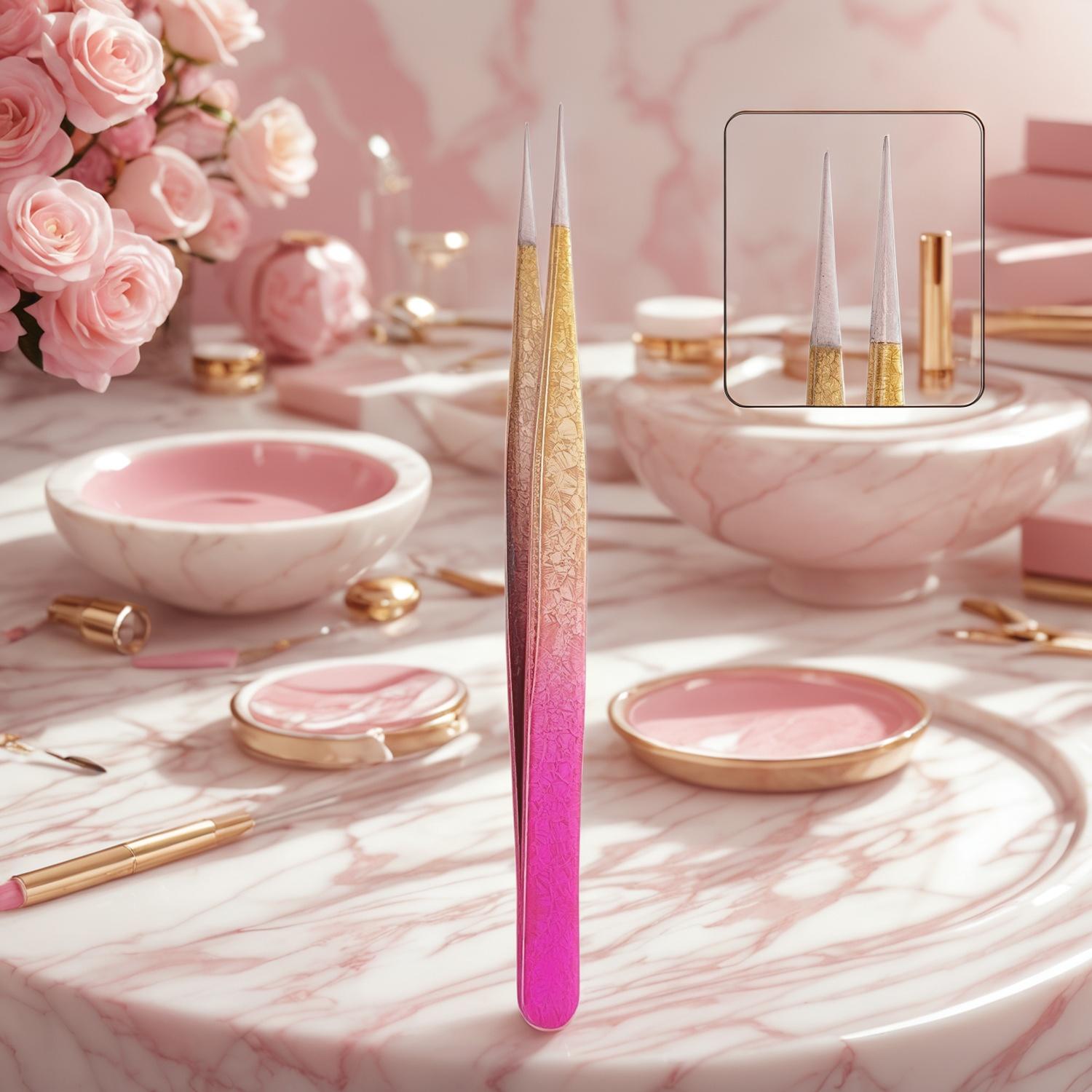
False Lash Tweezers for Controlled Professional Application
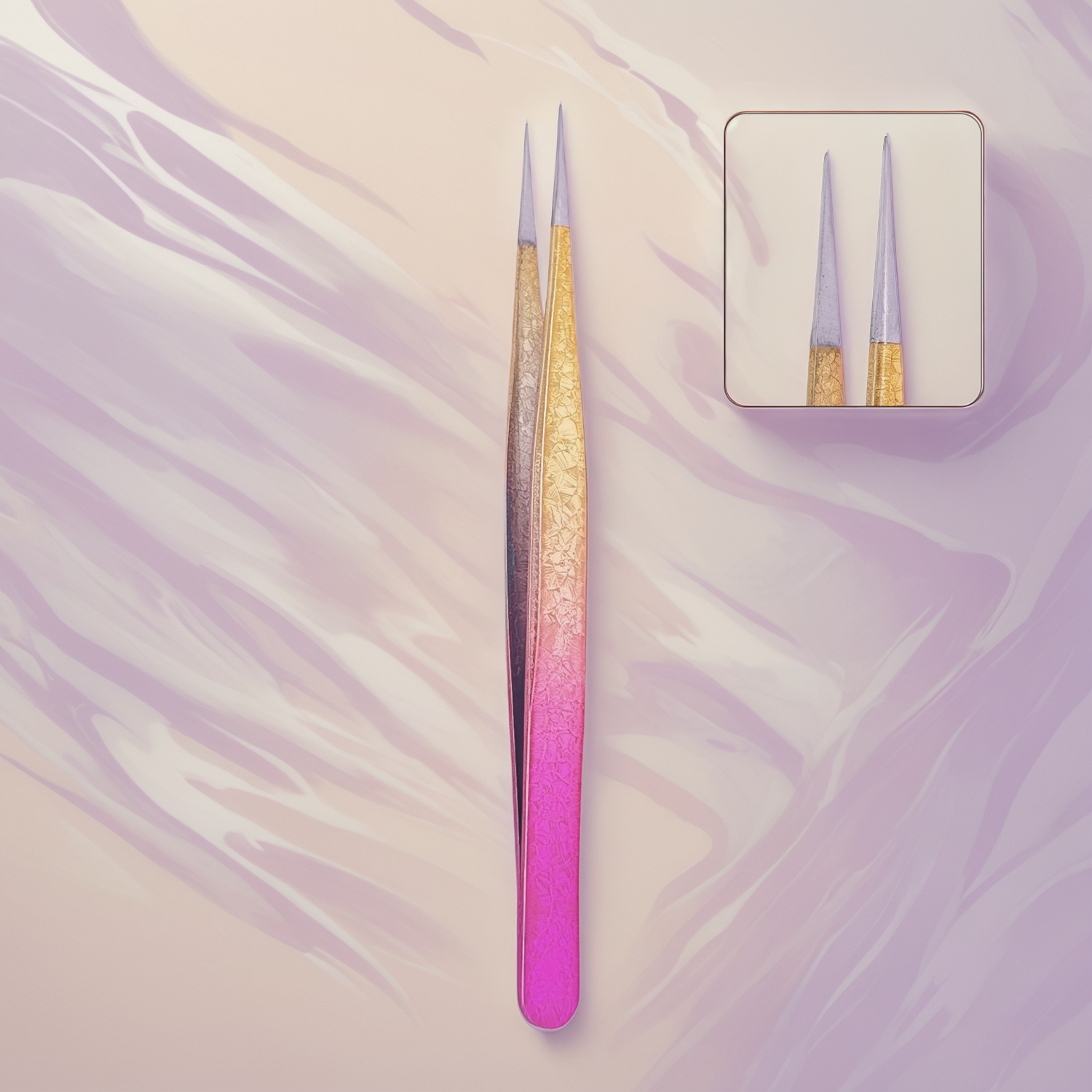
False lash tweezers are precision beauty tools designed to lift, position, adjust and release lash strips or smaller lash sections without crushing the band or blocking the lash line. For salons, retailers, lash technicians and private label beauty buyers, the right tweezer affects application control, user confidence, kit value and the perceived quality of the finished beauty assortment.
Unlike general grooming tweezers, lash application tweezers must handle lightweight synthetic fibers and flexible lash bands with controlled pressure. A useful tool should grip securely, align cleanly, feel stable in the hand and allow the user to see the placement area. Olimor Beauty offers false lash tweezer designs with stainless steel construction, fine or curved tips, textured grip areas and a fuchsia-to-gold gradient finish, making them relevant for both professional use and retail presentation.
Why False Lash Tweezers Are Different from General Tweezers
General tweezers are often selected for firm hair removal. Their edges, tip pressure and shape may be suitable for gripping individual hairs, but false lash work requires a different type of control. The tool must hold a lash band gently enough to avoid creasing or damaging it, while remaining secure enough that the strip does not twist during placement.
False lash application usually happens close to the eye, where visibility and controlled motion matter. Fingers can block the lash line and apply uneven pressure. A well-designed lash tweezer creates a smaller, more precise contact point between the hand and the lash band. This makes it easier to place the center of the lash first, then adjust the inner and outer corners before the adhesive fully sets.
For B2B buyers, this distinction matters because a poor tool can create complaints even when the lash style or adhesive is not the real problem. If the tweezer slips, feels stiff or hides the working area, users may experience more corrections and less consistent results. A better-matched tool helps support cleaner application, especially in kits intended for beginners, salons or beauty demonstrations.
Core Features Buyers Should Evaluate
The best false lash tweezer for a product line is not always the most decorative option. Visual finish can help retail appeal, but performance depends on tip shape, alignment, grip, spring tension, surface finish and packaging protection. Buyers should compare samples using actual lash bands rather than judging only from photographs.
Tip Precision and Alignment
Tip precision is the first performance checkpoint. Fine tips help the user reach close to the lash line without covering the view. The tips should meet evenly when closed, with no obvious crossing, gap or uneven contact. If alignment is inconsistent, a lash band may slide at the moment the user is trying to set the inner or outer corner.
Olimor lash tweezer options described in the supplied product information include ultra-fine tips and dual-curved stainless steel tips. Ultra-fine tips are useful for gripping delicate lashes and making small adjustments. Curved or dual-curved tips can improve the approach angle, helping the user guide the lash into position while keeping a clearer view of the eyelid.
Curved Tip Geometry
Curved tips can be especially helpful for strip lashes because the shape can support the curve of the lash band and reduce the need to bend the wrist. A more natural hand position matters during repeated applications, such as in a salon station or retail demonstration setting. The curve should assist placement without making the tool difficult to clean or package safely.
When comparing curved lash tweezers for false lash application, buyers should test how the tool behaves during pickup, center placement and corner adjustment. A curve that looks attractive may not be practical if it blocks visibility or makes release difficult. The best evaluation is hands-on testing with the lash formats the buyer intends to sell.
Stainless Steel Construction
Stainless steel is commonly used in beauty tools because it offers a firm structure and is easier to clean than porous materials. In false lash tweezers, the material must support controlled opening and closing while maintaining tip alignment. The supplied Olimor designs are described with stainless steel construction, including high-grade stainless steel in one product description and stainless steel tips in another.
Buyers should avoid assuming that all stainless steel tools perform the same. Inspection should include surface smoothness, edge finishing, tip contact and resistance to visible roughness at the gripping area. Any rough contact point can snag lash fibers, mark delicate bands or collect adhesive residue.
Textured Grip and Hand Comfort
A textured handle helps reduce slipping during application. This is practical because lash placement often happens after skincare or makeup steps, when fingers may have traces of cream, primer or cosmetic residue. A slippery handle can force the user to squeeze harder, reducing fine control at the tips.
Good texture should feel stable without being sharp or uncomfortable. Buyers should open and close the tweezer repeatedly to check whether the tension feels controlled rather than stiff or loose. For salons and lash professionals, hand comfort affects repetitive use. For consumer kits, a stable grip can reduce hesitation and help beginners feel more confident.
Gradient Finish and Retail Presentation
A fuchsia-to-gold or gold-to-fuchsia gradient finish can make a lash tweezer more attractive in retail kits, giftable beauty sets and private label assortments. Decorative appearance should not compromise handling, cleanability or tip protection. The finish should appear even and clean, with no obvious rough areas where the hand grips the tool or where adhesive could build up.
For buyers building coordinated beauty-tool assortments, appearance can be part of the commercial decision. A distinctive finish may help the tweezer align with lash kits, makeup accessories or salon tools. Buyers can review related options through Olimor beauty tool products when planning a broader false lash or brow category.
Comparison Table: What to Check Before Choosing a Lash Tweezer
| Selection Factor | Why It Matters | What Buyers Should Check |
|---|---|---|
| Tip alignment | Even contact helps prevent the lash band from slipping during placement. | Close the tips on multiple samples and look for gaps, crossing or uneven pressure. |
| Tip smoothness | Rough edges can snag fibers or mark delicate bands. | Test on actual lash bands and inspect the contact area for sharp or unfinished edges. |
| Curved or fine tip shape | Tip geometry affects visibility, approach angle and corner adjustment. | Simulate pickup, center placement, inner corner adjustment and outer corner adjustment. |
| Stainless steel structure | The tool needs stable tension and durable handling for repeated use. | Review material description, surface finish and consistency across samples. |
| Textured grip | A stable handle reduces slipping and excessive squeezing. | Hold the tool with dry hands and lightly damp or gloved hands where relevant. |
| Decorative finish | Finish supports retail appeal and coordinated kit design. | Check color consistency, rough areas and whether the finish affects comfort or cleaning. |
| Packaging fit | Fine tips can be damaged if packaging does not protect them. | Confirm the tool sits securely in trays, pouches or kits without tip movement. |
How to Use Precision Lash Tweezers for Cleaner Results
Even a well-made lash tweezer works best with a careful process. The goal is to hold the lash band securely while keeping the adhesive area clean and visible. This process is useful for retail education, salon training and product instructions included with lash kits.
- Check the lash fit first. Place the lash strip near the eye to confirm the length and shape before applying adhesive.
- Grip the band, not the fibers. Hold near the center of the lash band to avoid bending the lash style or pulling fibers out of alignment.
- Apply adhesive carefully. Use the adhesive according to its own instructions and allow the appropriate tackiness before placement.
- Place the center first. Guide the middle of the lash close to the natural lash line, using the tweezer shape to keep visibility open.
- Adjust the corners. Set the outer and inner corners before the adhesive fully sets, using small controlled movements.
- Release gently. Open the tweezer slowly so the lash band stays in place instead of lifting with the tool.
- Check balance. Compare both eyes from the front and from a slightly downward angle to confirm the lash direction is even.
Common application problems often relate to timing and control. If adhesive is too wet, the lash may slide. If it is too dry, the band may not settle smoothly. A stable tweezer cannot replace correct adhesive use, but it can help the user make small adjustments with less disruption.
B2B Use Cases: Retail Kits, Salons and Private Label Lines
Different buyers evaluate false lash tweezers for different commercial reasons. A salon owner may prioritize repeat handling, grip security and cleaning access. A retailer may focus on visual appeal, packaging fit and beginner-friendly use. A private label buyer may need a style that works across several lash formats without creating too many separate SKUs.
Retail Beauty Kits
In a retail lash kit, the tweezer contributes to the customer’s first impression. A gradient finish can help the tool feel more polished and giftable, while a fine or curved tip gives the kit practical value. Packaging should protect the tips so the customer receives a usable precision tool rather than a decorative accessory with bent or misaligned ends.
Salon and Demonstration Stations
For salon stations, daily handling matters more than appearance alone. Lash artists and sales staff need a tool that feels steady through repeated opening and closing. Textured grip, controlled tension and smooth tip contact are important because the user may be applying or demonstrating lashes multiple times in a day.
Private Label and Distributor Assortments
For private label beauty buyers and distributors, a false lash tweezer should be evaluated as part of the full assortment. It may be paired with strip lashes, lash applicators, brow tools or cosmetic accessories. Buyers can browse Olimor product collections to consider how finishes, categories and packaging concepts can align across a wider beauty-tool line.
Quality Inspection Questions for Lash Tweezer Sourcing
Small beauty tools can vary if alignment, finishing and packaging are not checked consistently. Olimor Beauty applies internal quality control from raw material inspection through final packaging. For buyers comparing finished products or ODM possibilities, sample review should include both visual inspection and practical handling tests.
- Do the tips meet evenly across multiple samples, not only one selected sample?
- Does the tip grip a lash band securely without cutting, creasing or sliding?
- Is the textured grip consistent and comfortable during repeated use?
- Does the spring tension feel controlled rather than stiff or loose?
- Is the gradient finish even, clean and free from rough areas that affect handling?
- Can adhesive residue be removed from the tip area after use?
- Does the tool fit securely in the intended tray, pouch or kit?
- Are the tips protected well enough to avoid bending during packing and transport?
- Are inspection steps defined for raw materials, semi-finished goods and final packaging?
For supplier evaluation, buyers may also ask how quality requirements are documented, what acceptance criteria are used for alignment and finish, and how nonconforming pieces are handled. Where a buyer requires a formal quality framework or restricted-substance documentation, public references such as ISO 9001 quality management principles or EU REACH requirements may be relevant depending on market and product scope. Buyers should verify the applicable version, regional obligations and supplier documentation directly. This article does not claim that Olimor holds any certification unless it is separately documented by Olimor.
Cost Factors Without Guesswork
False lash tweezer cost depends on practical product and sourcing choices rather than a single universal price. Buyers should avoid comparing quotes only by unit price because the lowest-cost option may create higher risk if the tips are inconsistent, the finish is weak or the packaging does not protect the tool.
Common cost factors include material selection, tip complexity, handle texture, decorative finish, packaging format, inspection requirements, customization needs and order structure. A dual-curved stainless steel tip may require different forming and finishing attention than a simpler tweezer. A gradient finish can add presentation value but should be reviewed for consistency. Custom packaging or private label presentation may also affect quotation scope.
For accurate commercial comparison, buyers should request samples, confirm the intended use case and align on inspection expectations before finalizing a sourcing decision. Olimor buyers can start a project discussion through the product inquiry page when they need to compare lash tweezer options for kits, retail programs or professional supply channels.
Cleaning, Storage and Maintenance Considerations
Maintenance affects long-term usability. Adhesive residue left on the tips can reduce grip precision and may transfer to the next lash band. Users should remove residue according to the adhesive and tool-care instructions suitable for the product. The tool should be dried and stored so the fine tips are protected from impact or pressure.
For retail kits, it is useful to include simple care guidance. For salons, cleaning routines should align with local hygiene expectations and the salon’s own procedures. Stainless steel construction can support easier cleaning than porous materials, but buyers should still confirm whether any decorative finish, grip texture or packaging component has special care requirements.
How to Choose the Right Olimor Lash Tweezer Option
The right choice depends on the buyer’s primary channel and user profile. For beginner-focused lash kits, prioritize a stable grip, clear visibility and protected packaging. For professional or salon use, focus on tip alignment, hand comfort and repeat handling. For giftable retail assortments, balance performance with a finish that looks attractive in the package.
Olimor false lash tweezer designs bring together functional details from the supplied product information: stainless steel construction, fine or dual-curved tips, textured handle areas and a fuchsia-to-gold gradient finish. These features are relevant for buyers who want a beauty tool that can support controlled application while still looking suitable for retail sets and branded assortments.
To evaluate the best match, request samples, test with the lash styles you intend to sell, review packaging fit and clarify quality-check expectations before placing a commercial order. For direct support with product selection or customization discussions, buyers can contact Olimor with their intended market, packaging plan and application requirements.
FAQ
Can buyers request samples before ordering false lash tweezers?
Sample review is recommended for lash tweezers because tip alignment, grip feel and packaging fit are best evaluated by hand. Buyers should contact Olimor to discuss sample availability and the specific tweezer style they want to test.
Does Olimor provide customization for lash tweezer projects?
Customization may depend on the project scope, product style, finish, packaging and order requirements. Buyers should share their target channel, branding plan and packaging concept so Olimor can confirm what is feasible.
What MOQ applies to false lash tweezers?
MOQ can vary by product configuration, customization level and packaging requirements. Buyers should request the current MOQ directly from Olimor rather than relying on a generic figure.
What quality checks should be confirmed before purchase?
Key checks include tip alignment, tip smoothness, grip texture, spring tension, surface finish, cleaning access and packaging protection. B2B buyers should also confirm how raw material, in-process and final packaging inspections are handled.
How long does production or delivery take?
Lead time depends on order details, customization, packaging and production schedule. Buyers should confirm timing with Olimor during quotation and sample approval so launch planning is based on current project information.
Tag: