

How to Choose a Nail Clippers Supplier for OEM Personal Care Tools
Finding the right nail clippers supplier is not only about ordering a common grooming item at a competitive cost. For salons, personal care brands, gift suppliers, wholesalers and grooming product distributors, nail clippers affect how customers judge the quality of an entire range. A clipper that feels uncomfortable, loses sharpness quickly or leaves a rough nail edge can damage repeat sales, even if the packaging looks attractive.
A strong supplier should help you balance function, finish, consistency and customization. The best sourcing decision usually comes from looking beyond a product photo and comparing how the tool is designed, manufactured, checked and prepared for bulk delivery. If you are building an OEM personal care line or adding nail care tools to an existing assortment, the following criteria can help you make a more reliable choice.
What a Nail Clippers Supplier Should Prove Before a Bulk Order
Before discussing branding or packaging, confirm that the supplier understands the practical performance requirements of nail clippers. A durable nail clipper should cut smoothly, align cleanly and remain comfortable through repeated use. Small differences in blade angle, lever strength, edge finishing and hinge assembly can change the user experience significantly.
When comparing suppliers, pay attention to evidence of process control rather than broad claims. A responsible supplier should be able to describe how products are inspected, how surface finish is handled and how consistency is maintained during production. This is especially important when you are ordering in volume for retail, salon use or promotional distribution.
- Cutting alignment: The upper and lower cutting edges should meet evenly without visible gaps or twisting.
- Lever action: The lever should press smoothly and return without sticking, wobbling or feeling loose.
- Edge finish: The cutting edge should feel precise enough for clean trimming but not unsafe to handle during normal use.
- Hand comfort: The body and lever should avoid sharp corners that make longer salon or grooming use uncomfortable.
- Batch consistency: Samples should represent the intended production standard, not a one-off polished display item.
Olimor Beauty focuses on beauty and personal care tool supply, and buyers can compare related categories through the beauty tool products page when building a broader grooming assortment.
Why Durability Matters More Than Decoration
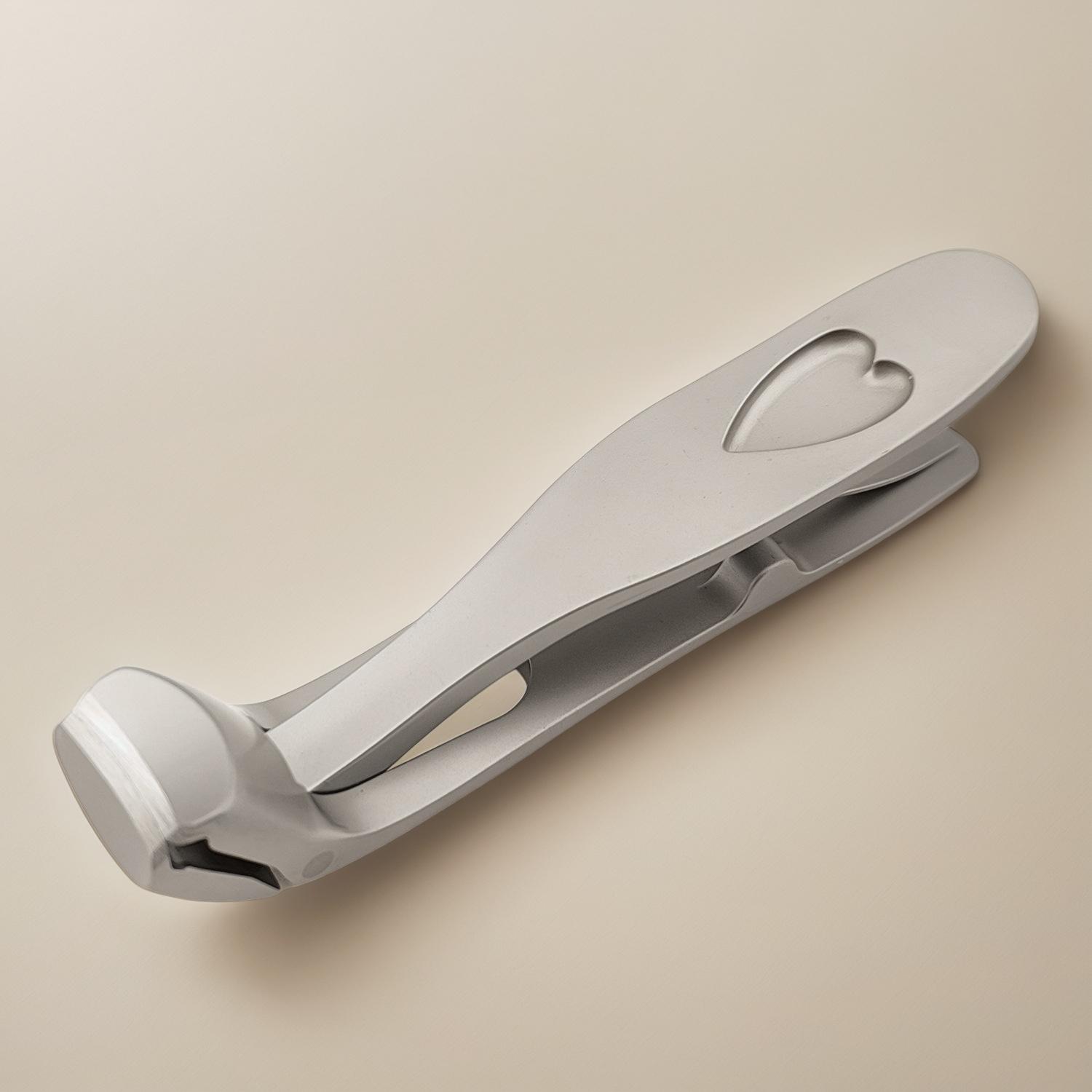
Decoration can help a nail clipper stand out, but durability is what keeps customers satisfied after purchase. A clipper may have a fashionable shape, a polished surface or a detail such as an elegant heart accent, yet it still needs to perform reliably. Bulk buyers should treat appearance as one part of the product decision, not the full decision.
Durable nail care tools support long-term value in several ways. For salons, consistent performance reduces interruptions during service. For distributors, fewer complaints and returns protect margins. For private label brands, a reliable clipper can encourage customers to trust other items in the same personal care range.
One useful way to judge durability is to think about the whole user journey. The customer opens the package, holds the clipper, trims fingernails or toenails, wipes it clean, stores it and uses it again weeks later. Each step tests a different aspect of quality: surface feel, grip, cutting force, corrosion resistance, assembly stability and ease of cleaning. A supplier that only focuses on first impression may miss problems that appear after repeated use.
If you are evaluating a design similar in intent to the Artisanal Edge Nail Clipper mentioned in existing Olimor Beauty product communication, look carefully at both the decorative detail and the basic mechanical parts. A well-made personal grooming tool should not ask customers to choose between visual appeal and practical cutting performance.
OEM Options for Personal Care Brands
OEM sourcing is valuable when you want nail clippers that fit a specific market position. A salon supply brand may prefer a clean professional appearance. A travel grooming kit may need a compact profile. A gift-focused assortment may emphasize surface finish, color direction or decorative details. The role of an OEM personal care tools supplier is to help translate those needs into manufacturable choices.
Useful OEM discussions often include shape, finish, logo placement, packaging format and assortment planning. However, these choices should be reviewed together with function. For example, a distinctive lever shape should still be comfortable to press. A special finish should not make the tool slippery in the hand. Compact packaging should protect the product during transportation.
| OEM decision | Why it matters | Buyer checkpoint |
|---|---|---|
| Body shape | Affects grip, storage and perceived quality | Check hand comfort and stability during cutting |
| Surface finish | Influences appearance and corrosion resistance expectations | Review finish consistency across samples |
| Logo or decoration | Supports brand recognition | Confirm placement does not interfere with handling |
| Packaging | Protects the item and communicates retail value | Assess both presentation and transport protection |
| Assortment fit | Helps the clipper match other grooming tools | Compare with files, scissors, tweezers or kit items |
Buyers planning a coordinated personal care line can also browse Olimor Beauty product collections to think about how nail clippers may sit alongside other grooming and beauty tools.
Inspection Criteria for Samples and Pre-Production Approval
Sample approval is one of the most important stages in nail clipper sourcing. A sample should be tested as a working tool, not only photographed or viewed in a showroom. If several people on your team will assess the sample, give them a simple checklist so feedback is consistent.
- Open and close the lever repeatedly. Listen for unusual noise and feel for uneven movement.
- Inspect the cutting edges under good light. Look for chips, visible gaps, burrs or poor alignment.
- Test on appropriate nail material. The clipper should cut cleanly rather than crush, split or require excessive force.
- Check the surface and edges. The user should not feel rough seams, sharp unfinished corners or unstable parts.
- Review packaging with the product inside. Confirm the clipper is held securely and protected from scratches.
- Compare several samples if available. Consistency matters more than one perfect item.
For OEM orders, keep an approved reference sample and written specifications. This makes later communication clearer and reduces the risk of subjective disagreement about finish, feel or packaging. If your order involves customized decorative features, record the approved position, size and appearance so the production version can be evaluated against the same standard.
Questions to Clarify With a Potential Supplier
A good sourcing conversation is specific. Instead of asking whether the clipper is “high quality,” ask questions that reveal how the supplier controls quality. You do not need to know every manufacturing detail, but you should understand the decision points that affect your customers.
- What sample options are available for reviewing shape, finish and cutting performance?
- How are cutting alignment and lever movement checked before packing?
- Which parts of the clipper can be customized for an OEM project?
- How will decoration or logo placement be protected during production and packing?
- What packaging choices are suitable for retail display, salon supply or grooming kits?
- How should the product be cleaned and stored by end users?
- What information should be included on packaging or instructions for safe normal use?
These questions help separate a supplier that simply sells a catalog item from one that can support a personal care brand. If your project requires direct discussion about product direction, packaging or sample review, you can contact Olimor or send an inquiry with your intended use, target market and customization goals.
Matching Nail Clippers to Your Sales Channel
Different buyers need different clipper priorities. A salon purchasing for professional use may value handling comfort and dependable cutting above decorative detail. A retail brand may need a balance of function, packaging appeal and shelf-ready presentation. A travel kit supplier may prioritize compactness and secure packaging. Promotional buyers may focus on simple branding, but they still need a tool that works well enough to protect the reputation of the campaign.
For e-commerce, product consistency is especially important because reviews can quickly highlight issues such as dull edges, weak levers or poor finishing. If selling online, prepare accurate product photos and practical descriptions that do not overpromise. Customers appreciate clear information about intended use, care and storage. Avoid presenting a nail clipper as suitable for every possible grooming need if the design is aimed mainly at standard fingernail trimming.
For physical retail, packaging plays a larger role. The buyer may see the tool before touching it, so the package must communicate quality while keeping the item secure. Transparent packaging, hang cards, boxes or grooming kit formats can each work depending on the sales environment. The best choice is the one that protects the clipper, fits your brand position and makes the product easy to display.
Care and Maintenance Guidance Adds Value
Even a durable nail clipper performs better when users care for it properly. Including simple care guidance on packaging, inserts or product pages can reduce misuse and improve satisfaction. Recommend that users keep the clipper dry, wipe it after use and store it in a clean place. If the clipper is shared in a salon or professional setting, cleaning practices should follow the applicable hygiene requirements of that environment.
Maintenance guidance does not need to be complicated. The key is to help customers understand that nail clippers are precision personal care tools, not disposable accessories. Clear after-use instructions also support a more professional brand image, particularly for OEM personal care tools sold as part of a premium grooming assortment.
Building a Better Nail Care Tool Supply Plan
The right nail clippers supplier should help you deliver products that look appropriate for your market and perform reliably in everyday use. Focus on cutting alignment, lever feel, surface finishing, sample consistency, packaging protection and realistic OEM customization. Decorative details can make a design more memorable, but they should support the tool’s usability rather than distract from it.
For salons, distributors and personal care brands, sourcing nail clippers is a small decision with a large impact on customer trust. A careful selection process helps you avoid weak tools, inconsistent batches and packaging that does not fit the sales channel. By evaluating both the mechanical quality and the brand presentation, you can choose durable nail care tools that make sense for your customers and your business model.
Tag: