


Nail Clipper Quality Assurance: What Makes a Reliable Grooming Tool
Nail clippers look simple, but small differences in blade alignment, leverage, finishing, and inspection can decide whether a tool cuts cleanly or causes splitting, snagging, and discomfort. For retailers, salons, distributors, and private-label beauty buyers, nail clipper quality assurance is not just a production formality. It is the system that protects user safety, reduces returns, and keeps grooming tools consistent from one shipment to the next.
A dependable nail clipper should feel controlled in the hand, meet the nail cleanly, and produce a smooth cut without excessive pressure. The original product focus for Olimor Beauty highlights stainless steel clippers, inspection protocols, and quality control across the production process. This guide explains what those ideas mean in practical buying terms, how to evaluate a nail clipper before purchase, and which questions help identify a reliable supply partner.
Why Nail Clipper Quality Assurance Matters
Quality assurance matters because nail clippers interact directly with hard keratin, surrounding skin, and sometimes sensitive areas around the nail edge. A dull or poorly aligned clipper can crush the nail rather than cut it. A rough edge on the handle can irritate the fingers. A weak lever can bend or loosen over time. These issues may seem minor individually, but they affect the daily experience of the end user and the reputation of the brand selling the tool.
For consumer beauty brands, a nail clipper is often part of a larger grooming range. If the clipper feels cheap or inconsistent, customers may judge the entire set the same way. For salons and professional buyers, tool reliability also influences service time and hygiene routines. A clipper that cuts smoothly reduces repeated passes and helps the user maintain better control.
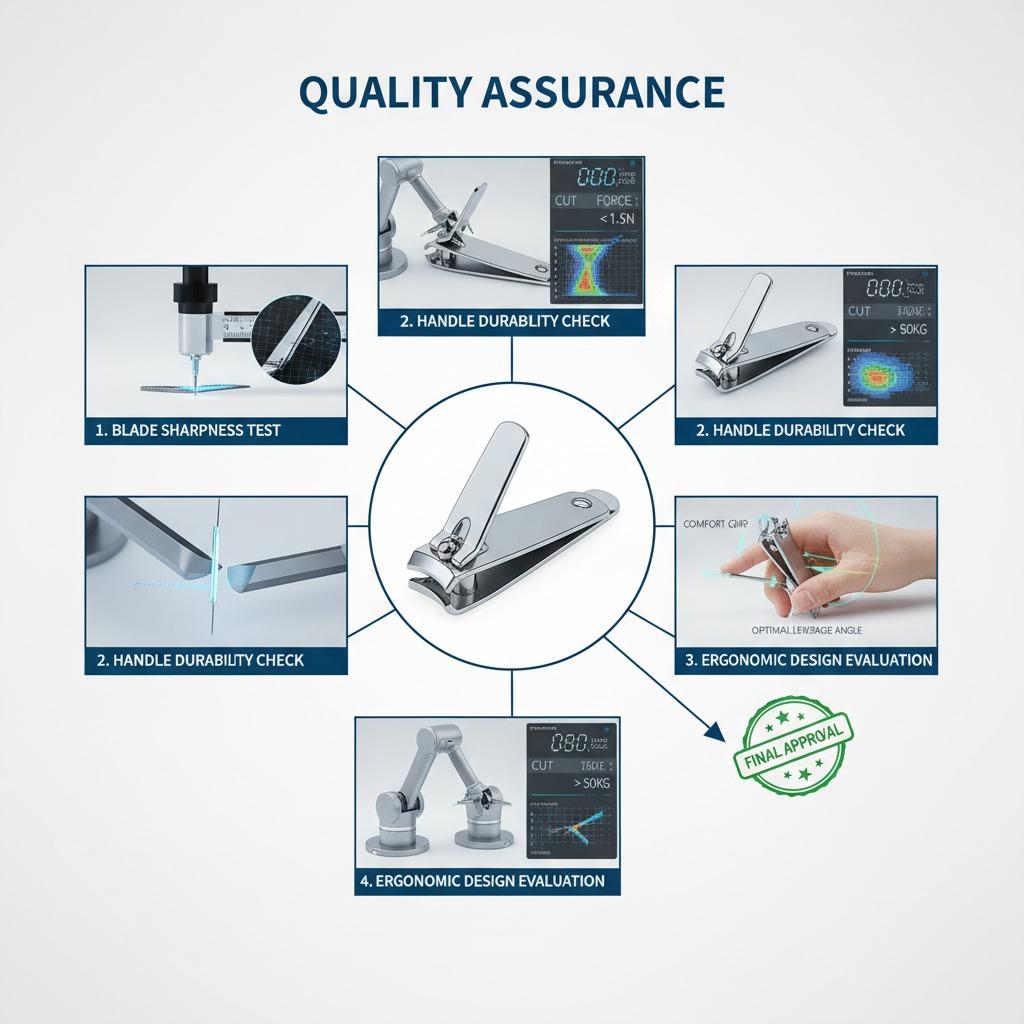
Quality assurance is different from a quick visual check. It includes decisions about material selection, blade forming, sharpening, handle design, assembly, surface finishing, packaging, and final inspection. Buyers comparing beauty tool products should look for evidence that each of these stages is considered, not just a polished product photo.
Key Inspection Points for a Nail Clipper
A practical inspection process focuses on the parts of the clipper that determine cutting comfort and durability. Not every buyer needs a laboratory test report for every order, but every buyer should understand the basic checkpoints that separate a usable grooming tool from an unreliable one.
- Blade alignment: The two cutting edges should meet evenly across the curve. Gaps, crossing tips, or uneven contact may cause tearing or partial cuts.
- Sharpness and cutting feel: A good clipper should cut a nail sample cleanly without excessive squeezing. The action should feel controlled rather than harsh.
- Lever strength: The lever should not feel loose, warped, or unstable. It should transfer pressure efficiently to the blades.
- Pivot and rivet area: The joint should allow smooth movement without rattling. Overly tight movement can make the tool tiring to use.
- Surface finishing: Edges on the handle, lever, and underside should be smooth enough for comfortable handling.
- Cleanliness: Finished clippers should be free from visible residue, excess oil, metal dust, or sharp burrs.
- Packaging protection: Packaging should help prevent scratches, contamination, and movement during transport.
These checks are especially important for stainless steel nail clippers because the material is chosen for grooming use, but material alone does not guarantee performance. The blade geometry, finishing, and assembly determine how the product behaves in the hand.
How Blade Design Affects Cutting Performance
The most important part of a nail clipper is the cutting edge. Users usually notice blade problems immediately: the tool may slip, leave jagged edges, or require multiple attempts to remove a small section of nail. Quality assurance should therefore start with blade consistency.
Curvature is one key factor. A curved blade is common for fingernail and toenail grooming because it follows the natural shape of the nail. However, the curve must be symmetrical and predictable. If one side of the blade meets before the other, pressure is not distributed evenly. The result can be nail splitting or a cut that stops before reaching the opposite edge.
Sharpness also needs balance. A blade should be sharp enough for clean cutting, but the finished tool should not have exposed burrs or rough metal around the edge. During inspection, the aim is not simply to make the blade appear sharp; it is to confirm that cutting force, alignment, and edge finishing work together. For buyers, a sample test on different nail thicknesses can reveal more than a visual review alone.
Comfort, Control, and Everyday Use
Reliable grooming tools are not evaluated only by the blade. A nail clipper must also be comfortable enough for repeated use and controllable enough for accurate trimming. Handle comfort is especially important for users who trim thicker nails or need careful shaping around corners.
When evaluating samples, hold the clipper in several positions. Does the lever offer enough surface area for the thumb? Does the lower body sit securely against the finger? Are there any rough corners? Does the clipper feel stable when pressure is applied? These questions help identify problems that may not appear in product specifications.
Ergonomic design should be understood in practical terms. It does not require exaggerated shapes or decorative features. In a nail clipper, ergonomic value comes from a lever that is easy to press, a body that does not twist during use, and a finish that feels smooth against the skin. The best design is often the one that helps users complete trimming safely without thinking about the tool.
A Buyer Checklist for Quality Control
Before placing an order for nail clippers, buyers can use a structured checklist to compare samples and reduce subjective decisions. The goal is to confirm that the product is suitable for the target market, whether it will be sold as a single grooming item, included in a kit, or supplied to salons.
| Checkpoint | What to Review | Why It Matters |
|---|---|---|
| Cutting action | Test on suitable nail samples or equivalent material | Confirms clean trimming and acceptable pressure |
| Blade contact | Inspect whether edges meet evenly | Reduces snagging and incomplete cuts |
| Lever movement | Open and close repeatedly | Checks smooth operation and joint stability |
| Surface finish | Run fingers carefully along handle and lever edges | Helps identify burrs or uncomfortable corners |
| Visual consistency | Compare multiple pieces from the same sample group | Shows whether appearance and assembly are stable |
| Packaging fit | Check whether the clipper is protected and secure | Prevents scratches and movement in transit |
This type of review is useful because it connects product quality to real use. It also creates a common language between purchasing, quality, and sales teams. If your company is comparing grooming tools across several suppliers, keeping notes against the same checklist makes the decision more objective.
Sourcing Questions for Nail Clipper Orders
Good sourcing decisions depend on clear expectations. Buyers should avoid relying only on general claims such as “high quality” or “professional.” Instead, define what quality means for the intended customer. A travel-size retail clipper, a salon tool, and a gift-set accessory may have different requirements for finish, packaging, and perceived value.
Useful sourcing questions include: What material and finish are intended for the clipper body and lever? How is blade alignment checked during production? What visual defects are considered unacceptable? How are finished clippers protected before packing? Can packaging be reviewed for safe storage and retail presentation? What sample approval process is used before bulk production?
These questions do not require inventing unrealistic specifications. They simply make expectations visible. For custom packaging, assortment planning, or product development support, buyers can review Olimor product collections to understand related beauty tool categories, then send an inquiry with the intended market, quantity planning, and packaging goals.
Maintenance Guidance for End Users
Quality assurance continues after the product reaches the customer. Even a well-made nail clipper performs better when it is kept clean and stored properly. Brands and retailers can reduce complaints by providing simple care instructions with the product or on the product page.
- Wipe the clipper after use to remove nail dust and residue.
- Keep the tool dry before storage, especially after cleaning.
- Avoid using the clipper on materials other than nails, as this can damage the blade edge.
- Store it in a pouch, case, or dry compartment to reduce scratches and contamination.
- Replace the clipper if the cutting edge becomes damaged, misaligned, or uncomfortable to use.
These instructions are straightforward, but they help customers understand that grooming tools are precision items. Proper care supports cutting performance and helps the product remain pleasant to use over time.
Choosing Reliable Nail Clippers with Olimor Beauty
Nail clipper quality assurance is built from many small controls: stainless steel material selection, accurate blade forming, careful sharpening, stable assembly, smooth finishing, and protective packaging. When these steps are handled consistently, the result is a grooming tool that cuts cleanly and feels dependable in everyday use.
For beauty brands and grooming tool buyers, the best approach is to evaluate samples with a clear checklist, define acceptable quality standards early, and consider how the clipper will be used by the final customer. A reliable nail clipper does not need exaggerated marketing language. It needs precise cutting, comfortable handling, clean finishing, and consistency across production.
Olimor Beauty supports buyers looking for practical, dependable grooming tools and related beauty accessories. To compare options or discuss a nail clipper project, explore beauty tool products or contact Olimor with your target use case and packaging requirements.
Tag: