

Nail Clipper Manufacturing Excellence: What Buyers Should Look For
Nail clipper manufacturing may look simple from the outside, but a dependable clipper depends on a series of small decisions: material selection, cutting-edge geometry, lever tension, surface finishing, assembly accuracy and final inspection. For retailers, distributors, private label buyers and grooming tool brands, understanding these details helps separate an ordinary low-cost item from a product that customers will use confidently for years.
A nail clipper is held close to skin, used on hard keratin, stored in bathrooms or travel bags, and often shared within households. That means it must be sharp enough to cut cleanly, smooth enough to handle safely, corrosion-resistant enough for humid environments, and consistent enough across batches. Olimor Beauty focuses on practical beauty and grooming tools, and nail clippers remain a core example of how everyday products benefit from careful manufacturing control. You can explore related beauty tool products or compare broader product collections when building a grooming assortment.
Why Stainless Steel Matters in Nail Clipper Manufacturing
The original value of stainless steel in nail clipper production is clear: it offers durability, hygiene and resistance to rust and corrosion. For a grooming tool that may be exposed to water, hand oils, disinfecting wipes or humid bathroom storage, this matters. Stainless steel forms a protective oxide layer, helping the tool resist oxidation and maintain a cleaner surface compared with materials that corrode more easily.
However, stainless steel alone does not guarantee a high-quality clipper. Buyers should consider how the material is shaped, hardened, polished and assembled. A poorly formed cutting jaw can still crush the nail instead of slicing it cleanly. A rough handle edge can feel uncomfortable even if the metal is corrosion-resistant. A lever that is too loose or too stiff can reduce control. Good nail clipper manufacturing treats stainless steel as the foundation, then builds performance through precision processing.
Key Manufacturing Steps That Influence Clipping Performance
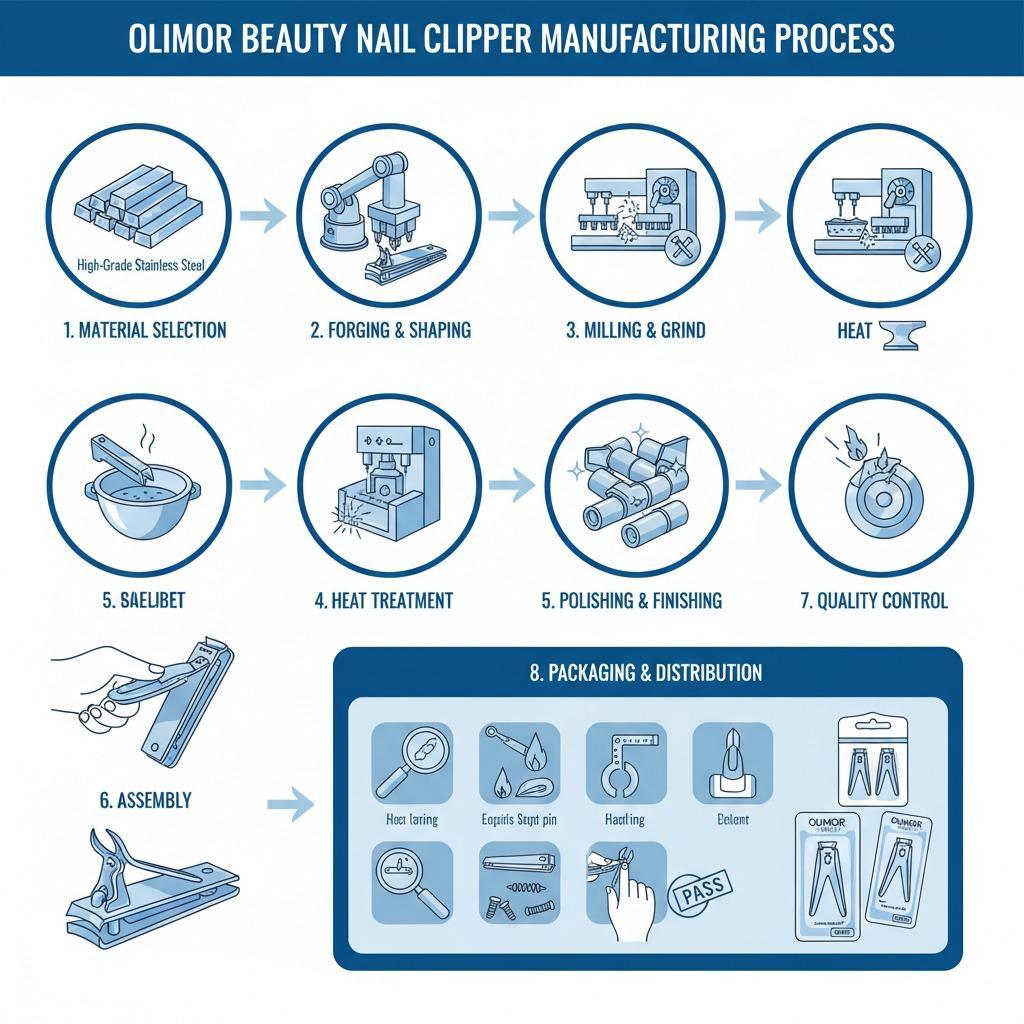
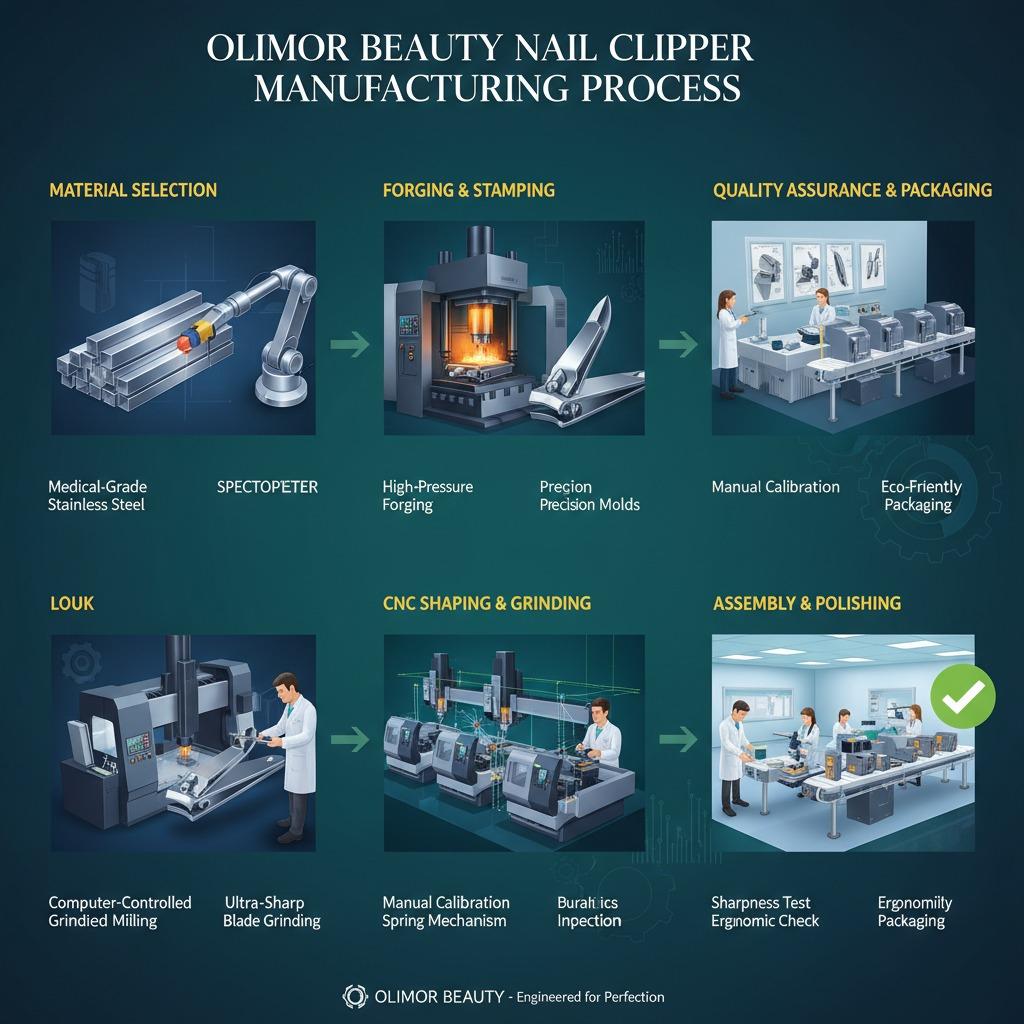
Reliable nail clippers are the result of controlled production, not just attractive packaging. While exact production methods vary by design, most stainless steel nail clipper manufacturing requires attention to the following areas:
- Material preparation: Stainless steel components must be formed consistently so the jaw, body and lever fit together accurately.
- Cutting-edge formation: The upper and lower cutting edges need the right shape and alignment. If the edges do not meet evenly, nails can split or bend.
- Surface finishing: Polishing, deburring and smoothing help remove sharp burrs from non-cutting areas, improving hand comfort and safety.
- Assembly: The pin, lever and body must work together with stable tension. A clipper should open and close smoothly without wobbling.
- Inspection and packaging: Finished products should be checked for appearance, function, edge contact and cleanliness before packing.
For buyers, the most useful question is not simply whether a clipper is stainless steel, but whether the manufacturing process controls these details consistently. Small differences in alignment can be difficult to see in a product photo but obvious to the end user during use.
How to Evaluate Blade Alignment and Cutting Feel
The cutting experience is the strongest test of a nail clipper. A good clipper cuts with a clean, controlled snap. It should not require excessive hand pressure, and it should not tear, fold or leave jagged edges on the nail. The two cutting edges should meet evenly from one side to the other. If only the center touches, the corners may fail to cut. If one corner touches first, the nail may twist during clipping.
When reviewing samples, buyers can create a simple evaluation routine. Inspect the jaws under good light. Open and close the lever slowly to see whether the edges meet evenly. Test on different nail thicknesses if appropriate for the product type. Check whether the handle provides enough control without slipping. After repeated clipping, confirm that the lever action remains stable and the edge does not feel dull too quickly.
For assortments that include compact travel clippers, standard fingernail clippers or larger toenail clippers, cutting requirements may differ. Larger clippers usually need stronger leverage and a wider jaw opening, while smaller clippers must feel precise and easy to control. Avoid assuming one design will suit every user. Matching clipper size and leverage to the intended use is an important sourcing decision.
Ergonomics, Safety and Everyday Usability
A nail clipper is a small tool, but ergonomics still matter. The user’s thumb presses the lever while the fingers stabilize the body, so the lever shape, surface texture and opening angle all affect control. A clipper that looks sleek but is slippery can be frustrating. A clipper with rough corners can scratch the user’s hand or catch on a pouch. A lever that flips too loosely can feel cheap, while one that is too tight can be difficult for some users.
Useful ergonomic checks include:
- Does the lever provide enough surface area for a comfortable press?
- Are the edges of the body smooth where fingers naturally rest?
- Does the clipper remain stable during cutting, especially on thicker nails?
- Can the user see the cutting area clearly while positioning the nail?
- Is the tool easy to wipe clean after use?
These points are especially important for beauty retailers and grooming brands because end customers often judge quality by feel before they understand the technical manufacturing details. A clean cut, a smooth finish and a comfortable grip communicate product quality immediately.
Quality Control Checks for Buyers and Distributors
Quality assurance in nail clipper manufacturing should cover more than appearance. A polished clipper can still fail if the blade alignment is inconsistent or the lever loosens after light use. For purchasing teams, a practical inspection checklist helps reduce avoidable complaints and supports more consistent product selection.
| Quality area | What to check | Why it matters |
|---|---|---|
| Cutting edges | Even contact, clean cutting action, no visible chips | Determines whether nails are cut smoothly or crushed |
| Lever action | Stable pressure, smooth opening and closing | Affects control, comfort and perceived durability |
| Surface finish | No burrs, rough corners or sharp non-cutting edges | Improves safety and handling comfort |
| Corrosion resistance | Appropriate stainless steel use and suitable finishing | Supports hygiene and longer service life in humid settings |
| Packaging | Clean presentation, secure protection during transport | Reduces scratches and supports retail display quality |
For bulk sourcing, buyers should also compare multiple samples from the same batch rather than relying on a single perfect unit. Consistency is often the difference between a reliable supplier and a risky purchase. If your team is preparing a sourcing brief, you can send an inquiry with your target product type, packaging direction and market requirements.
Packaging and Assortment Planning for Nail Clippers
Packaging should protect the nail clipper from scratches, moisture and deformation during transport while also communicating the product clearly to the buyer. For retail, visibility may be important; for professional or travel kits, compact packaging may matter more. The right choice depends on channel, price positioning and whether the clipper is sold alone or as part of a grooming set.
Assortment planning also deserves attention. A store may need a basic stainless steel fingernail clipper, a larger toenail clipper, and a travel-friendly option. A beauty kit brand may prioritize matching finishes and compact presentation. A distributor may focus on durable, easy-to-explain products that work across multiple sales channels. In each case, the nail clipper should be evaluated not only as a single item but as part of a broader grooming tools category.
Care Tips That Help Customers Extend Product Life
Even a well-manufactured stainless steel nail clipper benefits from proper care. Customer education can reduce complaints and improve satisfaction. After use, nails and dust should be removed from the jaw area. If the clipper becomes wet, it should be dried before storage. It is better to store clippers in a clean, dry place rather than loose in a damp bathroom drawer. For shared tools, users should follow suitable hygiene practices and clean the surface between uses.
Customers should also avoid using nail clippers on materials other than nails. Cutting wire, plastic tags or other hard objects can damage the edge or misalign the jaw. If the lever becomes difficult to move or the edge no longer cuts cleanly, the clipper should be replaced rather than forced. These simple care guidelines help preserve cutting performance and support a better user experience.
Choosing Olimor Beauty for Practical Grooming Tool Sourcing
Olimor Beauty approaches nail clipper manufacturing as a balance of material selection, functional design and quality checking. Stainless steel provides a strong foundation for durability and hygiene, while precise blade alignment, smooth finishing and stable assembly determine how the product performs in daily use. For buyers, the best sourcing decisions come from looking closely at these practical details rather than relying only on surface appearance.
If you are comparing nail clippers for retail, wholesale, private label planning or grooming kit development, start with the product’s intended use, target customer and quality expectations. Then evaluate samples for cutting feel, comfort, finish and packaging suitability. To discuss product options or share a project brief, contact Olimor and review the beauty tool range that fits your market needs.
Tag: