


Nail Clippers for Retailers: A Practical Guide to Quality, Precision, and Sourcing
For retailers and resellers, a nail clipper is a small product with a large impact on customer satisfaction. Shoppers may buy it as an inexpensive personal-care item, a travel accessory, a grooming kit component, or a practical add-on near checkout. But if the clipper tears nails, feels flimsy, rusts quickly, or arrives with uneven finishing, the low ticket price can still create complaints, returns, and weak repeat sales.
This guide focuses on how to assess a nail clipper for retail sale: what to check in the cutting edge, handle operation, material, portability, and packaging consistency. It also explains how a specialized retail-ready clipper differs from generic bulk options and how buyers can compare suppliers without relying only on price.
Why Retail Nail Clippers Need More Than Basic Function
A traditional nail clipper is often judged by one simple question: does it cut? Retailers need to ask more. A clipper that technically cuts can still perform poorly if the blade alignment is inconsistent, the lever requires too much force, or the edges leave the nail rough. These problems matter because the buyer may not separate the product from the retailer that sold it.
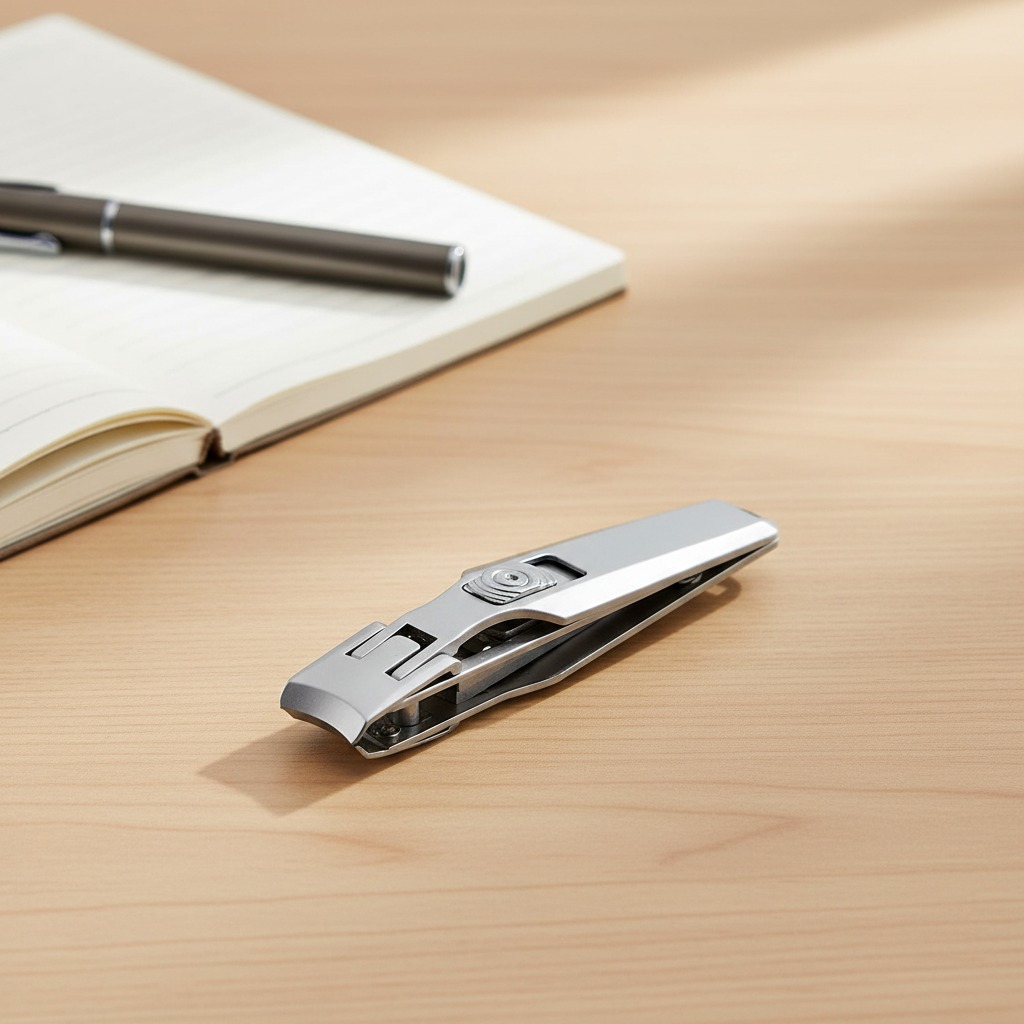
Specialized retailer options should be evaluated as consumer products, not just metal tools. The best candidates feel stable in the hand, close cleanly, and suit daily home use as well as travel. In the supplied product information, the nail clipper measures 91 mm in length and weighs 48 grams. Those details are useful for buyers because they help define the product’s retail positioning: compact enough for travel or grooming kits, yet substantial enough to feel controlled during use.
Stainless steel construction is also important. It is commonly associated with strength, durability, and easier cleaning, making it a sensible choice for personal-care tools. For retailers, the material choice affects perceived quality at the shelf as much as long-term use. A clean metal finish, smooth edges, and a precise lever action can make a small grooming tool feel dependable instead of disposable.
Key Selection Criteria for Retailers and Resellers
Before adding a nail clipper to a store assortment, retail buyers should define the use case and inspect the product from both a customer and merchandising perspective. A clipper for a discount bin, a travel grooming section, and a premium personal-care display may have different priorities.
- Cutting precision: Check whether the cutting jaw closes evenly from side to side. Uneven closure can crush or split nails instead of trimming them cleanly.
- Lever comfort: The lever should provide enough pressure without feeling harsh or unstable. Innovative lever systems can make trimming easier for a wider range of users.
- Material and finish: Stainless steel should look clean, with no sharp non-cutting edges, discoloration, or rough polishing marks.
- Size and weight: At 91 mm and 48 grams, the referenced clipper offers a portable format while still giving the user a secure grip.
- Safety in storage: For foldable or multi-tool designs, confirm that moving parts close securely and that any locking mechanism works consistently.
- Packaging compatibility: Consider whether the product can be displayed on hooks, in bins, in kits, or as part of seasonal travel and personal-care promotions.
Retailers comparing options can also review related beauty tool products to see how nail clippers fit into broader grooming categories. A single item may sell well, but it often performs better when merchandised alongside nail files, tweezers, scissors, or compact beauty tools.
Comparing Standard Clippers With Retail-Ready Designs
Generic clippers are often selected because the unit price is low. That can work for certain channels, but only if the clipper is consistent enough to protect the retailer’s reputation. A low-cost clipper that arrives with mixed finishing, weak spring action, or dull jaws can create hidden costs through rework, customer dissatisfaction, and lost confidence.
Retail-ready designs usually focus on a more complete product experience. The cutting edge should be precision-engineered, the handle should feel balanced, and the finish should look acceptable under store lighting. A lightweight but robust stainless steel build can help position the item as practical and reliable without making it unnecessarily bulky.
The supplied product details also mention a stainless steel multi-tool format with a precision-engineered cutting jaw, ergonomic handles, a locking mechanism, and a foldable design. This type of configuration may suit retailers looking for portability and multifunctional value. However, the buying decision should still start with the primary function: the nail clipper must trim cleanly. Extra functions should not reduce cutting accuracy, comfort, or safety.
Quality Checks Before Placing a Retail Order
Retailers sourcing nail clippers, especially for private label programs, export orders, or reseller channels, should create a repeatable inspection checklist. The goal is not to overcomplicate a simple tool, but to prevent common issues before stock reaches customers.
| Check Point | What to Look For | Why It Matters |
|---|---|---|
| Blade alignment | Jaws meet evenly with no visible gap | Improves cut quality and reduces nail tearing |
| Lever action | Smooth pressure and stable return | Affects comfort and perceived quality |
| Surface finish | No burrs, stains, or rough edges | Protects users and improves shelf appeal |
| Fold or lock function | Secure closing and reliable locking where applicable | Supports safe storage and travel use |
| Packaging condition | Clean printing, correct orientation, consistent sealing | Reduces retail handling problems |
For export purchasing, quality control should cover the product from raw material review through final packaging. Buyers do not need to accept vague claims. A practical approach is to request clear photos or samples showing the cutting jaw, lever, hinge area, folded position if relevant, and packaging. For larger programs, define acceptable and unacceptable examples before production so both sides evaluate the same standards.
How to Position Nail Clippers in a Retail Assortment
Nail clippers can serve several retail roles. They may be a core grooming essential, a travel accessory, a replacement purchase, or a small giftable item within a personal-care set. The right positioning affects packaging, display, and product selection.
For pharmacies and convenience stores, clarity and reliability matter most. Customers want to identify the product quickly and trust that it will work. For beauty retailers, appearance and hand feel may carry more weight because the clipper sits among more design-sensitive tools. For online resellers, product photos and specifications become critical because shoppers cannot test the lever or inspect the finish before buying.
A 91 mm, 48 gram stainless steel clipper can be described with practical detail rather than exaggerated language. Retail copy can emphasize clean trimming, portable size, stainless steel construction, and comfortable operation. If the product has a foldable multi-tool format with ergonomic handles and a locking mechanism, highlight those points only where they are accurate for the specific item being sold.
Sourcing From China: Questions Retail Buyers Should Clarify
When evaluating nail clipper export from China, buyers should compare more than a catalog image. Consistency, packing, communication, and after-sales handling all influence whether a product is suitable for repeat retail supply. The best sourcing conversations are specific and measurable.
- Confirm the exact product dimensions and weight. For this item, the stated size is 91 mm and the weight is 48 grams. Make sure samples match the approved specification.
- Review material and finish expectations. Stainless steel should be evaluated for appearance, smoothness, and clean forming.
- Test several samples, not only one. Clip performance should be consistent across multiple pieces.
- Check packaging under real retail handling. Packaging should protect the clipper and display information clearly.
- Define inspection points in writing. Include blade alignment, lever action, cosmetic finish, folding or locking function, and carton condition.
If you are comparing grooming tools for a store program, Olimor’s product collections can help you think beyond a single SKU and build a more complete personal-care assortment. Buyers ready to discuss a nail clipper order, packaging direction, or sample evaluation can also send an inquiry with their retail channel, target positioning, and required product details.
Final Buying Advice for Retail Nail Clippers
A good retail nail clipper should feel simple to the shopper but carefully selected by the buyer. Precision cutting, stainless steel construction, comfortable leverage, safe portability, and consistent packaging all contribute to the final customer experience. Retailers should avoid choosing only by the lowest upfront cost, especially when small defects can lead to visible dissatisfaction.
For resellers, the strongest product is one that can be explained clearly and inspected consistently. A compact 91 mm, 48 gram stainless steel clipper offers practical selling points, while features such as ergonomic handles, a foldable format, and a locking mechanism may add value when they are part of the specific design. By focusing on verifiable details and retail usability, buyers can select nail clippers that support repeat sales and protect customer trust.
For tailored sourcing support or questions about beauty tool options, you can contact Olimor to discuss your product needs.
Tag: