

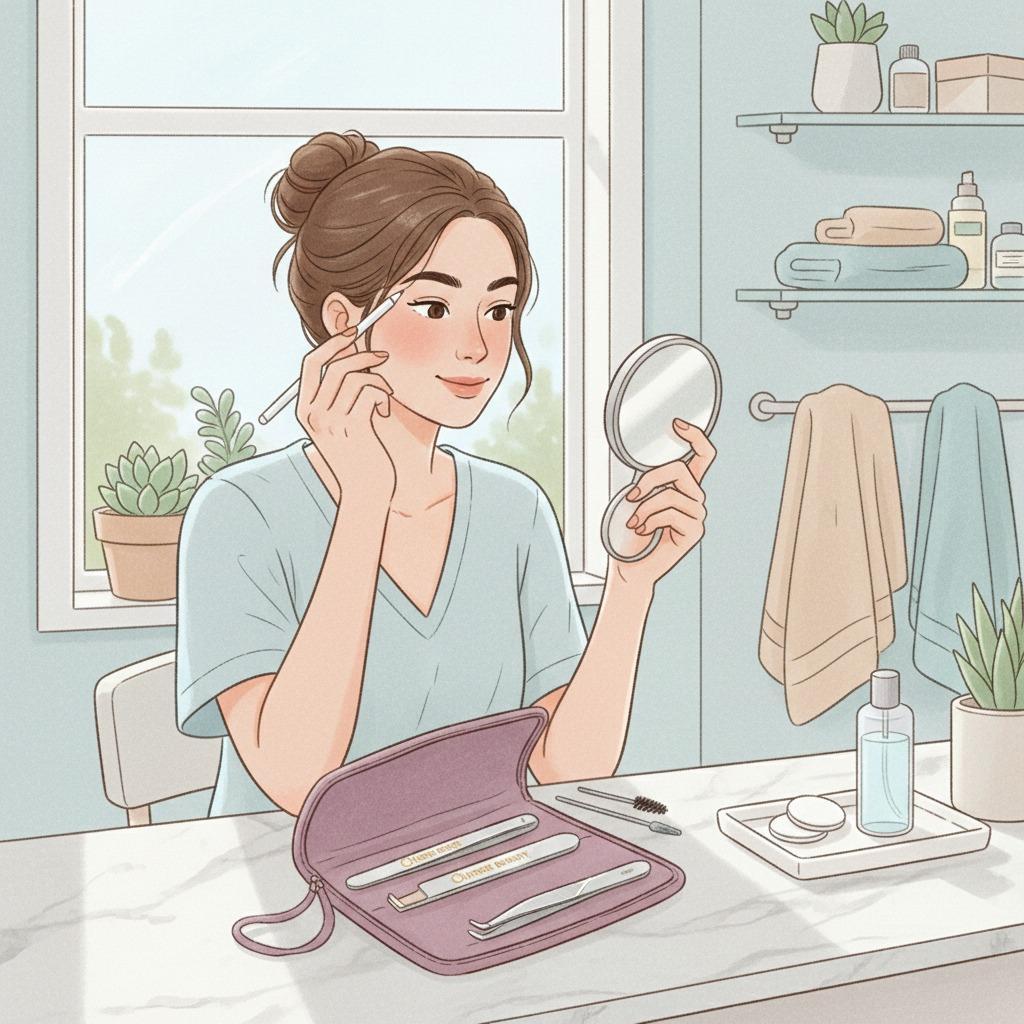
Slanted Eyebrow Tweezers for Precise At-Home Brow Shaping

Slanted eyebrow tweezers are designed for one clear job: removing individual brow hairs with control. For at-home users, that means tidying the natural brow shape without over-plucking. For retailers, salons, distributors and private-label buyers, it means selecting a beauty tool that feels accurate, comfortable and durable enough for repeated grooming use.
Olimor Beauty eyebrow tweezers are made with stainless steel construction, an ergonomic grip and a slanted tip intended to catch fine hairs. Those details matter because brow hairs are short, often angled and easy to break if the tweezer tips do not meet cleanly. A good brow tweezer should help the user isolate one hair, grip close to the root and pull in the direction of growth without excessive squeezing.
This guide explains how to map brows before tweezing, how to use slanted tweezers safely, what to inspect before purchase, how to clean and store the tool, and what B2B buyers should consider when evaluating eyebrow tweezers for a retail or professional beauty range. To compare related grooming tools, browse Olimor Beauty beauty tool products or review broader product collections.
Why Slanted Tweezers Are Preferred for Eyebrow Shaping
Eyebrow shaping is detailed work. The goal is not to clear a large area of hair, but to remove selected hairs around the lower brow line, between the brows and, when necessary, around the outer tail. A slanted tweezer gives the user both a broad gripping surface and a more defined angled end. This combination makes it more forgiving than a sharp point tweezer while still offering better precision than a flat general-use tweezer.
The slanted edge can sit close to the skin, helping the user grip near the root. The pointed end of the slant can help separate one hair from nearby hairs, which is useful when brow growth is dense or uneven. This is especially important for beginners because many brow mistakes come from pulling several hairs at once or removing hairs that looked stray in a magnifying mirror but contributed to the overall shape from normal viewing distance.
Stainless steel is also practical for eyebrow tools because it is easy to wipe clean and suitable for repeated personal grooming when cared for properly. The ergonomic grip on Olimor Beauty tweezers supports controlled hand pressure. If a tweezer feels slippery, too stiff or poorly balanced, the user may squeeze harder than necessary, increasing the chance of pinching skin or snapping the hair instead of removing it cleanly.
Map the Brow Before Removing Hair
The most useful rule for DIY eyebrow shaping is simple: map first, tweeze second. Brow mapping gives reference points so the user does not keep removing hair in an attempt to force perfect symmetry. Natural brows are not identical, and a balanced result usually looks better than a rigidly matched one.
Basic brow mapping steps
- Find the start point. Hold a brow pencil, makeup brush or slim tool vertically from the side of the nose toward the inner corner of the eye. Where it meets the brow gives a natural starting guide.
- Locate the arch reference. Angle the same tool from the side of the nose through the outer edge of the iris while looking straight ahead. This indicates where the highest part of the brow may naturally sit.
- Check the tail point. Angle the tool from the side of the nose toward the outer corner of the eye. The brow tail generally ends near this line.
- Define the lower boundary. Brush brow hairs upward and look for hairs that clearly sit outside the natural lower edge.
Use a light brow pencil to mark reference points if needed, but avoid drawing a heavy stencil and tweezing everything outside it. Natural brow texture includes small differences in length, density and direction. Removing every hair that falls outside a hard outline can create an artificial or overly thin shape. A safer method is to remove a few obvious stray hairs, step back, and reassess from a normal distance.
How to Use Slanted Eyebrow Tweezers Safely
Good tweezing technique reduces broken hairs, redness and uneven lines. Work in clear light, clean the area first and avoid rushing before an event. Even careful tweezing can leave temporary redness, so it is better to shape brows when the skin has time to settle.
Answer-first technique
Grip one hair at a time as close to the root as possible, hold the skin gently taut, and pull in the direction the hair grows. Do not pull upward sharply if the hair grows sideways. Following the growth direction helps reduce breakage and makes the process more comfortable.
- Clean the brow area. Remove makeup, sunscreen, skincare residue and oil so the tweezer tips can grip the hair rather than slide over it.
- Brush the brows into place. A clean spoolie or brow brush reveals the natural growth pattern.
- Use normal light first. A magnifying mirror can help with a single hair, but relying on magnification for the whole session can encourage over-plucking.
- Hold the skin steady. Gently stretch the skin near the hair, without pressing hard or irritating the area.
- Place the slanted tip carefully. Set the edge close to the root while avoiding skin contact between the tips.
- Pause every few hairs. Step back and compare both brows before continuing.
The safest zones for most users are the center between the brows and clearly stray hairs below the natural arch. Be conservative above the brow because removing too much from the top can flatten the expression or change the brow’s natural frame. If a hair is questionable, leave it and review the shape later.
Common Brow Tweezing Problems and Fixes
Most brow shaping problems come from either poor technique or poor tweezer performance. Before blaming the user’s skill, inspect the tool. A misaligned or dull gripping edge can make even simple grooming frustrating.
| Problem | Likely cause | Practical fix |
|---|---|---|
| Hair slips from the tips | Oil on skin, residue on tips or weak tip contact | Clean the brow area and wipe the tweezer tips; check that the slanted edges meet evenly |
| Hair breaks instead of pulling out | Gripping too far from the root or pulling against the growth direction | Grip closer to the root and pull in the direction the hair naturally grows |
| Skin gets pinched | Tips placed too flat against the skin or excessive hand pressure | Adjust the angle, hold skin taut and use controlled pressure |
| Brows become too thin | Tweezing without mapping or working too long in magnification | Map first, remove fewer hairs and step back often |
| Uneven shape | Trying to make both brows identical hair by hair | Aim for visual balance rather than perfect symmetry |
If the skin is already irritated, postpone tweezing. Avoid plucking immediately after strong exfoliation, sun exposure or treatments that make the brow area sensitive. If redness, swelling or discomfort seems unusual, stop and allow the skin to recover.
How to Inspect Eyebrow Tweezers Before Buying or Sourcing
For individual users, inspection helps avoid frustration. For B2B buyers, inspection supports product consistency, customer satisfaction and clearer supplier communication. The visible finish matters, but the working quality is determined by tip alignment, tension, edge smoothness and handling comfort.
Eyebrow tweezer inspection checklist
- Tip alignment: Close the tweezer and check whether the slanted gripping edges meet evenly. A visible gap can reduce grip on fine hairs.
- Tip finish: The edges should feel precise without rough burrs that may scratch skin.
- Body tension: The tweezer should close firmly without requiring excessive pressure.
- Grip comfort: The handle area should feel stable in the fingers, especially during detailed work near the eye area.
- Material suitability: Stainless steel construction supports cleaning and repeated grooming use.
- Protective storage: A tip cap, sleeve or packaging design can help protect alignment during shipping, display and customer use.
- Use instructions: Retail-ready tweezers benefit from clear care and safety guidance, especially for first-time brow grooming customers.
For sourcing, do not evaluate only one attractive sample. Ask how the supplier controls tip consistency, packaging protection and finished-goods inspection. Request current product documents that apply to the market where the item will be sold. Depending on the destination, buyers may need to verify consumer product safety, labeling and import expectations from public bodies or regulations such as the U.S. Consumer Product Safety Commission and the EU General Product Safety Regulation. Requirements can change, so buyers should verify current versions and supplier documentation rather than relying on assumptions.
Selection Factors for Retailers, Distributors and Beauty Lines
Eyebrow tweezers are small products, but they influence how customers judge a beauty tool range. A tweezer that looks good but fails to grip fine hairs can lead to returns, poor reviews or low repeat purchasing. A practical assortment should match tool type to customer need and explain the difference clearly.
Slanted stainless steel tweezers are a versatile choice because they suit routine brow maintenance, stray hair removal and beginner-friendly shaping. They can fit into personal grooming kits, travel beauty sets, brow care displays, salon retail assortments and private-label beauty tool lines. When comparing options, consider the complete user experience: how the tweezer feels in hand, how the tips are protected, how the product is explained on packaging and whether the design matches the rest of the range.
Cost is affected by several non-price factors, including material selection, tip finishing, handle design, packaging format, inspection requirements, customization work and order terms. Buyers should avoid choosing by unit cost alone because a poorly aligned tool can create hidden costs through complaints or unsold inventory. To discuss sourcing details, packaging needs or intended sales channels, send a product inquiry with the application and market requirements.
Cleaning, Storage and Maintenance
Eyebrow tweezers touch skin, hair, makeup and skincare residue, so basic cleaning should be part of every grooming routine. After use, wipe the tips with a clean cloth to remove visible residue. Before the next use, check that the gripping edge is clean and dry. If the tool has been rinsed, let it dry fully before storing.
Protecting the tips is just as important as cleaning. Dropping tweezers on a hard surface can affect alignment, and alignment is central to performance. Avoid throwing brow tweezers loosely into a crowded makeup bag where the tips may hit hard packaging, metal tools or compacts. A protective cap, small sleeve or dedicated grooming pouch can help preserve the working edge.
Do not use eyebrow tweezers as a household tool. Opening packages, scraping adhesive, removing labels or handling hard objects can damage the fine gripping surface. Keeping one pair for brow use only is a simple way to maintain precision. For retail customers, clear care instructions can reduce misuse and help the product perform as intended for longer.
When to Tweeze and When to Stop
Brows are easier to maintain with light, regular grooming than with occasional aggressive reshaping. Remove obvious strays when the shape begins to look untidy, but avoid long sessions that turn maintenance into redesign. Short sessions make it easier to preserve the natural brow line.
A good time to tweeze is after cleansing, when makeup and oil have been removed. Some users prefer tweezing after a warm shower because the skin feels softer, but the brow area should be dry before using tweezers so the tips do not slip. Stop if the skin becomes irritated, if the brows start looking much thinner than planned or if you are unsure whether a hair belongs to the shape. Waiting is often the best correction method because an unplucked hair can always be removed later.
Commercial Buying Notes for Eyebrow Tweezer Programs
For B2B buyers, the best eyebrow tweezer is not only the one that performs well in a single sample review. It is the one that can be produced, inspected, packaged and explained consistently for the intended customer. When preparing a purchasing brief, include the target user, sales channel, preferred packaging style, branding expectations and any destination-market documentation needs.
Customization may involve appearance, packaging, set configuration or retail presentation, depending on the project. Buyers should confirm what is feasible before finalizing launch plans. If samples are required, clarify whether the goal is to evaluate grip performance, visual finish, packaging, branding or all of these together. For direct support, contact Olimor Beauty with the product type and project requirements.
FAQ
Can I request samples before placing a larger order?
Sample availability depends on the product and project requirements. Share the tweezer style, intended market and any packaging or customization needs so the available options can be confirmed.
Is there an MOQ for eyebrow tweezers?
MOQ can vary by product, packaging and customization. Buyers should confirm current order terms directly before planning retail pricing or launch schedules.
Can eyebrow tweezers be customized for a beauty tool line?
Customization may be possible for aspects such as presentation, branding or assortment planning, depending on the selected product and order requirements. Confirm feasibility and artwork or packaging details during inquiry.
How should quality be checked before shipment?
Useful checks include tip alignment, gripping performance, surface finish, tension, packaging protection and labeling. Buyers should agree on inspection expectations and required documents with the supplier before production or shipment.
What affects lead time?
Lead time can be influenced by product availability, order quantity, customization, packaging development, inspection requirements and shipping arrangements. Confirm timing for the specific project rather than relying on a general estimate.
Better Brow Results Start with the Right Tool
Precise brow shaping comes from conservative technique and a well-made tweezer. Map the brow, remove one hair at a time, check progress from a normal distance and protect the tool after use. Stainless steel slanted eyebrow tweezers with comfortable handling are a practical choice for home grooming and for beauty businesses building reliable brow care assortments.
For product comparison, retail planning or sourcing support, explore Olimor Beauty grooming and beauty tools or submit details through the inquiry page to discuss suitable options.
Tag: