

Gold Finish Precision Foot File for Practical Manicure and Pedicure Care
A good manicure pedicure routine is not only about nail color or cuticle detail. Foot skin care matters just as much, especially for people who deal with dry heels, rough pressure points, or callus buildup from daily walking, standing work, sandals, sports, or closed shoes. Olimor Beauty’s Gold Finish Precision Foot File is designed for that part of the routine: controlled smoothing of dead skin and rough areas without turning a pedicure into an aggressive treatment.
This article looks at the tool from a buyer’s and user’s perspective. It covers where a precision foot file fits in a manicure pedicure service, what to look for when selecting foot care tools, how to use the file safely, and how salons, spas, wholesalers, and beauty retailers can evaluate it for their assortment. If you are comparing related beauty tool products or preparing a sourcing list, the goal is to help you judge the foot file by function rather than by appearance alone.
What the Gold Finish Precision Foot File Is Designed to Do
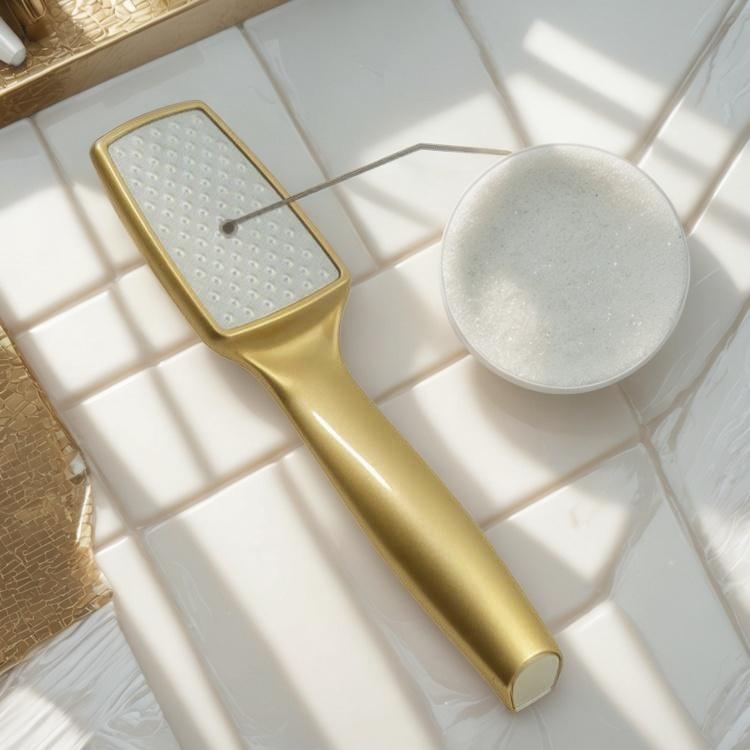
The Gold Finish Precision Foot File is a manual pedicure tool for removing dry, dead surface skin and smoothing rough foot areas. Its visible design feature is a brushed gold handle, giving the tool a polished appearance suitable for both personal care sets and professional pedicure displays. The handle includes a loop for easy hanging or storage, which is useful in treatment rooms, retail kits, and home bathrooms where tools need to dry and remain easy to locate.
The working surface is described as micro-abrasive, with precision-cut points intended to help address calluses and rough patches. In practice, this type of tool is best used for gradual refinement rather than deep removal in a single session. That matters because feet are sensitive to over-filing. A reliable foot file should help the user feel in control, allowing repeated light passes over dry or slightly softened skin instead of harsh scraping.
For manicure pedicure businesses, the value is not simply that the tool looks attractive. A foot file must support repeatable results, fit comfortably in the hand, and be simple to clean between uses according to the salon’s hygiene process. The ergonomic grip mentioned in the product description is relevant because technicians may perform multiple pedicures per day, and hand fatigue can affect both comfort and control.
Why Foot Filing Belongs in a Manicure Pedicure Routine
Many customers think of pedicure care as a finishing service: nail shaping, polish, and foot massage. However, rough heel skin can make an otherwise neat pedicure feel incomplete. A precision foot file helps prepare the foot surface before moisturizing and final grooming. It is especially useful around heels, the outer edge of the big toe, and other areas where shoes create friction.
For home users, a manual file provides more control than trying to remove roughness with scissors, blades, or overly harsh methods. For professionals, it supports a standard service flow: assess the foot, soften the skin if appropriate, file conservatively, cleanse, and moisturize. The tool should not be treated as a medical device or used on wounds, cracked bleeding skin, infections, or severe foot conditions. In those cases, the safe recommendation is to stop cosmetic treatment and seek qualified care.
A precision file also helps maintain results between full pedicure appointments. Light weekly smoothing can prevent dry skin from building up to the point where stronger filing is needed. That makes it practical for retail add-on sales, aftercare kits, and personal foot care routines.
Selection Criteria for Salons, Spas and Retail Buyers
When choosing a foot file for a salon, spa, online store, or manicure pedicure kit, appearance should be only one part of the evaluation. A gold finish may support a premium presentation, but daily use depends on the surface, grip, balance, storage design, and maintenance compatibility. Buyers can use the checklist below when comparing this foot file with other items in product collections.
- Grip comfort: The handle should feel secure when the user’s hands are dry or lightly moisturized. A comfortable grip helps reduce slipping and over-pressure.
- Surface behavior: A micro-abrasive surface should smooth gradually. It should not feel so aggressive that it encourages removal of too much skin at once.
- Control on curved areas: Heels and toe edges are not flat surfaces. The tool should allow short, controlled strokes over curved areas.
- Storage and drying: The built-in loop supports hanging, which can help keep tools organized and allow better air circulation after cleaning.
- Visual consistency: For retail or kit assembly, the gold handle should look consistent across units so the finished set feels coherent.
- Cleaning workflow: Professional users should confirm how the tool fits into their established hygiene, cleaning, and replacement procedures.
- Packaging suitability: Retailers and distributors may need packaging that protects the abrasive area during transport and display.
For wholesale planning, it is also useful to think about where the tool will sit in the product range. It may work as a standalone foot care product, part of a manicure pedicure kit, a spa retail item, or a companion to moisturizers, toe separators, nail files, and pedicure accessories. If you are building a sourcing list, you can send an inquiry with the specific buying context, such as salon use, retail resale, or kit assembly.
How to Use a Precision Foot File Safely
The best results usually come from a conservative routine. The goal is smoothness and comfort, not removing every sign of natural foot texture. Feet need protective skin, and over-filing can leave the area tender. The following method is suitable for general cosmetic use when the skin is healthy and unbroken.
- Inspect the feet first. Do not file over cuts, blisters, rashes, swelling, infections, or painful cracks. Avoid cosmetic filing if the customer has a condition that requires medical foot care.
- Clean the foot area. Start with clean skin. Some users prefer filing after a brief soak, while others prefer dry filing for better visibility. Avoid working on skin that is too soft from long soaking.
- Use light pressure. Make short strokes across rough areas such as the heel or ball of the foot. Let the abrasive surface do the work.
- Check progress often. Stop every few passes and feel the area with clean hands. This prevents over-filing.
- Refine, do not scrape. The file is for gradual smoothing of dead surface skin, not cutting into thick skin.
- Rinse or wipe away residue. Remove loose skin dust before applying aftercare.
- Moisturize after filing. A foot cream or lotion helps the newly smoothed area feel comfortable and reduces dryness after the pedicure.
- Clean and store the tool. Follow the cleaning practice appropriate for personal or professional use, then store it where it can remain dry.
For professional pedicure services, each salon should apply its own hygiene standards and local requirements. If the tool is used in a shared environment, the cleaning and replacement policy should be clear to every technician. Consistency protects both the client experience and the salon’s reputation.
Design Details That Affect Daily Use
The brushed gold handle gives this file a refined appearance, but the more important point is how the design behaves during repeated use. A tool that looks good but becomes awkward in the hand will not remain a favorite for technicians. The comfortable grip described for this foot file is relevant because filing requires steady pressure and repeated motion. Poor grip design can make a technician press unevenly, which may cause inconsistent smoothing.
The storage loop is a small detail with real value. In home use, it keeps the tool visible and separate from wet surfaces. In a salon or spa, it can support tidy station organization when combined with proper cleaning and storage procedures. For retailers, the loop may also help with display options, depending on packaging and merchandising format.
The micro-abrasive surface is another practical feature. For a foot file, abrasiveness must be balanced. If it is too mild, the user works too long and becomes impatient. If it is too rough, the user can irritate the skin. A precision surface is most useful when it encourages gradual filing and controlled results.
Use Cases for Home Care, Salons and Wholesale Kits
Different buyers will evaluate the Gold Finish Precision Foot File differently. A home user may care most about comfort, storage, and smoother heels before applying moisturizer. A salon technician may focus on grip, treatment speed, and consistent results across clients. A distributor or kit assembler may care about visual presentation, durability expectations, and how well the tool pairs with other manicure pedicure supplies.
For home care, the file works best as a maintenance tool. Instead of waiting until calluses feel thick and uncomfortable, users can smooth lightly on a regular schedule. For spas and salons, it can be included in standard pedicure preparation, especially where clients expect visible improvement in heel texture. For retail shelves, the gold finish gives the product a giftable look without requiring the buyer to understand complex technical claims.
When planning a product range, avoid treating every foot file as interchangeable. A low-quality file may feel harsh, lose effectiveness quickly, or look inconsistent in a kit. A well-chosen file should support the customer’s routine and fit the service or retail position. For additional product planning support, businesses can contact Olimor to discuss the category they are building and the type of manicure pedicure tools they need.
Care, Cleaning and Replacement Considerations
Manual foot files are exposed to skin particles, moisture, and cosmetic products, so care habits are important. After each use, remove visible residue from the abrasive area. Let the file dry fully before storage. Avoid leaving it in standing water or sealed damp spaces. In a personal routine, a dry, ventilated storage area helps preserve cleanliness. In professional environments, cleaning should follow the salon’s hygiene protocol and any applicable local rules.
Replacement timing depends on use frequency, surface condition, cleaning process, and whether the tool is used personally or professionally. Signs that a file should be replaced include reduced filing performance, visible damage, loosened parts, surface contamination that cannot be properly cleaned, or any change that makes the tool uncomfortable to use. For retail and wholesale buyers, it is helpful to provide simple aftercare instructions so end users understand that performance depends partly on correct maintenance.
A Focused Foot Care Tool for Better Pedicure Results
Olimor Beauty’s Gold Finish Precision Foot File is best understood as a controlled smoothing tool for manicure pedicure routines. Its brushed gold handle, storage loop, comfortable grip, and micro-abrasive working surface make it suitable for users who want practical foot care with a polished appearance. It is not a substitute for medical treatment or aggressive skin removal, and it should be used with light pressure and good aftercare.
For salons, spas, retailers, and home users, the right question is not whether a foot file looks attractive on a counter. The better question is whether it helps create consistent, comfortable, repeatable pedicure results. Used thoughtfully, this precision foot file can support smoother heels, tidier foot care routines, and a more complete manicure pedicure experience.
Tag: