

Low MOQ Tweezers: How Beauty Brands Can Choose the Right Supplier
For a beauty startup, salon retailer, professional makeup artist, or growing distributor, tweezers are a small product with a large impact on customer trust. A tweezer that feels balanced, grips hair cleanly, and stays aligned after repeated use can become a repeat-purchase item. A poorly finished tool, however, can damage brand credibility quickly. That is why low MOQ tweezers are useful: they allow buyers to test a product, launch a focused range, or support a private label program without taking on excessive inventory.
Olimor Beauty supports buyers looking for flexible sourcing options for professional beauty tools, including tweezers made with practical design considerations such as stainless steel construction, ergonomic handling, and pointed tips for precision work. The key is not simply finding the lowest minimum order quantity. The better goal is to find a supplier that can balance order flexibility with consistent manufacturing, inspection, packaging support, and clear communication.
Why Low MOQ Matters in Tweezer Sourcing
Low MOQ sourcing helps beauty businesses control risk. Instead of purchasing a large volume before a product has been tested in the market, a buyer can start with a manageable order and gather feedback from customers, technicians, or retail partners. This is especially important when the product will be sold under a new brand identity, included in a kit, or introduced to a niche audience such as brow artists, lash technicians, or travel beauty shoppers.
For salons and professional makeup teams, low MOQ can also help match stock levels to real usage. Tweezers are often needed in different tip styles, finishes, and packaging formats, so a smaller initial order can make assortment planning easier. For wholesalers, low MOQ programs allow a new product to be added to a catalog without tying up too much cash in slow-moving inventory.
However, low MOQ should not mean unclear specifications or inconsistent quality. A supplier should still be able to explain how the tool is produced, how alignment is checked, what customization options are realistic, and how bulk orders are packed. When reviewing beauty tool products, buyers should compare not only unit appearance but also grip performance, finish consistency, and packaging suitability for the intended sales channel.
Quality Features to Check Before Ordering Tweezers
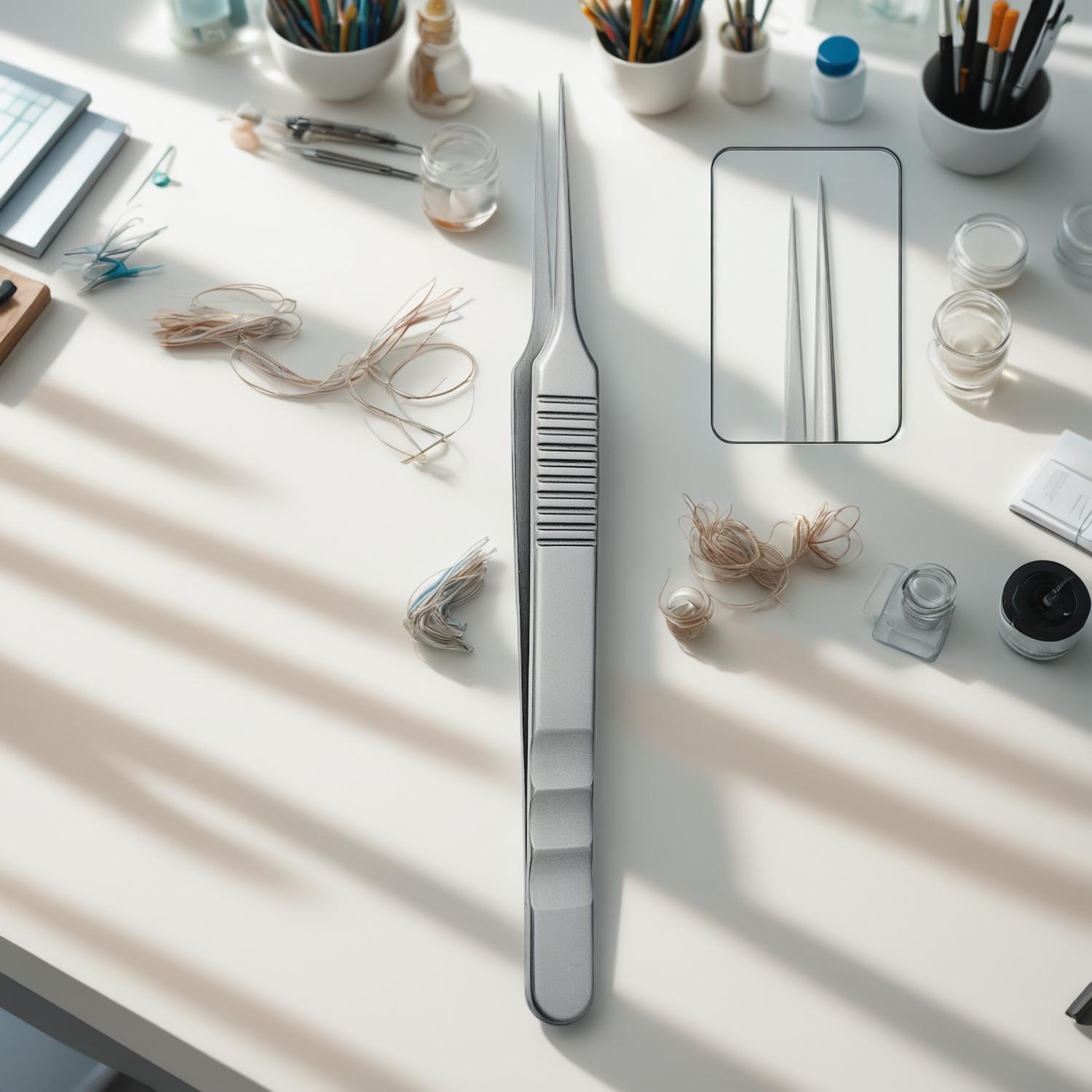
A tweezer looks simple, but its performance depends on several manufacturing and finishing details. Stainless steel is a practical material choice for beauty tools because it is durable and suitable for repeated handling in professional environments. The original product information highlights stainless steel, ergonomic design, and precisely engineered pointed tips. These are relevant qualities for buyers who need tweezers for brow grooming, lash work, splinter removal in beauty settings, or detailed cosmetic application tasks.
Before approving a wholesale or OEM order, evaluate samples using a clear checklist. Do not rely only on product photos. Hold the tool, open and close it repeatedly, and test the tip contact against fine hair or fiber. A good tweezer should feel controlled, not slippery or uneven. The tension should be firm enough for grip but not so stiff that it causes hand fatigue during professional use.
- Tip alignment: The two tips should meet evenly without visible gaps or crossing.
- Grip performance: The tweezer should hold fine hair or test fibers without cutting, slipping, or requiring excessive pressure.
- Surface finish: Edges should be smooth, polished, and comfortable against the skin and fingers.
- Ergonomics: The body should be easy to control for both professional and retail users.
- Consistency across samples: Several samples from the same batch should feel and perform similarly.
- Packaging fit: The tool should sit securely in its pouch, card, box, or retail display format.
Supplier Evaluation: Factory, Wholesaler, or OEM Partner?
Beauty buyers often use the terms supplier, wholesaler, manufacturer, and factory interchangeably, but each relationship can support a different sourcing goal. A tweezers wholesaler may be suitable when speed, stock availability, and simple replenishment are the priority. A tweezers manufacturer or factory relationship becomes more important when you need direct quality communication, design adjustments, custom packaging, or OEM branding.
Olimor Beauty positions its service around professional beauty tool supply, low MOQ access, and customization opportunities. For buyers, the practical question is how much control is needed. If you are filling salon inventory, a standard wholesale option may be enough. If you are launching a branded line, you will need to consider logo placement, packaging artwork, finish selection, inspection expectations, and future reorder consistency.
| Sourcing need | Best-fit supplier capability | What to confirm |
|---|---|---|
| Small salon or studio restock | Low MOQ wholesale supply | Available tweezer styles, lead time, packing method |
| New beauty brand launch | OEM and customization support | Branding options, sample approval process, packaging files |
| Distributor catalog expansion | Reliable batch consistency | Quality checks, carton labeling, reorder planning |
| Professional brow or lash kits | Tool selection and kit compatibility | Tip style, finish, pouch or insert fit, user instructions |
A strong supplier should not pressure a buyer into unnecessary complexity. If the goal is simply to validate demand, a clean standard tweezer with appropriate packaging may be more effective than a heavily customized item. Once the product proves itself, branding and packaging can be expanded through a more detailed OEM program.
Customization Decisions That Affect Cost and Usability
Customization can help a tweezer fit a brand identity, but each decision should serve a purpose. For example, a logo may help retail recognition, while a protective sleeve may reduce tip damage during shipping and storage. Packaging can also affect how the product is sold: a salon may prefer simple functional packaging, while retail buyers may need a hang card, box, or branded insert that explains the tweezer’s use.
When planning OEM tweezers, prepare a short product brief before requesting samples or pricing. This makes communication clearer and reduces revision time. Include the target user, sales channel, preferred tweezer type, branding requirement, packaging format, and any compliance or labeling needs for your market. If you are comparing multiple items, browse Olimor product collections to think about how tweezers might fit with other tools in a broader beauty set.
Common customization areas include logo application, exterior finish, packaging format, protective caps or sleeves, and set combinations. The exact options can depend on the product design and order plan, so it is best to treat customization as a specification process rather than a generic decoration service. A simple, well-inspected custom product is usually more valuable than an overdesigned product with uncertain usability.
Inspection and Quality Control Questions to Use
The supplied product information notes internal quality control from raw material inspection to the final polished product. For buyers, this is an important starting point. A tweezer may fail because of poor material selection, weak forming, uneven grinding, misaligned tips, rough polishing, or inadequate final inspection. Each stage affects the final user experience.
When discussing an order, use questions that reveal the supplier’s process without demanding unrealistic guarantees. Useful questions include: How are tip alignment and gripping performance checked? Are samples taken from production for comparison against the approved sample? How are polished surfaces inspected for rough edges or visible defects? How are pointed tips protected during packing? What information can be included on carton labels for warehouse handling?
It is also helpful to keep an approved sample in your office and compare it with the first bulk shipment. This does not replace factory inspection, but it gives your team a practical reference for future reorders. If you sell through professional channels, gather user feedback after the first batch and record any comments about tension, comfort, precision, packaging damage, or finish wear. That feedback can guide the next purchase order.
Inventory Planning for Low MOQ Orders
Low MOQ ordering is most effective when paired with realistic inventory planning. Start by deciding whether the tweezers will be sold individually, included in a kit, used as a professional consumable, or offered as a gift-with-purchase. Each use case changes the quantity, packaging, and reorder rhythm. A brow studio may need steady replenishment of one dependable style, while an online beauty brand may test several finishes or packaging concepts before selecting a hero item.
Build a simple launch plan that includes sample testing, packaging confirmation, first order quantity, sales channel preparation, and reorder timing. Avoid waiting until inventory is nearly gone before reviewing performance. If a product sells well, you will need time for production, packing, shipping, and inbound inspection. If it sells slowly, low MOQ protects you from holding excessive stock while you adjust the offer.
- Define the buyer: salon professional, retail shopper, distributor, or kit customer.
- Approve a physical sample for grip, finish, comfort, and packaging.
- Confirm the customization details before bulk production begins.
- Record quality expectations in writing for alignment, polish, and packing.
- Review sales and user feedback before placing the next order.
Working With Olimor Beauty on Low MOQ Tweezers
Choosing low MOQ tweezers is not only a purchasing decision; it is a product development decision. The right partner should help you move from a basic sourcing idea to a practical, sellable tool with repeatable quality. Olimor Beauty offers flexible sourcing for businesses that need professional beauty tools, wholesale opportunities, and OEM support while keeping order quantities accessible for growing brands.
If you are comparing suppliers, focus on sample quality, communication clarity, customization feasibility, and inspection discipline. A tweezer that performs well in the hand, arrives protected, and matches your brand plan is more likely to support long-term customer trust. To discuss available options for your next tweezer order, contact Olimor or send an inquiry with your target quantity, packaging idea, and intended sales channel.
Tag: