

Low MOQ Tweezers: A Practical Guide to Precision Lash Tool Sourcing
For lash artists, beauty retailers and emerging private-label brands, tweezers are small tools with a large impact on the customer experience. A false-lash tweezer must pick up delicate fibers cleanly, support controlled placement and feel stable in the hand during repeated use. At the same time, many buyers do not want to commit to excessive inventory before they have validated a product line, tested packaging, or understood demand in different sales channels.
That is why low MOQ tweezers are important for professional beauty businesses. A manageable order quantity can help a brand launch or refresh a product range with less inventory pressure, while still focusing on the details that matter: tip alignment, grip comfort, material quality, finish consistency and packaging readiness. Olimor Beauty supports beauty tool sourcing for businesses that need professional-grade instruments, including False-Lash Tweezer options, with flexibility for wholesale and OEM projects.
Why Low MOQ Matters for Lash Tool Buyers
Low MOQ sourcing is not only about ordering fewer pieces. It is about reducing the risk of bringing the wrong product into your assortment. Tweezers can vary significantly in shape, hand feel and tension. A design that works well for one lash artist may not be the right fit for a beginner kit, salon retail set, or online beauty brand bundle. Starting with a manageable order allows buyers to confirm which tool design best matches their audience before expanding.
For a new beauty brand, low MOQ tweezers can make it easier to test different positioning. One product may be marketed as a lash application tool for daily strip lashes, while another may be paired with other accessories in a professional kit. For a retailer, smaller order requirements can support seasonal product launches, trial assortments or regional demand testing. For salons and training studios, low MOQ purchasing can help maintain tool availability without tying up cash in slow-moving stock.
The goal is not to source the cheapest tweezer available. The goal is to find a reliable balance between precision, consistent production and purchasing flexibility. A poorly aligned tweezer can cause frustration for lash users and increase returns, even if the initial unit cost appears attractive. A well-made tweezer supports better handling and a more confident user experience.
What to Check in a Professional False-Lash Tweezer
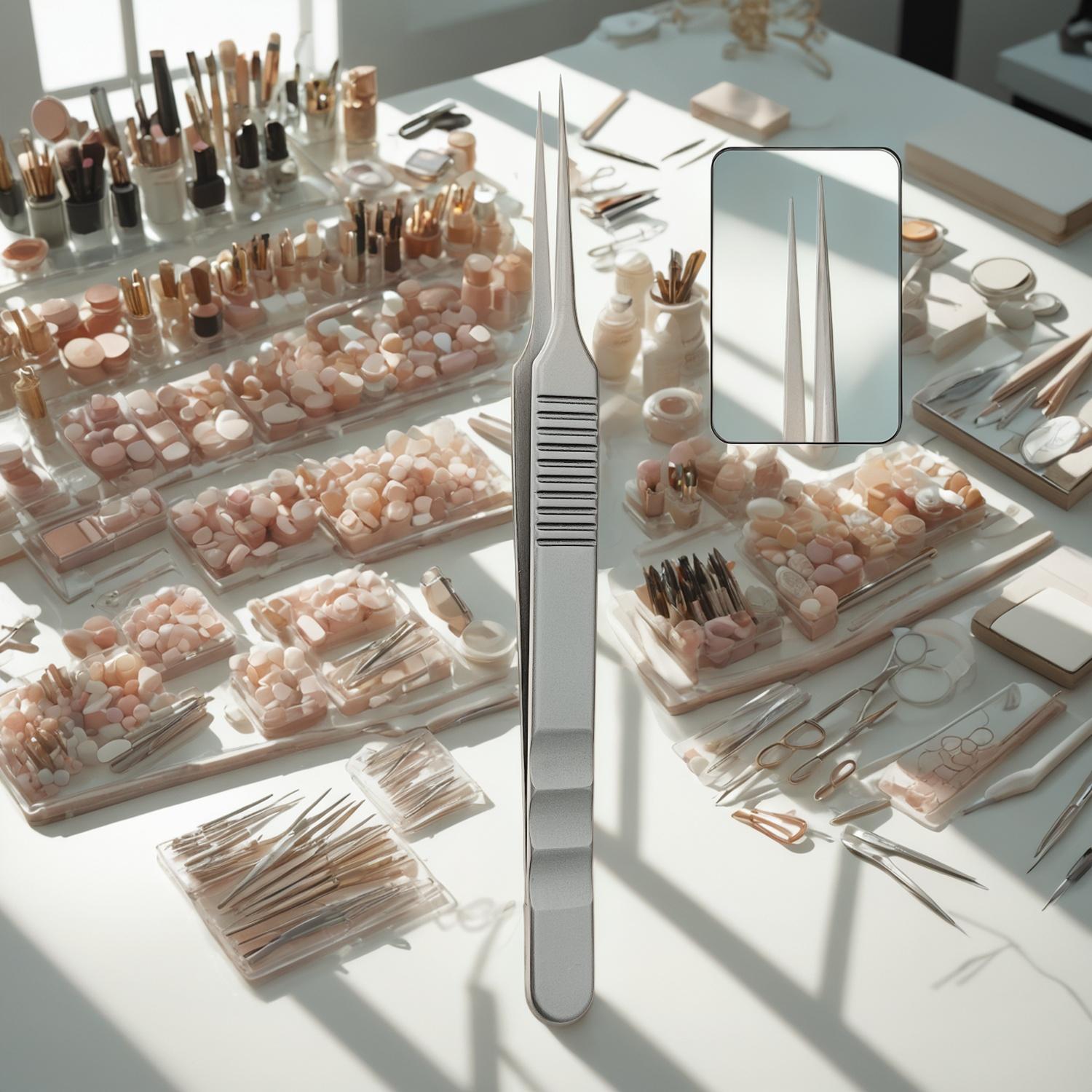
A false-lash tweezer should be evaluated through actual handling, not only by appearance. The tool needs to meet the demands of beauty professionals and everyday users who expect clean control during application. Olimor Beauty focuses on professional beauty tools with attention to stainless steel sourcing, internal quality control, ergonomic design and fine grooves for control and comfort.
When comparing low MOQ tweezers, use a structured checklist. This helps prevent decisions based only on color, price or packaging mockups.
- Tip alignment: The two ends should meet evenly without visible gaps that reduce grip accuracy.
- Grip surface: Finely etched grooves can help the user maintain control, especially during precise lash placement.
- Hand tension: The tweezer should open and close smoothly without feeling too stiff or too loose.
- Edge comfort: Areas touched by the fingers should feel smooth enough for repeated use.
- Material choice: Stainless steel is commonly preferred for beauty tools because it supports durability and a professional finish.
- Finish consistency: Surface treatment should look even across units, without rough marks or distracting imperfections.
- Intended user: A salon professional, beginner lash wearer and gift set buyer may each prefer a different shape or grip feel.
These criteria are especially important when the order is small but the brand impression is large. A customer who buys a lash tweezer from your brand may judge the entire beauty line by that first tool.
Manufacturing Quality: Details That Affect Daily Use
A strong tweezers manufacturer does more than shape metal into a tool. The manufacturing process must produce consistent alignment, balanced tension and a reliable surface finish. Internal quality controls are essential because small variations can change how the tweezer performs during lash application.
Buyers should pay attention to how the tweezer feels after repeated opening and closing. If the hand tension is inconsistent, users may struggle to pick up lashes cleanly. If the tip is too blunt or uneven, it may not give the precision expected in professional beauty work. If the surface finish is inconsistent, the product may look less refined in retail packaging, even if it functions adequately.
Ergonomic design also matters. A tweezer used in lash work may be held for careful, detailed movements. The angle, grip area and overall shape should support control without causing unnecessary finger fatigue. A practical design is often more valuable than an overly decorative one, especially for users who apply lashes frequently or work in a salon environment.
For OEM and wholesale buyers, consistency from sample to production is a key concern. The approved sample should represent the expected production quality as closely as possible. Before confirming a purchase, it is useful to define what should be checked: alignment, grip, surface finish, logo placement if applicable, packaging condition and carton labeling. Clear inspection points reduce misunderstandings and make later reorders easier to manage.
OEM and Wholesale Options for Beauty Brands
Low MOQ tweezers are useful for several sourcing models. A wholesaler may need ready-to-sell products that can be introduced quickly into existing channels. A private-label brand may want custom presentation that reflects its visual identity. A salon supply business may need a stable tool that can be reordered for training kits, retail shelves or promotional bundles.
Olimor Beauty provides support for buyers looking for professional beauty tools, including OEM sourcing paths where customization may be part of the project. The right level of customization depends on the maturity of the brand and the purpose of the order. For some buyers, a reliable existing tweezer design with simple packaging is the best first step. For others, custom packaging, surface finish decisions or branding details may be important to create a cohesive retail line.
Before investing in customization, define the sales context. A tweezer sold through an online beauty store may need strong product photography and clear packaging information. A tweezer included in a lash kit may need compact packaging that fits with other components. A salon training tool may prioritize durability, grip and reorder consistency over decorative presentation.
You can explore related beauty tool products to compare sourcing opportunities across categories, or review product collections when planning how tweezers may fit into a broader beauty assortment.
How to Build a Buyer Specification for Low MOQ Tweezers
A written specification helps turn a general request into a sourcing plan. Even when the order quantity is manageable, a clear specification saves time and supports better communication between buyer and manufacturer.
- Define the application: State whether the tweezer is for strip lashes, false-lash placement, salon use, retail sale or kit assembly.
- Describe the preferred feel: Note whether the target customer needs a light, moderate or firm hand tension.
- Confirm material expectations: If stainless steel is required, include it in the specification rather than assuming it is standard.
- Set visual requirements: Clarify finish, color direction if relevant, branding needs and acceptable appearance standards.
- Plan packaging early: Packaging affects retail display, shipping protection, barcode needs and unboxing presentation.
- Identify inspection points: Include tip alignment, grip area, tension, finish consistency and packaging condition.
- Think about reorders: Keep records of approved samples, artwork files and packaging details to simplify future purchasing.
This type of sourcing brief is especially helpful for buyers who are comparing several tool options. It also helps avoid over-customizing too soon. If the market response is still unknown, it may be better to start with a practical configuration and refine branding after customer feedback.
Choosing a Supplier for Long-Term Tool Programs
The best low MOQ supplier is not simply the one willing to accept a small order. A strong partner understands the importance of precision, professional appearance and future scalability. For beauty tools, the supplier should be able to discuss product function, inspection priorities, packaging considerations and OEM possibilities in practical terms.
When evaluating a tweezers supplier, consider whether they can support both your current launch and your likely next step. A new brand may begin with a small order, then move into additional tools, improved packaging or broader distribution. A retailer may test one false-lash tweezer, then add related accessories if sell-through is strong. Working with a supplier that understands beauty tool programs can make that progression smoother.
Olimor Beauty works with buyers seeking professional beauty tools and flexible sourcing support. Whether your priority is wholesale purchasing, OEM development, or selecting a dependable tweezer for a lash-focused product line, the sourcing process should begin with product function and end with a tool your customers can use with confidence.
If you are preparing a low MOQ tweezer project, organize your product requirements, target customer and packaging expectations before starting the conversation. To discuss a sourcing plan, contact Olimor or send an inquiry with your intended application and customization needs.
Tag: