


Choosing a Tweezers Supplier for Precision, OEM Customization and Reliable Beauty Tool Sourcing
A good pair of tweezers looks simple, but buyers know that small differences in alignment, grip, finish and consistency can decide whether a product feels professional or disappointing. For beauty brands, salons, distributors and private label buyers, selecting a tweezers supplier is not only about finding an item that can pluck hair. It is about sourcing a tool that performs consistently, supports your brand positioning and can be inspected clearly before it reaches customers.
Olimor Beauty supplies beauty tools for buyers who need practical sourcing options, including tweezers OEM and custom design discussions. This guide explains what to evaluate when comparing tweezers, how to think about curved and precision tips, what customization can realistically include, and which quality checkpoints matter before placing a production order.
What Makes a Tweezers Supplier Reliable?
Reliability starts with repeatability. A sample may look good on a desk, but a supplier should also be able to keep the same feel, finish and tip alignment across a batch. This is especially important for beauty tools because consumers judge tweezers by immediate tactile feedback: whether the arms spring back smoothly, whether the tips meet evenly, and whether the edges feel clean against the skin.
When reviewing a tweezers supplier, look beyond a product photo. A useful sourcing conversation should cover intended use, finish preference, packaging method and inspection expectations. Eyebrow grooming, eyelash application, facial hair removal and professional salon retail each place slightly different demands on the tool. A buyer sourcing for a premium eyebrow kit may prioritize fine tip alignment and a polished appearance, while a buyer supplying daily retail kits may focus on practical durability, comfortable grip and consistent packaging.
Olimor Beauty works with buyers who want beauty tools that fit a defined retail or professional purpose. If you are comparing categories beyond tweezers, you can also review related beauty tool products to consider how tweezers may sit alongside scissors, lash tools, applicators or grooming accessories in a complete product range.
Tip Shape, Alignment and Use Case Should Come First
The tip is the working part of any tweezer, so it should be evaluated before color, decoration or packaging. Even attractive tweezers will fail if the tips do not close evenly. For precision beauty use, the two sides should meet cleanly without obvious gaps. The gripping area should hold a fine hair or lash accessory without requiring excessive pressure.
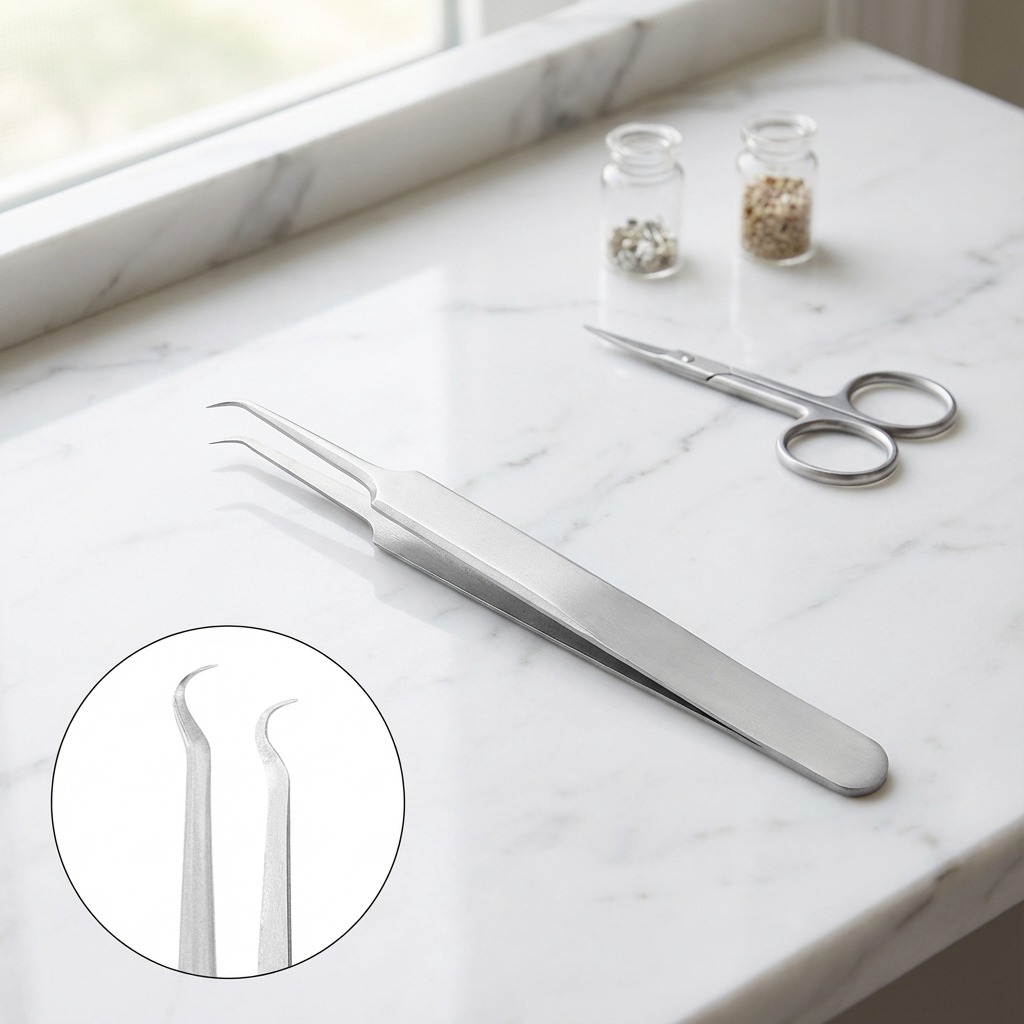
The supplied product information references Stainless Steel Precision Curved Tweezers with aligned curved tips for face contouring and reduced irritation. Curved tips can be useful when the hand needs a better viewing angle or when the user wants to approach the skin with more control. This can matter in eyebrow shaping, facial grooming and eyelash-related work, where visibility and controlled contact help create a more comfortable experience.
Different buyers may prefer different tip shapes depending on the target user. A practical comparison may include:
- Curved tips: Helpful for controlled approach angles, contour work and tasks where visibility around the working area matters.
- Slanted tips: Common for eyebrow grooming because they combine surface contact with precision.
- Pointed tips: Useful for very fine work, but they require careful handling and may not suit all consumer audiences.
- Flat tips: Better for broader gripping tasks, though less suited to fine hair removal.
Before committing to a shape, define the user scenario. Is the tweezer intended for professional use, a travel grooming kit, a lash tool set, or a retail beauty accessory? This decision will guide the most important specifications and avoid over-customizing features that do not support the final customer.
How to Evaluate Stainless Steel Tweezers Without Overlooking Details
The original product information highlights stainless steel construction, longevity and rust resistance. Stainless steel is widely used in beauty tools because it supports hygiene-focused routines and can offer a clean, durable surface when properly finished. However, buyers should still evaluate the actual sample carefully instead of relying on material wording alone.
During sample review, check the surface under good lighting. The finish should look even, without rough edges where the fingers hold the tool. Open and close the tweezers repeatedly to feel the spring tension. The arms should not feel too stiff for ordinary grooming, but they also should not feel weak or unstable. For retail items, comfort matters because many end users will judge quality by how the tweezers feel during the first use.
A practical sample test can include gripping a fine hair, a thread or a very thin paper edge. This does not replace a supplier inspection process, but it helps buyers compare samples in a consistent way. If the tips slide off easily or only grip at one corner, the alignment may not be suitable for precision beauty positioning.
OEM Tweezers: What Can Be Customized?
Tweezers OEM services are useful for brands that want a tool aligned with a product line, gift set, salon retail display or distributor catalog. Customization can involve more than placing a logo on a handle. Depending on the project, buyers may discuss the tweezer shape, surface treatment, color direction, packaging style and presentation for the intended sales channel.
Useful OEM planning questions include:
- Who is the end user? A professional brow artist, a beauty enthusiast and a mass retail shopper may all prefer different shapes and finishes.
- What task should the tweezer perform best? Eyebrow shaping, lash application and general grooming should not be treated as identical use cases.
- How should the tool feel in hand? Handle width, tension and texture can affect comfort during repeated use.
- What packaging environment is required? Online retail, salon display and set packaging each need different protection and visual presentation.
- Which inspection points define acceptance? Tip alignment, surface finish, logo placement and packaging condition should be clear before bulk production.
If you want to design your own tweezers, start with function and then move to appearance. A distinctive color or handle style is valuable only if the tweezer still grips accurately and feels comfortable. Buyers developing a larger assortment can browse Olimor product collections to think about how a tweezer design may coordinate with other beauty tools in the same retail story.
Quality Checks Buyers Should Define Before Production
Clear inspection standards reduce misunderstandings. For precision tweezers, quality should not be described only as “good” or “premium.” Buyers should define what will be checked and how defects will be judged. This is especially important for OEM orders because decoration, packaging and performance all need to match the approved direction.
| Checkpoint | Why It Matters | What to Review |
|---|---|---|
| Tip alignment | Determines gripping accuracy | Tips meet evenly without visible gaps or twisting |
| Spring tension | Affects comfort and control | Arms open and close smoothly without excessive force |
| Surface finish | Influences appearance and skin contact | No sharp burrs, uneven marks or rough handle areas |
| Logo or decoration | Protects brand presentation | Position, clarity and color match approved sample |
| Packaging | Prevents damage and supports retail display | Clean packing, correct inserts, readable labels if used |
For private label beauty tools, it is helpful to approve a reference sample and keep it as a comparison point. Photos, written tolerances and packaging mockups can also reduce confusion. The goal is not to create unnecessary complexity, but to make sure the supplier and buyer judge the product in the same way.
Packaging and Brand Presentation for Custom Tweezers
Packaging should protect the tips and communicate the intended value of the product. Precision tips can be affected by pressure during shipping or storage, so the packaging format should hold the tweezers securely. A simple protective sleeve may suit some kits, while a retail card, box or set insert may be more appropriate for branded sales.
When planning packaging, consider where the customer first sees the product. For e-commerce, the product photo and unboxing condition matter. For salon retail, the packaging should be easy to display and explain. For distributor catalogs, consistency across multiple beauty tools may be more important than a highly decorative single item.
Buyers should also think about instructions and safety language where appropriate. Tweezers are small grooming tools, but clear use and care guidance can improve customer satisfaction. Basic care recommendations may include keeping tips clean and dry after use, storing the tool with tip protection, and avoiding drops that can damage alignment.
Maintenance Guidance That Adds Value for End Users
A tweezers supplier can support the buyer by helping create realistic maintenance guidance for the final customer. Even well-made tweezers need proper care. Oil, makeup residue, adhesive and moisture can affect cleanliness and grip. Consumers often blame the tool when the real issue is buildup on the tips or damaged alignment from poor storage.
Useful aftercare guidance for beauty tweezers can include:
- Wipe the tips after use to remove hair, makeup or adhesive residue.
- Keep the tweezers dry before storing them.
- Use a protective cap or case when placing them in a makeup bag.
- Do not use precision beauty tweezers as general household tools.
- Avoid dropping the tweezers, as impact can affect tip alignment.
Adding this type of guidance to packaging, inserts or product pages can reduce complaints and help customers understand how to preserve performance. It is a small detail that can strengthen a brand’s reputation.
When to Contact Olimor Beauty About Tweezers Sourcing
If you are developing a beauty tool line, expanding an existing grooming category or comparing OEM tweezers for a private label project, it is useful to prepare your requirements before beginning a sourcing discussion. Share the intended user, preferred tip style, finish direction, packaging concept and any brand presentation needs. If you already have a reference product, clarify which features you want to keep and which should be improved.
Olimor Beauty can support conversations around precision tweezers, tweezers OEM production and custom design planning for buyers who need a practical beauty tool sourcing partner. To discuss a project, contact Olimor with your requirements or send an inquiry for product sourcing communication.
The best tweezers supplier is not simply the one with the most attractive sample image. It is the supplier that understands how precision, comfort, finish, packaging and inspection work together. By evaluating these details early, beauty brands and distributors can source tweezers that meet customer expectations and fit naturally into a professional beauty tool range.
Tag: