

Nail Clipper Manufacturing Trends for OEM Buyers
Nail clippers may look simple, but buyers who source them for retail, private label, travel kits, salon supply, or promotional beauty sets know that small design choices have a large effect on customer satisfaction. A clipper that cuts cleanly, fits comfortably in the hand, resists corrosion, and arrives with consistent finishing is easier to sell and less likely to create after-sales problems. This is why nail clipper manufacturing has become more focused on precision, ergonomics, inspection, and OEM flexibility.
For beauty tool buyers, the current opportunity is not just to find a low-cost clipper. The stronger approach is to select a nail clipper manufacturer that can support the intended use case: daily home grooming, portable travel care, professional manicure add-ons, men’s grooming kits, or private label beauty accessories. Olimor Beauty works in this category with stainless steel nail clippers and OEM options, including a compact design measuring 91mm in length, 16mm in width, and 48g in weight. Those dimensions point to a broader industry direction: tools that are easy to carry, comfortable to control, and durable enough for repeat use.
Why Nail Clipper Buyers Are Looking Beyond Basic Price
Price remains important in wholesale sourcing, but it is no longer the only decision point. Nail clippers are used close to the body and often kept for a long time, so customers quickly notice poor alignment, weak leverage, rough edges, uncomfortable handling, or surface rust. A low unit cost can become expensive if the tool produces uneven cuts, packaging damage, or inconsistent batches.
More buyers now evaluate nail clippers as part of a complete grooming experience. A clipper may be sold alone, included in a manicure set, bundled into a travel pouch, or added to a personal care collection. In each scenario, the buyer needs consistency. The jaws should meet cleanly, the lever should move smoothly, and the surface should feel finished rather than sharp in the wrong places. These details are especially important for e-commerce, where reviews can quickly expose quality issues.
For brands building a wider grooming range, it is also useful to compare nail clippers with related beauty tool products. Alignment across finish, packaging style, and target customer can make a product line feel more coherent without requiring exaggerated claims or unnecessary design features.
Compact Stainless Steel Designs Are Gaining Attention
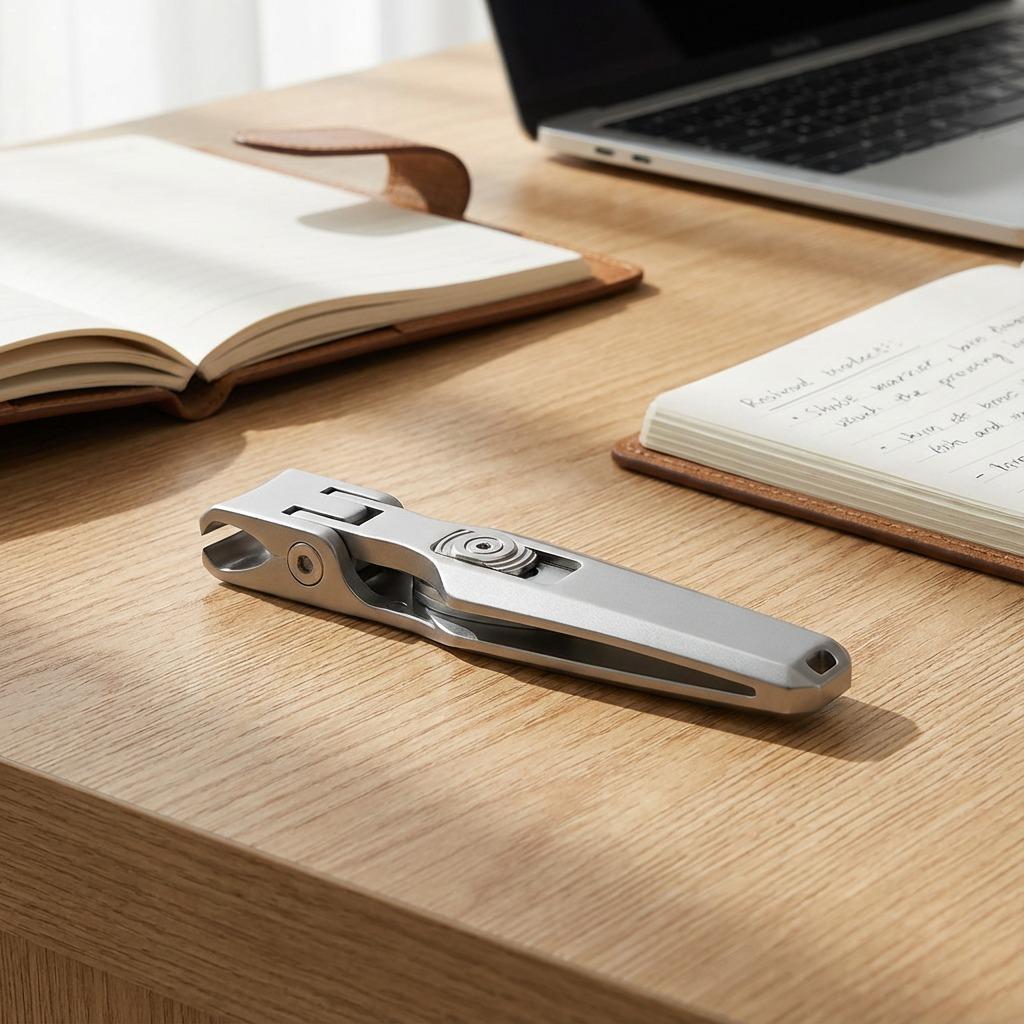
One notable trend is the move toward compact yet substantial nail clippers. A smaller tool is convenient for travel, handbags, bathroom drawers, and grooming kits, but it still needs enough weight and leverage to feel stable during use. The Olimor Beauty nail clipper referenced on this page measures 91mm by 16mm and weighs 48g, giving buyers a useful example of the balance many customers expect: portable, but not flimsy.
Stainless steel remains a common choice for nail clippers because buyers associate it with durability, clean appearance, and routine hygiene. Material alone, however, does not guarantee a good product. Buyers should also examine how the cutting edges are formed, how the lever is attached, how smoothly the moving parts operate, and whether the surface finish is appropriate for the selling channel. A clipper for a value multipack may have different finish expectations than a clipper intended for a premium personal care set.
Ergonomic grips are another practical area of improvement. A nail clipper does not need an overly complex shape, but it should be easy to hold and press. This matters for users with larger hands, users trimming thicker nails, and anyone who wants better control. In OEM planning, the most successful ergonomic decisions are usually subtle: lever length, finger contact area, edge rounding, and the angle at which the user can see the nail while clipping.
What a Nail Clipper Factory Should Control During Production
Factory capability is not only about the number of pieces produced. For nail clippers, the important question is whether each stage is controlled well enough to produce consistent cutting performance. Buyers should look for a production mindset that covers raw material handling, forming, sharpening, assembly, surface finishing, cleaning, and final packaging checks.
A practical factory evaluation can include the following points:
- Cutting alignment: The upper and lower cutting edges should meet evenly without visible gaps that affect trimming performance.
- Lever movement: The lever should rotate and press smoothly, with enough resistance to feel controlled but not stiff.
- Edge safety: Non-cutting areas should not feel rough, sharp, or uncomfortable in the hand.
- Surface consistency: The finish should be clean and uniform across the batch, with attention to visible scratches, stains, or burrs.
- Packaging protection: The clipper should be packed to reduce rubbing, movement, and cosmetic damage during shipping.
- Inspection records: Buyers should understand what is checked, when it is checked, and how nonconforming pieces are handled.
Olimor Beauty emphasizes quality checks on stainless steel tools, including inspection from raw materials through packaging. For wholesale buyers, that type of process focus is more valuable than a vague promise of quality. Nail clippers are small items, but batch-to-batch variation can affect brand reputation quickly.
OEM Nail Clipper Development: Decisions to Make Early
OEM nail clipper sourcing works best when the buyer defines the product position before discussing decoration or packaging. A clipper made for a minimalist travel kit may need a different size, finish, and packaging format than one intended for a salon retail display. Clear positioning helps the manufacturer recommend practical options and helps the buyer avoid unnecessary changes late in the process.
Before moving into sampling, buyers can prepare a simple development brief:
- Target user: Define whether the clipper is for general adults, travel users, men’s grooming, manicure kits, or professional resale.
- Sales channel: Specify whether it will be sold through e-commerce, retail stores, salons, gift sets, or wholesale distribution.
- Preferred size and feel: Decide whether compact portability, heavier hand feel, or maximum leverage is the priority.
- Finish direction: Identify the desired appearance while keeping durability and fingerprint visibility in mind.
- Branding needs: Consider logo placement, packaging copy, and how the clipper should match other tools in the range.
- Quality expectations: Set acceptance criteria for cutting performance, surface finish, movement, and packaging condition.
This preparation is especially helpful when discussing private label or customized grooming tools. It keeps the conversation focused on the product’s real use rather than decoration alone. Buyers reviewing broader product collections can also compare how a nail clipper might fit alongside tweezers, scissors, manicure tools, or other beauty accessories.
Wholesale Sourcing Priorities for Retail and Beauty Brands
Wholesale nail clipper buyers usually need reliable replenishment, consistent appearance, and packaging that suits their sales channel. A product that looks acceptable in a factory sample can still create problems if the master carton, individual packaging, or surface protection is not planned correctly. For e-commerce, cosmetic defects are especially visible because customers often inspect items closely before leaving reviews. For retail, hanging cards, boxes, or pouches must arrive in display-ready condition.
It is also worth considering how the nail clipper will be described to the end customer. Strong product pages focus on verifiable details: size, material, intended use, grip comfort, portability, and care instructions. Claims should be realistic. A good nail clipper can support neat personal grooming, but buyers should avoid unsupported medical, professional, or performance claims unless they are properly substantiated.
When comparing manufacturers, buyers can use a short checklist rather than relying only on catalog images:
- Does the factory understand the intended market and packaging format?
- Are dimensions, weight, material, and finish clearly confirmed before production?
- Can pre-production samples be evaluated for cutting feel and surface quality?
- Are inspection points defined for cutting edge alignment, lever action, and cosmetic finish?
- Is packaging suitable for the shipping method and final sales channel?
- Can the supplier support consistent communication during OEM development?
For buyers ready to discuss an OEM or wholesale project, the simplest next step is to send an inquiry with the intended market, quantity planning, packaging concept, and any required customization details.
Maintenance and End-User Care Add Value
Manufacturers and brands often focus on production, but user care instructions can reduce complaints and improve the customer experience. Nail clippers are frequently stored in humid bathrooms, travel bags, or shared grooming kits. Even when a clipper is made from stainless steel, basic cleaning and dry storage are sensible recommendations.
Useful care guidance for product packaging or online listings can include wiping the clipper after use, keeping the cutting edge dry, storing it away from standing water, and avoiding use on materials other than nails. If the clipper includes a file or catcher, instructions should explain how to clean that area as well. These details are simple, but they show that the brand understands real customer use.
Choosing a Manufacturer for the Next Nail Clipper Line
The strongest nail clipper manufacturing trend is not a single shape or finish. It is the move toward better sourcing discipline. Buyers want compact tools that feel stable, stainless steel construction that supports regular use, ergonomic handling, OEM flexibility, and quality checks that protect consistency. A 91mm by 16mm, 48g nail clipper is one example of how portability and usability can be balanced in a daily grooming item.
For retail brands, distributors, and beauty tool buyers, the best results come from matching the product to the sales channel and confirming the details that affect real use: cutting alignment, grip comfort, finish quality, packaging protection, and inspection standards. To compare options or discuss a nail clipper project with Olimor Beauty, buyers can contact Olimor with their product goals and sourcing requirements.
Tag: