


Import Tweezers from China: A Quality-Focused Buyer Guide
For beauty retailers, salon suppliers, private label buyers, and distributors, choosing where to import tweezers from is not only a price decision. Tweezers are small tools, but customers judge them quickly: the tips either meet cleanly or they do not; the grip either feels controlled or it feels cheap; the finish either resists daily handling or it begins to disappoint after limited use. That is why sourcing tweezers from China should be approached as a quality and consistency project, not simply as a search for the lowest unit cost.
China has become a major source for beauty tools because it combines manufacturing scale with a wide range of production options. Buyers can find everyday eyebrow tweezers, salon-oriented precision tools, and sets with straight, curved, or angled tips. The best results come from defining the tool’s use case, checking the supplier’s quality process, and confirming that the product fits the retail or professional environment where it will be sold.
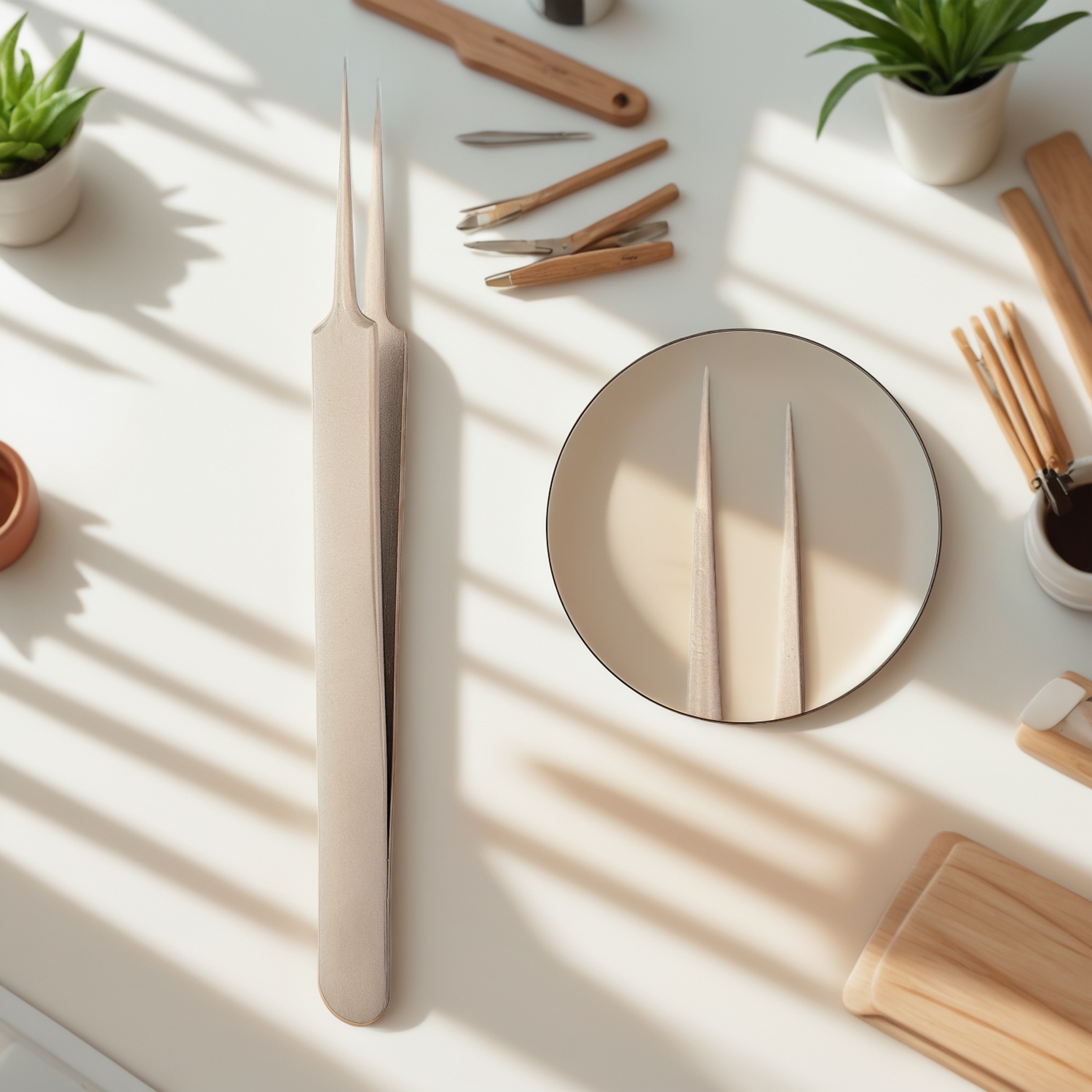
Why China Remains a Practical Source for Tweezers
The global tweezer market includes suppliers from many regions, and each has its own strengths. China’s advantage is that it can support many buyer needs in one sourcing base: volume production, varied tip shapes, packaging flexibility, and access to stainless steel beauty tools. For buyers managing a product line rather than a single item, that variety can reduce sourcing complexity.
Modern tweezer sourcing is also shaped by customer expectations. A basic tweezer still needs clean alignment, a comfortable hand feel, and durable construction. A salon-oriented tweezer needs more consistent grip pressure and tip finishing because it may be used frequently. Craft or electronics users may care more about tip shape and control. China’s supplier base can serve these different demands, but only when the buyer gives clear specifications and evaluates samples carefully.
Olimor Beauty focuses on beauty tool supply, including products where precision, stainless steel construction, ergonomic handling, and reliable finishing are important. Buyers reviewing broader options can explore beauty tool products to understand how tweezers may fit into a larger beauty accessories assortment.
Define the Tweezer Type Before Comparing Suppliers
Many sourcing problems begin with vague product requests. “High quality tweezers” can mean different things to different factories. Before comparing prices, buyers should define the intended customer and the expected use. A tweezer for eyebrow shaping may require a slanted or angled tip with a comfortable grip. A tweezer for fine work may need a narrower, more precisely aligned point. A beauty gift set may need a balanced mix of tip types and attractive packaging.
Common tweezer formats include:
- Slanted or angled tip tweezers: often preferred for eyebrow grooming because they combine control with a usable gripping surface.
- Straight tip tweezers: suitable for general beauty use, craft work, or handling small items where a flat grip is helpful.
- Curved tip tweezers: useful when access angle matters, depending on the task and customer segment.
- Pointed tip tweezers: chosen for very fine work, but they require careful tip protection and quality inspection.
- Tweezer sets: practical for retailers that want to cover multiple uses in one SKU, especially when packaging is part of the sales appeal.
When requesting samples, avoid relying only on photos. Tip alignment, spring tension, edge smoothness, and hand feel cannot be judged accurately from a product image. Samples should be tested by the same people who understand your customer complaints, return reasons, and price positioning.
Key Quality Checks for Imported Tweezers
A tweezer is a precision instrument, even when sold as a simple beauty accessory. Small defects can affect performance. The following checks help buyers evaluate whether a product is suitable for retail shelves, salon supply, or private label programs.
| Inspection Point | What to Check | Why It Matters |
|---|---|---|
| Tip alignment | Tips should meet evenly without visible gaps or twisting. | Misaligned tips fail to grip fine hairs or small items cleanly. |
| Tip finishing | Edges should be finely honed but not rough or unsafe. | Good finishing improves precision and reduces customer complaints. |
| Grip tension | The arms should flex smoothly with controlled resistance. | Too much tension causes fatigue; too little reduces control. |
| Surface finish | Check for scratches, stains, burrs, or uneven coating if applicable. | Appearance affects perceived quality and retail value. |
| Material suitability | Confirm stainless steel construction when that is part of the specification. | Stainless steel supports durability and corrosion resistance in normal beauty use. |
| Packaging protection | Tips should be protected during shipping and retail handling. | Unprotected tips can bend, chip, or arrive misaligned. |
For a first order, it is wise to test multiple samples from the same supplier rather than one perfect presentation sample. Consistency across samples gives a better view of production control. If a sample set includes straight, curved, and angled tips, inspect each type separately because different tip shapes may require different finishing skill.
How to Compare Chinese Suppliers Beyond Unit Price
Price matters, but a cheaper tweezer can become expensive if it leads to returns, poor reviews, or repacking costs. When comparing suppliers, look at the complete sourcing picture: product consistency, communication clarity, packaging ability, inspection process, and whether the supplier understands the end market.
A useful supplier review should include these questions:
- Can the supplier produce the exact tip style and finish your market needs? Do not assume a factory that makes one tweezer type can make all types equally well.
- How are raw materials, forming, polishing, and final inspection handled? You do not need to collect unnecessary technical claims, but you do need evidence of process control.
- Are samples representative of production? Confirm that approved samples will be used as the reference for bulk production.
- How will the tips be protected? A well-made tweezer can still fail if packaging allows tip damage during transport.
- Is packaging suitable for your sales channel? E-commerce, retail display, salon supply, and gift sets may all need different packaging decisions.
- How are defects defined and handled? Create a clear defect list covering misalignment, scratches, stains, rough edges, and packaging damage.
If you are building a wider beauty accessories range, browsing product collections can help you think about how tweezers coordinate with complementary tools, sets, and retail presentation.
Packaging and Branding Decisions That Affect Sell-Through
Tweezers are often bought on visual trust. Customers cannot test them before purchase in many retail and online settings, so packaging needs to communicate cleanliness, precision, and durability without exaggeration. A simple package may work for value-focused channels, while a premium beauty set may need a more protective and polished presentation.
Important packaging decisions include whether to use a tip guard, sleeve, blister card, pouch, box, or set tray. For pointed or finely finished tips, protection is especially important. Packaging should prevent movement that could bend the tool or damage alignment. If the tweezer is sold online, the package must also survive parcel handling, not only factory-to-warehouse shipping.
Claims printed on packaging should be accurate and supportable. For example, if the tweezer is stainless steel, that can be a meaningful selling point when it is part of the confirmed specification. Avoid broad claims that cannot be verified, such as unsupported professional certifications or performance promises. Clear instructions for cleaning, drying, and safe storage can also reduce misuse and improve customer satisfaction.
Maintenance Guidance Buyers Can Pass to Customers
Good after-sale guidance helps customers get better results from tweezers and can reduce negative feedback. Even durable stainless steel tools benefit from proper care. Beauty users should clean the tips after use, dry the tool before storage, and avoid dropping it on hard surfaces. A drop can damage alignment, especially on fine or pointed tips.
For salon or frequent-use environments, tweezers should be inspected regularly for grip quality, tip wear, and cleanliness. If the tips no longer meet evenly, the tweezer may not perform as expected. Including basic care language on packaging or product pages is a small step that can improve perceived quality and reduce avoidable complaints.
When Importing Tweezers from China Makes the Most Sense
Importing tweezers from China is especially practical when a buyer needs a balance of precision, value, and assortment flexibility. It can work well for beauty distributors, salon supply companies, online sellers, and private label programs that need consistent products across repeat orders. The key is to treat sourcing as a controlled process: define the product, test samples, approve reference standards, review packaging, and confirm inspection expectations before production.
Olimor Beauty supports buyers looking for beauty tool sourcing options where design, usability, and quality control are part of the purchasing decision. To discuss tweezer sourcing requirements, packaging expectations, or product assortment planning, you can contact Olimor or send an inquiry with your target use, preferred tip type, packaging needs, and order planning details.
A well-sourced tweezer may look simple, but it reflects careful choices in material, finishing, alignment, and presentation. Buyers who focus on these details are more likely to receive products that perform well, support their brand position, and meet customer expectations in a competitive beauty tool market.
Tag: