

Import Tweezers from China: A Practical Quality Guide for Beauty Tool Buyers
For beauty brands, salon distributors, private-label buyers and retail sourcing teams, tweezers look simple at first glance. In practice, they are precision tools. A pair that grips cleanly, aligns evenly and resists corrosion can support professional brow shaping and everyday grooming. A poor pair can slip, pinch the skin, lose alignment quickly or create inconsistent customer feedback. That is why businesses planning to import tweezers from China should evaluate more than unit price.
China remains a major manufacturing base for beauty tools because it offers a wide supplier range, scalable production options and experience across different product categories. The challenge is not finding a source; it is identifying a supplier whose process matches your market positioning. Buyers need to compare tip accuracy, material consistency, finishing quality, packaging readiness and communication reliability before placing repeat orders.
This guide explains how to assess tweezers export from China with a practical buyer mindset, especially when sourcing for beauty retail, salon use or professional grooming kits.
Why China Is a Common Source for Beauty Tweezers
The international tweezers trade includes many manufacturing regions, from niche European producers to large-scale Asian manufacturing hubs. China is attractive to many buyers because it combines supplier variety with production flexibility. A sourcing team can often compare basic grooming tweezers, salon-oriented options and more refined stainless steel tools within the same market.
However, the size of the market also creates variation. Some factories and trading companies focus on low-cost, high-volume items. Others concentrate on more controlled finishing, better alignment and product consistency. For a beauty business, that difference matters. Tweezers are frequently handled, examined closely and judged immediately by touch. Even small flaws in tip closure or edge finishing can affect perceived quality.
Before choosing a supplier, define the role of the product in your assortment. A budget travel kit may have different requirements from a brow studio retail line. A professional salon tool should usually be evaluated with closer attention to grip accuracy, comfort and long-term durability. Olimor Beauty works within the beauty tools category, and buyers can compare related items through beauty tool products when planning a broader sourcing program.
Key Quality Factors to Check Before Importing Tweezers
Good tweezers depend on a combination of material choice, shaping, alignment and finishing. Stainless steel is commonly valued in beauty tools because it can support durability and a clean appearance when properly processed. Still, the words “stainless steel” alone do not prove product quality. Buyers should inspect how the tool performs in the hand and whether samples remain consistent across multiple pieces.
When reviewing samples, focus on observable performance rather than only catalog descriptions:
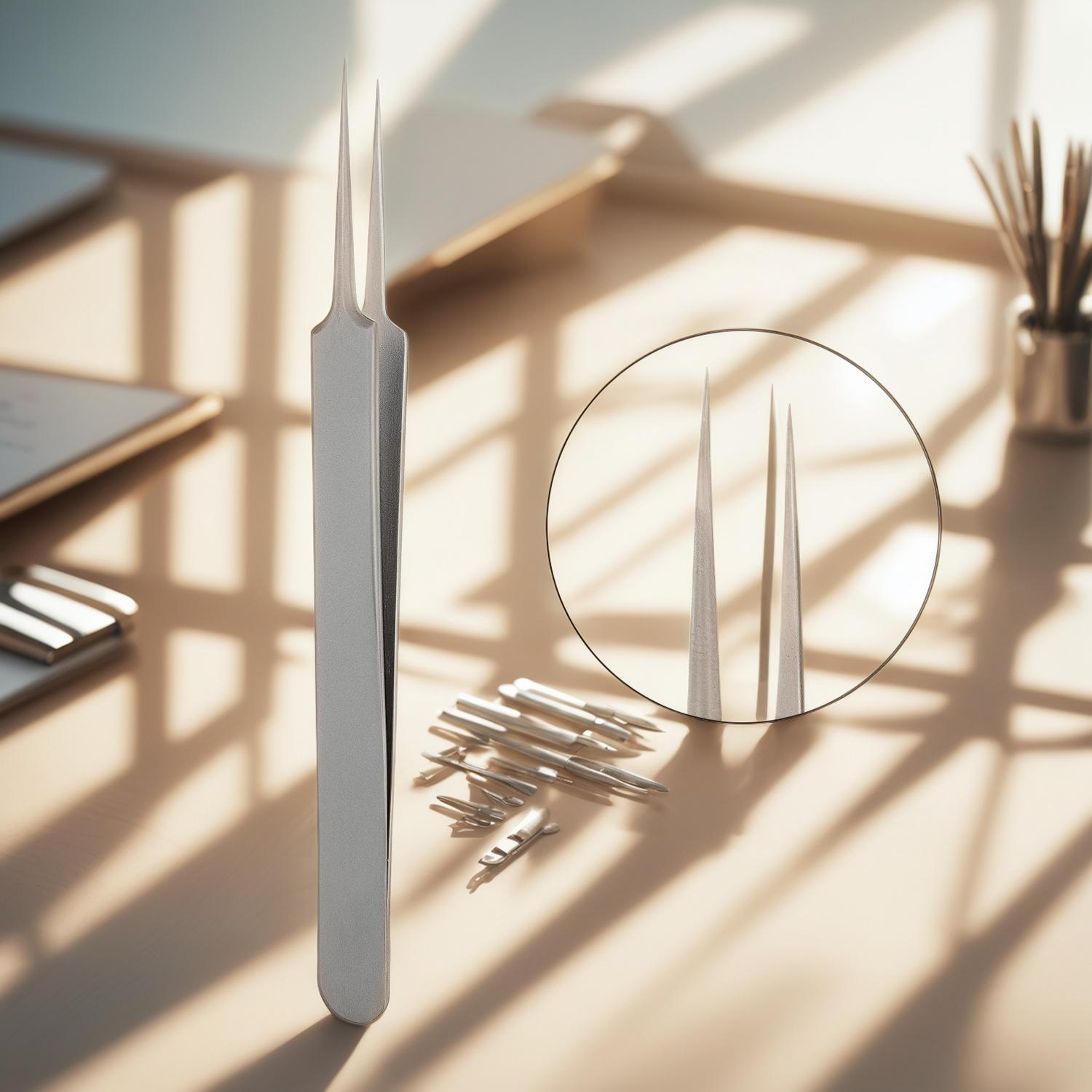
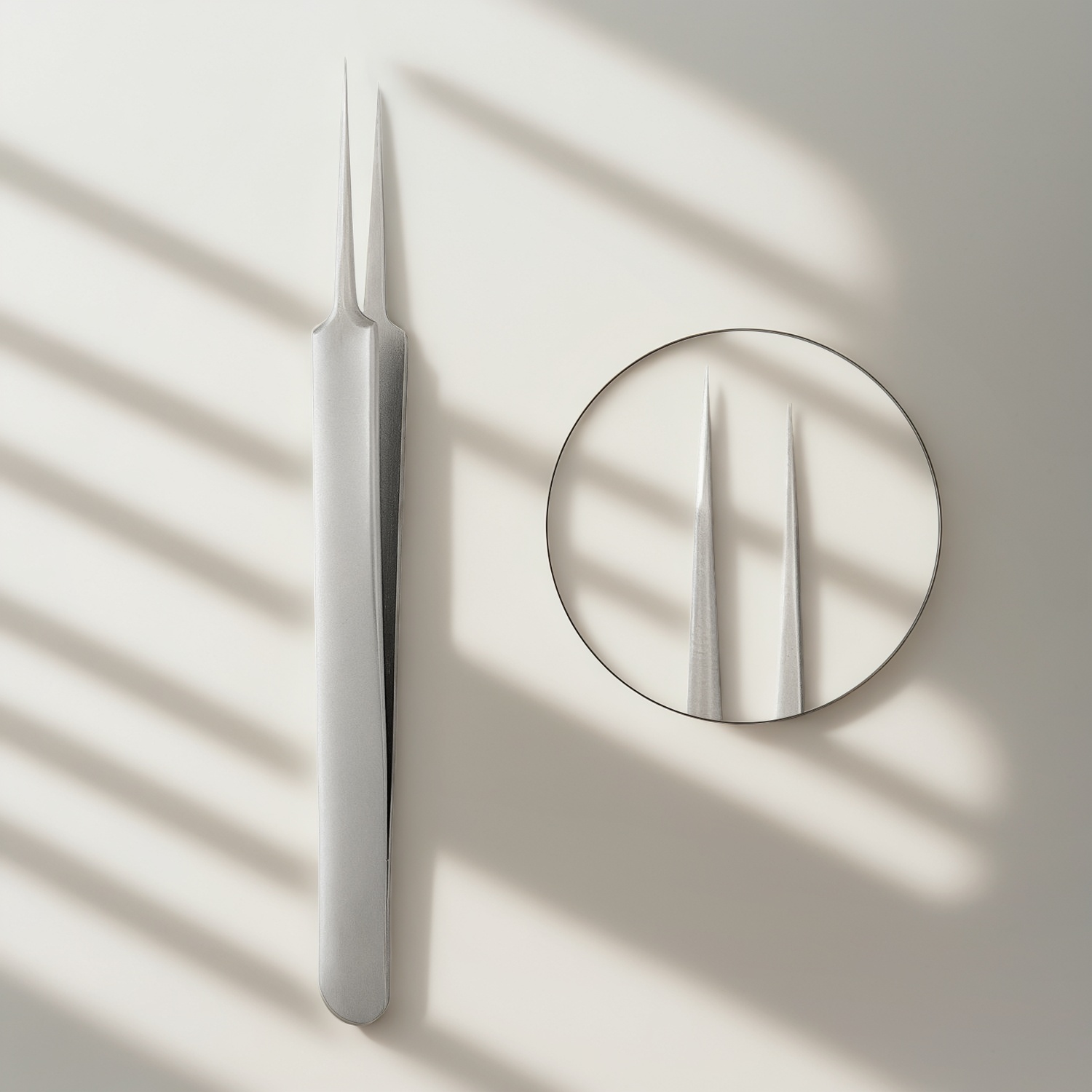
- Tip alignment: The two tips should meet evenly without a visible gap, twist or offset.
- Grip performance: Tweezers should grasp fine hairs or test fibers without excessive pressure.
- Edge comfort: Outer edges should feel smooth enough for beauty use and should not scratch the skin during normal handling.
- Tension: The spring feel should be firm enough for control but not tiring during repeated use.
- Finish consistency: Surface treatment, color, polish or coating should look uniform across samples.
- Clean packaging: Packaging should protect the tips and present the product appropriately for the target sales channel.
For beauty buyers, tip protection is especially important. Tweezers can leave the factory well aligned but arrive damaged if the tip is not secured during packing and shipment. Include packaging structure in your inspection checklist, not just the tool itself.
Straight, Slanted and Angled Tweezers: Match the Shape to Use Case
The original product range referenced straight-tip and highly angled tweezers, which are common options for beauty and precision handling. The right tip shape depends on the customer’s expected use. A buyer serving brow professionals may prioritize slanted or angled tips for visibility and control, while a kit supplier may prefer a simple straight-tip option for general grooming.
The following comparison can help during assortment planning:
| Tip style | Typical use consideration | Buyer evaluation focus |
|---|---|---|
| Straight-tip tweezers | General gripping tasks and simple grooming kits | Even closure across the full tip width and comfortable tension |
| Slanted or angled tweezers | Brow shaping, visibility around contours and more controlled hair removal | Precise point contact, balanced angle and smooth edge finishing |
| Fine-tip styles | Detailed precision work where accuracy is important | Tip symmetry, safe protective packaging and careful handling standards |
A practical sourcing strategy may include more than one shape if your customers have different skill levels. For retail, clear packaging descriptions can reduce confusion. For salon distribution, sample testing by technicians can provide better feedback than office inspection alone.
Manufacturer or Trading Company: What Buyers Should Compare
Not all tweezers suppliers operate the same way. A trading company may provide access to many product categories and handle communication efficiently, but it may have limited direct control over production details. A dedicated manufacturer can often offer deeper technical discussion about tooling, finishing, inspection and packaging, depending on its capabilities.
Price is important, but it should be compared together with repeatability. A low initial quotation can become expensive if quality varies between batches, tip alignment requires rework, or customer returns increase. For professional beauty tools, consistency is often more valuable than the lowest available price.
When comparing a potential tweezers global supplier, review these sourcing questions internally:
- Does the sample match the quality level expected by your retail or salon customers?
- Are the tips protected in a way that prevents bending during shipment?
- Is the supplier able to keep appearance, tension and closure consistent across production?
- Can the supplier discuss packaging, labeling and assortment needs clearly?
- Do communication timelines support your launch schedule and reorder planning?
- Are inspection expectations agreed before production begins?
For buyers developing a wider beauty tool line, it may also help to review product collections so tweezers can be considered alongside complementary tools rather than sourced as an isolated item.
Sample Testing: A Simple Process That Prevents Costly Mistakes
Sample approval should be more than a quick visual check. Because tweezers are small, defects can be subtle until the tool is used. Create a repeatable test process and compare several pieces from the same sample set. If every sample behaves differently, larger production may also vary.
A useful sample review can include grip testing on fine hair-like fibers, visual inspection under bright light, tension comparison, packaging drop or handling checks, and review of surface finish from multiple angles. If the tweezers are intended for salon-quality positioning, have someone familiar with brow work test them in realistic hand movements. Comfort during repeated use can reveal issues that a static inspection misses.
Document your approved sample with photos, notes and acceptance criteria. For example, note whether the tips should close fully, how the surface should look, what packaging protection is required and what kind of user experience you expect. This gives both sides a clearer reference when moving from sampling to production.
Quality Control Points for Tweezers Export from China
Quality control should be planned before production, not only after goods are ready. Tweezers are vulnerable to issues such as uneven tips, inconsistent tension, scratches, rough edges, bent points or packaging movement. These problems are easier to prevent when the supplier understands which points are critical for your market.
For a beauty-focused order, consider defining inspection checkpoints around material appearance, shaping, tip closure, surface finishing, cleaning, packaging and carton protection. If your product will be sold online, appearance consistency becomes even more important because customers compare the delivered item directly with product photos. If it will be sold through salons, hand feel and performance may carry more weight.
Olimor Beauty positions tweezers as precision beauty tools, with attention to stainless steel construction, ergonomic design and inspection from raw materials to final packaging. Buyers who need product guidance can contact Olimor to discuss suitable options, packaging considerations and sourcing priorities for their market.
Building a Reliable Tweezers Sourcing Program
Successful importing is rarely about a single order. It is about building a repeatable process that supports stable quality over time. Once you approve a tweezer style, keep reference samples, packaging samples and written quality notes. Use them for reorders and for comparing new production. This helps avoid slow quality drift, where small changes accumulate unnoticed until customers complain.
Also consider how tweezers fit into your brand architecture. Are they an entry-level accessory, a professional brow tool, part of a manicure or grooming set, or a retail add-on near the checkout? Each position requires different packaging, finish expectations and price sensitivity. Clear positioning allows your supplier to recommend more appropriate choices without overbuilding or underbuilding the product.
For buyers ready to evaluate options, the next step is to prepare target use, preferred tip shape, packaging needs, market channel and quality expectations, then send an inquiry. A focused inquiry saves time and leads to more relevant sampling discussions.
Final Checklist for Importing Tweezers from China
China offers strong opportunities for beauty tool sourcing, but the best results come from structured evaluation. Look beyond broad claims and inspect the details that determine user satisfaction: tip alignment, grip, comfort, finish, packaging and supplier consistency. Whether you are sourcing a simple grooming tweezer or a more refined salon-oriented tool, precision should be treated as the core product value.
A reliable tweezers export program combines the right product design with clear communication and practical quality control. By testing samples carefully, defining acceptance criteria and selecting a supplier aligned with your brand standards, you can import tweezers from China with greater confidence and build a beauty tool assortment that customers can trust.
Tag: