

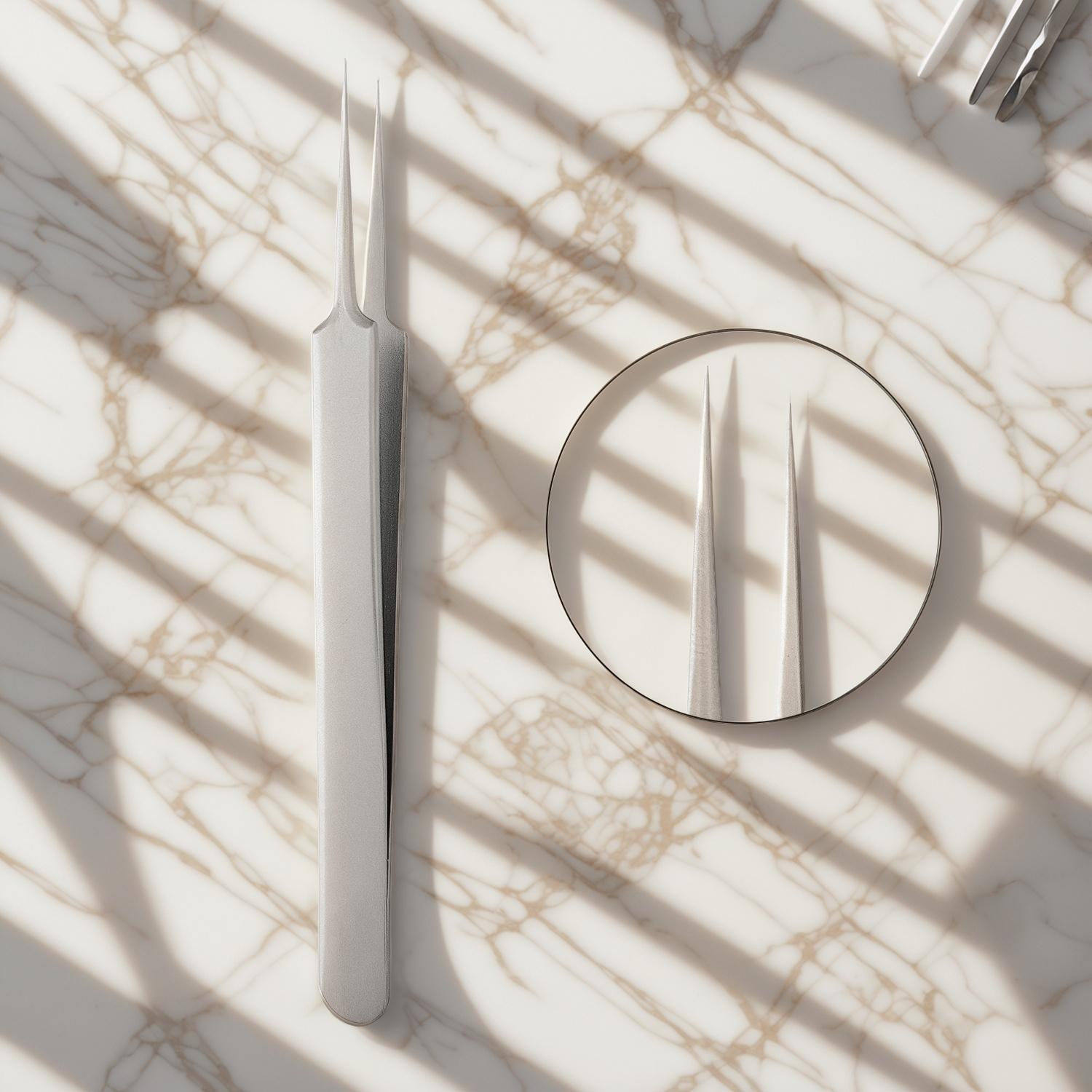
Import Tweezers from China: A Practical Supplier Guide for Beauty Tool Buyers
For beauty brands, salon distributors, wholesalers and private-label buyers, the decision to import tweezers from China is often driven by three practical needs: consistent supply, broad product choice and competitive production costs. China has a mature beauty-tool manufacturing base, which makes it possible to source common brow tweezers, pointed precision tweezers, slant tip tweezers, curved tweezers and other grooming tools through one purchasing channel.
That scale is useful, but it does not remove the need for careful evaluation. A tweezer is a small product, yet buyers quickly notice differences in tip alignment, grip tension, edge finish, coating durability and packaging consistency. A low-cost tweezer that cannot hold a fine hair or has rough edges can damage customer trust. A well-sourced tweezer, by contrast, supports repeat orders because the user immediately feels the difference in control and precision.

This guide explains how to approach China tweezer sourcing with a quality-first mindset, what to compare against local alternatives, and which checks matter before committing to larger import orders.
Why China Is a Major Source for Tweezers
China’s role in the international tweezers trade is linked to production infrastructure. Many buyers are not only looking for one item; they need a range of grooming tools that can be purchased, inspected, packed and shipped together. Compared with smaller local supply options, Chinese manufacturers and trading partners may offer wider access to different tweezer shapes, finishes and packaging formats.
For a distributor or beauty brand, this matters because product lines rarely remain static. A starter order may include one slant tweezer, but later purchasing plans may require straight tweezers, pointed tweezers, brow scissors, lash tools or other beauty accessories. Working with a supplier that understands beauty-tool categories can simplify development and reduce the need to manage many unrelated vendors.
Buyers comparing suppliers can begin with Olimor’s broader beauty tool products to understand how tweezers may fit within a wider personal-care tool assortment. Reviewing related categories is useful when planning bundles, retail sets or distributor catalogs.
Key Tweezer Quality Factors to Check Before Importing
The most important quality issues are usually visible in the working end of the tweezer. A polished finish or attractive color can help retail presentation, but performance depends on whether the tips meet cleanly and grip consistently. Before importing tweezers from China at scale, buyers should define what acceptable quality means for their customer segment.
- Tip alignment: The two tips should meet evenly without gaps, twisting or crossing. Misaligned tips make it difficult to grip fine brow hairs.
- Grip tension: The tweezer should open and close smoothly. Too much stiffness causes hand fatigue; too little tension reduces control.
- Tip sharpness and finish: Tips should be precise enough for intended use but not rough, jagged or unsafe to handle.
- Surface finishing: Plating, coloring, polishing or coating should look even and should not leave sharp edges around the arms or tip area.
- Symmetry and shape consistency: Products in the same carton should have consistent size, curve, angle and finish.
- Packaging fit: Caps, sleeves, cards or boxes should protect the tip and prevent movement during shipment.
For professional salon buyers, tip precision may be the top priority. For retail beauty brands, packaging appearance and finish consistency may carry equal weight. For promotional buyers, price may be important, but even low-cost tweezers should still pass basic safety, alignment and handling checks.
China Suppliers vs. Local Alternatives
Local sourcing can be useful for urgent replenishment, smaller test quantities or buyers who need simplified logistics. However, local suppliers may have a narrower assortment and higher per-unit costs, especially when the product has passed through several distribution layers. Importing directly from China can give buyers more control over product selection, packaging decisions and long-term cost planning.
The trade-off is responsibility. Import buyers need to manage samples, specifications, quality expectations, shipping schedules and customs documents more carefully. A local wholesaler may be easier for quick ordering, while a China-based supplier can be more effective for planned sourcing and scalable product programs.
| Decision Point | Importing from China | Buying Locally |
|---|---|---|
| Product variety | Often broader, with multiple tweezer shapes and finishes available | May be limited to stocked items |
| Cost structure | Can be competitive for planned volume orders | Usually includes local distribution margins |
| Lead time | Requires production and international shipping planning | Often faster for available stock |
| Customization | Potentially more flexible depending on supplier capability | Often limited unless the buyer orders through a custom program |
| Quality control | Needs clear specifications, samples and inspection standards | Can sometimes be checked physically before purchase |
The right choice depends on the buyer’s sales model. A boutique salon may prefer local stock for convenience. A distributor, marketplace seller or private-label beauty brand may benefit more from direct sourcing because product range and repeat supply become more important over time.
How to Evaluate a Tweezer Supplier
A reliable supplier should be able to discuss the product in practical manufacturing terms, not only send photos. Buyers should look for clear communication about tweezer types, material options, finish options, packaging methods and inspection steps. When details are not confirmed, it is better to create a written checklist than rely on assumptions.
Useful evaluation questions include:
- Which tweezer shapes are available for the intended use: slant, straight, pointed, curved or other formats?
- How are tip alignment and gripping performance checked before packing?
- What surface finishes are available, and what are the visible acceptance standards for scratches, color variation or marks?
- Can samples be reviewed before a bulk order is approved?
- What packaging options protect the tips during shipping and retail handling?
- How are mixed orders, cartons and product labels organized for importers?
- What information will be provided for shipping, customs and product identification?
These questions help separate product-focused suppliers from general sellers. A good sourcing conversation should result in clear specifications that both sides can repeat: tweezer shape, dimensions if applicable, finish, packaging, sample approval reference, inspection points and carton requirements.
Sample Approval: The Step Buyers Should Not Skip
Samples are essential because tweezer quality is tactile. A photo cannot confirm spring tension, balance in the hand or the way the tips grip fine hair. Buyers should test samples in the same way their customers will use them. For brow grooming tools, that means checking fine-hair grip, comfort, tip control and whether the tips feel safe around the skin.
When reviewing samples, do not approve only the best-looking piece. Check several units if possible and record what makes the sample acceptable. If the finish is brushed, mirror-polished, coated or colored, note the expected appearance. If the packaging includes a tip protector, pouch, card or box, confirm that it does not bend or dull the tips.
A simple sample review sheet can include columns for tip alignment, grip strength, surface finish, logo or label position, packaging condition and overall approval. This record is useful when the bulk shipment is inspected later because it gives the buyer and supplier the same quality reference.
Packaging, Branding and Retail Readiness
Tweezers are small, but packaging has a major effect on customer perception and damage prevention. A bare tweezer shipped loosely can rub against other items, causing scratches or tip damage. Retail packaging can also influence whether the product is suitable for salons, pharmacies, beauty stores, ecommerce orders or promotional kits.
Common packaging considerations include tip caps, protective sleeves, backing cards, pouches, hang holes, barcode placement and outer carton strength. Buyers planning private-label or retail-ready orders should prepare artwork carefully and check print positioning, color matching and required product information. No packaging claim should be added unless it is accurate for the product and supported by the supplier’s documentation.
If tweezers are part of a broader beauty program, it may help to review Olimor product collections for assortment planning. Buyers can compare how individual tools might fit into sets, gift packs or professional supply catalogs without creating unnecessary overlap.
Import Planning and Quality Control Before Shipment
After sample approval, the next risk is inconsistency between approved sample and bulk production. Importers should define an inspection plan before shipment. The inspection does not need to be complicated, but it should focus on the failure points that matter most for tweezers.
Important pre-shipment checks include carton count, product quantity, packaging condition, visible finish defects, tip alignment, opening and closing function, and comparison against the approved sample. For mixed orders, the inspection should also confirm that each tweezer type is packed and labeled correctly. This reduces receiving problems and helps warehouse teams identify products quickly.
Shipping plans should consider lead time, seasonal demand and reorder timing. Tweezers may be compact, but delays can still affect retail launches or distributor commitments. Buyers should align production timing, packaging approval and freight arrangements early rather than waiting until the order is finished.
When to Work with a Beauty-Tool Specialist
General import vendors may be able to source tweezers, but a beauty-tool specialist is more likely to understand why small performance details matter. For example, a tweezer used for brow shaping must grip fine hairs cleanly, while a general household tweezer may not meet the same expectations. A supplier familiar with salon-quality beauty tools can help buyers compare practical options and avoid choosing only by appearance.
Olimor Beauty focuses on beauty tools and can be considered by buyers who want to discuss tweezer sourcing as part of a larger product plan. To clarify available options, packaging direction or order planning, buyers can contact Olimor or send an inquiry with their intended market, product type and quality expectations.
Final Buyer Checklist for Importing Tweezers from China
Importing tweezers from China can be a strong sourcing decision when it is managed with clear standards. The best results come from treating tweezers as precision grooming tools rather than simple low-cost accessories. Before confirming an order, buyers should know which tweezer shape they need, how the tip should perform, what finish is acceptable, how the product will be packed and how quality will be checked before shipment.
A practical final checklist includes sample approval, written product specifications, packaging confirmation, inspection criteria, shipping timeline and reorder planning. With these basics in place, buyers can take advantage of China’s manufacturing scale while protecting the performance and consistency their customers expect.
Tag: