

Import Tweezers from China: Practical Sourcing Guide for Beauty Tool Buyers
Importing tweezers from China can be a practical sourcing route for beauty retailers, grooming brands, salon suppliers, wholesalers and private label buyers that need reliable tools at a workable landed cost. The opportunity is not just about finding a low unit price. A successful tweezer import program depends on clear product requirements, consistent quality checks, appropriate packaging, realistic shipping planning and a supplier relationship that can support repeat orders.
Tweezers look simple, but buyers know that small details affect customer satisfaction: tip alignment, grip tension, surface finish, edge sharpness, corrosion resistance, packaging protection and the way the tool feels in the hand. If one of these details is ignored, a product that appears acceptable in photos may not perform well after arrival. This guide focuses on the practical decisions that help you import tweezers from China with fewer surprises.
Why China Is a Common Source for Tweezers
China is a major manufacturing base for beauty and grooming tools, including stainless steel tweezers used for eyebrow shaping, facial hair removal, lash application, nail work and general grooming. For buyers, the main attraction is the ability to source different tweezer styles, packaging formats and order configurations through an established export supply chain.
However, sourcing from China should still be approached as a structured procurement project. A tweezer is a precision hand tool. The buyer should confirm whether the supplier understands the intended use, target customer and quality level. A beauty retailer selling consumer eyebrow tools may need different packaging and finish standards from a professional salon distributor, while a promotional buyer may prioritize simple presentation and stable supply.
Olimor Beauty works in the beauty tools category and can be reviewed alongside other beauty tool products when buyers are comparing sourcing options. The right choice depends on the product requirements, inspection expectations and market positioning of your business.
Define the Tweezer Type Before Requesting a Quote
Many import problems begin with a vague inquiry. Asking for “stainless steel tweezers” is usually not enough. A supplier may quote a product that is technically correct but not suitable for your market. Before requesting pricing, prepare a simple specification sheet that describes the product in functional terms.
Key points to define include:
- Tip shape: Pointed tips are useful for precise grooming and detailed hair removal. Slanted, flat or curved tips may suit other beauty tasks.
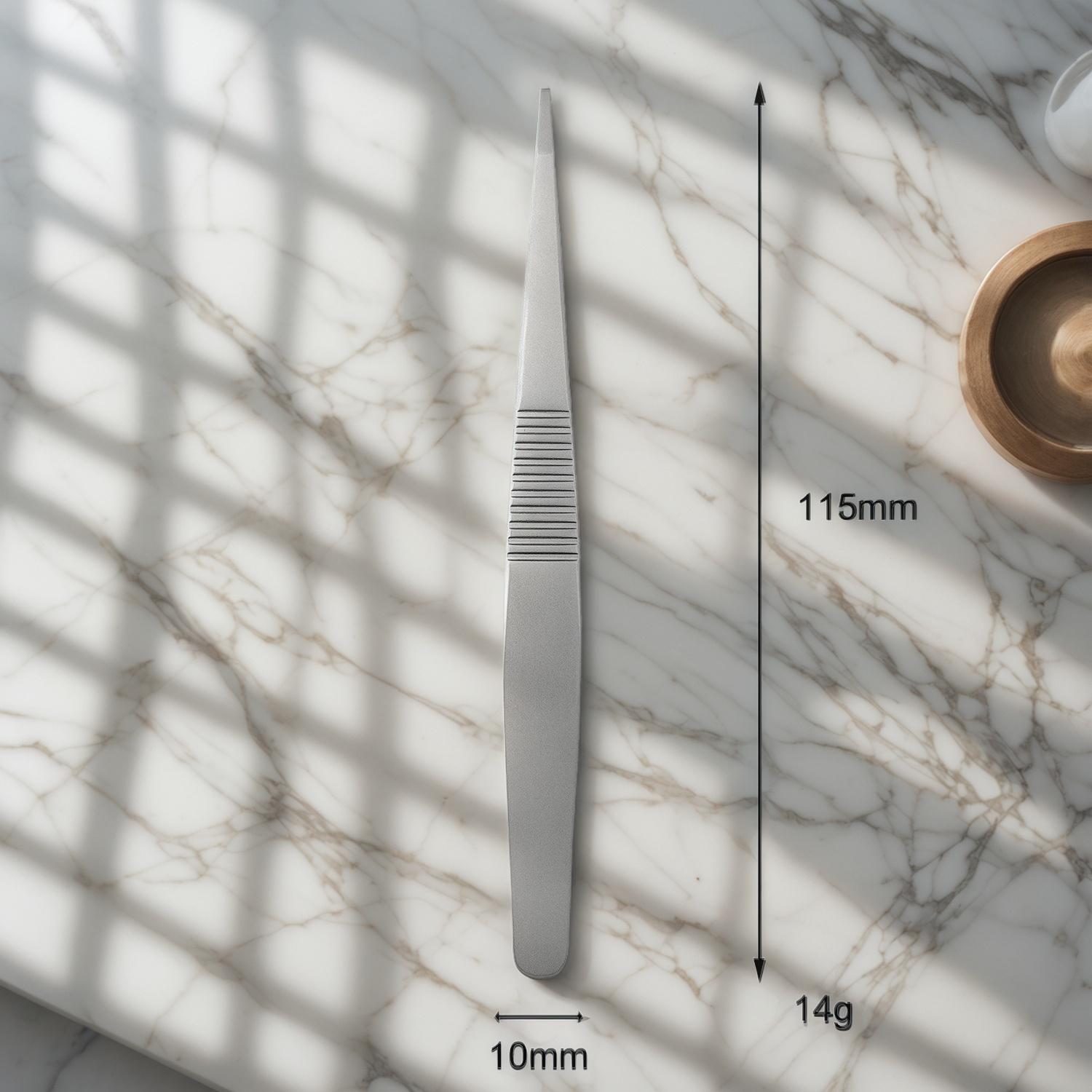
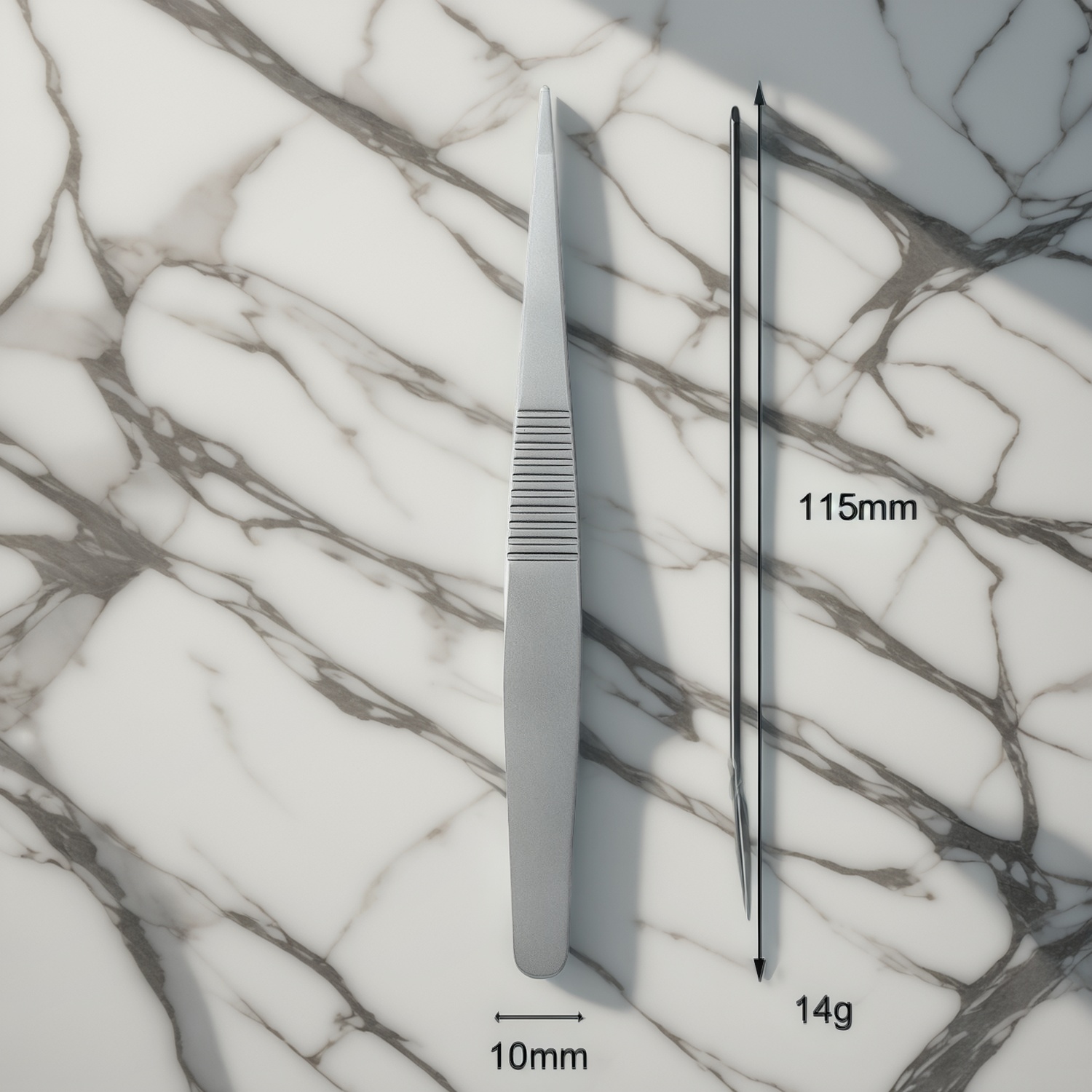
- Size: The supplied article references 115mm stainless steel tweezers with pointed tips. If this is your target, confirm the length and acceptable tolerance in writing.
- Material: Stainless steel is commonly used for beauty tweezers because it supports durability and a clean finish. Avoid assuming a specific grade unless it is confirmed in supplier documentation.
- Grip and tension: The arms should close smoothly without feeling too loose or too stiff. This affects both precision and user comfort.
- Surface finish: Decide whether you need polished, brushed, matte or coated surfaces, and consider how easily fingerprints or scratches will show.
- Packaging: Individual sleeves, retail cards, boxes or bulk packs all affect cost, shipping volume and customer presentation.
A clear specification sheet makes supplier comparison easier. It also reduces the risk of receiving quotes for different products that cannot be compared fairly.
How to Evaluate a Tweezers Global Supplier
When choosing a tweezers global supplier, do not rely only on product photos and price. A stronger evaluation looks at communication, sampling discipline, packaging experience, export handling and willingness to document details. Buyers importing for resale should look for a supplier that can answer practical questions without overpromising.
Useful evaluation criteria include:
- Product understanding: The supplier should be able to explain the use of different tweezer tips and finishes, not only provide a catalog image.
- Specification control: Confirm that length, tip type, material description, finish and packaging can be recorded on a quotation or order confirmation.
- Sample consistency: Samples should reflect the intended mass production quality. If sample and bulk production may differ, clarify why.
- Inspection process: Ask how tip alignment, closing tension, finish defects and packaging condition are checked before shipment.
- Export experience: A supplier familiar with international tweezers trade should understand packing lists, commercial invoices and shipping coordination.
- After-sales handling: Discuss how shortages, visible defects or packaging problems are reported and resolved.
You can also browse relevant product collections to understand the range of beauty tools available before narrowing your inquiry. If your requirements are ready, you can send an inquiry with your target tweezer type, estimated order quantity, packaging needs and destination market.
Sampling: The Most Important Step Before Bulk Import
A sample order is not just a formality. It is the best opportunity to confirm whether the tweezer performs as expected in real use. Inspect the sample under good lighting and test it with the same grooming task your customer will perform. For pointed tweezers, examine whether the tips meet evenly and whether they can grip fine hair without slipping.
During sample review, check both function and presentation. A tool may remove hair well but still fail your retail standard if it has visible scratches, uneven finishing, rough edges or weak packaging. If the sample is intended for professional beauty users, comfort during repeated use is especially important. Ergonomic design, mentioned in the supplied material, should be evaluated by hand rather than accepted as a description only.
Keep approved samples as reference pieces. Label them with date, supplier, specification and any agreed changes. When bulk goods arrive, compare cartons from the shipment against the approved sample. This gives your receiving team a practical baseline for inspection.
Quality Checks for Imported Tweezers
Quality assurance for tweezers should focus on details that affect performance and customer complaints. Even when a supplier has internal checks, the importer should define what is acceptable. A simple incoming inspection plan can prevent defective pieces from entering your inventory.
| Check point | What to look for | Why it matters |
|---|---|---|
| Tip alignment | Tips meet evenly without gaps or crossing | Determines grip precision and hair removal performance |
| Closing tension | Arms close smoothly with controlled resistance | Affects comfort, fatigue and usability |
| Surface finish | No obvious scratches, stains, burrs or sharp unintended edges | Supports customer perception and safe handling |
| Length and shape | Matches the confirmed specification, such as 115mm pointed tweezers if ordered | Prevents mixed or incorrect product shipments |
| Packaging | Correct artwork, clean packing, no crushing or moisture damage | Protects goods in transit and supports retail readiness |
| Carton labeling | Clear item description, quantity and shipping marks where required | Improves receiving, warehousing and customs handling |
For larger orders, consider checking samples from multiple cartons rather than only the top carton. Transit pressure and handling conditions can vary across a shipment, so packaging durability matters as much as the product itself.
Packaging and Shipping Considerations
Tweezers are compact, but their pointed tips and finished surfaces require protection. Poor packaging can cause tip damage, scratches or bent retail cards. Decide early whether the shipment will be bulk packed for repacking in your market or packed in final retail presentation before export.
For retail-ready shipments, confirm artwork, barcode placement, warning language if needed, country-of-origin marking and carton quantities. For wholesale or professional supply, simple protective sleeves may be sufficient, but the tips should still be protected from impact. If you are importing pointed tweezers, packaging should prevent the points from damaging neighboring units or carton liners.
Shipping choices depend on order size, urgency and budget. Air freight may be suitable for samples, urgent replenishment or small high-value shipments. Sea freight is commonly used when volume grows, but it requires longer planning. Whatever method is chosen, request documents that match the shipment accurately, including item descriptions, quantities, declared values and package counts. Import regulations, tariffs and documentation rules vary by country, so confirm the requirements in your destination market before shipment.
Costing Beyond the Unit Price
A low quoted price does not always mean a low final cost. For import planning, calculate the landed cost: product cost, packaging, inspection if used, domestic transport in China if applicable, international freight, insurance where selected, import duty, customs brokerage, local delivery, warehousing and any rework required after arrival. Small tools can still carry meaningful costs if packaging is bulky or if shipments are not consolidated efficiently.
Also factor in the cost of quality risk. If tweezers arrive with poor tip alignment or damaged packaging, the real cost includes sorting labor, returns, discounts and lost customer trust. Paying attention to specification and inspection often protects margin more effectively than negotiating the last small discount from the unit price.
Building a Repeatable Import Process
The best sourcing programs are repeatable. Once you approve a tweezer style, create a file that includes the quotation, confirmed specification, sample photos, packaging artwork, inspection notes, shipping documents and receiving feedback. This file becomes your reference for reorders and helps avoid misunderstandings when staff or supplier contacts change.
After the first shipment, review what worked and what should improve. Were cartons easy to receive? Did packaging protect the pointed tips? Did customers comment on grip, finish or comfort? Did the lead time match your selling cycle? Use this information to adjust future orders instead of treating each purchase as a new project.
If your business is comparing stainless steel tweezers with other beauty tools, or if you need to clarify available product options, you can contact Olimor with your intended use, packaging format and target market. A well-prepared inquiry helps both sides focus on the product details that matter most.
Final Buying Checklist
Before you import tweezers from China, confirm the following points in writing:
- Exact tweezer type, including tip shape and size.
- Material description and surface finish.
- Approved sample and any changes requested after sample review.
- Packaging format, artwork and carton packing method.
- Inspection criteria for tip alignment, tension, finish and packaging.
- Shipping method, destination, required documents and timeline.
- Process for reporting shortages, damage or defects after arrival.
Importing tweezers from China can support a strong beauty tool assortment when the buying process is specific and disciplined. Focus on function, consistency and documentation, not only price. With clear specifications and practical quality checks, stainless steel tweezers can become a reliable part of your grooming tool supply chain.
Tag: