

Import Nail Clippers from China: Practical Sourcing Checks for Beauty Buyers
Importing nail clippers from China can be a sensible route for beauty retailers, wholesalers, e-commerce sellers, salon suppliers and private-label brands that need consistent everyday grooming tools at competitive landed cost. The opportunity is not only about price. A well-managed sourcing process can give buyers more control over design details, packaging, assortment planning and repeat supply.
At the same time, nail clippers look simple until you begin evaluating them as commercial products. Blade alignment, spring tension, cutting feel, grip comfort, surface finishing, file integration, packaging durability and inspection consistency all affect customer satisfaction. A clipper that looks good in a product photo may still disappoint if it pulls, bends, rusts prematurely or arrives with inconsistent finishing.
This guide explains how to approach China sourcing with practical criteria rather than assumptions. It is written for buyers comparing direct imports with local distribution, reviewing nail clipper suppliers and deciding what to verify before placing an order. Olimor Beauty offers beauty tool products for buyers who need sourcing support, product comparison and communication around practical production questions. You can also browse related beauty tool products to understand how nail tools fit within a wider personal care assortment.
Why China Is a Common Source for Nail Clippers
China remains a major manufacturing base for personal care tools because it combines component supply, metal processing, surface finishing, assembly, packaging and export logistics within established industrial networks. For nail clippers, that matters because the final product depends on more than one process. The cutting edge must be formed accurately, the lever must transfer pressure smoothly, the body must resist deformation during use and the surface finish must be acceptable for the intended retail channel.
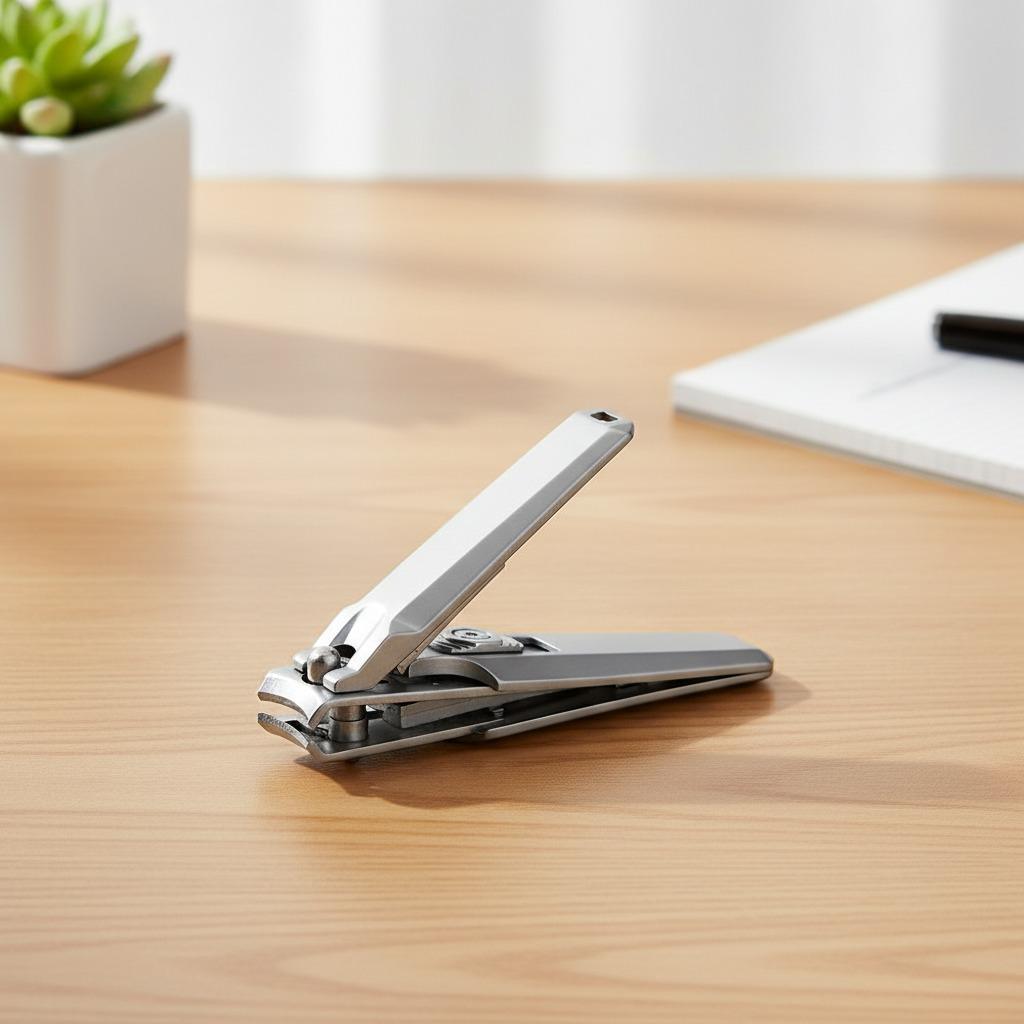
Direct sourcing can also provide more room to define product details. A buyer may want a classic compact clipper, a larger toenail clipper, an option with a built-in file or a metallic finish that suits a particular retail display. The supplied product information mentions sleek 91mm nail clippers, ergonomic grips and sharp blades, as well as a Titanium Nail Clipper with a built-in file and durable metallic finish. It also refers to a lightweight 48g design and ergonomic stainless steel construction. These are the kinds of details buyers should document clearly when comparing samples, because a small difference in size, weight or grip feel can change the customer experience.
Local distributors can be useful when speed and small replenishment quantities are the priority. However, buyers who need more control over specifications, packaging and long-term assortment planning often evaluate direct China sourcing to reduce layers between the brand and the manufacturing source.
Traditional Sourcing vs. Direct Import: What Changes for the Buyer?
Traditional sourcing through domestic wholesalers or regional distributors is usually simpler at the beginning. Communication may happen in the buyer’s time zone, products may already be stocked locally and reorder quantities may be lower. The tradeoff is that the buyer may have limited access to the actual manufacturer, fewer customization options and less visibility into inspection standards.
Direct import from China requires more preparation. Buyers need to compare suppliers, confirm product specifications, review samples, arrange packaging details and plan shipping. In return, they can often build a closer link between product decisions and market needs. For example, if your customers prefer a larger 91mm clipper with a comfortable grip, that should be captured as a specification rather than left as a general request for a “good quality nail clipper.”
When deciding between routes, evaluate the total buying process, not just the quoted unit price. A lower product price may not be the best choice if it comes with weak finishing, unclear packaging protection or inconsistent inspection. A higher-priced supplier may still offer better value if the clipper cuts cleanly, the lever feels stable, the surface finish is consistent and cartons are prepared for the chosen shipping method.
Key Quality Criteria for Nail Clipper Imports
Nail clippers are judged by feel as much as appearance. Buyers should handle samples repeatedly and, where appropriate, compare them with products already accepted by their target market. A good sourcing review should include both visual checks and functional checks.
- Blade alignment: The cutting edges should meet evenly. Misalignment can cause tearing, slipping or incomplete cuts.
- Cutting sharpness: Sharp blades reduce pressure and improve user comfort. Test the clipper on appropriate sample materials rather than relying only on appearance.
- Lever stability: The lever should open, close and press smoothly without excessive looseness.
- Grip comfort: Ergonomic grips can help users maintain control, especially on larger clippers or tools intended for frequent use.
- Body strength: The clipper should resist bending during normal pressure. Lightweight designs, such as a 48g tool referenced in the supplied product details, still need to feel stable.
- Surface finishing: Metallic finishes should look consistent, without obvious scratches, stains, burrs or rough edges.
- Built-in file quality: If the clipper includes a file, confirm that it is useful, accessible and safely integrated.
- Packaging fit: Retail packaging should protect the cutting edge and lever while presenting the product clearly.
Olimor Beauty’s product description refers to inspections from raw materials to packaging. For import buyers, this type of process should be translated into specific checkpoints: incoming material review, in-process functional checks, final appearance inspection and packing verification. Clear checkpoints reduce misunderstandings and help both sides agree on what “acceptable quality” means.
Specification Details to Confirm Before Sampling
Many sourcing problems begin with vague specifications. Before requesting samples or quotations, prepare a product brief that defines the intended customer, sales channel and retail positioning. A nail clipper for a value multipack may not need the same finish as an individual giftable grooming tool. A salon supply channel may prioritize durability and cutting feel, while an online listing may need stronger packaging and clear product photos.
Use a structured checklist when contacting a supplier or comparing offers:
- Product type: Fingernail clipper, toenail clipper, travel clipper, set component or multifunctional design.
- Size and weight target: Include any known reference point, such as a 91mm clipper or 48g design if that suits your range.
- Material and finish: Confirm the stated material, finish appearance and any surface treatment expectations without assuming unverified grades.
- Functional features: Built-in file, ergonomic grip, curved blade, straight blade or specific lever shape.
- Packaging format: Bulk pack, blister card, box, pouch or retail display format.
- Branding needs: Logo placement, packaging artwork, barcode area and instruction text.
- Inspection standard: Define how sharpness, alignment, appearance and packing will be checked.
- Import documents: Confirm commercial invoice, packing list and any market-specific documentation required by your importer or customs broker.
If you are building a wider grooming assortment, it can help to compare related product collections rather than choosing one nail clipper in isolation. Assortment planning affects packaging size, price ladder, display layout and repeat purchasing.
Comparing Supplier Offers Without Focusing Only on Price
A quotation for nail clippers should be reviewed as a complete offer. Two suppliers may quote similar products, but the differences can appear in finishing consistency, packaging strength, delivery clarity or the willingness to define inspection criteria. A practical comparison table can help buyers avoid choosing based only on the lowest number.
| Comparison Point | What to Review | Why It Matters |
|---|---|---|
| Sample consistency | Compare multiple samples, not just one ideal piece | Shows whether production is likely to match the approved sample |
| Cutting feel | Check sharpness, pressure and blade alignment | Directly affects customer satisfaction and returns |
| Finish quality | Look for burrs, scratches, stains and uneven coating | Impacts perceived value in retail and online channels |
| Packaging protection | Review inner packing, retail pack fit and carton layout | Reduces damage during storage and shipping |
| Communication clarity | Confirm specifications, photos, documents and timelines in writing | Prevents disputes and production misunderstandings |
For buyers importing for the first time, the most reliable supplier is not always the one with the broadest claims. It is often the one that answers detailed product questions clearly, provides realistic sample feedback and can discuss quality limits before production begins.
Packaging, Branding and Retail Readiness
Nail clippers are small, but packaging decisions are commercially important. The package must protect the cutting edge, prevent loose movement, display the product attractively and meet the needs of the sales channel. A clipper sold in a pharmacy, salon supply shop, supermarket, travel kit or online marketplace may require different packaging choices.
Retail packaging should make the product easy to understand. If the clipper has a built-in file, larger 91mm size, ergonomic grip or metallic finish, those points should be visible or clearly stated. Avoid overloading the package with unsupported claims. Strong product communication is specific: size, function, use case and care instructions are more useful than broad quality slogans.
For online sales, also consider how the clipper will be protected in parcel delivery. A package that looks acceptable on a shelf may not survive single-item shipping unless it is paired with appropriate outer protection. If you plan to sell multi-piece grooming kits, confirm how each tool is separated to prevent scratching during transit.
Import Planning: Logistics and Risk Control
Importing nail clippers requires coordination between product readiness and shipping readiness. Before production begins, confirm carton dimensions, gross weight, packing method, labeling requirements and the documents your customs broker needs. These details influence freight planning and landed cost.
Risk control should start before shipment. Buyers should approve pre-production samples, keep a signed specification sheet and use clear acceptance criteria. If inspection is arranged, the checklist should include quantity, packaging, appearance, function and carton marks. For a simple tool, this may seem excessive, but small consumer products are often purchased in large quantities, so a small defect rate can become a significant customer service issue.
It is also wise to plan reorder timing. If a nail clipper becomes a steady seller, waiting until inventory is almost gone can create pressure and poor decisions. Build a calendar that includes sample approval, production, inspection, shipping and customs clearance.
How Olimor Beauty Can Support Nail Clipper Sourcing
Olimor Beauty works with beauty tool buyers who need practical product options and sourcing communication. For nail clippers, that means helping buyers focus on the details that influence real use: blade sharpness, ergonomic handling, finishing, built-in functions such as files, and packaging checks from raw materials through final packing.
If you are comparing a Titanium Nail Clipper, a 91mm clipper format or a lightweight stainless steel grooming tool, prepare your target specification before discussing price. The clearer the request, the easier it is to compare samples and confirm whether the product matches your audience.
To discuss nail clipper sourcing, packaging requirements or a broader beauty tool assortment, you can contact Olimor or send an inquiry with your product brief, target market and preferred packaging format.
Final Buyer Checklist
Importing nail clippers from China is most effective when the buyer treats the product as a functional grooming tool, not a generic commodity. Confirm the size, weight, blade performance, grip comfort, finish, packaging and inspection criteria before committing to production. Compare offers based on total value and supply reliability, not only on the lowest quoted price. With a clear specification and disciplined sample review, nail clipper imports can support a dependable beauty tool range for retail, wholesale or private-label sales.
Tag: