

Import Nail Clippers from China: Quality, Cost and Sourcing Checks for Beauty Buyers
Importing nail clippers from China can be a practical sourcing route for beauty tool distributors, private-label buyers, salon suppliers and e-commerce sellers. The opportunity is clear: China has a mature beauty-tool manufacturing base, broad component availability and experience producing compact grooming products for international markets. The challenge is also clear: a nail clipper looks simple, but buyer satisfaction depends on blade alignment, cutting feel, metal finishing, spring tension, packaging protection and consistent batch quality.
This guide focuses on how to evaluate nail clippers before placing an order, what affects landed cost, and what questions help separate a suitable manufacturing partner from a low-price listing. If you are building or expanding a grooming category, you can also browse Olimor beauty tool products to understand how nail clippers fit within a wider beauty-tools range.
Why China Is a Common Source for Nail Clippers
Nail clippers are small, metal-based products that require repeatable stamping, grinding, polishing and assembly. China’s manufacturing ecosystem is well suited to this type of item because related suppliers, tooling vendors, packaging factories and export service providers are often located within established industrial clusters. That can make sampling, component adjustment and packaging coordination more efficient than working with disconnected suppliers in different regions.
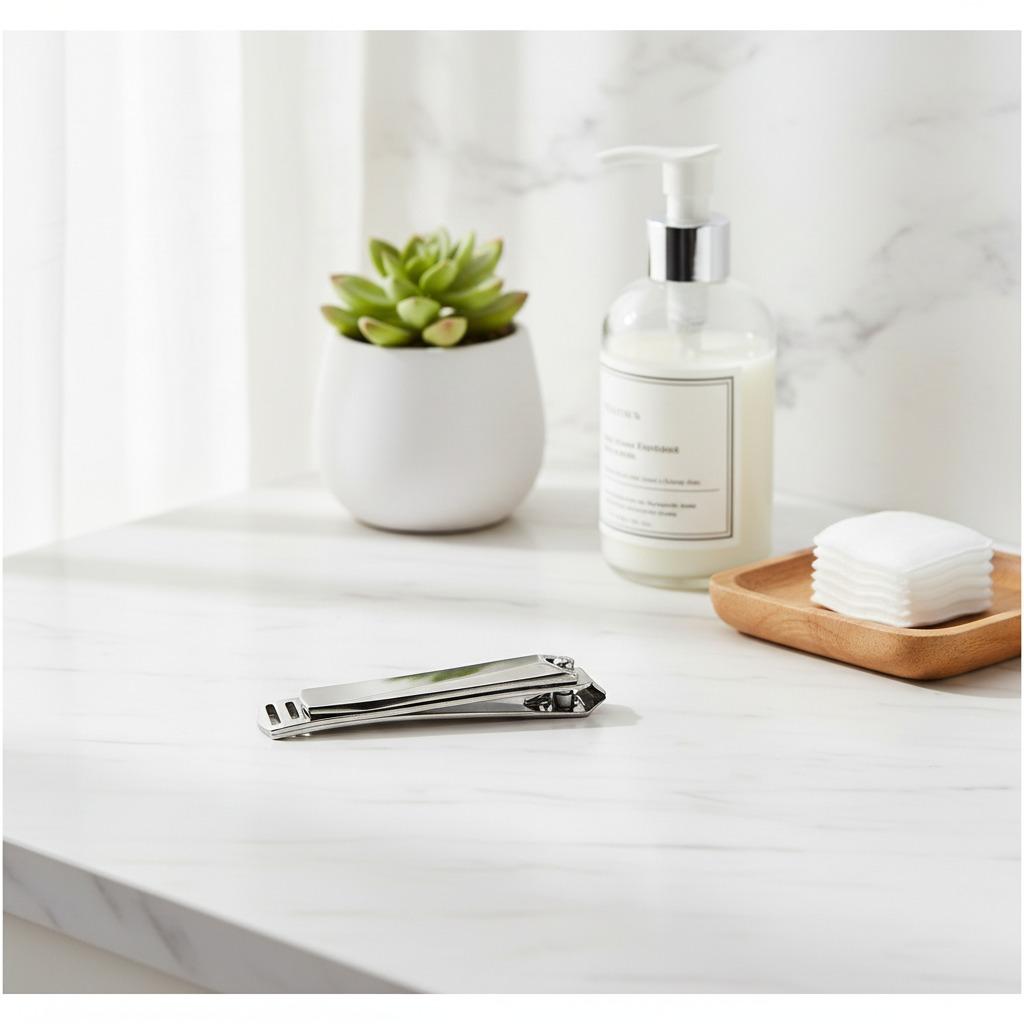
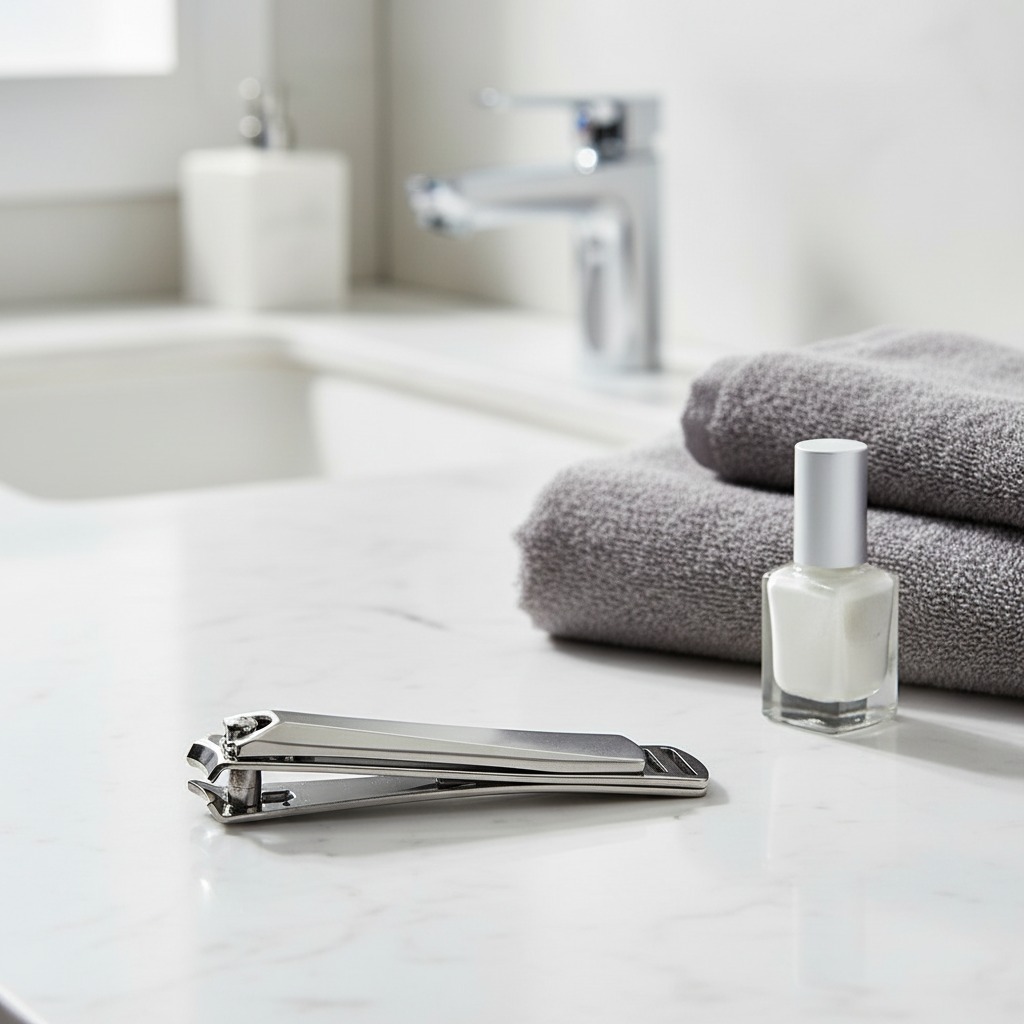
For buyers, the main advantage is not simply finding the lowest unit price. It is the ability to compare many options: standard fingernail clippers, larger toenail clippers, compact travel sizes, ergonomic lever styles, curved blade designs and versions with built-in files. The original product information highlights compact 70 mm dimensions and a lightweight 30 g build as desirable features for travel and everyday grooming. These details matter because a clipper that is easy to carry and comfortable to control can perform better in retail, promotional and salon-support channels.
Local sourcing may offer faster replenishment and simpler communication, but it may also limit design choice or increase the product cost. Import sourcing requires more planning, yet it can provide access to scalable production and a broader selection of finishes and packaging formats.
Quality Factors That Matter More Than Appearance
A polished metal surface is important, but it should not be the only inspection point. Nail clippers are functional tools. If the cutting edge is poorly aligned or the lever feels weak, the user notices immediately. A professional buyer should evaluate samples with real use in mind, not only product photos.
- Blade alignment: The upper and lower cutting edges should meet evenly from side to side without gaps or visible twisting.
- Cutting feel: A good clipper should cut cleanly without crushing, tearing or requiring excessive pressure.
- Lever resistance: The lever should feel stable, not loose, sharp at the edges or difficult to press.
- Metal finish: Check for burrs, rough corners, uneven polishing, discoloration or plating marks that may affect perceived quality.
- File function: If the clipper includes a built-in file, verify that the texture is useful and the file is securely positioned.
- Rust resistance expectations: Stainless steel and finishing quality affect durability, especially when tools are stored in bathrooms or travel bags.
- Packaging protection: Small metal tools can scratch each other during transit if inner packing is too loose.
When comparing nail clipper suppliers, request samples from the same process and materials intended for production. A beautiful hand-selected sample is less valuable than a sample that represents normal batch output. If you plan to sell under your own brand, keep approved samples for comparison during production and final inspection.
Cost Drivers When Importing Nail Clippers
The cost of importing nail clippers from China is affected by more than the quoted unit price. Buyers should calculate landed cost, which may include product cost, packaging, inland freight, export handling, international shipping, import duties, customs clearance, warehousing and possible inspection fees. A lower factory quote can become expensive if packaging is oversized, cartons are weak or the shipment method is not matched to the order volume.
| Cost Area | What to Check | Why It Matters |
|---|---|---|
| Product construction | Material, blade finish, lever design, file option | Small changes can affect both price and user satisfaction. |
| Packaging | Bulk pack, card, pouch, retail box or custom insert | Packaging influences retail value, carton size and damage risk. |
| Inspection | Sample approval, in-line checks, final random inspection | Functional problems are easier to prevent than to solve after arrival. |
| Logistics | Shipment volume, carton weight, delivery timeline | Small tools may ship efficiently, but packaging density still matters. |
| After-sales risk | Return rate, complaints, replacement handling | A cheap clipper can be costly if customers report poor cutting performance. |
Some sourcing discussions mention savings compared with traditional purchasing channels, but percentage claims should be verified against your own route, market and order structure. A practical approach is to compare three scenarios: local purchase, direct import with standard packaging, and direct import with customized packaging. This gives a clearer picture of the real commercial difference.
How to Evaluate a Nail Clipper Supplier
A reliable supplier should be able to discuss production details, not only show catalog photos. For a simple grooming tool, small design decisions have a large effect on the end user’s experience. Before committing to production, organize your supplier review around evidence: sample quality, communication clarity, packaging drawings, inspection standards and export documentation process.
- Define the product use case. Decide whether the clipper is for travel kits, salon resale, mass retail, gift sets or professional grooming assortments.
- Confirm the size and style. A compact clipper may suit handbags and travel pouches, while a larger clipper may be better for toenails.
- Review cutting performance. Test on different nail thicknesses where appropriate and compare several samples from the same supplier.
- Check edges and comfort. The lever, body and file area should not have sharp unfinished corners.
- Assess packaging durability. Drop, compression and rubbing during shipment can affect presentation before the product reaches the customer.
- Agree on approval samples. Keep a signed or clearly documented reference sample for later comparison.
- Set inspection criteria. Define acceptable and unacceptable defects before production starts.
If you need help matching a nail clipper to a broader beauty assortment, you can review Olimor product collections or contact Olimor for category guidance.
Packaging and Positioning for Different Sales Channels
Nail clippers are often sold as low-cost personal care items, but the right presentation still matters. For online retail, packaging must protect the item and photograph clearly. For physical stores, hang cards or compact boxes can improve shelf organization. For salon supply, practical multi-unit packaging may be more important than decorative presentation. For travel kits or promotional programs, lightweight packaging and consistent appearance may be the priority.
Buyers should also consider labeling space, barcode placement, safety warnings where required by the destination market, and the customer’s first impression when opening the package. A curved blade, built-in file or compact metal body should be easy to identify on the packaging if those features are central to the sales message. Avoid overloading the package with claims that are not supported by product testing or documentation.
Import Planning: From Sample to Repeat Order
A strong first order is built through disciplined preparation. Start with a written specification sheet that includes size, finish, blade style, file requirement, packaging type, carton requirements and inspection points. Then compare samples and select the version that best fits your channel, not just the lowest price.
For repeat orders, keep records of approved samples, packaging artwork, carton markings and defect feedback. If customer reviews mention dull blades, loose levers or rust concerns, treat that feedback as sourcing data. Continuous improvement is especially important for beauty tools because users judge them by touch and performance, not only by appearance.
Importing nail clippers from China can support a competitive grooming category when buyers take quality control seriously. The best results come from balancing cost, function, packaging and supplier communication. To discuss sourcing options or prepare a product brief, you can send an inquiry to Olimor Beauty.
Tag: