

Importing Nail Clippers from China: A Practical Buyer Guide
For beauty retailers, grooming brands, hotel amenity buyers, promotional product companies and distributors, nail clippers are small items with surprisingly important sourcing details. A clipper that looks acceptable in a photo can still fail in daily use if the cutting edge is dull, the lever feels loose, the plating is uneven or the packaging does not protect the product during transit. That is why many buyers compare local procurement with importing nail clippers from China, where mature manufacturing clusters, export experience and a wide supplier base can support both standard and customized orders.
This guide focuses on practical sourcing decisions: what to check before placing an order, how to compare suppliers, which product details affect user satisfaction and where cost savings can create hidden risk. Olimor Beauty works with beauty tools and grooming accessories, and buyers can explore related beauty tool products or review broader product collections when planning a nail care assortment.

Why Buyers Import Nail Clippers from China
China is a major sourcing destination for nail clippers because the product depends on several manufacturing capabilities that are widely available there: metal stamping, grinding, polishing, surface finishing, assembly and export packing. These processes are not complex individually, but they must be controlled consistently. A good nail clipper needs aligned jaws, a sharp cutting edge, firm leverage, smooth edges on the body and a finish that resists early wear in normal use.
Compared with buying only from local wholesalers, direct or semi-direct importing can offer more control over design, packaging and assortment planning. Buyers may source a simple household clipper, a compact travel option, a salon-style item, a giftable manicure set component or a promotional grooming tool. The benefit is not only lower unit cost; it is the ability to define the product before it enters the market.
However, importing is not automatically better for every buyer. It works best when the buyer can plan ahead, consolidate quantity, communicate specifications clearly and evaluate samples before production. Local options may still be suitable for urgent replenishment, small test runs or markets where immediate availability matters more than customization.
Product Details That Affect Nail Clipper Quality
A nail clipper is often judged in the first few seconds of use. The user presses the lever, feels the resistance and expects a clean cut without tearing the nail. For buyers importing in bulk, small technical details can have a large effect on reviews, returns and repeat orders.
- Cutting edge alignment: The upper and lower jaws should meet evenly. Misalignment can cause the nail to bend instead of cut cleanly.
- Sharpness and edge consistency: A clipper should cut fingernails smoothly without requiring excessive pressure. Thick toenail use may require a different jaw design.
- Lever tension: The lever should not feel flimsy or overly stiff. A stable lever improves control and perceived quality.
- Body finish: Polished or plated surfaces should be smooth, with no burrs along the edges that touch the fingers.
- Grip and ergonomics: Compact clippers are convenient for travel, while wider levers can be easier for frequent use.
- Packaging protection: Individual sleeves, cards, boxes or sets should prevent scratches and keep the cutting edge protected during shipping.
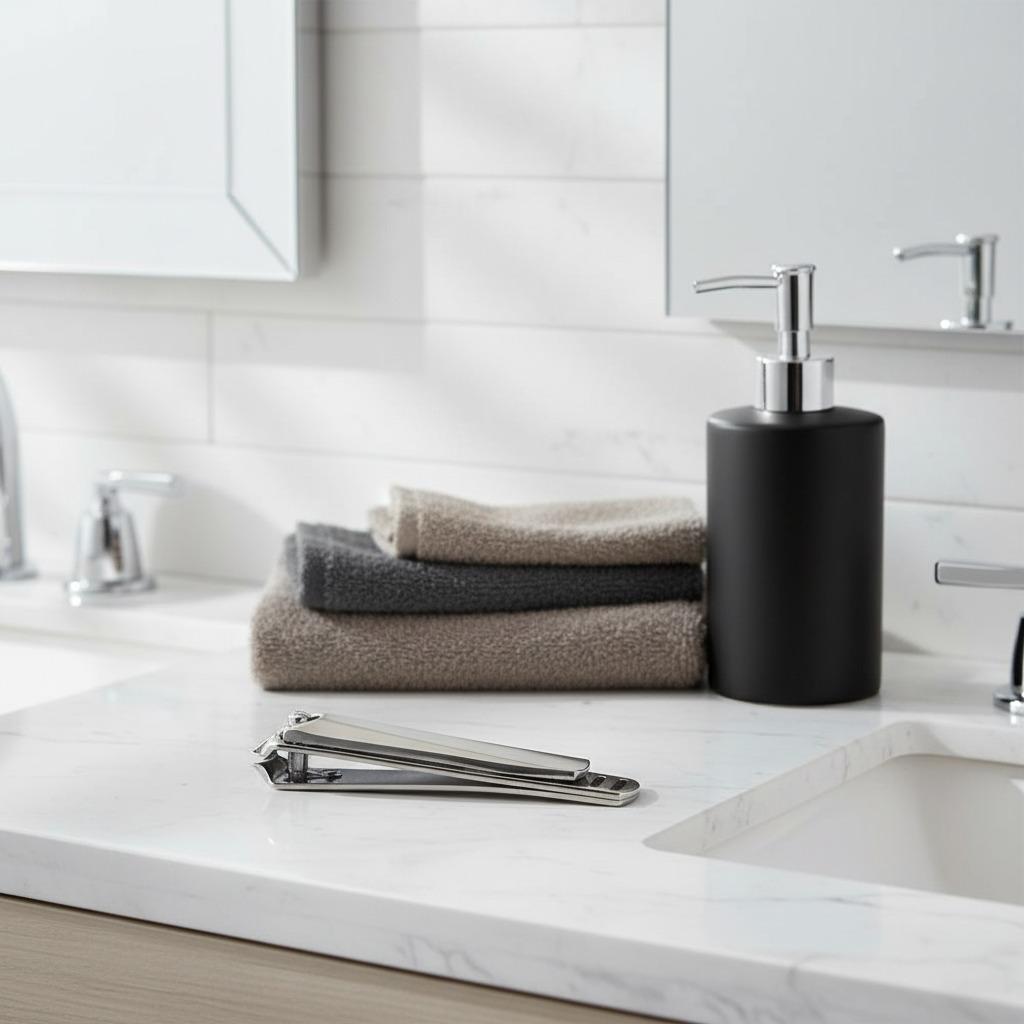
The original product information highlights stainless steel construction and a compact 70 mm, 30 gram format, which points to the type of portable clipper many buyers consider for everyday grooming, travel kits or retail display. When evaluating similar products, confirm that the size, weight and material description match your target user and sales channel.
China Versus Local Sourcing: What to Compare
The strongest sourcing decision usually comes from comparing total value, not just the quoted unit price. A domestic source may offer faster delivery, simpler communication and smaller order flexibility. An overseas source may offer more competitive bulk pricing, broader design options and better control over private packaging. The right choice depends on the buyer’s timeline, order size and quality expectations.
| Comparison point | Importing from China | Local or regional sourcing |
|---|---|---|
| Product variety | Wide range of shapes, finishes, packaging formats and set combinations | Often limited to stocked items or distributor catalogues |
| Customization | More suitable for logo, packaging and assortment planning when quantities justify it | May be limited or expensive for small changes |
| Lead time | Requires production, inspection and international shipping time | Faster for ready inventory and urgent replenishment |
| Cost structure | Can be efficient for bulk orders but must include freight, duty and inspection costs | Higher unit cost may include warehousing and local service |
| Quality control | Needs clear specifications, samples and shipment checks | Easier to inspect before purchase when inventory is nearby |
This comparison shows why imported nail clippers are attractive for planned programs, while local sourcing remains useful for short-term needs. Many buyers use both: import core items for margin and consistency, then use local stock to cover unexpected demand.
How to Build a Nail Clipper Specification
Before requesting prices, prepare a specification that describes the product in buyer-friendly language. A clear specification reduces misunderstandings and helps suppliers quote comparable items. If your product will be sold under your own brand, this step is especially important because packaging, labeling and user expectations must align.
- Define the use case: Fingernail clipper, toenail clipper, travel clipper, manicure set component, hotel amenity or promotional item.
- Confirm size and profile: Specify approximate length, jaw opening, lever style and whether a nail file or catcher is required.
- State material expectations: If stainless steel is required, include that in the request and confirm surface finish options.
- Describe finish and appearance: Polished, matte, plated, colored or minimalist metal finishes may suit different retail channels.
- Plan packaging: Bulk packed, individual polybag, blister card, paper card, gift box or set packaging each affects cost and logistics.
- Set inspection criteria: Include sharpness, jaw alignment, lever movement, surface defects, packaging accuracy and carton condition.
Good specifications do not need to be overly technical, but they should be measurable. For example, “smooth lever action with no loose pin” is more useful than “high quality.” “No visible burrs on touch areas” is clearer than “premium finish.”
Quality Control Before Shipment
Because nail clippers are compact and often ordered in large quantities, buyers should not rely only on a pre-production photo. The sample approval process should include real cutting performance, not just appearance. Test the sample on typical fingernails and, if relevant, thicker nails. Check whether the clipper cuts cleanly from both sides of the jaw and whether the lever remains stable after repeated use.
For shipment inspection, practical checks include product count, packaging match, barcode or label accuracy, visible scratches, rust spots, burrs, lever looseness and carton strength. If the order includes mixed colors or packaging languages, verify assortment ratios carefully. These checks are simple but can prevent expensive problems after the goods arrive.
Olimor Beauty emphasizes quality assurance from raw materials through packaging in its beauty tool supply work. For buyers, the lesson is straightforward: inspection should cover the full product journey, not only the finished metal part. A well-made clipper can still disappoint if packaging is crushed, labels are wrong or cartons are too weak for export handling.
Logistics, Landed Cost and Import Planning
The price quoted by a supplier is only one part of the import cost. Buyers should calculate landed cost, including product price, packaging, inland transport if applicable, export handling, international freight, import duties, customs clearance, insurance when needed and final delivery to warehouse. A nail clipper is small, but packaging choices can change carton volume and shipping efficiency.
Lead time planning is also important. Production, quality checks, booking freight and customs clearance all take time. Seasonal retail programs, holiday gift sets and promotional campaigns should be scheduled early so there is room to approve samples and correct issues before mass production. If a buyer waits until the launch date is close, the savings from importing may be reduced by urgent freight or limited inspection time.
When to Contact Olimor Beauty
If you are comparing nail clipper suppliers, preparing a private-label grooming item or building a broader nail care range, Olimor Beauty can help you clarify the product direction before you commit to an order. Share the intended market, target packaging, quantity range, finish preference and any compliance or labeling requirements relevant to your sales channel.
You can contact Olimor for general sourcing discussion or send an inquiry with product details for a more focused response. The most productive inquiries include reference photos, desired size, packaging idea, destination market and expected order timeline.
Final Buying Advice
Importing nail clippers from China can be a strong choice when buyers want competitive bulk sourcing, design flexibility and access to established grooming tool manufacturing. The best results come from treating the clipper as a functional tool rather than a simple commodity. Sharpness, alignment, lever strength, finish, packaging and inspection standards all matter.
Start with a clear specification, approve samples carefully, compare total landed cost and build enough time into the schedule for production and shipment checks. With a practical sourcing process, nail clippers can become a reliable product in a beauty, grooming, travel or promotional assortment without unnecessary quality surprises.
Tag: