

How Tongue Scrapers Work for Fresher Breath and Daily Oral Hygiene
A tongue scraper is a simple oral hygiene tool, but its effect is easy to understand once you know what it removes. The upper surface of the tongue is not smooth. It has tiny projections and shallow grooves where food residue, dead cells, saliva proteins, and microorganisms can collect. This coating is one reason the tongue may look pale, feel coated, or contribute to unpleasant breath, especially in the morning.
Brushing your teeth helps clean hard tooth surfaces, but a toothbrush is not always the most efficient shape for clearing the soft, textured surface of the tongue. A tongue scraper works by using a smooth edge to lift and move tongue coating from the back of the tongue toward the front. Used gently and consistently, it can make the mouth feel cleaner without adding a complicated step to your routine.
What a Tongue Scraper Actually Removes
The main target is tongue coating, sometimes called a tongue film. It is not one single substance. It is a mixture of moisture, shed cells, small food particles, and oral bacteria that can settle between the tongue’s surface structures. Some of these bacteria produce volatile sulfur compounds, which are associated with bad breath. That is why tongue cleaning is often recommended as part of a complete breath-care routine, along with brushing, flossing, hydration, and regular dental visits.
A scraper does not “sterilize” the tongue, and it should not be used aggressively. The mouth naturally contains bacteria, and many are part of a normal oral environment. The goal is mechanical reduction of excess coating. By clearing the layer that builds up on the tongue surface, the scraper helps reduce the material that can trap odor and leave an unpleasant taste.
How the Scraping Motion Works
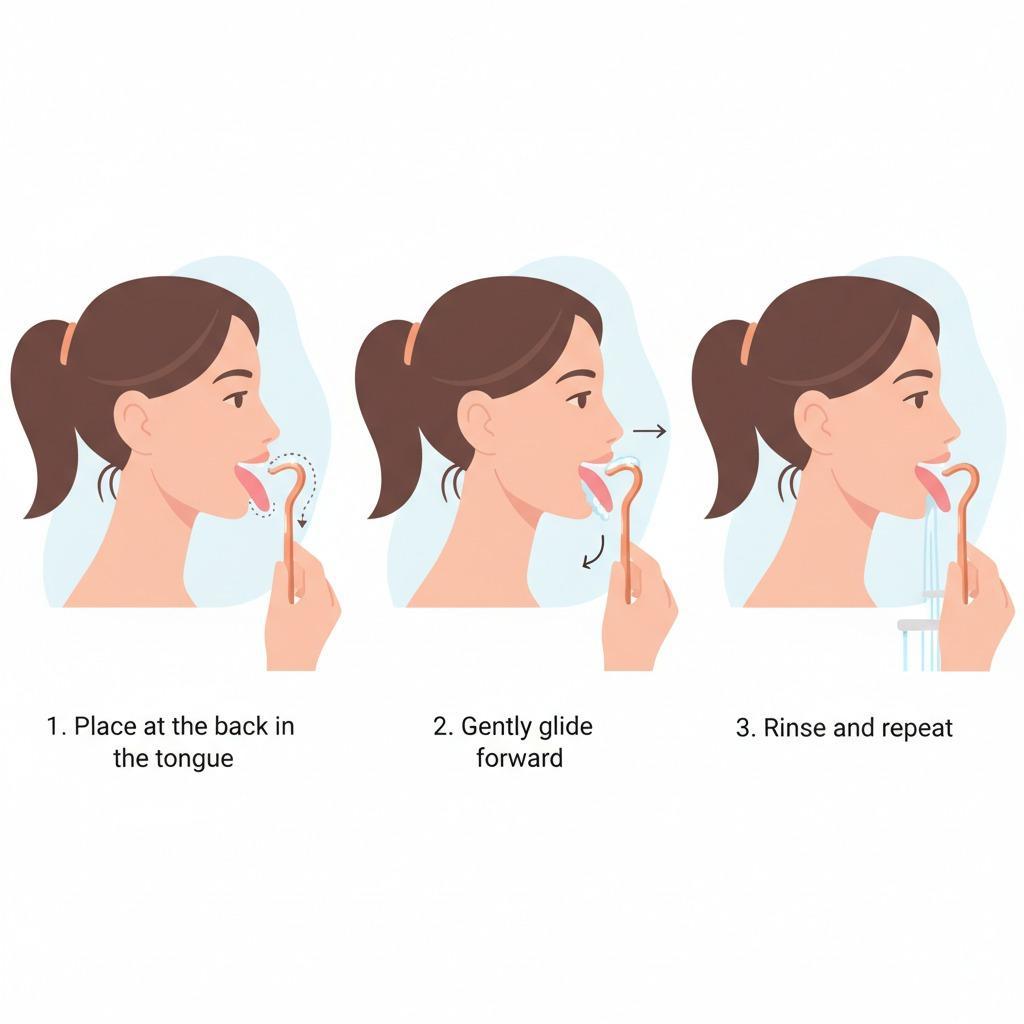
The effective motion is controlled and light: place the scraper toward the back of the tongue, then pull forward in one smooth pass. The edge gathers the coating and moves it away from the tongue surface. Rinse the scraper, then repeat a few times until the tongue feels cleaner. Pressure should be gentle; more force does not mean better cleaning and may irritate the tongue.
- Use the scraper after brushing or before rinsing, depending on your routine.
- Extend the tongue comfortably, without straining.
- Place the scraper as far back as feels comfortable, avoiding gagging.
- Pull forward with light, even pressure.
- Rinse the scraper after each pass.
- Stop after several passes or when visible coating is reduced.
- Wash and dry the tool before storing it.
Most people use a tongue scraper once daily, often in the morning. Some prefer evening use as well, especially after coffee, strong spices, or long periods of dryness. If the tongue is sore, cracked, bleeding, or unusually sensitive, pause scraping and consider professional dental or medical guidance.
Why Copper Is Used for Tongue Scrapers
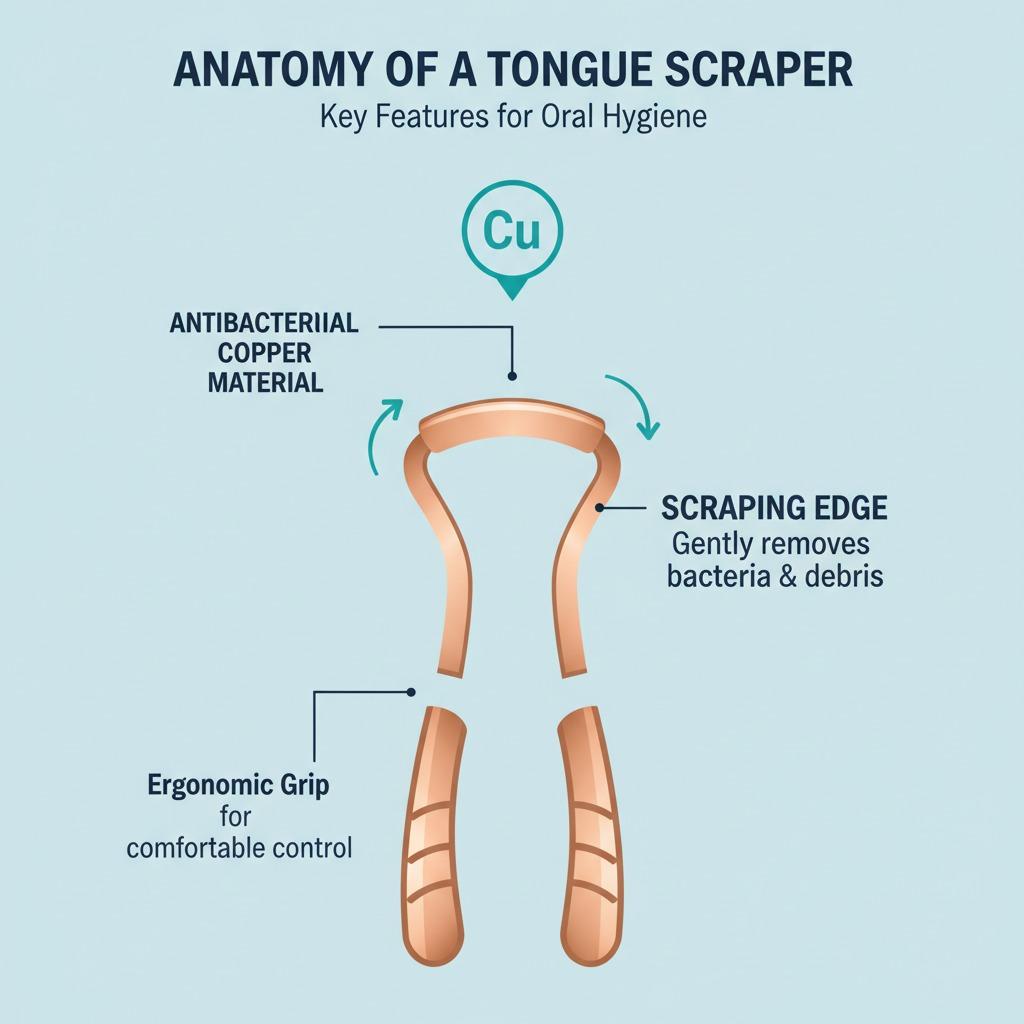
The original Olimor Beauty tongue scraper article highlights copper as the material used for this tool. Copper has long been valued in personal care accessories because it is durable, reusable, and naturally associated with antibacterial properties. For an oral care tool, the most important practical benefit is that copper can be formed into a firm, smooth edge that cleans effectively without relying on disposable plastic.
Copper also has a distinctive appearance, but appearance should not be the only buying reason. A well-made scraper should feel smooth at the edges, have balanced flexibility, and be easy to rinse clean. If the edge is too sharp, it can feel harsh. If the tool is too flimsy, it may bend unevenly and provide poor control. The best scraper is one you can use lightly and consistently.
| Feature to Check | Why It Matters |
|---|---|
| Smooth scraping edge | Helps remove coating without scratching or irritating the tongue. |
| Comfortable handle shape | Allows controlled pressure and a stable pull from back to front. |
| Easy-to-rinse surface | Supports hygienic cleaning after each use. |
| Durable material | Reduces replacement frequency compared with many disposable options. |
| Clear care instructions | Helps users maintain the tool and avoid improper storage. |
Tongue Scraper vs. Toothbrush: When Each Tool Helps
A toothbrush is designed primarily for teeth and gumline cleaning. Its bristles reach into small areas around teeth, while toothpaste helps with plaque control, fluoride delivery, and a fresher mouthfeel. On the tongue, however, bristles can push coating around or leave residue behind in the tongue’s texture. Some people also find toothbrush tongue cleaning uncomfortable because the brush head is bulky and may trigger gagging.
A tongue scraper is narrower in purpose. It is not a substitute for brushing or flossing; it is an add-on for the tongue surface. Its advantage is direct contact across a wider line, allowing it to gather coating in a few controlled passes. For people comparing beauty tool products for personal care, this distinction matters: a scraper is valuable because it does one job efficiently, not because it replaces the rest of oral hygiene.
How to Use a Tongue Scraper Without Overdoing It
Good results come from consistency, not force. The tongue is sensitive tissue, so scraping should feel clean and comfortable, not painful. A slight sensation of pressure is normal; stinging, scraping marks, or bleeding are signs that the tool is being used too hard or too often. Rinsing the mouth after scraping can remove loosened debris and leave a fresher taste.
- Use light pressure and slow strokes rather than fast, harsh scraping.
- Rinse the scraper thoroughly during and after use.
- Dry the tool before storage to reduce moisture buildup.
- Store it in a clean, ventilated place rather than sealed while wet.
- Do not share a tongue scraper between users.
- Replace the tool if it becomes bent, rough, cracked, or difficult to clean.
Copper may naturally change color over time. This surface change does not automatically mean the tool is unusable, but rough buildup, residue that cannot be removed, or damage to the scraping edge should be taken seriously. Mild cleaning and complete drying are usually enough for everyday care. Avoid abrasive treatment that could create rough spots on the edge.
What Retailers and Wellness Buyers Should Consider
For spas, wellness shops, oral care brands, and gift-focused retailers, a tongue scraper is a compact product that customers can understand quickly. The key is to choose a tool that feels reliable in the hand and is supported by clear usage guidance. Packaging should explain what the tool does, how to use it, and how to clean it. This is especially important because many first-time users may press too hard unless the instructions emphasize gentle motion.
When reviewing sourcing options, focus on verifiable product details rather than vague claims. Useful questions include: Is the scraper edge smooth and consistent? Does the handle design suit different hand sizes? Is the surface easy to rinse? Are care instructions included? Is the product positioned for daily hygiene, travel, retail display, or wellness kits? These questions help compare options without relying on unsupported claims about medical outcomes.
Olimor Beauty provides beauty and personal care tools for buyers who need practical products with clean presentation. You can browse related product collections or send an inquiry if you are evaluating tongue scrapers for retail, gifting, or a broader oral care assortment.
Building a Simple Daily Oral Hygiene Routine
A tongue scraper works best when it fits into a complete routine. Start with toothbrushing, clean between teeth as recommended by your dental professional, scrape the tongue gently, rinse, and keep the tool clean. Hydration also matters because dry mouth can make breath problems more noticeable. If bad breath continues despite consistent oral hygiene, it may be related to gum issues, diet, medication, sinus concerns, or other health factors, so professional advice is worthwhile.
The value of a tongue scraper is its simplicity. It addresses a real source of mouth odor and coating with a fast mechanical action. A copper tongue scraper adds durability and a reusable format, while proper shape and smooth finishing make daily use more comfortable. Whether you are choosing one for your own bathroom shelf or comparing oral care accessories for your business, the right standard is the same: gentle cleaning, easy maintenance, and a design that encourages consistent use.
To learn more about available options or discuss a sourcing need, you can contact Olimor for product support.
Tag: