

Wholesale Grooming Tools: How Beauty Brands Can Source Better Kits
For beauty brands, retailers, salons, gift-box companies, and private-label sellers, sourcing high-quality grooming tools wholesale is not simply a matter of finding the lowest unit price. A grooming kit is handled closely, used repeatedly, and judged immediately by its weight, finish, sharpness, alignment, grip, and packaging. If the tools feel weak, pinch unevenly, rust too quickly, or arrive in inconsistent packaging, customers notice. That makes supplier selection an important product decision, not just a purchasing task.
Olimor Beauty works with beauty-tool buyers who need grooming and manicure sets that look organized, feel reliable in the hand, and suit a clear retail audience. The original product focus is on stainless steel instruments, ergonomic design, organized kits, custom manufacturing, internal quality control, and options that can support conscious beauty positioning, including vegan manicure tools wholesale. This guide explains how to evaluate those factors before committing to a wholesale grooming tools order.
Why Grooming Tool Quality Matters in Wholesale Buying
Grooming tools sit in a demanding category. They must be compact enough for home, travel, salon retail, or gifting, but strong enough to perform cleanly. A tweezer that misses fine hair, a nail clipper with poor leverage, or a cuticle tool with an uncomfortable edge can damage customer trust even when the outer packaging looks attractive. For wholesale buyers, the goal is to build a line that performs consistently across every set, not only in a perfect sample.
Quality also affects repeat purchases and reviews. Consumers may not know the manufacturing process behind a grooming tool, but they understand whether a kit feels balanced and practical. Retailers need products that are easy to display and explain. Beauty brands need items that support their positioning, whether that is everyday personal care, salon-inspired precision, giftable beauty accessories, or travel grooming. A strong wholesale program should connect product performance with the intended customer use case.
What to Look for in a Wholesale Grooming Tools Supplier
When comparing beauty tools supplier options, especially when sourcing from China, avoid judging only by catalog photos. A useful supplier conversation should cover the actual tool assortment, finishing expectations, packaging approach, and inspection process. The strongest sourcing decisions come from asking how the kit will be used and what the buyer needs the final customer to experience.
- Tool function: Confirm which tools belong in the set and what each one is intended to do, such as nail trimming, cuticle care, eyebrow grooming, or travel touch-ups.
- Material and finish: Stainless steel instruments are valued because they can provide a clean, polished appearance and dependable structure when properly manufactured and finished.
- Grip and ergonomics: Handles, edges, and leverage points should support comfortable use, especially for small tools that require precision.
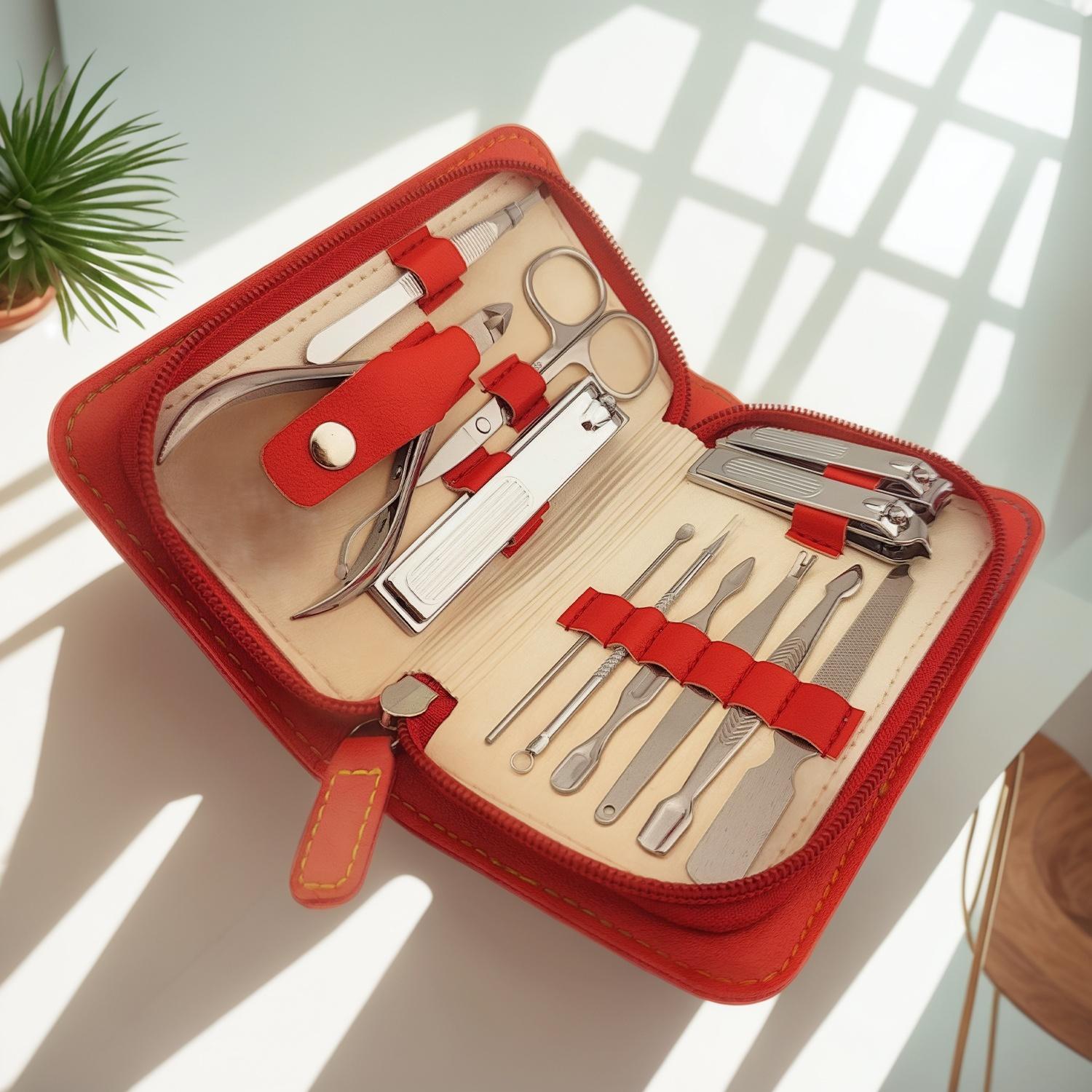
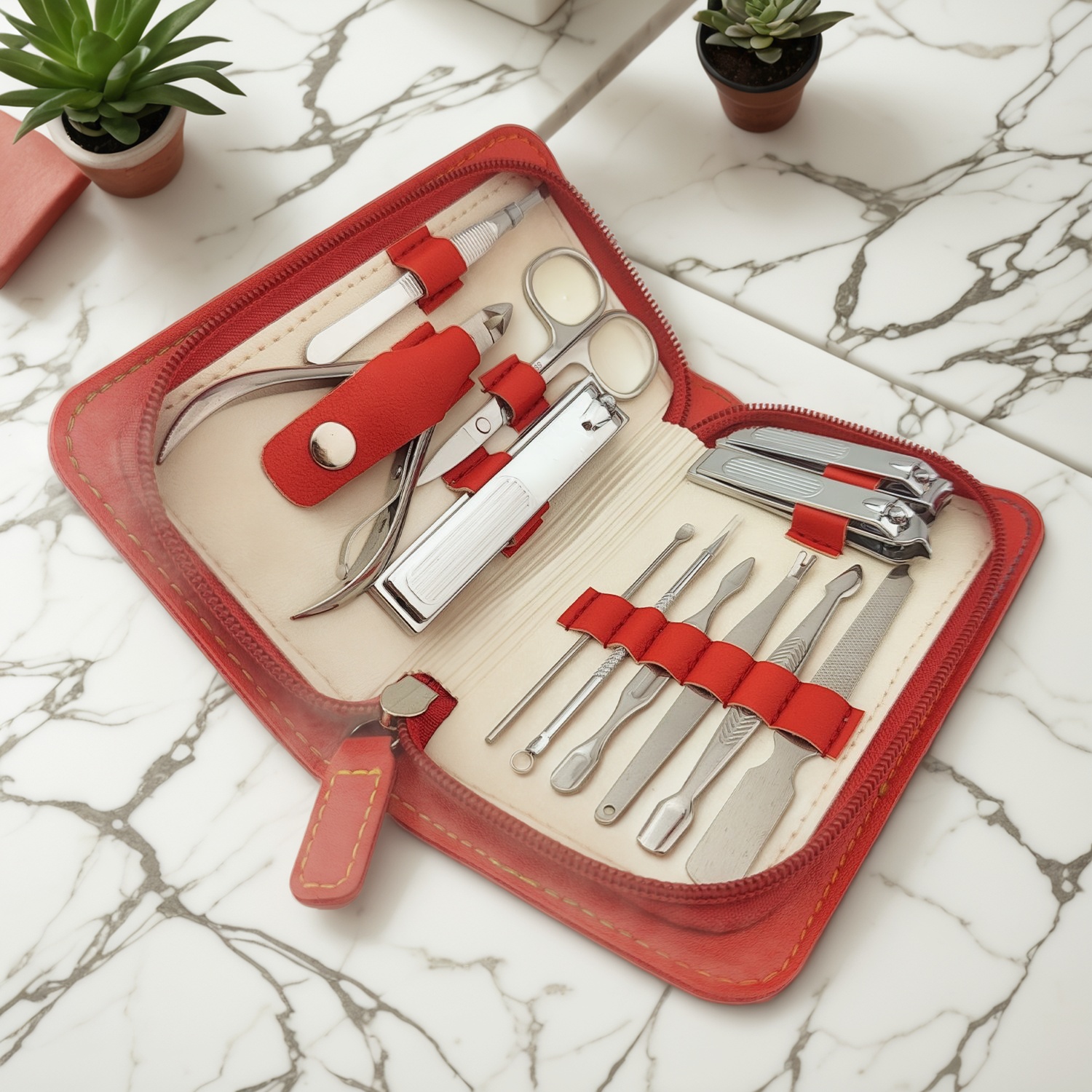
- Kit organization: A grooming set should hold each tool securely so the customer can store, carry, and identify items easily.
- Brand presentation: Color, case style, insert layout, and packaging should suit the audience without creating unnecessary complexity.
- Quality consistency: Internal checks should cover raw materials, production steps, finishing, assembly, and final packing to reduce avoidable variation.
Olimor Beauty positions its grooming and manicure sets around precise manufacturing, ergonomic designs, organized kits, and strict internal quality control. Buyers can review broader options through beauty tool products or compare assortment ideas in product collections before narrowing a project brief.
Choosing the Right Grooming Kit for Your Market
A successful grooming kit starts with audience fit. A compact travel set for a lifestyle retailer may need a different assortment from a salon retail kit or a premium gifting set. Before requesting samples or discussing customization, define the reason the kit exists in your range. This keeps the sourcing process focused and reduces the risk of building a set that looks attractive but is difficult to position.
For everyday retail, buyers often prioritize familiar tools, secure storage, and a price-to-value impression that feels fair to the customer. For salon or professional-adjacent retail, the focus may shift toward tool feel, precision, and a more serious visual presentation. For gifting, packaging and color harmony become more important, but function should not be sacrificed. For travel, compactness and tool retention matter because the kit may be placed in a handbag, suitcase, or bathroom drawer.
It is also worth considering whether the tools will be sold individually, as part of a grooming set, or as a branded seasonal bundle. Wholesale grooming tools can support many selling formats, but the kit design should match the channel. A product intended for online sales needs clear photos and concise benefits. A product intended for in-store shelves needs packaging that communicates the contents quickly. A private-label brand may need a more distinctive case or color direction to avoid looking interchangeable with competitors.
Customization Without Losing Practicality
Working with a custom beauty tools manufacturer can help a brand create a more ownable product line. Customization may involve assortment planning, case appearance, color direction, packaging layout, and brand presentation. However, effective customization should improve market fit rather than add decoration for its own sake. The best question is not “How much can be customized?” but “Which changes help the customer understand and use the product?”
For example, a clean and organized kit layout can make the product feel more premium because every tool has a place. A bold color may work well for youth-focused beauty retail, while a restrained palette may suit a professional or giftable collection. Packaging should protect the product, identify the contents, and support the brand message. If a buyer is considering vegan manicure tools wholesale, the full presentation should be reviewed carefully so the claim, materials, and customer expectations are aligned responsibly.
Customization also needs discipline. Too many changes can complicate production, inspection, and replenishment. A buyer checklist helps keep the process clear:
- Define the target customer and sales channel.
- Choose the core tools required for that use case.
- Confirm the desired case format and organization.
- Set the preferred visual direction for colors and packaging.
- Review tool feel, finish, and alignment on samples.
- Check that labeling and product claims match the actual materials and presentation.
- Plan how the line can be reordered or expanded without confusing customers.
Quality Control Questions That Protect Your Brand
In wholesale beauty tools, consistency matters as much as the first sample. A sample can show the intended direction, but repeat orders depend on process control. Olimor Beauty emphasizes strict internal quality control from raw materials to final packaging, with inspections throughout production. For buyers, this type of quality-control mindset helps reduce problems that are common in small grooming tools, such as uneven finishes, loose tool placement, inconsistent case assembly, or packaging defects.
Useful quality discussions should be specific. Instead of asking only whether the product is “high quality,” review the checkpoints that affect the customer experience. Are the tools inspected for finish and usability? Is the kit checked after assembly? Are packaging components reviewed before shipment preparation? Is the final product evaluated as a complete retail item rather than as separate parts? These questions help reveal whether the supplier understands how a grooming kit is actually judged in the market.
Buyers should also compare samples under realistic conditions. Open and close the case repeatedly. Remove and replace each tool. Hold the instruments as a customer would. Look for rough areas, awkward grip points, or weak organization. Review the kit under good lighting to evaluate finish and presentation. If the product will be sold online, photograph the sample to see whether the contents are easy to explain visually. If it will be sold in stores, consider how quickly a shopper can understand what is included.
Packaging and Presentation for Retail Success
Packaging is not only a protective layer; it is part of the customer’s first judgment. Grooming tools can be small, so the case and outer presentation often carry much of the perceived value. A vibrant, organized kit can make the product feel easier to use and more suitable for gifting. At the same time, packaging should remain honest and functional. Overly bulky packaging may create a premium impression at first, but it can be inefficient for shipping, storage, and retail display.
For e-commerce, the product page needs clear content: what is included, who it is for, how the kit is stored, and what type of grooming tasks it supports. For retail shelves, the packaging must work harder because shoppers may compare several sets quickly. If the assortment is visible, the tool layout should look neat and secure. If the packaging is closed, the printed content should be simple enough to understand in seconds.
Brands that want to build a family of grooming products should also think beyond one order. A consistent packaging system can help customers recognize related items across nail care, eyebrow care, travel grooming, or gift sets. This is where a practical supplier relationship becomes valuable: the buyer can develop a product architecture instead of treating each kit as a disconnected purchase.
Building a Better Wholesale Sourcing Brief
A clear brief saves time and leads to better recommendations. Before contacting a supplier, gather the essential information: target market, preferred tool assortment, desired case style, expected retail positioning, packaging needs, and any claim requirements. If exact specifications are not yet decided, provide reference priorities rather than vague terms. For example, “compact travel grooming set for online beauty retail” is more useful than “nice manicure kit.”
Olimor Beauty can support buyers looking for wholesale grooming tools, custom beauty tools manufacturing, and organized manicure or grooming sets with a focus on precision, durability, ergonomic design, and quality checks. To discuss a project direction, buyers can contact Olimor or send an inquiry with their target audience, preferred assortment, and packaging goals.
The right grooming tools supplier should help you balance appearance, function, consistency, and brand fit. When those elements work together, a grooming kit becomes more than a simple accessory. It becomes a product customers can understand quickly, use comfortably, store neatly, and associate with your brand’s standard of care.
Tag: