

Bulk Foot Files Purchase Guide for Salons, Spas and Beauty Buyers
A bulk foot files purchase is not just a stockroom decision. For salons, spas, nail studios, hotel wellness departments, training schools, beauty retailers and distributors, foot care tools affect service consistency, technician workflow, hygiene procedures, retail credibility and long-term operating cost.
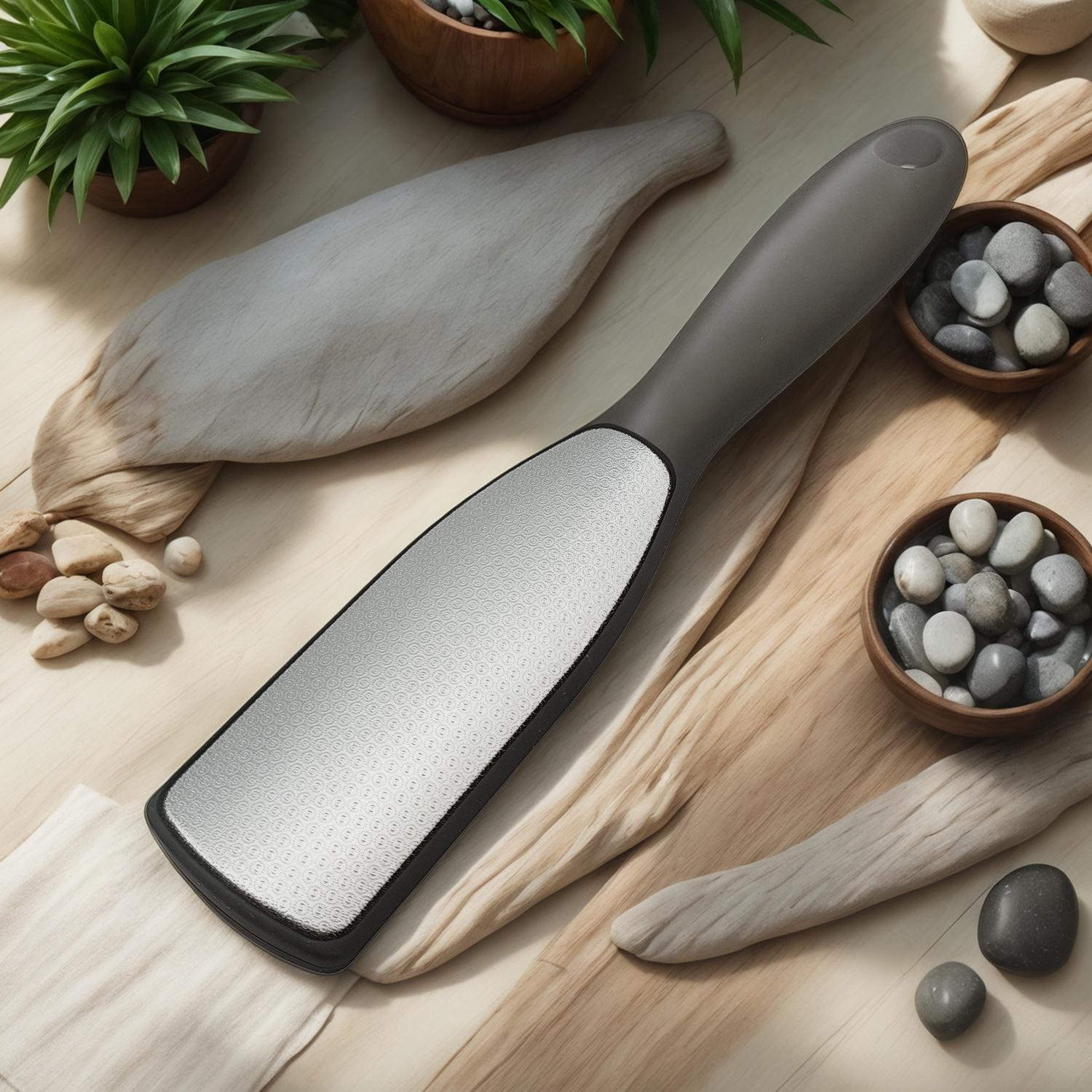
The right foot file should feel controlled in the hand, predictable on the skin and practical to manage across repeated services. Olimor Beauty supplies beauty tools for professional and personal care environments, including stainless steel foot callus removers described with ergonomic, non-slip handles and precisely engineered stainless steel surfaces, including a dual-textured stainless steel head. Those details matter when a business needs reliable tools for back-bar pedicure services, staff kits, retail displays or promotional self-care sets.
This guide explains how to evaluate foot files for bulk purchase without relying on price alone. It covers service fit, material and handle design, quality checks, hygiene planning, packaging, retail use and supplier questions so buyers can make a more confident B2B sourcing decision.
Why Bulk Foot Files Matter in Professional Foot Care
Professional foot care depends on repeatable technique. A technician softens, files, checks texture, refines rough areas and cleans the tool according to the salon procedure. If each station uses a different foot file, the grip angle, pressure, filing speed and finishing result can vary from one client to another.
Bulk sourcing helps standardize the tools used across technicians, rooms and locations. That consistency makes training easier because staff members learn on the same handle shape and filing surface. It also supports a more predictable client experience: the tool used in one treatment room should not feel harsher, weaker or less stable than the tool used in another.
Inventory planning is another reason to buy foot files in bulk. Instead of ordering a few tools only when supplies run low, managers can plan around staff expansion, seasonal demand, service promotions, retail display needs and replacement cycles. For busy spas and salons, tool availability is part of professional service delivery.
Bulk purchasing can also support retail sales. Many clients want to maintain smoother feet between appointments but may not know which tool is suitable. When a salon offers a foot file that matches the professional standard used during service, the home-care conversation becomes easier. Staff should still explain safe use, including moderate pressure, avoiding broken or irritated skin and not treating cosmetic filing as medical care.
What to Look for Before Ordering Foot Files Wholesale
The best bulk foot file for a professional setting balances callus smoothing with controlled handling. A low-cost tool that feels awkward, wears poorly or does not match the service style can increase waste, slow appointments and frustrate technicians. Buyers should review the tool as both a service item and, where relevant, a retail product.
Handle comfort and grip control
An ergonomic handle helps technicians maintain a secure hold during repeated pedicure services. This is especially important during long service days or when working around curved areas such as heels, soles, pressure points and the sides of the foot. A non-slip grip is also practical because foot care often involves water, lotions, gloves and sanitation routines. The tool should not feel unstable when the hand is slightly damp.
Stainless steel working surface
The supplied Olimor product information identifies stainless steel foot files. Stainless steel is valued in beauty tools because it can provide a firm, durable working surface when properly designed and maintained. For professional buyers, the key question is not only whether the tool removes rough skin, but whether the surface allows controlled smoothing without unnecessary harshness.
Dual-textured head for service flexibility
A dual-textured stainless steel head can help technicians move between more intensive smoothing and finishing passes without changing tools. This can simplify the service flow, but staff technique still matters. A foot file should be used with appropriate pressure and should not be used on cracked, wounded, inflamed or medically sensitive skin.
Balance, assembly and finish
A foot file should not feel top-heavy or awkward. Good balance supports accurate pressure and reduces the temptation to over-file. Buyers should also check the connection between the handle and head, the edge feel, the surface finish and whether several units from the same order feel consistent.
Matching Foot Files to Salon, Spa, Retail and Distributor Use
Different buyers purchase foot files for different reasons. A nail salon may need high-turnover tools for regular pedicure services. A day spa may need a clean, professional-looking tool for a more relaxed treatment menu. A hotel wellness department may want tools that match a premium service environment. A distributor may be selecting items for resale to regional beauty shops or professional buyers.
For service use, technician control is the priority. The handle should allow stable movement around common rough areas while supporting smooth, moderate strokes. Training should cover grip, pressure, stroke direction, client communication, inspection before use and post-service cleaning.
For retail use, the product must be easy to explain. A retail foot file should be positioned for routine cosmetic maintenance of dry or rough skin between appointments. It should not be described as a medical treatment or as a solution for serious foot conditions. Clients with diabetes, circulation concerns, infections, open wounds or persistent foot pain should be advised to seek appropriate healthcare guidance.
For distributors and brand buyers, assortment fit matters. A foot file should match the quality level and appearance of the broader tool range, such as nail tools, tweezers or facial care accessories. Buyers building a larger beauty-tool program can review related categories through Olimor professional beauty tool products or compare complementary options in the beauty tools collection.
Comparison Checklist for Bulk Foot File Buyers
A structured evaluation process helps separate a professional-ready tool from a generic accessory. Before confirming a larger order, compare samples or available product information against practical service requirements, retail needs and internal handling procedures.
| Buying factor | What to review | Why it matters |
|---|---|---|
| Service fit | Pedicure menu, client needs, technician technique and expected level of smoothing | The tool should match the actual foot care service, not just look suitable in a catalog. |
| Handle and grip | Ergonomic shape, non-slip feel, balance and control at different working angles | Comfortable handling supports technician confidence during repeated appointments. |
| Working surface | Stainless steel finish, dual-textured function and edge feel | A predictable surface helps deliver controlled callus smoothing and finishing. |
| Assembly quality | Firm connection between handle and head, no unwanted movement during use | Stable construction reduces operational problems at the service station. |
| Order consistency | Compare several units for the same design, grip, surface condition and presentation | Uniform tools make training, replacement and multi-station service easier. |
| Hygiene workflow | Ease of cleaning, visual inspection and storage between services | Foot care tools must fit responsible salon sanitation procedures. |
| Packaging and storage | Protection in transit, counting convenience, retail display suitability and labeling needs | Good packaging helps with stock control, staff distribution and customer perception. |
Quality Control Questions to Ask a Foot File Supplier
Olimor Beauty states that quality control includes inspections from raw materials to final packaging. For a professional buyer, this point is important because a bulk order may involve many units, and inconsistency can become expensive. Small variations in handle grip, head attachment or working surface finish can affect staff confidence and client perception.
When evaluating any beauty tools manufacturer or wholesale supplier, prepare questions before focusing on discount levels. Useful supplier-evaluation phrases include: how the product structure is inspected, how surface finish is checked, how packaging is protected for shipment, whether the tool is suitable for the intended service environment and what customization information is required if private label or branded packaging is being considered.
Buyers should also ask how the supplier supports order review before production or shipment. Depending on the purchasing arrangement, that may include product images, sample review, packaging confirmation or written specifications. Do not assume that all suppliers use the same inspection steps; request documentation that matches your purchasing risk and market requirements.
Hygiene, Maintenance and Replacement Planning
Foot files are used in a service category where hygiene is closely linked to client trust. A bulk purchase should therefore include a plan for how tools are stored, cleaned, inspected and replaced. Each salon or spa should follow the sanitation regulations that apply in its location and should train staff on the approved internal procedure.
Authoritative public guidance may come from local health departments, occupational safety agencies or national public health bodies. In some markets, disinfectant selection and use may also involve products registered or recognized by the relevant environmental or health authority. Buyers should verify the applicable version of any regulation, standard or guidance document and keep supplier documentation on file where required. This does not imply that a specific foot file or supplier holds a certification unless the supplier provides valid evidence.
Practical maintenance starts with staff habits. Technicians should inspect the tool before use, avoid dropping it, clean it according to the salon procedure and remove any unit that appears damaged, loose, excessively worn or difficult to inspect. Tools should be stored in a way that prevents contamination, avoids unnecessary impact and separates clean items from used items.
Replacement planning is also important. Even a durable tool should not remain in service indefinitely without review. Managers can create a simple station checklist so staff know when to report a worn working surface, unstable handle, poor grip condition or packaging issue for retail stock.
Cost Factors Beyond the Unit Price
Bulk foot files are often compared by price per piece, but the true cost of ownership includes more than the invoice line. A cheaper tool can become expensive if it slows down appointments, creates inconsistent service results, arrives with poor packaging or fails to support your hygiene workflow.
Important cost factors include technician efficiency, service consistency, replacement frequency, packaging suitability, internal storage, retail presentation, staff training time and customer confidence. A tool that helps standardize technique across stations may reduce avoidable confusion. A product that looks clean and professional on retail shelves may be easier for staff to recommend as part of a home-care routine.
For distributors, cost evaluation should also include catalog fit, customer support needs and the risk of returns due to inconsistent appearance or unclear product positioning. For salons and spas, the most valuable foot file is not necessarily the lowest-cost item; it is the tool that fits the service, supports controlled use and can be sourced consistently.
How to Prepare a Bulk Foot Files Inquiry
A clear inquiry helps a supplier respond with relevant information. Before contacting Olimor Beauty or another supplier, define whether the foot files are intended for back-bar service, retail resale, staff kits, promotional sets, distributor inventory or a combination of uses.
- Describe the use case: Explain whether the tool will be used in salon services, sold to clients or included in a broader beauty-tool assortment.
- Confirm product priorities: List requirements such as ergonomic handling, non-slip grip, stainless steel surface, dual-textured head or retail packaging needs.
- Ask about samples: Sample review can help buyers evaluate hand feel, surface finish, packaging and suitability before a larger order.
- Discuss customization: If branding, packaging or assortment changes are needed, ask what information the supplier requires and what limitations apply.
- Request quality details: Ask how raw materials, assembly, surface condition and final packaging are checked.
- Clarify commercial terms: Discuss MOQ, lead time, shipping preparation and payment terms directly rather than assuming standard values.
Businesses ready to compare options can send requirements through the Olimor bulk beauty tools inquiry page or contact the team through Olimor customer support for product and sourcing questions.
Supplier Evaluation Checklist
A dependable bulk foot file supplier should make the buying process clearer, not more confusing. Look for a partner that can discuss product construction, packaging, inspection approach and intended use in practical terms. Product photos are useful, but B2B buyers also need information that supports internal approval, retail planning and service training.
- Can the supplier explain the handle design, grip feel and working surface clearly?
- Can the supplier identify the material and construction details without vague claims?
- Can you review samples or product information before committing to a larger order?
- Does the supplier describe quality checks from incoming materials through final packaging?
- Can packaging support your storage, counting, staff distribution or retail display needs?
- Does the supplier avoid unsupported medical, performance or certification claims?
- Can the supplier discuss customization, MOQ and lead time based on the actual inquiry?
Olimor Beauty is suitable for buyers looking for a beauty-tool manufacturing partner that understands professional and personal care use. The best next step is to share your intended market, service environment and packaging goals so the product recommendation can be aligned with your buying purpose.
FAQ
Can salons request samples before a bulk foot files order?
Sample availability should be confirmed with Olimor Beauty during the inquiry. Reviewing samples is useful because buyers can check grip comfort, stainless steel surface feel, packaging condition and whether the tool fits the salon or spa procedure.
Is there a fixed MOQ for bulk foot files?
MOQ can depend on the product, packaging, customization requirements and order arrangement. Buyers should ask for the current MOQ during quotation rather than relying on assumptions.
Can foot files be customized for retail or private label programs?
Customization may be possible depending on the requested branding, packaging and order details. Provide your target use, artwork or packaging goals early so the supplier can confirm what is practical.
What quality checks should buyers ask about?
Ask how the supplier inspects raw materials, handle and head assembly, stainless steel working surface, appearance consistency and final packaging. Buyers should also request any relevant documentation needed for their market or internal approval process.
How should lead time be handled for salon or distributor planning?
Lead time should be confirmed case by case because it may vary with order quantity, packaging, customization and shipping preparation. Plan ahead for new service launches, retail promotions and distributor replenishment cycles.
Tag: