

How to Choose a Precision Tweezers Supplier for Beauty Tool Sourcing
Choosing a tweezers supplier is not only a purchasing decision. For beauty brands, salon distributors, lash technicians and grooming tool retailers, tweezers affect the user’s sense of control, comfort and trust in the product. A tweezer that feels balanced, closes cleanly and holds fine hair or lashes without slipping can become a repeat-purchase item. A tweezer with uneven tips, weak tension or rough finishing can quickly create customer complaints.
Olimor Beauty supplies beauty tools with attention to precision, durability and ergonomic handling. For buyers comparing standard tweezers, private label tools or tweezers OEM services, the key is to evaluate how well the supplier can support both product performance and brand requirements. This guide explains the practical criteria to review before selecting a supplier, especially when your market includes eyebrow grooming, eyelash extension work, detailed makeup application or fine craft tasks.
Start With the Real Use Case, Not Only the Shape
Many buyers begin by asking for a familiar tweezer style, but a better starting point is the end user’s task. Eyebrow shaping, eyelash extension placement and general grooming all place different demands on tip alignment, grip pressure and hand comfort. A tweezer for quick brow maintenance should remove short hairs cleanly without forcing the user to squeeze too hard. A tweezer for eyelash extension work needs careful control at the tip because the user may work for long periods on small, delicate materials.
Before comparing suppliers, define the primary use case and the level of precision required. This prevents overbuying an unsuitable style or selecting a tweezer mainly because it looks attractive in packaging. If your brand serves professionals, consistency matters more than decorative appearance. If your customers are retail consumers, comfort, intuitive handling and clear care instructions may be just as important as tip precision.
- Eyebrow grooming: look for clean closure, stable tension and tips that can grip fine hairs.
- Eyelash extension work: prioritize precise alignment, balanced hand feel and shapes suited to detailed placement.
- Makeup artistry: consider tools that help with small adjustments, strip lash handling or detail work.
- Craft and detail tasks: evaluate grip security and tip durability for repeated fine handling.
Material and Finishing Questions That Affect Durability
The original product information highlights stainless steel construction, rust resistance and long-lasting performance. Those are important starting points because tweezers are handled frequently, cleaned regularly and often stored in humid bathroom or salon environments. Stainless steel is widely used for beauty tools because it can provide a durable surface and a professional feel when properly finished.
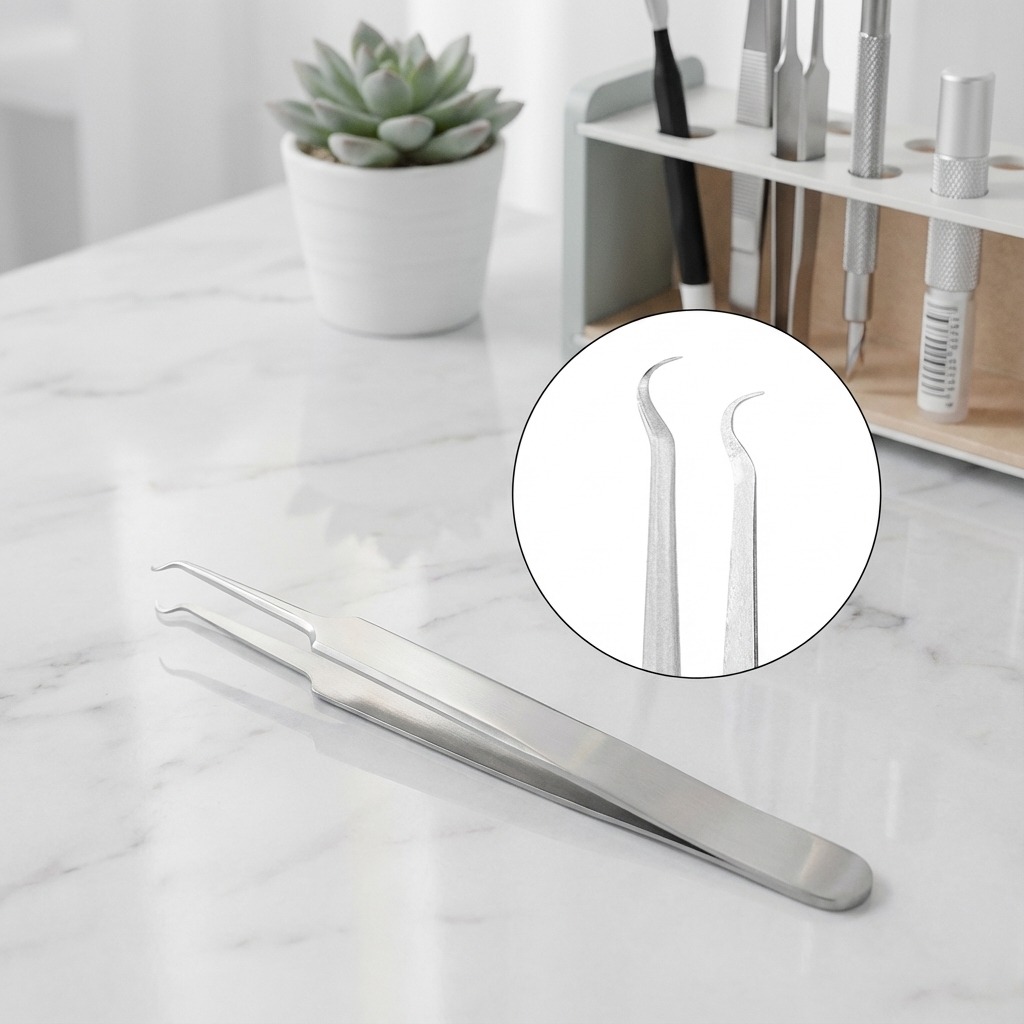
However, material alone does not determine quality. Buyers should also review the finishing standard. Edges should feel smooth, the outer surface should not scratch the skin during normal handling and the inner gripping area should support reliable contact. A polished finish can improve the user’s perception of cleanliness and may also support a comfortable grip when paired with suitable shape and tension. If the tweezer includes a curved tip that mimics natural eyelash shapes, confirm that the curve is functional for the intended task rather than purely decorative.
When developing an OEM tweezer, create a simple evaluation checklist for samples. Inspect whether both arms are symmetrical, whether the tips meet evenly and whether the tool maintains alignment after repeated use. For beauty retailers, it is also useful to test the tweezer with different hair thicknesses or lash materials that match the target customer’s needs.
Tip Precision: The Detail That Defines the Product
For most users, the quality of tweezers is judged at the tips. Even if the body looks attractive, poor tip contact will make the product feel unreliable. Precision tips should close consistently without a visible gap, and the two sides should meet at the correct point. If the tips are misaligned, users may squeeze harder, which can cause discomfort and poor control.
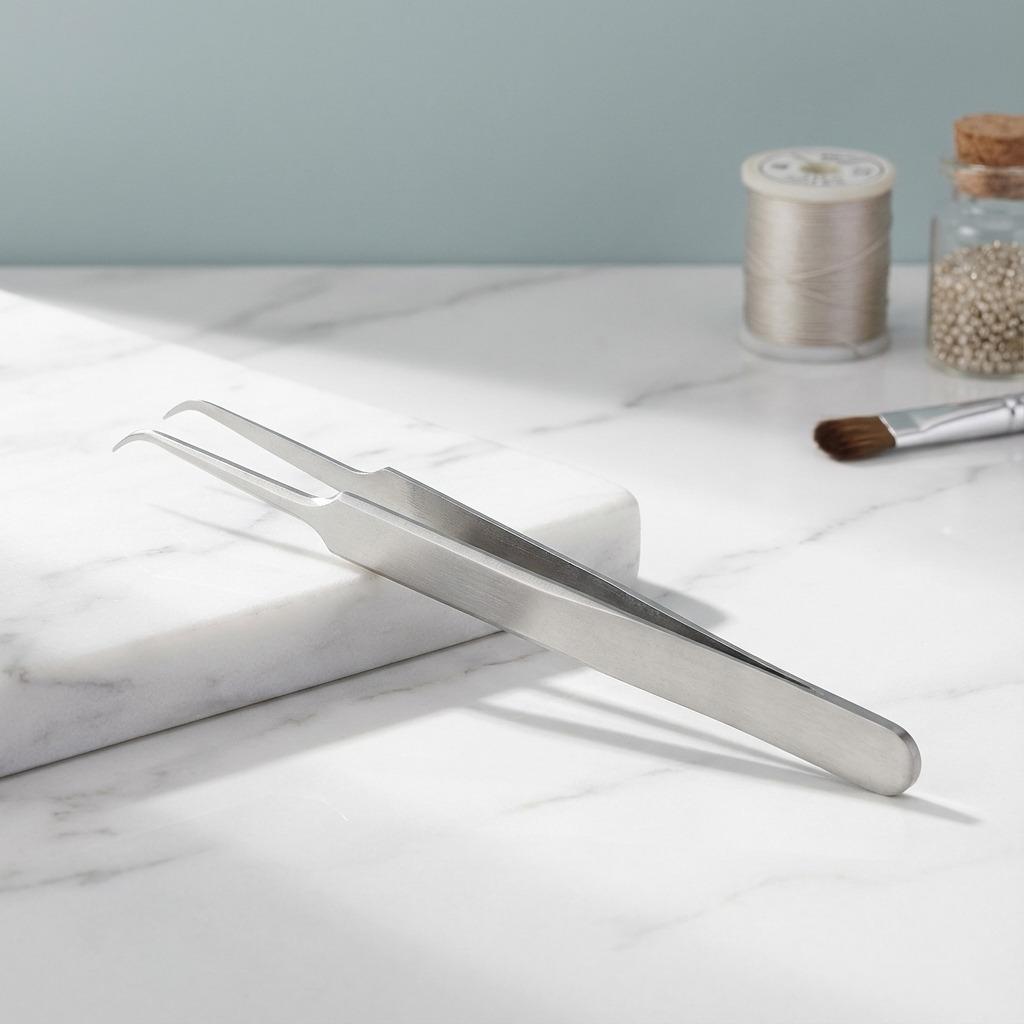
Tip shape should also match the task. Slanted tips are commonly used for general grooming because they combine visibility with practical grip. Pointed or more specialized tips may be used for detailed work, while curved styles can support lash-related applications. Since the supplied product information refers to curved tips that mimic natural eyelash shapes, buyers interested in lash tools should pay close attention to how that curve supports pickup, placement and release.
A good supplier should be able to discuss tolerances, inspection steps and sample review in practical terms. You do not need exaggerated promises; you need repeatable production. Ask for samples from the same intended production approach and compare multiple pieces, not only one perfect display sample. Consistency across units is what protects a brand’s reputation after the first order.
OEM Tweezers: Where Customization Should Add Value
Tweezers OEM services are useful when a brand wants a tool that fits a particular audience, price position or retail presentation. Customization can include shape, finish, grip feel, packaging direction and other brand-facing details. The goal is not to add features for their own sake, but to create a product that users understand and enjoy using.
For example, a beauty brand focused on lash work may explore curved tips, refined tension and a polished appearance. A grooming-focused line may prefer an easy-to-use profile and packaging that clearly explains the function. A professional kit may require several tweezer types selected for different tasks. Olimor Beauty supports customized beauty tool development, and buyers can review broader beauty tool products to understand how tweezers may fit within a wider product range.
When planning custom tweezers, prepare a concise product brief before sample development. It should define the target user, intended application, preferred finish, packaging expectations and any functional priorities. This helps avoid vague instructions such as “make it premium,” which can mean different things to designers, factories and buyers. A clear brief makes communication faster and improves the chance that the first samples are close to your intended product.
Quality Control Points to Review Before Ordering
The original product information mentions stringent quality checks and inspections at every stage. For buyers, the most useful approach is to translate that into specific inspection points. Beauty tools are relatively small, so defects may be subtle, but users notice them immediately during use. Uneven tension, burrs, scratches, loose closure or poor packaging can all reduce perceived value.
| Inspection point | Why it matters | What buyers can check in samples |
|---|---|---|
| Tip alignment | Determines whether the tweezer can grip fine hairs or lash materials cleanly. | Close the tips under light pressure and look for gaps or twisting. |
| Arm tension | Affects comfort during repeated use. | Test whether squeezing feels controlled, not too stiff or too weak. |
| Surface finish | Influences comfort, appearance and perceived cleanliness. | Check for rough edges, scratches, uneven polishing or residue. |
| Functional shape | Ensures the style matches the advertised use. | Try the tool on realistic grooming or lash materials. |
| Packaging fit | Protects the tips and supports retail presentation. | Confirm the tweezer is secure and the tips are not pressed out of alignment. |
This type of checklist is especially helpful when comparing several suppliers. It keeps the discussion focused on measurable product behavior instead of general claims. It also gives your team a repeatable method for approving future production.
Maintenance Guidance Helps Reduce Customer Complaints
A good tweezer should be supported by simple care guidance. Even durable stainless steel tools can perform poorly if users drop them, store them with unprotected tips or allow product residue to build up. For retail brands, adding concise care instructions to packaging or product pages can reduce avoidable dissatisfaction.
Useful care guidance may include wiping the tool after use, keeping the tips protected, storing the tweezer in a dry place and avoiding twisting the tips against hard surfaces. For lash professionals, cleaning routines should match their workplace hygiene standards and the materials they use. The important point is to help customers preserve alignment and grip performance for as long as possible.
If your brand offers multiple tools, consider placing tweezers within a broader grooming or lash-care assortment. Buyers can review Olimor product collections to consider how tweezers may be combined with complementary beauty tools for kits, retail bundles or professional sets.
How to Compare Tweezers Suppliers Efficiently
Supplier comparison should balance product quality, communication and customization capability. A supplier may offer an appealing sample, but the real test is whether it can support repeatable production, practical feedback and packaging needs. For OEM projects, responsiveness during sampling is important because small changes to tip angle, finish or tension can affect final performance.
- Define the product role: retail brow tweezer, lash tool, professional kit component or general beauty accessory.
- Request relevant samples: compare shapes that match the intended use instead of collecting random styles.
- Test with real tasks: use fine hairs, lash materials or craft items similar to what customers will handle.
- Review finishing and packaging: confirm the tool looks professional and the tips are protected.
- Document changes clearly: provide marked photos or written notes for any adjustment to shape, finish or grip feel.
For buyers ready to discuss custom development, private label direction or sourcing options, the simplest next step is to send an inquiry with your target use case and sample expectations. If you need help clarifying which tweezer structure fits your audience, you can also contact Olimor for product communication.
Build a Better Tweezer Line Through Practical Decisions
The ideal tweezers supplier is not defined only by a catalog image. It is defined by how well the tool performs in the user’s hand and how consistently the supplier can reproduce that performance. Stainless steel construction, rust resistance, ergonomic design, polished finishing and precise tip shapes all contribute to a better beauty tool, but they need to be evaluated through real use.
For brands, salons and distributors, the best sourcing decisions come from clear product positioning, careful sample testing and practical OEM communication. Whether you want a reliable grooming tweezer, a lash-focused curved tip design or a customized tool for your beauty line, focus on the details users feel immediately: alignment, grip, comfort and durability. Those details are what turn a simple tweezer into a product customers trust.
Tag: