

Choosing a Beauty Tools Manufacturer: Quality, Ethics and Real-World Usability
For beauty brands, retailers and professional buyers, selecting a beauty tools manufacturer is not only a sourcing decision. It affects product performance, customer trust, repeat purchases and the long-term reputation of your range. A tweezer that loses alignment, an eyelash curler that pinches, or a handle that feels unstable can quickly turn a promising product into a complaint risk. The best manufacturing partner should understand how beauty tools are actually used: close to the skin, around delicate eye areas and often as part of a daily routine.
Olimor Beauty focuses on beauty tools where precision, durability and practical design matter. From tweezers to eyelash curlers, the goal is to create tools that feel controlled in the hand and deliver reliable performance over repeated use. This guide explains what buyers should evaluate when comparing beauty tool suppliers, especially if the brief includes quality, ethical production and user-friendly design.

Start With the Tool’s Purpose, Not Just Its Appearance
Beauty tools are often visually appealing, but buying decisions should begin with function. A good eyelash curler, for example, must offer control, a comfortable grip and a gentle curling action. A tweezer must close evenly and maintain useful tension. The shape, material and finish all influence performance, but they should support the tool’s purpose rather than simply create shelf appeal.
Before comparing samples, define the main use case. Will the tool be sold to everyday makeup users, professional artists, travel shoppers or salon buyers? A consumer-focused tool may prioritize intuitive handling and visual appeal, while a professional tool may need to withstand frequent use and cleaning. This early decision helps avoid products that look attractive in a catalog but disappoint during daily application.
Buyers reviewing beauty tool products should consider how each item fits into a broader assortment. A product line that includes eyelash curlers, tweezers and other small tools should feel consistent in quality, comfort and finish. Consistency makes the range easier to position and gives end users confidence that each tool has been developed with the same level of care.
Material and Construction: What to Check Before Ordering
Material choice is a major factor in durability. The supplied product information highlights the use of durable stainless steel, a common choice for beauty tools because it can support strength, stability and a clean finish when manufactured correctly. However, buyers should look beyond the material name. The way a tool is cut, formed, assembled and finished can be just as important as the raw material itself.
For eyelash curlers, the hinge action, frame alignment and pad contact are critical. If the frame is poorly aligned, pressure may be uneven. If the pad is too hard, too soft or poorly fitted, the curl can feel uncomfortable or inconsistent. For tweezers, tip alignment and closing tension determine whether the tool can grip fine hairs accurately. These small details are often where a quality manufacturer shows its value.
- Check alignment: Moving parts should meet evenly without twisting or visible gaps that affect use.
- Assess comfort: Handles should sit naturally in the hand and should not require excessive force.
- Review finishing: Edges should feel smooth, with no rough surfaces that could irritate skin or fingers.
- Test repeat use: Open, close and operate samples multiple times to detect looseness, squeaking or stiffness.
- Inspect packaging fit: The tool should be protected during shipping and displayed without unnecessary movement.
Quality Control Should Be Built Into the Process
Quality control is strongest when it happens throughout manufacturing, not only at the final packing table. Olimor Beauty describes a process that includes precise manufacturing steps, internal quality standards and inspections from raw material sourcing through final packaging. For buyers, this matters because many tool defects are easier to prevent early than to correct later.
A practical quality discussion should cover the checkpoints most relevant to the product category. With eyelash curlers, this can include frame symmetry, pad placement, handle movement and surface finish. With tweezers, it can include tip matching, spring tension and the feel of the closing action. The purpose is not to create unnecessary complexity, but to make sure the finished tool matches the intended user experience.
| Area to Review | Why It Matters | Useful Buyer Check |
|---|---|---|
| Raw material consistency | Supports durability and a stable finish | Compare samples from different batches when available |
| Assembly accuracy | Affects alignment, pressure and ease of use | Operate the tool repeatedly and check for uneven movement |
| Ergonomic design | Improves control and reduces strain during application | Test with different hand sizes and typical use angles |
| Surface finishing | Influences comfort, safety and perceived quality | Run fingers over edges, handles and contact areas |
| Final packaging | Protects the tool and supports retail presentation | Confirm that the tool remains secure during handling |
Ethical and Sustainable Sourcing Requires Practical Decisions
Ethics in beauty tools should be treated as a real operating principle, not a marketing phrase. The supplied information identifies Olimor Beauty as a sustainable beauty tools supplier and a cruelty-free beauty tools manufacturer. For physical tools, one of the most practical sustainability decisions is to make products durable enough to be used for a long time. A well-made tool that does not need frequent replacement can help reduce waste compared with disposable or low-quality alternatives.
Durability also affects customer satisfaction. Users are more likely to keep and recommend a tool that remains comfortable, aligned and effective. This is especially important for small tools because consumers often judge the quality of an entire beauty brand by everyday details: the pressure of a curler, the accuracy of a tweezer or the feel of a handle.
Ethical sourcing conversations should include production practices, material choices, packaging approach and product lifespan. When details are not stated in a product description, buyers can use a neutral checklist: whether the tool is designed for repeated use, whether replacement or maintenance needs are clear, whether packaging is appropriate rather than excessive, and whether animal welfare expectations are reflected in the production approach.
Eyelash Curler Design: Comfort, Control and Shape Compatibility
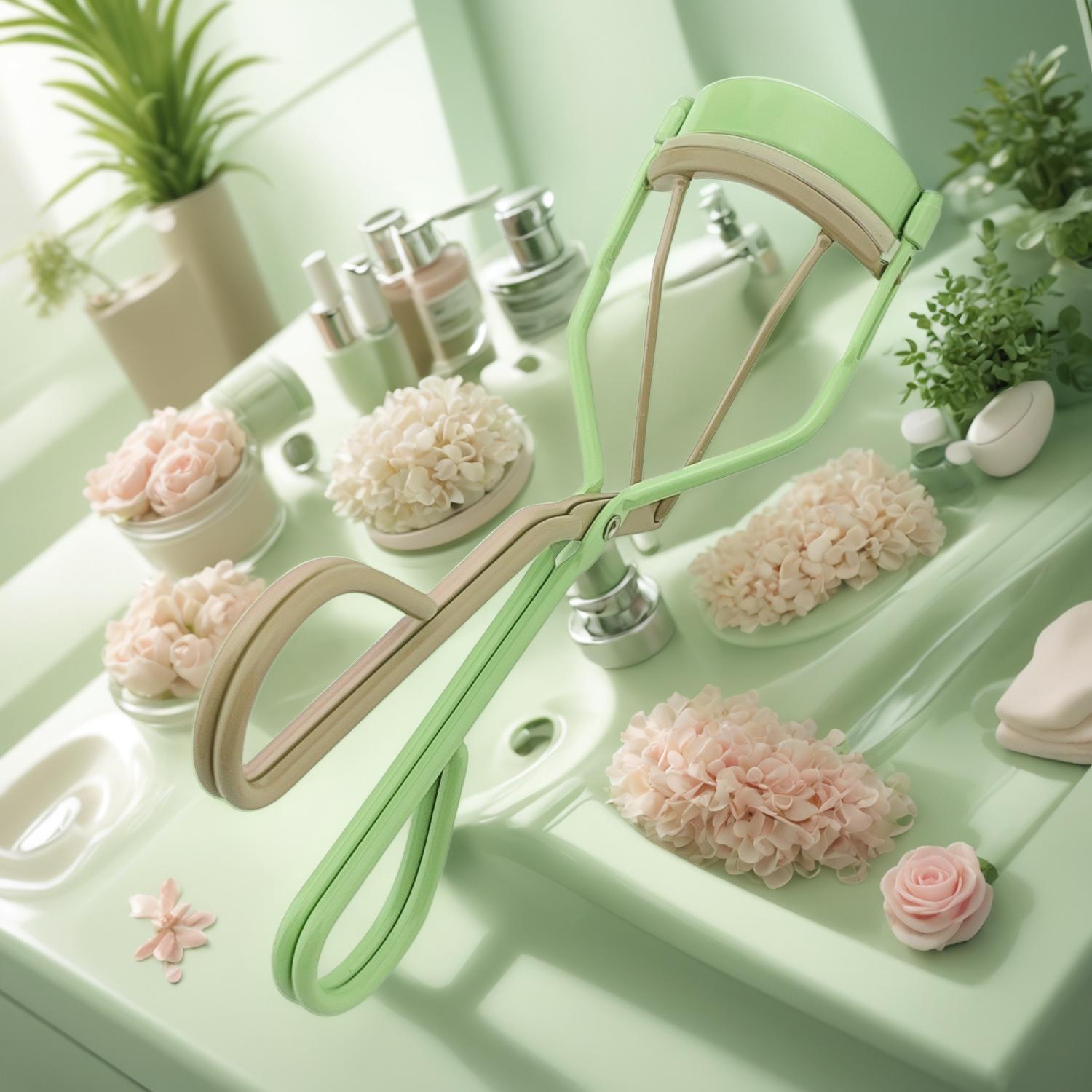
The article’s highlighted tool is an eyelash curler with a modern pastel green and warm brown color palette. While the color gives it a distinctive appearance, its performance depends on more technical factors: the curve of the handles, the engineered structure and the soft pad. These details influence whether the tool feels gentle, stable and controlled during use.
An eyelash curler is used close to the eye, so comfort is not optional. Handles should allow the user to apply pressure smoothly, without slipping or forcing the wrist into an awkward position. A soft pad helps cushion the lash line and supports a curl without unnecessary tension. The supplied information also states that the curler is designed to fit all eye shapes, which makes the curve and opening especially important for broad consumer appeal.
For buyers developing an eyelash curler assortment, sample testing should include users with different eye shapes and experience levels. A professional makeup artist may adapt quickly to a tool, but a first-time consumer needs a more intuitive design. The best result is a curler that feels easy to position, applies pressure evenly and leaves lashes lifted without discomfort.
How Buyers Can Compare Beauty Tool Manufacturers
A clear evaluation process helps buyers make a decision based on evidence rather than catalog images. Use a structured review that includes product performance, design suitability, quality systems and communication. If you are sourcing multiple items, compare them as a range rather than as isolated samples. A tweezer, eyelash curler and other tool in the same line should share a coherent quality level.
- Define the target user: Decide whether the tool is intended for daily consumers, professional artists, travel kits or retail gift sets.
- Request and test samples: Evaluate feel, alignment, durability impression and ease of use under realistic conditions.
- Check design suitability: Confirm that colors, handle shapes and finishes support the product’s intended positioning.
- Review quality checkpoints: Make sure inspection criteria reflect the defects that matter most for that tool type.
- Consider long-term assortment fit: Determine whether the manufacturer can support a consistent product family without relying on unsupported claims.
Exploring product collections can help buyers understand how different tools may sit together in a retail or brand lineup. If you have a specific brief, such as an eyelash curler-focused range or a coordinated set of everyday beauty tools, you can also send an inquiry with your target user, preferred tool types and design priorities.
Maintenance Guidance Adds Value for End Users
A reliable beauty tool should also be easy to care for. Maintenance information helps reduce misuse and extends the practical life of the product. Even a well-made tool can perform poorly if it is stored loosely in a damp bag, dropped repeatedly or used when pads and moving parts are worn.
For eyelash curlers, users should keep the pad clean, avoid applying excessive force and inspect the pad regularly for wear. The tool should be used gently and stored where the frame is not bent or compressed. For tweezers, the tip should be protected from drops and kept clean so that alignment remains useful. These simple instructions can be included in packaging inserts, product pages or retail training materials.
Maintenance guidance is also a brand trust signal. It shows that the manufacturer and buyer understand the product beyond its appearance. When customers know how to use and care for a tool, they are more likely to experience the intended performance.
Build a Beauty Tool Range Around Trustworthy Details
The right beauty tools manufacturer should combine material knowledge, precise production, careful inspection and thoughtful design. For Olimor Beauty, the stated focus on durable stainless steel, ergonomic handling, internal quality standards, sustainable product life and cruelty-free principles gives buyers a framework for evaluating whether a tool is suitable for their market.
When comparing suppliers, prioritize the details that users will feel immediately: smooth movement, stable grip, comfortable pressure, clean finishing and reliable performance over time. Attractive colors and packaging can support a product, but they cannot compensate for poor construction. A beauty tool earns repeat use when it works comfortably and consistently.
If you are planning a new beauty tool assortment or refining an existing one, review your product goals carefully and test samples with real use in mind. To discuss sourcing needs, specifications or product direction, you can contact Olimor and share the type of beauty tools you want to develop.
Tag: