

How to Choose a Custom Beauty Tools Manufacturer for Retail-Ready Grooming Sets
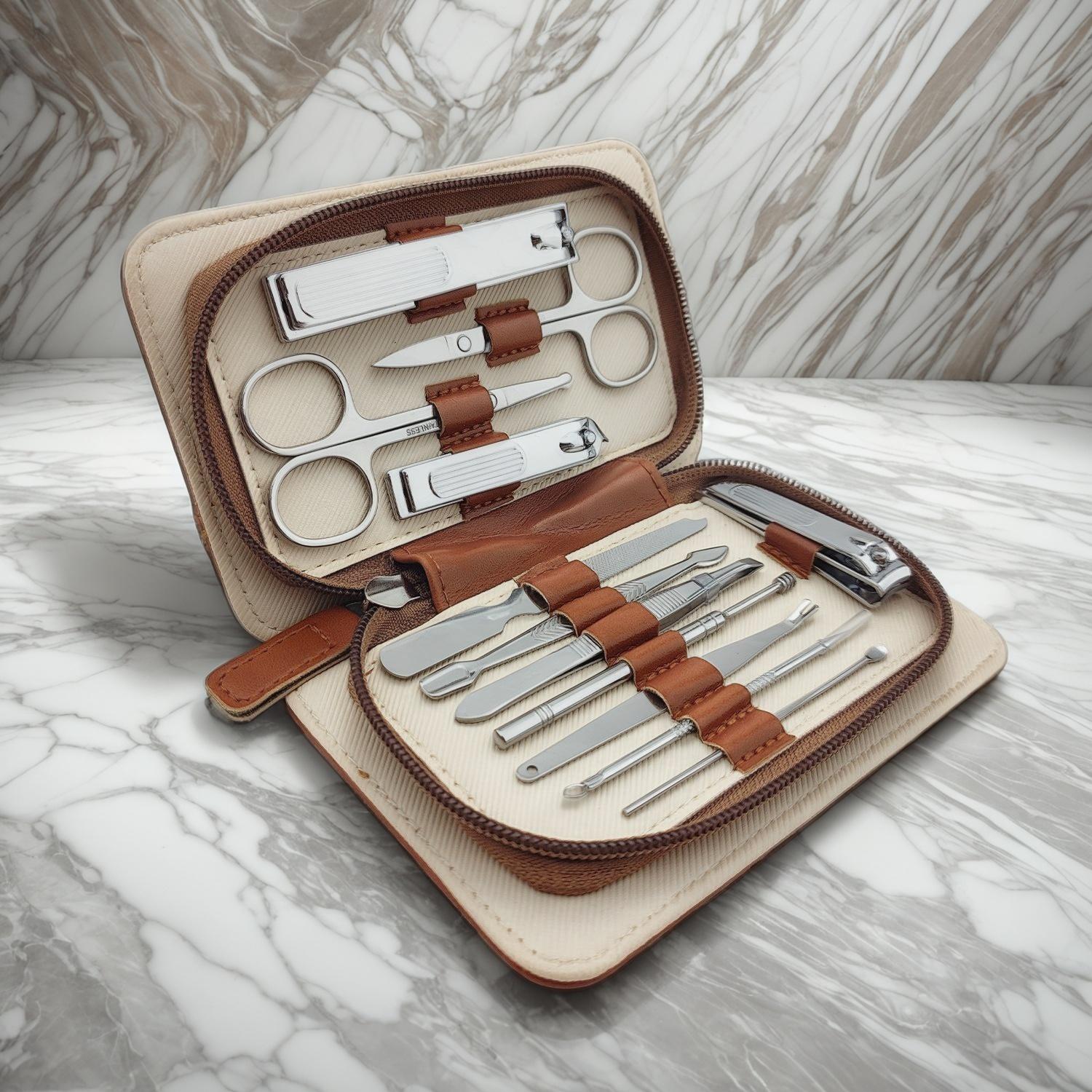
For beauty brands, retailers, gift suppliers, and private label buyers, choosing a custom beauty tools manufacturer is not only about finding a factory that can make nail clippers or tweezers. The manufacturer you choose influences product durability, perceived value, customer reviews, hygiene standards, packaging appeal, and repeat sales. A grooming set is handled closely, often used on nails, cuticles, brows, and facial hair, so buyers need practical confidence in both the tools and the way they are produced.
Modern consumers are also more selective than ever. They expect grooming tools to feel precise in the hand, stay sharp over repeated use, resist corrosion, and arrive in packaging that looks suitable for gifting or travel. Many shoppers also look for ethical options, including vegan manicure tools and leather-look pouches that do not rely on animal-derived materials. For a retailer building a dependable assortment, these details matter as much as the visual design.
Start With the Material, Not the Catalog Photo
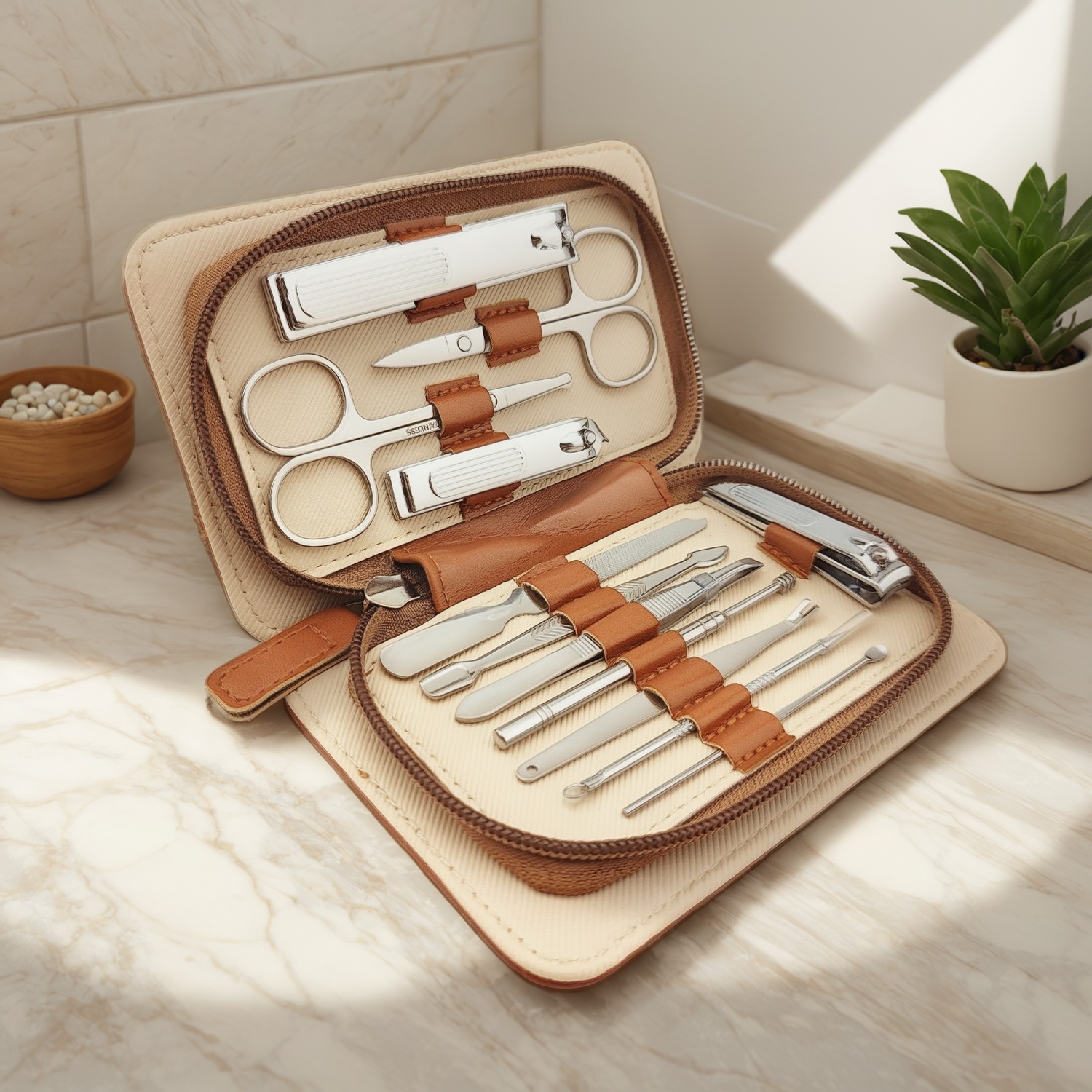
A polished product image can make almost any grooming set look premium, but the real test begins with the material. For high-quality grooming tools wholesale, stainless steel is a common and practical choice because it is durable, rust-resistant, and easier to sanitize than many lower-grade alternatives. In tools such as nail clippers, cuticle pushers, tweezers, precision scissors, and nail files, material quality affects sharpness, control, and the way the product feels after repeated use.
When comparing manufacturers, look beyond broad claims such as “premium” or “professional.” A serious supplier should be able to explain how the tool is formed, polished, sharpened, assembled, and checked before packing. The aim is not only to produce a tool that looks clean on delivery, but one that performs consistently once the customer uses it at home or while traveling.
Useful material and finish checkpoints include:
- Corrosion resistance: Tools should be suitable for bathroom storage and routine cleaning without developing visible rust quickly.
- Edge performance: Clippers and scissors should cut cleanly rather than crush, bend, or tear the nail.
- Surface finish: Edges should be smooth where the hand touches the tool, with no burrs that catch skin or fabric.
- Sanitation practicality: The tool should be simple to wipe, clean, and dry after use.
- Consistency across the set: A kit should not combine one strong item with several noticeably weaker accessories.
Match the Tool Set to a Real Customer Routine
A complete grooming set should be designed around actual use, not around filling a pouch with as many items as possible. A buyer sourcing custom manicure sets should first define the end user. Is the product intended for a travel retail customer, a men’s grooming category, a salon-adjacent home care line, a holiday gift set, or a minimalist daily care collection? Each use case changes the ideal tool mix.
For example, a compact travel set may need fewer tools but better retention inside the case, so items do not fall out in luggage. A full self-care kit may include several clippers, a cuticle pusher, tweezers, scissors, and a fine-grade nail file. A gifting set may require more attention to pouch texture, interior layout, and the first impression when opened. The best custom beauty tools manufacturer will help align the assortment with the buyer’s market rather than simply offering a standard bundle.
Before confirming a set, review whether every tool has a clear purpose. Duplicate tools can add cost without improving customer satisfaction. On the other hand, removing a commonly expected item, such as tweezers or a nail file, may make the kit feel incomplete. If you are still comparing categories, Olimor’s broader beauty tool products can help you evaluate how grooming tools fit alongside other personal care items.
Evaluate Ergonomics Before You Approve Production
Ergonomics is one of the easiest quality signals for a customer to notice. A nail clipper that slips, tweezers that cannot grip fine hair, or scissors that feel awkward will quickly reduce trust in the product. For brands and retailers, this means samples should be tested by hand, not approved only from photos or drawings.
Good ergonomic design includes comfortable finger placement, balanced weight, predictable spring action, and enough control for precise grooming tasks. With cuticle pushers and files, the grip area should allow careful movement without forcing the user to press too hard. With tweezers, the tips should align correctly and meet with enough tension to hold fine hairs without excessive effort. With clippers, the lever should operate smoothly and cut cleanly across the nail.
A practical sample review process can be simple:
- Open and close every tool several times to check motion, alignment, and resistance.
- Inspect touch points for sharp burrs, rough seams, or uncomfortable edges.
- Test gripping tools, such as tweezers, on fine and slightly thicker materials to compare precision.
- Check whether clippers cut cleanly without leaving jagged edges.
- Place all tools back into the pouch or case to confirm fit, retention, and ease of removal.
Consider Vegan and Cruelty-Free Presentation Options
Ethical sourcing is now part of mainstream beauty purchasing. For vegan manicure tools wholesale, the focus is not only on the metal tools themselves but also on the accessories and packaging materials around them. Leather-look pouches can provide a refined appearance while supporting buyers who want a cruelty-free presentation. This is especially relevant for retailers serving conscious consumers, gift buyers, and brands that want to keep animal-derived materials out of their product line.
When developing a vegan-friendly grooming set, define the claim carefully. The pouch, lining, adhesives, labels, and packaging details should be reviewed as part of the same sourcing decision. Clear internal standards help avoid confusion later when marketing teams prepare product pages or retail packaging copy. If vegan positioning is important to your assortment, keep records of the chosen materials and ensure future repeat orders use the same approved components.
The goal is not to use ethical wording as decoration. It should reflect real material choices that can be explained clearly to distributors, retail buyers, and end customers.
Packaging Should Protect, Organize, and Sell
For grooming tools, packaging has three jobs: it protects the tools, organizes them for daily use, and communicates value at first glance. A sleek portable case can make a manicure or grooming set suitable for travel and everyday storage, but the inside structure matters just as much as the exterior. Elastic loops, molded slots, or fitted compartments should keep the tools from rubbing heavily against each other in transit.
Retailers should also think about how the set will be displayed, shipped, and returned to storage after use. A pouch that looks attractive but does not hold tools securely may disappoint customers. A case that is too bulky may reduce travel appeal. A very soft pouch without structure may be cheaper, but it may not create the same gifting impression.
Packaging decisions worth comparing include:
- Exterior material appearance and whether it supports vegan positioning.
- Interior organization and how securely each tool is held.
- Resistance to scuffs during shipping and handling.
- Ease of opening, closing, and returning tools to the correct place.
- Space for private label presentation, insert cards, or retail barcode requirements.
Quality Control Questions That Actually Matter
Quality control should cover more than final visual inspection. Olimor Beauty focuses on quality control from raw material inspection to final packaging, which is the kind of full-process approach buyers should look for when sourcing grooming tools. For a custom beauty tools manufacturer, checks at multiple stages reduce the risk of inconsistent edges, loose parts, poor polish, or packaging problems reaching the customer.
When evaluating a supplier, organize your quality review around the customer experience. Does the tool work as expected the first time? Does the set look clean and complete when opened? Are the tools placed correctly? Does the pouch close properly? Are there visible scratches, stains, or alignment problems? These issues directly affect reviews and returns.
A concise buyer checklist can include the following areas:
| Review Area | What to Check | Why It Matters |
|---|---|---|
| Tool function | Cutting, gripping, pushing, filing, and opening action | Confirms the set is useful, not just decorative |
| Finish | Polish, burrs, scratches, and edge smoothness | Affects comfort, safety, and perceived value |
| Set accuracy | Correct items, quantity, and placement | Prevents incomplete or mismatched kits |
| Case quality | Closure, stitching or bonding, tool retention | Supports travel use and gifting presentation |
| Packaging condition | Cleanliness, labeling area, and shipping protection | Reduces retail handling issues and complaints |
How to Compare Manufacturers Without Relying on Price Alone
Price is important, but it should not be the only selection factor. A very low quote may reflect lighter materials, less finishing time, weaker packaging, or reduced inspection. For products used close to the skin and nails, inconsistent quality can create more cost through complaints, returns, and brand damage.
Compare manufacturers by requesting samples that reflect the intended product level, not only the cheapest available set. Review how clearly the supplier communicates about materials, pouch options, tool mix, and packaging decisions. If your business needs a custom assortment, pay attention to how well the manufacturer understands your sales channel and customer routine. The best partner should help you refine choices, not pressure you into a generic kit.
It is also helpful to compare grooming tools with related product collections so your final assortment feels coherent across your store or brand range. When you are ready to discuss tool combinations, materials, or packaging direction, you can send an inquiry with your target use case and preferred set structure.
Build a Product Line Customers Can Trust
A well-made grooming set is a practical product customers may keep for years. That makes manufacturer selection especially important. Stainless steel construction, comfortable tool design, cruelty-free pouch options, careful packaging, and consistent inspection all contribute to a product that feels reliable in everyday use.
For brands and retailers, the strongest sourcing decisions come from matching the set to a real customer need, reviewing samples hands-on, and treating packaging as part of the product experience. With the right custom beauty tools manufacturer, a manicure or grooming set can become a dependable part of a personal care collection rather than a short-lived accessory. To discuss a custom direction or compare suitable beauty tool options, you can contact Olimor for product guidance.
Tag: