

How to Choose a Reliable Tweezers Supplier for Custom Beauty Tools
Choosing a tweezers supplier is a product quality decision, not only a purchasing decision. For beauty retailers, salon distributors, spa groups, private-label brands and professional tool ranges, tweezers are small items that customers judge immediately by feel, grip and precision. If the tips slip, the arms feel weak, the coating looks uneven or the tool becomes uncomfortable in the hand, the buyer may see returns, poor reviews and lower repeat orders.
A reliable tweezers supplier should help you match the tool to the user, control production details, protect consistency in bulk orders and support practical customization. The right partner can supply tweezers that look appropriate for retail presentation while still performing well for brow shaping, lash placement, personal grooming or salon use.
Olimor Beauty supplies professional and retail beauty tools, including precision tweezers, coated designs, curved options and custom beauty tool solutions. Buyers comparing suppliers can start by reviewing relevant beauty tool products and then building a clear request around tweezer shape, material, finish, packaging and quality expectations.
Start With One Question: Who Will Use the Tweezers?
The best supplier decision starts with the end user. A brow artist, lash technician, nail salon, retail shopper and travel kit customer may all need tweezers, but they do not judge the product in exactly the same way. Professional users usually care most about tip accuracy, grip control, comfort and repeat performance. Retail customers may also care strongly about color, packaging and whether the tool feels easy to use at home.
Before asking for quotations, define the application as clearly as possible. For brow shaping and general grooming, a slanted tip is often chosen because it offers a practical balance of visibility and control. Pointed or curved precision styles can support more detailed work, but they require careful manufacturing and responsible use. A broader or flatter tip may suit other grooming or gripping tasks, depending on the product concept. If the design is dual-ended, each working end should be inspected separately because both sides must meet their own alignment and grip requirements.
This user-first approach keeps the sourcing process focused. Instead of comparing only product photos or unit cost, buyers can ask whether each supplier can deliver the right tip shape, finish, hand feel and packaging format for the intended sales channel.
What Makes a Tweezers Supplier Reliable?
A dependable tweezers supplier is defined by process control. Tweezers look simple, but their performance depends on accurate forming, smooth polishing, stable tension, clean tip finishing and careful packaging. Minor variation can affect whether the tool grips fine hair, removes brow strays cleanly or feels tiring during detailed work.
Stainless steel is commonly used for beauty tweezers because it supports durability and corrosion resistance when properly selected and finished. Olimor Beauty uses high-quality, corrosion-resistant stainless steel for tweezers, and its process includes quality control from raw material inspection through final packaging. Material is still only the starting point; a serious supplier should also be able to explain how it checks alignment, surface finish, tension, handle comfort and packaging protection.
When comparing a tweezers China manufacturer, wholesaler or OEM partner, look for clear answers rather than broad promises. Ask how incoming material is reviewed, what operators check during production, how final goods are inspected before packaging and how approved samples are used as references for bulk orders. Buyers may also ask whether a supplier follows recognized quality management or sampling inspection frameworks, such as ISO 9001 or ISO 2859. The applicable version and documentation should always be verified directly with the supplier; do not assume certification or compliance unless the supplier provides valid evidence.
Key Quality Criteria for Professional and Retail Tweezers
Every market segment has its own priorities, but the core quality checks are similar. A retail beauty brand may want a polished appearance and attractive packaging. A salon-focused distributor may prioritize durability, comfort and daily handling. A private-label buyer may need both functional consistency and brand presentation.
- Tip alignment: The two tips should meet evenly, without visible gaps, twisting or offset that could reduce grip.
- Grip performance: The tweezer should hold fine hair or a thin fiber securely without requiring excessive hand pressure.
- Tension balance: The arms should open and close with controlled resistance. A tool that is too loose can feel weak, while one that is too stiff can cause fatigue.
- Material suitability: Corrosion-resistant stainless steel is a practical choice for beauty tools that may be handled often and exposed to moisture during storage, cleaning or salon use.
- Surface finish: Polished, coated or colored finishes should be smooth, even and free from rough edges, scratches or inconsistent color.
- Ergonomic handling: Non-slip handle areas, balanced construction and comfortable body shape help users maintain control.
- Packaging compatibility: The packaging should protect the tips during transport and support the intended retail, salon or kit presentation.
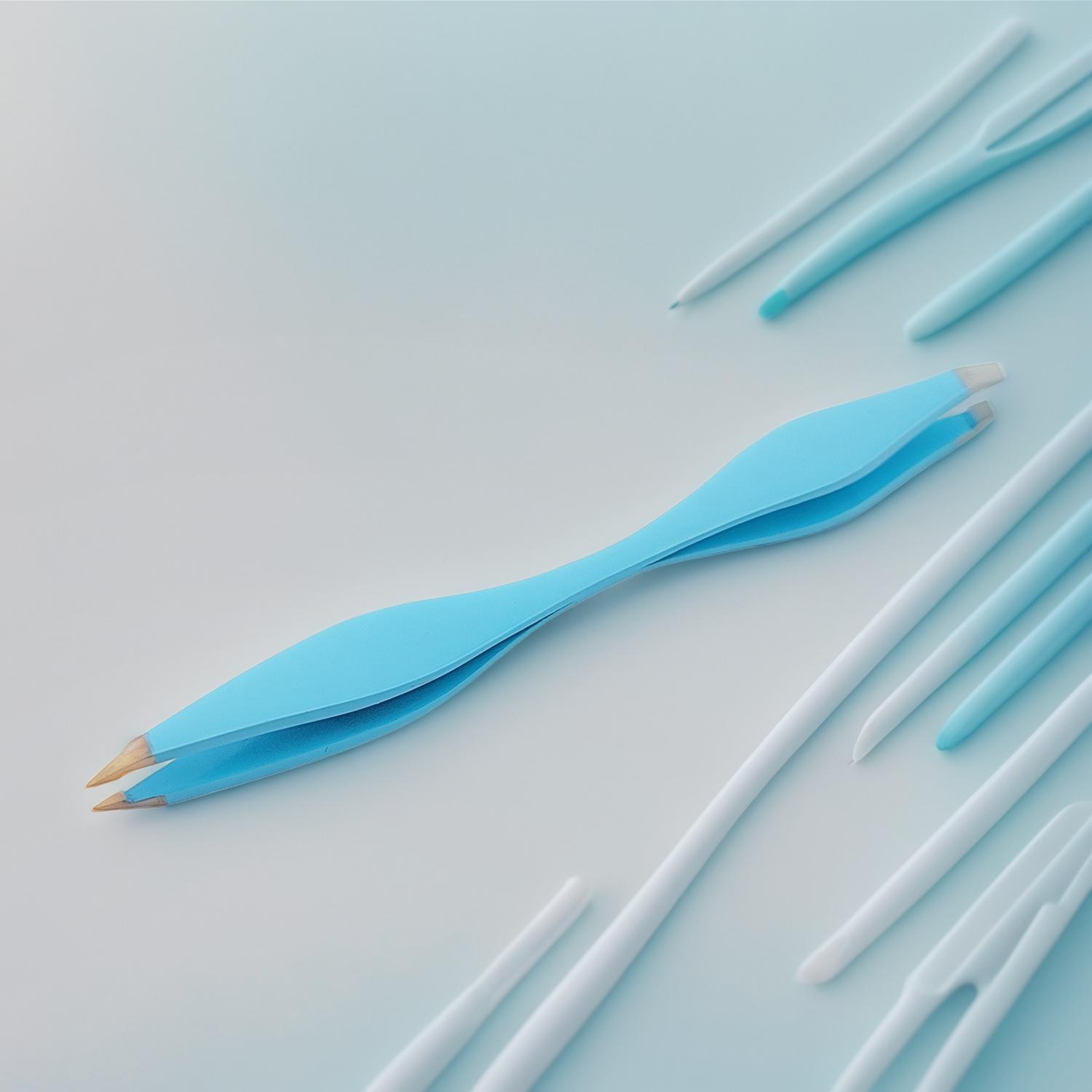
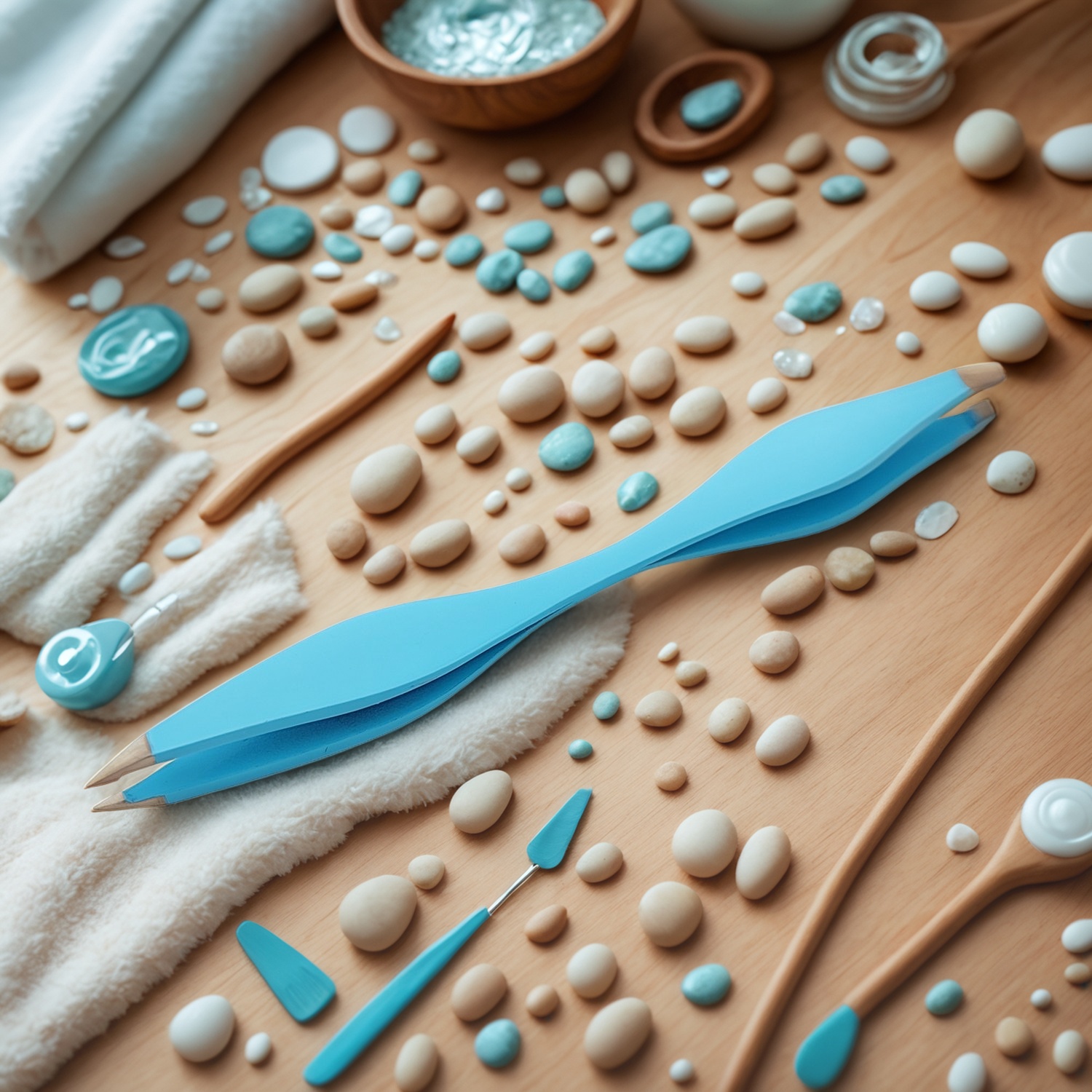
Olimor tweezer examples show how these criteria can appear in different product concepts. A dual-ended beauty tweezer highlights functional versatility. A sky-blue coated tweezer shows how color can support marketable presentation when the coating is applied consistently. Gradient Luxe Precision Tweezers combine a gradient pink-to-gold appearance with practical features such as stainless steel construction, corrosion resistance, a finely tuned tip, an ergonomic curve and non-slip handles. Curved Precision Tweezers show why shape and working angle matter in a detail-focused tool.
Supplier Comparison Table for B2B Buyers
Use a structured comparison table when reviewing samples and quotations. This helps sourcing, quality, product development and sales teams evaluate suppliers with the same criteria instead of relying only on appearance or price.
| Evaluation area | What to check | Why it matters | Questions to ask the supplier |
|---|---|---|---|
| Tip precision | Even tip contact, symmetrical shape and no visible gap | Supports grip on fine hair and reduces slipping | How are tip alignment and closure checked before packing? |
| Hand feel | Balanced tension, smooth opening and comfortable pressure | Improves control and reduces user fatigue during repeated use | Can samples be reviewed for different target users, such as salon and retail? |
| Material and finish | Stainless steel suitability, smooth edges, consistent coating or polish | Affects durability, appearance and skin-contact comfort | What material and finishing options are available for the selected design? |
| Bulk consistency | Match between approved sample and production goods | Reduces complaints, returns and brand inconsistency | What inspection steps are used from raw material to final packaging? |
| Customization | Logo position, color treatment and packaging format | Supports brand identity without damaging function | How will custom branding be confirmed before bulk production? |
| Packaging protection | Tip protection, label space and retail display fit | Helps prevent bent tips, scratches and presentation issues | How are tips protected during transit and storage? |
How to Review Tweezers Samples Before Bulk Ordering
Samples should be reviewed in a structured way. A beautiful sample photo is not enough because many of the most important tweezer features are felt during actual use. Ask for samples that represent the intended finish, tip style, handle texture and packaging direction as closely as possible.
- Inspect the tip under good lighting. Check whether both tips meet cleanly and whether the shape looks symmetrical.
- Test fine gripping. Grip fine hair or a thin fiber to judge whether the tips hold securely without cutting, slipping or needing excessive pressure.
- Check closing tension. Open and close the tweezer repeatedly to see whether the resistance is smooth and predictable.
- Review the surface finish. Look for scratches, rough edges, uneven coating, discoloration or areas that feel uncomfortable against the skin.
- Assess practical handling. Hold the tweezer as a real user would during grooming and evaluate control, balance and comfort.
- Compare several pieces. Review more than one sample to understand whether quality is consistent.
- Check packaging protection. Confirm that the tips are not likely to bend, scratch or become misaligned during shipping and shelf handling.
Samples should be tested by people who understand the end user. A purchasing team can evaluate cost, packaging and supplier communication, while a brow technician or beauty professional can judge tip accuracy, grip and comfort. Combining both perspectives produces better decisions for wholesale tweezers, salon kits and private-label programs.
Custom Logo Tweezers Without Losing Function
Custom logo tweezers are popular for beauty retailers, salons, spas, beauty schools and promotional grooming kits because the product is compact, useful and easy to fit into a branded assortment. However, branding should never interfere with tool function. A logo, color treatment or special package should strengthen recognition while preserving alignment, grip and comfort.
A practical custom order usually begins with the base tweezer. Choose the tip shape, finish and handle style that fits your audience. A gradient or colored finish may suit a beauty-focused retail range, while a simpler professional finish may suit salon or spa kits. Next, confirm the logo location and packaging format. The branding should be visible but should not create roughness, slipperiness or discomfort where the user holds the tool.
Olimor Beauty provides tweezers OEM services for brands developing custom tools aligned with their specifications and brand identity. Buyers can prepare a concise product brief before sample discussions. Include the intended user, tweezer shape, surface finish preference, grip expectations, packaging format and key performance priorities. If you are building a wider assortment, review related beauty tool collections so the tweezers fit the same visual and quality direction as other tools.
Wholesale Tweezers: Protecting Consistency at Scale
Wholesale orders require more than an approved sample. The main challenge is keeping the same feel, grip, finish and packaging appearance across the full order. A strong supplier should use the approved sample as a practical reference and maintain inspection discipline throughout production.
Batch consistency matters because customers judge tweezers quickly. If one shipment feels precise and the next feels loose or rough, the brand experience becomes unreliable. Retailers may see inconsistent reviews, distributors may receive complaints from salons and private-label buyers may struggle to maintain confidence in repeat orders.
To reduce risk, discuss inspection expectations before placing the order. Clarify how the supplier checks raw material, forming, polishing, coating, tip closure, tension and packaging. Ask how nonconforming goods are handled and how the supplier communicates if a production detail needs review. Clear communication before bulk production is usually more useful than trying to solve quality disputes after shipment.
Cost Factors When Comparing Tweezers Suppliers
Low unit cost can be attractive, but it should not be the only comparison point. Tweezers that fail on grip, comfort or finish can create hidden costs through returns, replacements, weak customer loyalty and time spent resolving complaints. A better approach is to compare total sourcing value.
Common cost factors include the tweezer style, material choice, surface finish, color treatment, logo application, packaging complexity, inspection requirements and order structure. More specialized tip shapes or decorative finishes may require closer process control. Retail packaging may also add cost compared with simple bulk protection, but it can be necessary for shelf display and brand presentation.
When requesting quotations, give suppliers the same brief so the comparison is fair. If one quote includes custom packaging and another only includes basic packing, the prices are not directly comparable. A reliable supplier should help you understand how design choices affect cost without pushing you toward a specification that does not fit your market.
How to Evaluate Communication and Supplier Fit
Reliable sourcing depends on communication as much as manufacturing. A good tweezers supplier should ask about the target user, sales channel, finish preference, packaging needs and quality priorities. If the supplier only sends a catalog and price list, it may be harder to develop a tool that matches your market.
Look for a partner that responds clearly, documents product details and confirms changes before production. For import buyers, especially those sourcing directly from a manufacturer, direct communication can reduce misunderstandings about finish, handle texture, tip style and packaging. It also helps the manufacturer understand whether the order is intended for retail shelves, salon distribution, professional kits or promotional use.
If you are ready to discuss a specific custom tweezer concept, share your brief through the custom beauty tool inquiry page. For broader sourcing questions or supplier evaluation support, you can also contact Olimor Beauty with your intended application and preferred product direction.
Pre-Purchase Checklist for Choosing a Tweezers Supplier
- Define the intended user and sales channel before comparing products.
- Choose a tip style based on real use, not only appearance.
- Request samples that represent the intended material, finish and packaging.
- Check tip alignment, fine gripping, tension, surface finish and handling comfort.
- Compare several samples, not only one best-looking piece.
- Ask how quality is controlled from raw material inspection to final packaging.
- Confirm how approved samples are used as references for bulk production.
- Review logo placement, color treatment and packaging so customization does not affect function.
- Ask suppliers to provide documentation for any standards, certificates or inspection claims they make.
- Compare total sourcing value, including quality consistency and communication, not only unit price.
FAQ
Can I request tweezers samples before placing a bulk order?
Yes. Samples are important for checking tip alignment, grip performance, tension, finish and packaging protection. Buyers should review several pieces where possible and involve people who understand the end user, such as a brow technician or product quality team.
Does Olimor support custom logo tweezers?
Olimor Beauty provides tweezers OEM services, including custom tool development aligned with buyer specifications and brand identity. Buyers should prepare the target user, tweezer style, finish preference, logo position and packaging requirements before sample discussions.
What should I ask about MOQ or lead time?
MOQ and lead time depend on the selected tweezer design, finish, customization and packaging requirements. Buyers should confirm these details directly during inquiry instead of assuming a standard number applies to every project.
How can I reduce quality risk in a wholesale tweezers order?
Approve representative samples, define inspection points, confirm packaging protection and ask how the supplier checks raw material, production quality, tip closure, surface finish and final packing. Any claimed certification or standard should be verified with current supplier documentation.
Tag: