

Eyelash Extensions and Precision Tweezers: A Practical Buying Guide for Beauty Professionals
Eyelash extensions rely on skill, clean technique, and the right hand tools. For salons, lash studios, beauty retailers, and distributors, tweezers are not a small accessory; they directly affect application control, grooming accuracy, staff comfort, and the customer experience. A tweezer that looks attractive but slips, feels unstable, or loses alignment quickly can slow down service and increase tool replacement costs.
This guide focuses on how to evaluate eyelash extension and eyebrow tweezers for professional and B2B purchasing. It includes selection criteria for bulk orders, practical use cases, maintenance considerations, and sourcing questions that help buyers compare options without depending only on appearance or product photos.
Why Tweezers Matter in Eyelash Extension Services
Eyelash extensions are designed to create fuller, more defined lashes without daily mascara application. The final result depends on lash mapping, adhesive control, isolation, placement angle, and the technician’s ability to separate natural lashes cleanly. Precision tweezers support each of these steps. They help isolate a single natural lash, pick up extension fibers, control placement, and reduce unnecessary contact with the surrounding lash line.
For eyebrow grooming, tweezers also need accuracy. Clean tip contact helps remove fine hairs without excessive pinching or repeated pulling. In both lash and brow services, poor grip and misaligned tips can create avoidable frustration. This is why buyers looking for beauty tool products should evaluate tweezers as professional instruments, not just low-cost consumables.
What to Look for in Eyelash Extension and Eyebrow Tweezers
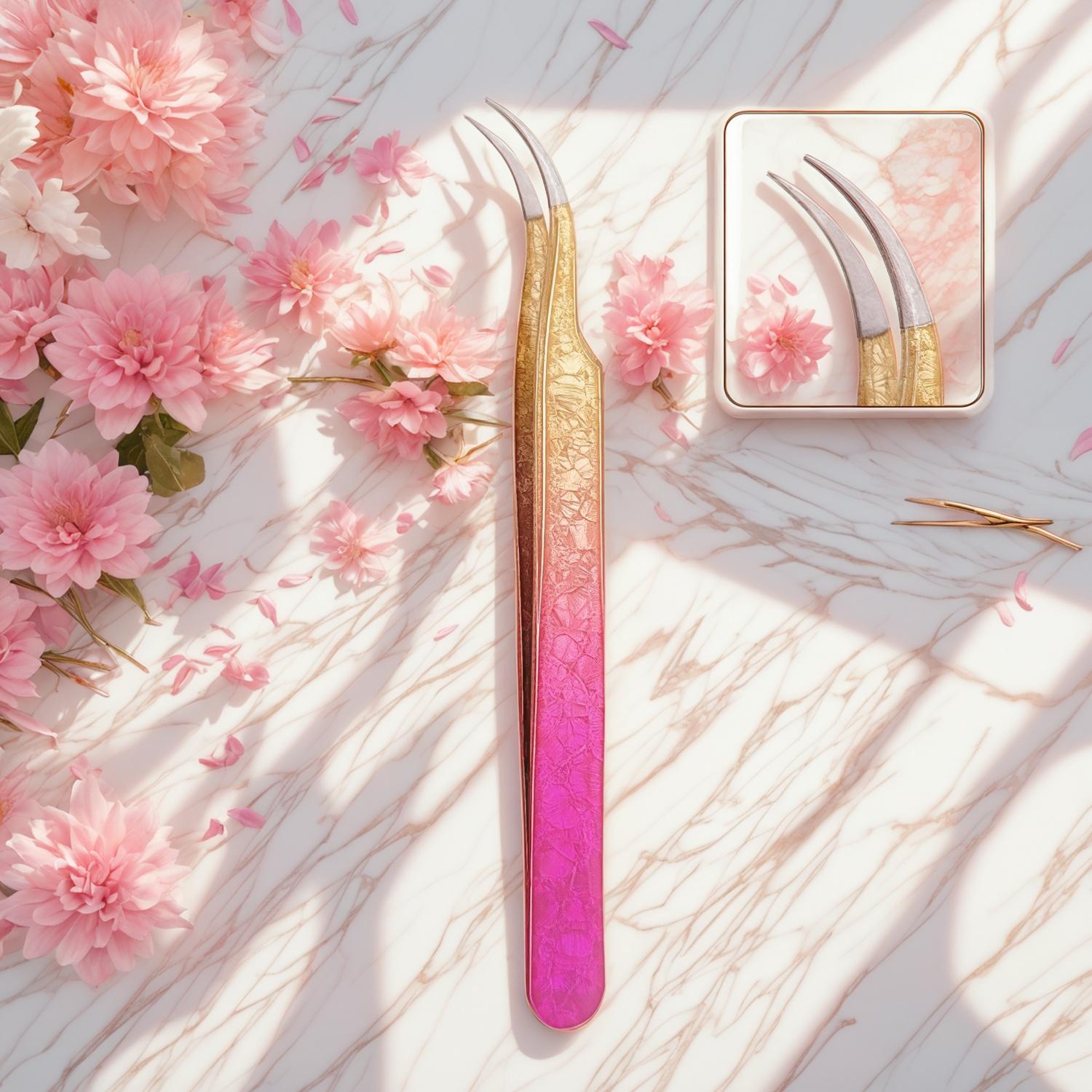
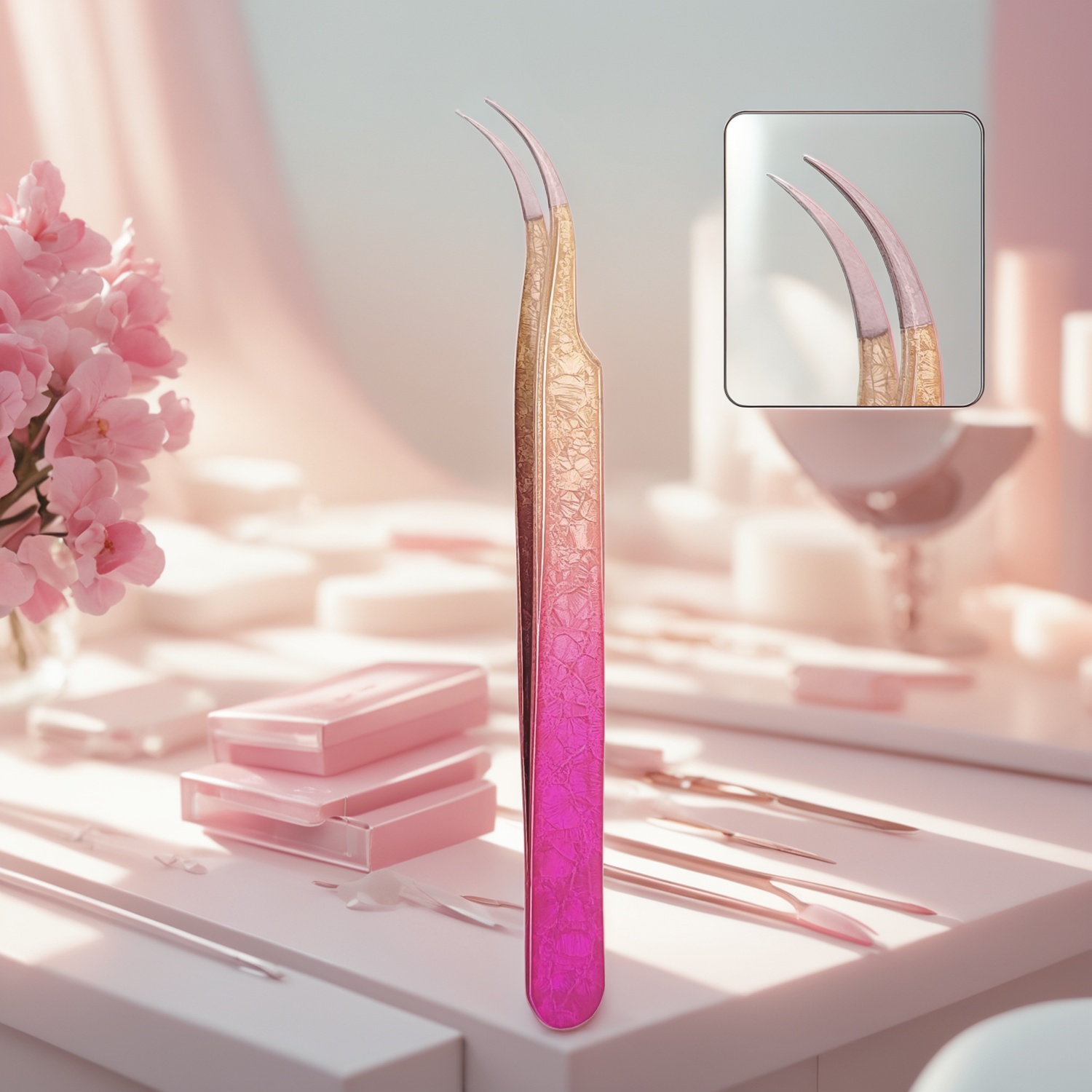
When comparing tweezers for salon use or resale, it is helpful to separate visual design from working performance. A polished finish may attract customers, but the tool still needs to feel balanced and predictable in the hand. Olimor Beauty’s Gradient Prism Precision Tweezers are described with a color gradient, textured grip, and high-grade stainless steel construction. Those features are useful starting points for evaluation because they relate to appearance, handling, and durability expectations.
- Tip alignment: The tips should meet cleanly and consistently. Uneven contact can make lash pickup or brow hair removal difficult.
- Grip surface: A textured grip can improve control, especially during longer application sessions or when gloves are used.
- Hand comfort: The tweezer should not require excessive pressure to close. Too much tension can cause hand fatigue during repeated use.
- Material choice: Stainless steel is commonly preferred for beauty tools because it is practical for routine cleaning and professional handling.
- Finish consistency: For retail or distributor orders, a consistent visual finish supports better presentation and fewer customer complaints.
- Packaging suitability: Bulk buyers should consider whether the packaging protects tips in storage and transport.
Matching Tweezer Features to Real Beauty Workflows
Not every buyer uses tweezers in the same way. A lash studio may prioritize isolation and application accuracy, while a retailer may focus on a visually attractive tool that is easy for consumers to understand. A distributor may need a broader product mix for salons, training schools, and beauty shops. Clarifying the intended use helps avoid overbuying tools that look similar but do not serve the same function.
| Buyer type | Main use case | Key evaluation points |
|---|---|---|
| Lash salon | Extension isolation and placement | Tip precision, hand comfort, grip stability, easy cleaning |
| Brow studio | Eyebrow shaping and detail grooming | Clean hair removal, controlled tension, durable tip contact |
| Beauty retailer | Consumer resale | Attractive finish, clear product positioning, safe packaging |
| Distributor | Bulk beauty supply programs | Consistent quality, repeatable appearance, order communication |
For many B2B customers, a tool such as the Gradient Prism Precision Tweezers can serve both professional and retail purposes because the visual gradient gives shelf appeal while the textured grip supports practical use. Buyers should still test samples in realistic conditions before committing to a larger assortment.
Bulk Purchasing: How to Reduce Risk Before Ordering
Buying eyebrow tweezers in bulk or adding lash tools to a B2B beauty supplies program requires more structure than choosing a single tool for personal use. The goal is not only to find a tweezer that works well once, but to identify a product that remains consistent across the order and matches the expectations of your customers.
Before placing a larger order, create a simple evaluation process. This is especially useful for salons with multiple technicians because each technician may notice different handling details. A buyer checklist can include:
- Inspect several samples for tip alignment and finish consistency.
- Test pickup performance with lash fibers or fine brow hairs, depending on your intended use.
- Check how the textured grip feels during a simulated service period.
- Review whether the tool is comfortable for both smaller and larger hands.
- Confirm that tip protection and packaging are suitable for storage, shipping, and retail display.
- Compare the tool with current products to identify where it improves accuracy, presentation, or handling.
It is also useful to compare the tweezers with adjacent items in your sourcing plan. If you are building a broader range, browse product collections to see how lash and grooming tools can be organized by function, buyer segment, or sales channel.
Maintenance and Hygiene Practices for Longer Tool Life
Even well-made tweezers perform poorly if they are stored loosely, dropped on hard surfaces, or cleaned in a way that damages the tips. Lash and brow professionals should establish routine care habits for every workstation. Good tool care supports hygiene, preserves accuracy, and helps teams identify worn tools before they affect service quality.
After use, remove visible residue according to your salon hygiene procedure, then clean and store the tweezers in a way that protects the tips. Avoid tossing tweezers into a drawer with metal tools, as contact between sharp tips and harder surfaces may compromise alignment. If your business sells tweezers to consumers, include simple care instructions so customers understand how to protect the tool after purchase.
- Keep tweezer tips protected during storage and transport.
- Separate tools used for lash application from general grooming tools when required by your workflow.
- Inspect tips regularly for bends, gaps, or loss of contact.
- Replace damaged tweezers rather than forcing continued use in professional services.
- Train staff to handle tweezers gently; drops and side pressure can affect precision.
Questions B2B Buyers Should Prepare Before Sourcing
A clear sourcing conversation saves time for both buyers and suppliers. Instead of asking only for price, prepare questions that reflect your business model. A salon may need reliable restocking. A retailer may need presentation details. A distributor may need a repeatable product description and dependable order communication.
Useful sourcing questions include whether the tweezers are intended for lash application, brow grooming, or both; how the grip and finish are presented; what packaging format is available; and whether the product information can support online or in-store sales. If you need to compare options for a buying program, you can send an inquiry with your intended channel, estimated assortment needs, and the type of customers you serve.
For custom sourcing discussions, product clarification, or coordination with your purchasing team, you can also contact Olimor. Providing context about your target market helps narrow the discussion to suitable beauty tools rather than a generic product list.
Building a Stronger Lash and Brow Tool Assortment
The best eyelash extension tool assortment balances practical performance with customer appeal. For professional users, the tool must feel stable, precise, and comfortable through repeated use. For retail buyers, the tool must be easy to present and visually clear in its value. For distributors, the product must fit a repeatable sales category and meet expectations across multiple accounts.
Eyelash extensions may create the visible result, but precision tools make that result easier to achieve. When evaluating Gradient Prism Precision Tweezers or any similar lash and brow tool, focus on the details that matter in real work: alignment, grip, comfort, finish, packaging, and maintenance. A thoughtful selection process helps beauty businesses avoid generic inventory and build a tool offering that supports both service quality and customer confidence.
Tag: