

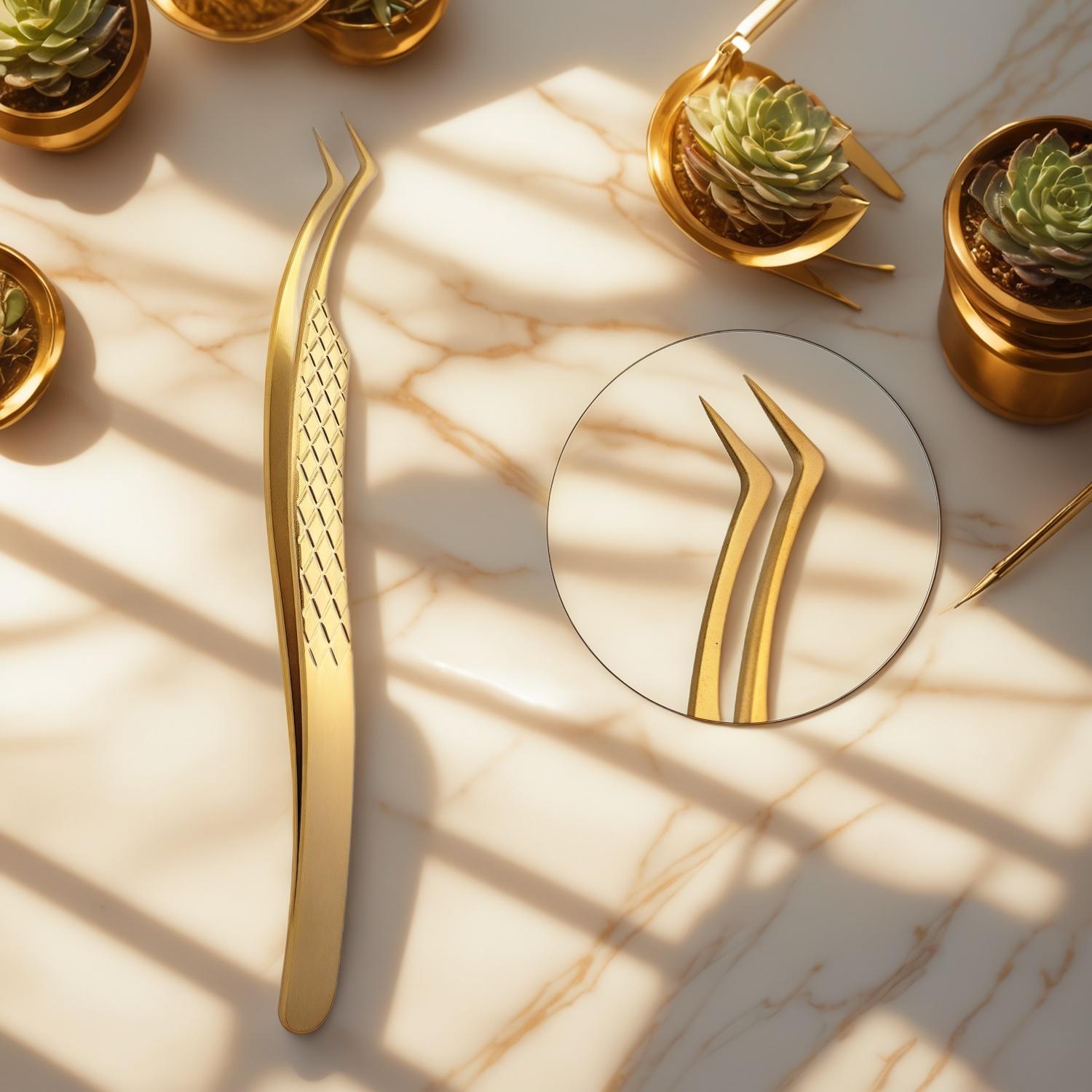
Curved Eyelash Extension Tweezers: Selection and Care Guide
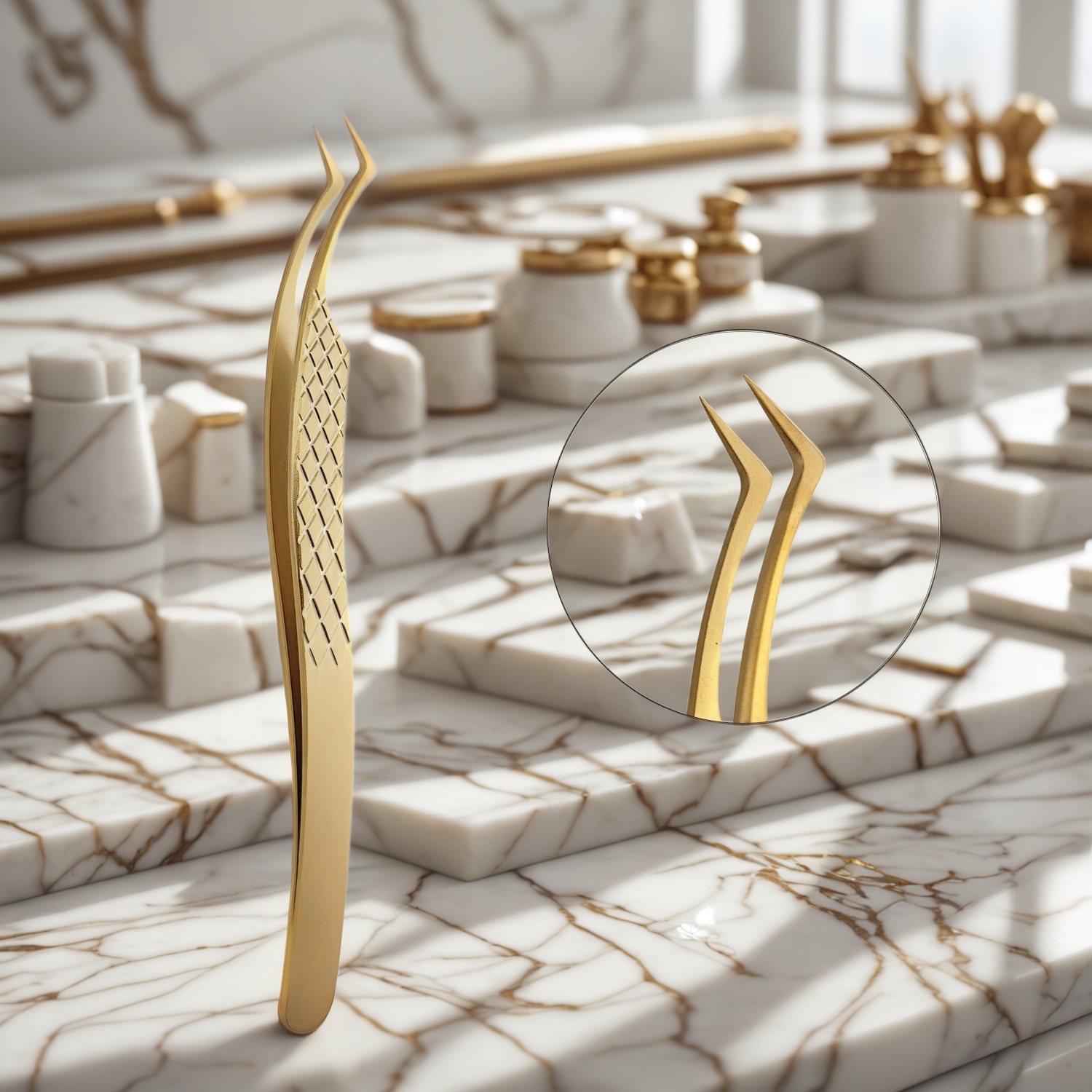
Curved eyelash extension tweezers are a practical choice for lash artists who need controlled pickup, clean isolation and accurate placement close to the lash line. In salon work, the right tool supports speed as well as precision: it should feel balanced in the hand, hold lashes predictably and fit into a hygiene routine that can be repeated every day.
For salons, lash studios and B2B beauty buyers, the most useful question is not simply whether a tweezer looks professional. It is whether the tip geometry, grip feel, finish and cleaning compatibility match the way technicians actually work. Olimor Beauty’s Gold Precision Curved Tweezers are positioned for eyelash extension application and feature a golden finish, curved tip shape and ergonomic handling for detailed lash tasks. This guide explains how to evaluate that kind of tool, how technicians use it, and what to check before ordering for retail or studio use.
What curved eyelash extension tweezers are best for
Curved tweezers are designed for close-detail lash work where visibility and control matter. Their shape can help technicians reach into small areas around the lash line, separate natural lashes and position extension fibers with less interruption to the working view. That makes them useful in both classic and advanced lash routines, depending on the technician’s method and training.
For many professionals, the curved profile is especially helpful when working on inner or outer corners, or when the hand position needs to stay clear of the client’s face. The tool is not only about style; it is about reducing unnecessary repositioning during repeated pickup and placement steps.
If your team is building a lash station, start by matching the tweezer style to the daily service menu. A studio that focuses on eyebrow or general beauty work may not need the same level of lash precision, while a dedicated lash room will usually benefit from a purpose-built tool set. You can compare related options in our professional beauty tools range or review the lash-focused collection.
How to evaluate a precision curved tweezer before buying
When you compare tweezers for professional use, the most important checks are practical. The tool should perform consistently in the technician’s hand, not just appear polished in a product image. For B2B buyers, that means looking at tip alignment, grip stability, balance and how the surface finish holds up under repeated cleaning and handling.
Tip alignment and pickup control
The tips should meet cleanly and predictably. If the alignment is off, the technician may need to squeeze harder, reposition often or lose control of the lash extension. Clean tip closure supports smoother pickup and a more stable hold on fine fibers.
Buyers should also consider whether the tweezer grips consistently across the usable tip area. A tool that only works well at one exact point can slow down the service and increase hand fatigue. Good pickup behavior matters because lash work depends on small, repeated actions rather than one large movement.
Finish, balance and hand comfort
The source product description highlights a golden finish and ergonomic handling. In day-to-day use, that means the tool should feel comfortable during repeated squeezing and release. A tweezer that is too heavy, too light or front-loaded can make fine work harder over a full appointment schedule.
Surface finish also matters for inspection and handling. A smooth, consistent finish supports a professional look and can make it easier to spot wear, residue or damage after cleaning. For salon buyers, visual consistency across multiple tools is useful when setting up stations or standardizing supplies for several technicians.
Cleaning compatibility and inspection
Eyelash extension tools work close to the eye area, so they need to fit into the salon’s hygiene process without special handling that creates delays. Before purchasing, confirm that the tool can be cleaned, dried and stored in the same workflow used by your team.
During inspection, check for bends, loose feel, rough edges or a change in the way the tips meet. If a tweezer starts to slip or pinch unevenly, it should be removed from active service until it is checked. Salons should align cleaning and handling practices with local health authority guidance and, where applicable, public-body guidance such as CDC or OSHA recommendations. Verify current versions and supplier documents before setting your internal procedure.
Curved vs straight vs angled tweezers: when each style makes sense
Curved tweezers are not the only option in lash work, but they often offer a good balance of access and visibility. A simple comparison helps buyers choose tools that suit their technicians’ habits instead of forcing a one-size-fits-all purchase.
| Tool style | Typical strength | Best fit | Buyer note |
|---|---|---|---|
| Curved tweezers | Better visibility and easier access around the lash line | Isolation, pickup and detailed placement | Often preferred for precision work and comfortable wrist positioning |
| Straight tweezers | Simple line of approach and familiar feel for some technicians | General handling and some isolation tasks | Can work well in a broader tool kit, but may not offer the same angle benefits |
| Angled tweezers | Intermediate control with a different working angle | Specific preference-based lash routines | Useful when a technician wants a more direct tip angle without a full curve |
If you are stocking for a salon group or retail channel, it is often better to offer more than one shape rather than assume every lash artist works the same way. A well-chosen assortment helps technicians find the tool that matches their hand position, lash technique and comfort level. For sourcing questions, send a note through our inquiry form so the team can review your use case.
Selection checklist for salon buyers and distributors
Before placing a repeat order, review the full purchasing context. Cost is important, but the most expensive tool is not always the most useful, and the cheapest tool can become costly if it slows services or wears out too quickly. A good buying decision balances technician comfort, cleanup routine, packaging needs and how consistently the supplier can meet future orders.
- Primary use: Decide whether the tool will be used for isolation, pickup, placement or a mix of lash tasks.
- Technician preference: Confirm that the curve and hand feel suit the people who will use it daily.
- Tip quality: Look for clean alignment and predictable closure.
- Finish consistency: Check that the surface looks uniform and supports your salon’s presentation standards.
- Cleaning workflow: Make sure the tool can be disinfected and stored without special exceptions.
- Batch consistency: If you buy for multiple stations, ask whether the tools can be kept consistent across reorder cycles.
- Packaging and handling: Confirm the supplier can support retail display, kit assembly or professional storage as needed.
- Supplier communication: A responsive supplier is often more useful than one that only competes on appearance.
When you compare options, focus on total usefulness rather than one feature alone. For example, a polished finish is helpful, but not if the tool feels awkward in daily use. A comfortable grip is useful, but not if the tips fail to align cleanly after repeated cleaning. The right balance supports service quality and reduces avoidable replacement.
What affects cost in professional lash tweezer sourcing
For B2B buyers, cost is shaped by several practical variables rather than a single number. Finish, packaging, order size, customization and consistency all influence the purchasing decision. A simple tool can still vary in value depending on how well it fits your business model.
Key cost factors to review include:
- Material and finish work: A smoother, more consistent finish can improve presentation and handling.
- Tip precision: Better alignment and more reliable closure usually support better day-to-day use.
- Packaging format: Retail display packaging and bulk professional packing may serve different channels.
- Customization: Branding, labeling or kit assembly requests can change the order structure.
- Supplier consistency: Repeatable products can reduce training friction and station variation.
- Logistics: Shipping method, order grouping and replenishment planning all affect the final buying experience.
If your business buys tools for several salons or for resale, a consistent product line is often more valuable than changing models frequently. Standardization can help technicians move between stations with less adjustment and makes restocking simpler for purchasing teams.
How to use curved tweezers during a lash appointment
Curved tweezers are part of a repeatable service flow. The goal is not to do everything with one tool, but to use the tool at the right point in the process. Technicians should prepare their station, confirm the tool is clean and then use the curve to support isolation, pickup and placement with minimal hand strain.
A typical workflow looks like this:
- Arrange tweezers, lash strips, adhesive, under-eye pads and disposables before the client settles.
- Inspect the tweezer tips and confirm the tool is dry, clean and properly aligned.
- Use the curve to separate natural lashes without pulling or pressing on surrounding skin.
- Pick up the extension with enough control to avoid bending or dropping the fiber.
- Place the extension while keeping a clear line of sight to the lash line.
- Recheck that the placement is clean and that neighboring lashes have not bonded together.
- Clean and store the tool according to the salon’s routine after the service is complete.
The more repeatable this sequence becomes, the more valuable the tool is in daily work. Lash professionals often prefer tools that feel natural after long hours of use because small differences in angle or tension can affect performance over an entire appointment book.
Cleaning, storage and maintenance for longer tool life
Good maintenance protects both performance and hygiene. Tweezers should not be tossed loosely into a drawer or allowed to knock against other metal tools, because the tips can lose their alignment. Even a small bend can change the way the tool grips a lash extension.
After each client, follow your salon’s cleaning and disinfection procedure. Remove visible residue first, then clean and disinfect using methods appropriate for your setting. Always store the tool dry, separated from other instruments and easy to identify. Some salons assign specific tweezers to individual technicians, while others keep labeled sets for particular services or stations.
Routine inspection is just as important as cleaning. If a tweezer begins to slip, feel uneven or make the technician work harder to maintain grip, it may be time to replace or retire it from active lash work. Tracking wear over time also helps buyers understand how often they need backup tools for each workstation.
Where Olimor Beauty fits in professional sourcing
Olimor Beauty supplies beauty tools for professional use, including precision curved tweezers for eyelash extension application. The Gold Precision Curved Tweezers described here are positioned as a practical option for technicians who want a curved tip shape, a golden finish and ergonomic handling for detailed lash work.
For salons, distributors and beauty supply businesses, the value of a tool like this is in how it supports routine work: controlled pickup, clear isolation, comfortable handling and a clean presentation at the workstation. If your team needs to compare categories, build a broader inventory or discuss packaging and customization options, you can continue browsing the product range or speak directly with the team through the contact page.
When evaluating any lash tweezer supplier, ask for the details that matter to your business: how the tool is intended to be used, how it should be cleaned, what customization or packaging choices are available, and how repeat orders are handled. Those practical questions often lead to better sourcing decisions than focusing on appearance alone.
FAQ
Can I request a sample before placing a larger order?
Many professional buyers prefer to test a sample first so technicians can check tip alignment, grip feel and comfort in real service conditions. Ask the supplier what sampling options are available.
Is there a minimum order quantity?
Minimum order quantity can vary by product, packaging and customization request. The best approach is to confirm the current order structure directly with the supplier before planning your purchase.
Can tweezers be customized for retail or studio use?
Customization may be available depending on the order. Common requests can include branding or packaging support, so it is worth asking what options are offered for your channel.
How should I judge quality before I buy?
Look at tip alignment, balance, finish consistency and how the tool feels during repeated opening and closing. If possible, have technicians test the tweezer in a normal lash workflow.
What affects lead time for a professional order?
Lead time can depend on order size, customization, packaging and shipping method. Confirm timing with the supplier early if you are restocking for a salon schedule or retail launch.
If you are building a dependable lash tool supply, start with the tools technicians use every day. A well-made curved tweezer can improve control, reduce strain and make service routines more consistent. For sourcing support or product questions, send an inquiry and describe your lash service needs, preferred tool style and ordering plan.
Tag: