

Eyelash Extension Tweezers: A Professional Guide to Choosing, Testing and Caring for Precision Tools
Eyelash extension tweezers are small tools with a large effect on service quality. They influence how easily an artist isolates natural lashes, picks up extension fibers, controls placement and works through detailed areas such as inner corners. For salons, educators and beauty supply buyers, the right tweezer is not only a cosmetic accessory. It is a precision tool that must feel stable in the hand, support repeatable movements and fit daily cleaning and storage routines.
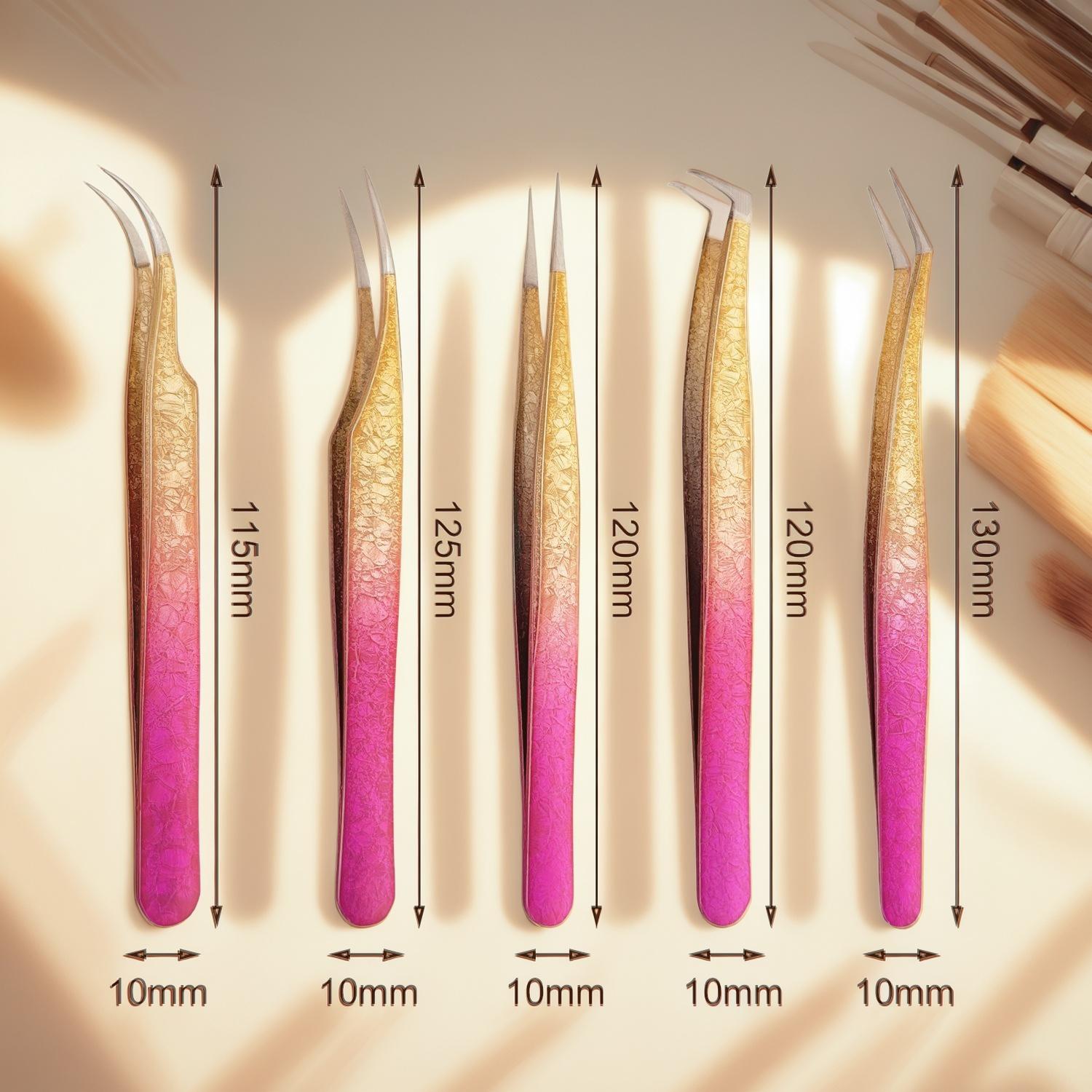
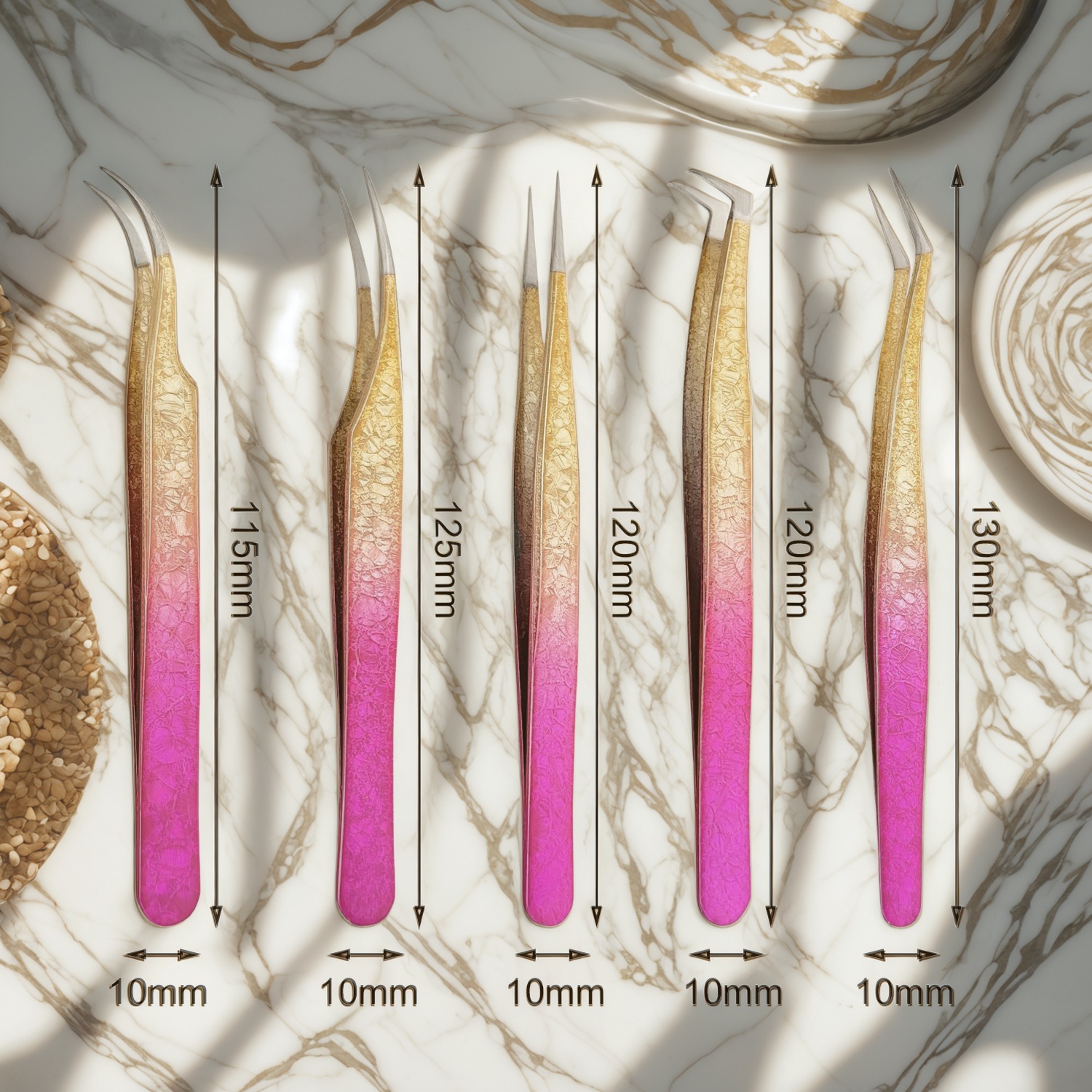
This guide explains how to evaluate eyelash extension tweezers for professional use, including grip, tip control, material, comfort, maintenance and supplier questions. It also looks at the Olimor Beauty Gradient Series Tweezer Set, which is designed for detailed beauty tasks such as lifting individual lashes and defining eyebrows. The set features stainless steel construction, an ergonomic form, a gradient finish and an engraved handle pattern intended to support hand control.
What Lash Artists Need from Eyelash Extension Tweezers
The primary search intent behind eyelash extension tweezers is practical: artists want to know which tools will help them work cleanly and comfortably. A tweezer must do more than close at the tip. It should help the artist control very fine fibers without excessive squeezing, hand fatigue or repeated drops during pickup.
In a lash service, the artist repeatedly separates one natural lash from surrounding hairs, chooses an extension, manages adhesive contact and places the extension with accuracy. If the tweezer tip is poorly aligned, too slippery or uncomfortable, the artist may spend more time correcting movements. That affects workflow and can make long appointments more tiring.
Most professionals use different tweezers for different tasks. One tool may be preferred for isolation, another for pickup and another for volume fan handling or tight corner work. A set can be useful because it lets each artist choose the shape that best matches technique, hand position and service type. This is especially important in salons where multiple artists share a purchasing standard but still need individual control.
Core Selection Criteria: Tip, Grip, Comfort and Material
The best way to choose lash tweezers is to evaluate them by function first and appearance second. A polished or colorful finish can help with presentation and tool identification, but performance depends on how the tweezer behaves during real lash work.
- Tip alignment: The tips should meet cleanly and consistently. Misalignment can cause lashes to slip, twist or fail to pick up.
- Controlled closing pressure: A professional tweezer should not require the artist to squeeze hard for every movement. Excess pressure can increase hand fatigue.
- Grip surface: A secure handle surface helps reduce slipping, particularly during long appointments or when working with very fine fibers.
- Ergonomic feel: The angle, weight balance and handle shape should support the artist’s normal working posture.
- Material suitability: Stainless steel is commonly used in beauty tools because it is durable and compatible with routine professional cleaning when cared for properly.
- Task compatibility: The tweezer should match the service, whether isolation, classic pickup, volume work, brow definition or inner-corner access.
The Olimor Beauty Gradient Series Tweezer Set addresses several of these criteria through stainless steel construction, an ergonomic design, an engraved handle pattern and a gradient finish. These features are relevant because lash professionals need tools that combine precision with practical handling, not tools selected only for visual appeal.
How to Compare Tweezer Types for Lash and Brow Work
Different tweezer shapes support different movements. Buyers do not need to overcomplicate the decision, but they should understand the intended role of each tool before purchasing in quantity. For example, a tweezer that feels excellent for isolation may not be ideal for extension pickup, and a tweezer used for brow definition may need a different angle from one used for fan handling.
| Use case | What the tweezer must do | What to check before buying |
|---|---|---|
| Natural lash isolation | Separate one natural lash without catching surrounding lashes | Tip visibility, closing accuracy and comfort near the eyelid area |
| Extension pickup | Lift fine lash fibers with steady control | Grip point, tip contact and whether fibers slip during pickup |
| Volume or fan handling | Support careful control of multiple fine fibers | Closing pressure, tip consistency and hand comfort |
| Inner-corner work | Reach small areas while keeping the hand stable | Angle, wrist position and visibility for detailed placement |
| Eyebrow definition | Remove or position individual brow hairs precisely | Tip sharpness, control and comfort for close-detail grooming |
The Gradient Series Tweezer Set is described as suitable for intricate tasks, from lifting individual lashes to defining eyebrows. This makes it relevant for beauty professionals who provide multiple eye-area services or for salons that want a compact set of precision tools for different detailed tasks.
A Practical Testing Checklist Before Salon Purchase
For B2B buyers, a sample evaluation is more useful than judging a tweezer only by photos. Salons, distributors and educators should test how the tool behaves in daily work conditions. A short trial can reveal whether the tweezer is comfortable for different artists, whether the tips feel consistent and whether the handle grip supports control.
Sample evaluation checklist
- Inspect the tips: Look at the closing point under good light. The tips should meet evenly and not cross or leave an unintended gap.
- Test on fine fibers: Pick up several fine lash extensions and check whether the tweezer holds them without crushing or dropping.
- Check isolation control: Use the tool to separate individual lashes during practice or training work and observe whether it catches neighboring hairs.
- Assess grip stability: Hold the tweezer in normal working position and test whether the engraved pattern or handle texture helps control.
- Evaluate hand comfort: Use the tweezer for several minutes. Note whether squeezing pressure feels excessive or whether the wrist angle feels awkward.
- Review cleaning workflow: Confirm that the tool can be cleaned, dried and stored according to salon procedures and local requirements.
- Compare consistency: If evaluating multiple pieces, check whether the closing feel and finish are consistent across the set.
Salon buyers can compare related beauty tools through Olimor’s professional beauty tool products and use the checklist above when reviewing samples or planning a purchasing standard for multiple workstations.
Material, Finish and Manufacturing Details Buyers Should Ask About
Material and finish matter because tweezers are repeatedly handled, cleaned and stored. The Olimor Gradient Series Tweezer Set uses stainless steel construction, a practical choice for professional beauty tools when combined with correct care. Stainless steel does not remove the need for cleaning discipline, but it supports durability and repeated handling better than materials that bend easily or are difficult to maintain.
The engraved handle pattern is also a functional detail. In lash work, a small slip can interrupt the artist’s rhythm. A patterned handle may help the user maintain grip during close-detail work, especially when moving between isolation, pickup and placement. The gradient finish can support product presentation and tool identification in shared salon, training or retail environments.
When sourcing tweezers, buyers should ask suppliers clear questions rather than relying on broad claims. Useful questions include: What material is used? How are the tips inspected? Is there care guidance for cleaning and storage? Can the supplier provide product photos or samples before a larger purchase? Are customization options available for packaging, finish or branding? These questions are commercially relevant because they affect purchasing risk, staff adoption and after-sale support.
For hygiene and workplace practice, salons should also follow their local cosmetology board or equivalent regulator. In markets where disinfectants are regulated, such as the United States, buyers may need to check current EPA disinfectant labeling for appropriate use on non-porous tools. Requirements can vary by location and service type, so professionals should verify current versions of applicable rules and supplier documents rather than relying on assumptions.
Cost Factors Without Guesswork
The cost of eyelash extension tweezers depends on more than the unit price. A lower-cost tool that drops lashes, bends easily or feels uncomfortable may increase replacement needs and reduce artist satisfaction. A higher-cost tool may still be a poor purchase if it does not match the artist’s technique. B2B buyers should compare total suitability, not just the initial quote.
Common cost factors include material, finish, number of pieces in the set, packaging requirements, customization requests, inspection expectations and order quantity. Shipping method, destination and any special retail presentation can also affect total landed cost. Because these details vary by order, buyers should request a current quotation rather than assume a fixed price.
For salons, the practical question is whether the tweezer supports smoother daily work. For distributors, the question expands to retail appeal, consistent supply, packaging clarity and customer support. For educators, durability and predictable handling are important because many students may use tools during practice sessions.
Buyers reviewing Olimor Beauty items can browse the beauty tool collection to compare product categories and identify related items that may be suitable for salon stations, training kits or retail assortments.
Care, Cleaning and Storage for Longer Tool Life
Precision tweezers depend on tip alignment. A small drop or impact can change how the tips meet, even if the tool still looks usable. Good maintenance protects both service quality and purchasing value.
After each service, artists should follow salon hygiene procedures, local regulations and product care instructions. Residue should not be allowed to build up at the tips. Tools should be cleaned as required, dried fully and stored separately from used items. Stainless steel supports routine cleaning, but it still benefits from careful drying and proper storage.
Daily care checklist
- Keep clean and used tools clearly separated.
- Remove visible residue according to salon procedure before disinfection or storage.
- Dry tools completely before placing them in a case or holder.
- Protect tweezer tips with a cap, sleeve or designated storage space when not in use.
- Do not toss tweezers loosely into a drawer with other metal tools.
- Inspect the tips before appointments and remove damaged tools from active use.
- Train staff to handle tweezers as precision instruments, not general-purpose accessories.
Maintenance should be simple enough that artists can follow it consistently. A tool that is difficult to clean, easy to lose or often stored incorrectly will not perform well over time, even if it feels good when new.
Supplier Evaluation for Salons, Distributors and Educators
A good supplier relationship is especially important when purchasing precision beauty tools in quantity. Buyers should evaluate communication, product clarity and support before committing to a larger order. Product-specific information is more valuable than broad promotional language.
When contacting a supplier, include the intended use, target buyer or salon setting, whether the tools are for professional stations, retail resale or training kits, and whether customization is needed. This helps the supplier respond with relevant product guidance. If samples are required, ask what sample options are available and what information is needed to quote accurately.
Useful supplier evaluation questions include whether the tweezer set is suitable for lash extension and eyebrow detail work, whether packaging options are available, how product appearance is checked before shipment and what care guidance can be shared with end users. Buyers should also confirm current product details directly, especially if they require a specific finish, presentation or private-label arrangement.
For order questions, product availability or sourcing discussions, buyers can send a product inquiry with the planned use and purchase requirements. For broader business communication, use contact Olimor Beauty to discuss next steps.
Why the Gradient Series Tweezer Set Fits Professional Beauty Work
The Olimor Beauty Gradient Series Tweezer Set is relevant for professionals who need controlled handling for delicate beauty services. Its stainless steel construction supports durability and routine care, while the ergonomic design focuses on comfort during detailed work. The engraved handle pattern is a practical grip feature, and the gradient finish gives the set a distinctive appearance that can help with presentation and tool identification.
For lash artists, the set should be evaluated by how well it supports isolation, pickup, placement and hand control. For brow specialists, the same precision can help with defining individual hairs. For salon owners, the value lies in whether the set can serve different technicians and service types without adding unnecessary complexity.
No tweezer should be selected by appearance alone. The most reliable buying approach is to inspect the tips, test the grip, confirm comfort, review cleaning procedures and ask the supplier direct questions before ordering in volume.
FAQ: Buying Eyelash Extension Tweezers from Olimor Beauty
Can I request a sample before placing a larger order?
Sample availability should be confirmed directly with Olimor Beauty. When inquiring, explain whether the tweezers will be used for lash extensions, brow services, retail resale or training so the response can match your intended use.
Is there a minimum order quantity for tweezer sets?
Minimum order requirements can vary by product, packaging and customization needs. Buyers should request current order information through an inquiry rather than relying on a general assumption.
Can the tweezer set be customized?
Customization may depend on the product, finish, packaging and order details. If branding or retail packaging is important, include those requirements when contacting Olimor Beauty for confirmation.
How should quality be checked when buying tweezers in quantity?
Check tip alignment, closing feel, handle finish, grip comfort and appearance consistency. Buyers should also confirm supplier inspection practices and review samples where available before approving a larger purchase.
What lead time should buyers expect?
Lead time depends on product availability, order quantity, customization and shipping arrangements. Request a current estimate from the supplier after providing your order details.
Final Buying Guidance
Eyelash extension tweezers should be chosen for control, consistency and comfort. A professional set must support precise isolation, reliable pickup, detailed placement and careful maintenance. The Olimor Beauty Gradient Series Tweezer Set combines stainless steel construction, ergonomic shaping, an engraved grip pattern and a gradient finish for lash, brow and close-detail beauty work.
Whether you are an individual artist, salon manager, educator or distributor, evaluate tweezers through real use: test the tips, check grip stability, confirm cleaning routines and ask clear supplier questions. This approach reduces purchasing uncertainty and helps ensure the tools support professional service quality over time.
Tag: