

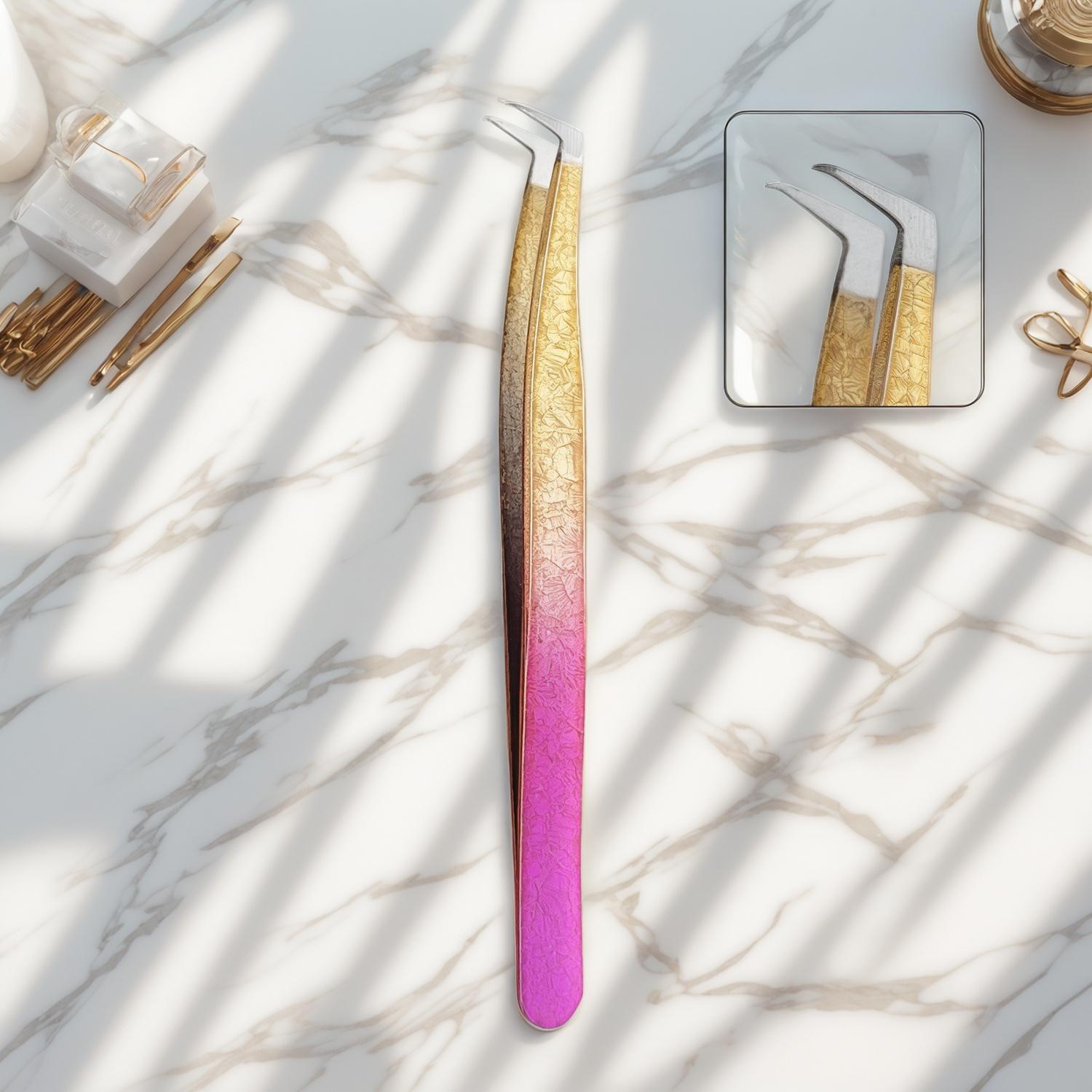
Professional Eyelash Extension Tweezers: Selection, Care and Bulk Sourcing Guide
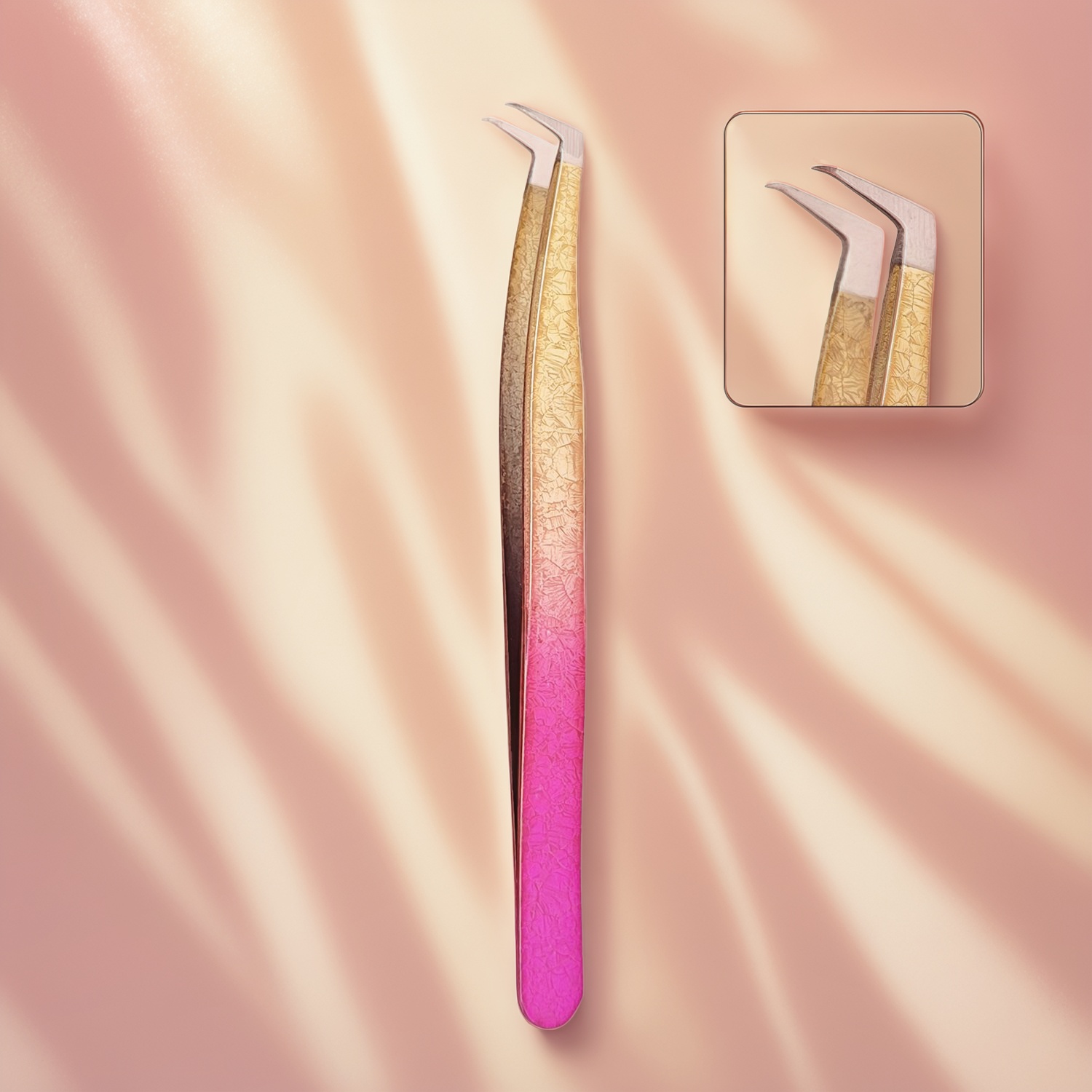
Eyelash extension tweezers are precision working tools, not simple accessories. For lash artists, salon owners, training academies, retailers and beauty tool distributors, the right tweezer affects isolation, pickup, placement accuracy, hand comfort and daily workflow. A poor tool can slow service, frustrate technicians and create unnecessary replacement costs.
The Gradient Titanium Professional Eyelash Extension Tweezers from Olimor Beauty are designed for professional lash application with finely pointed precision tips, titanium construction, a lightweight feel and an intricately engraved grip texture. These product details matter because lash extension work depends on controlled movements at very close range. The tool must feel stable in the hand, meet accurately at the tip and support repeated use through salon cleaning and storage routines.
This guide explains how to evaluate professional eyelash extension tweezers for salon use and B2B sourcing. It covers selection criteria, inspection points, care practices, common problems, cost factors and supplier questions so buyers can make practical decisions without relying only on product photos or surface finish.
Why Professional Lash Tweezers Matter
During an eyelash extension appointment, tweezers are used again and again for detailed tasks: separating natural lashes, picking up individual extensions or volume lashes, controlling placement near the lash line and keeping the extension stable while adhesive is positioned. If the tips are misaligned, the grip is unstable or the tension feels wrong, the technician may compensate by applying more pressure or slowing down.
For individual lash application, fine pointed tips can help isolate one natural lash and position the extension with controlled contact. For volume or mixed techniques, the pickup area and closing feel become especially important because the artist may be handling lightweight lash materials that can collapse, twist or slip if the grip is inconsistent.
For salons and wholesale buyers, tweezer quality also affects operations. A dependable tool supports technician training, consistent workstation setup and smoother replacement planning. For retailers and distributors, it influences product returns, repeat orders and customer confidence. When evaluating professional beauty tool products, tweezers should be assessed as functional instruments rather than decorative items.
Core Features to Evaluate Before Buying
A lash tweezer may look professional but still perform poorly in real service. The best evaluation starts with the working parts: tip contact, material feel, grip, tension and finishing. The Gradient Titanium Professional Eyelash Extension Tweezers include several practical features that fit this evaluation framework.
Tip precision and alignment
Finely pointed tips are useful for isolation and controlled placement. Buyers should inspect whether the tips meet evenly, whether the closing point feels predictable and whether the tool can grip practice lashes without crushing or slipping. Tip alignment is especially important because even a small bend can change how the tweezer performs.
Titanium construction and lightweight handling
The Olimor tweezer is made from titanium and is presented as lightweight. In professional lash work, a lighter-feeling tool can be helpful during long appointments or full service days. Material choice also affects the perceived quality and handling of the tool. Buyers should avoid assuming that material alone guarantees performance; the final shape, finish and tension still need to be checked.
Engraved grip texture
An intricately engraved texture can help improve control, particularly during long sessions or when gloves are used. A good grip surface should feel secure without distracting the artist or creating discomfort. For salon groups, it is useful to let multiple technicians test the grip because hand size, technique and personal preference vary.
Closure tension and balance
Closure tension should be firm enough to control the lash but not so stiff that it causes strain. Balance also matters. A tool that feels comfortable for a quick demonstration may not feel the same after repeated isolation and pickup movements. Test the tweezer with realistic hand motions rather than judging it only by opening and closing it once.
Finish, edges and presentation
The gradient finish gives the tool a professional visual appearance, but service performance depends on clean finishing. Edges should feel smooth, the working tips should be free from visible damage, and the tool should be easy to identify and store. For retail or kit programs, consistent presentation can support brand perception, but it should not replace functional inspection.
Individual, Volume and Mixed Lash Work
The Gradient Titanium Professional Eyelash Extension Tweezers are suitable to consider for both volume and individual eyelash application. That versatility can be useful for salons that offer multiple lash services or distributors building a broader lash tool assortment.
For individual application, the artist typically needs a tweezer that helps isolate one natural lash and place one extension with controlled pressure. Pointed precision tips support this type of detail work when they are properly aligned and comfortable for the artist.
For volume work, pickup control becomes a key concern. The technician may need to handle lighter lash materials or pre-made or handmade fans, depending on the salon’s method. A secure closing point and stable grip can reduce repeated pickup attempts. However, the best tweezer for volume work still depends on the artist’s grip style, lash materials and training background.
For mixed sets, a flexible tweezer can reduce the number of tool changes at the workstation. Salons should still keep backup tweezers available because a dropped or damaged fine-tip tweezer can disrupt an appointment. In busy service environments, redundancy is part of professional tool management.
Inspection Checklist for Salons and Buyers
Before adding lash tweezers to a salon kit, retail line or wholesale catalog, create a simple inspection process. This helps buyers compare samples fairly and identify problems before a larger order is placed.
| Inspection point | What to look for | Why it matters |
|---|---|---|
| Tip contact | Tips meet evenly without visible crossing, gap or damage | Supports reliable isolation and pickup |
| Pickup test | Tool grips practice lashes at the expected point | Confirms practical performance, not just appearance |
| Tension feel | Closing action is controllable and not overly stiff | Helps reduce hand fatigue during repeated use |
| Grip texture | Engraving improves control without sharp discomfort | Supports stable handling in salon conditions |
| Finish quality | Edges are smooth and the surface appears clean | Improves comfort and professional presentation |
| Storage fit | Tool can be protected in a case, tray or individual slot | Reduces risk of bent or damaged tips |
| Batch consistency | Samples feel similar across multiple pieces | Important for staff kits and wholesale programs |
For larger purchases, keep inspection notes. Record what your team liked, what issues appeared and which use cases the tweezer served best. This makes reordering easier and helps communicate expectations clearly to the supplier.
Cost Factors in B2B Tweezer Sourcing
The cheapest tweezer is not always the lowest-cost choice for a salon or distributor. Total cost includes purchase price, inspection time, replacement frequency, customer satisfaction, packaging requirements and the effect on service efficiency. Because lash tweezers are precision tools, a small functional weakness can create larger operational problems.
Several factors can influence cost discussions when sourcing eyelash extension tweezers:
- Material and construction: Titanium construction and precision finishing may affect the buying decision, especially for professional positioning.
- Tip work and alignment control: Fine tips require careful manufacturing and handling. Buyers should evaluate consistency rather than only asking for the lowest unit cost.
- Surface finish and engraving: Gradient coloring and engraved grip texture add visual and handling value, but should be reviewed alongside performance.
- Packaging needs: Retail-ready packaging, salon kit packaging and simple bulk packing may involve different requirements.
- Customization scope: Logo, packaging or assortment customization can affect planning, but details should be confirmed directly with the supplier.
- Order quantity and replenishment: Bulk purchasing may support better planning, but buyers should confirm current MOQ, availability and reorder process before committing.
When comparing lash tools within a broader beauty tool collection, ask how each product will be used. A tweezer for student practice kits may have different priorities from a tweezer intended for experienced lash technicians or premium retail display.
Cleaning, Disinfection and Storage Practices
Good tweezers can be damaged by poor maintenance. Fine pointed tips are vulnerable to impact, bending and incorrect storage. A dropped tool may still look acceptable, but the contact point can change enough to affect pickup and isolation.
After use, follow your salon’s hygiene process and the requirements of your local public health authority or cosmetology regulator. In the United States, salons commonly need to pay attention to state cosmetology board rules and the labeled use directions of EPA-registered disinfectants where applicable. Regulations and product labels change, so verify current requirements and supplier documents rather than relying on outdated routines.
Basic maintenance practices include:
- Remove visible residue promptly using an appropriate professional method for salon tools.
- Avoid scraping the tips with abrasive materials that could affect alignment or finish.
- Do not force dried adhesive away by twisting or bending the tweezer tips.
- Dry and store tools according to your hygiene process to avoid contamination between services.
- Keep tweezers separated from scissors, nail tools or heavier metal implements.
- Use a protective case, individual slot or dedicated stand to reduce impact damage.
- Inspect tips regularly and remove damaged tools from active service.
For multi-technician salons, consider assigning tweezers to individuals or labeling tool sets. This makes wear patterns easier to track and reduces confusion after cleaning. For training academies, include tweezer care in the curriculum so students learn that precision tools require careful handling.
Troubleshooting Common Tweezer Problems
When lash application becomes difficult, the tweezer is only one possible cause. Adhesive behavior, humidity, lash material, client lash condition and technician technique can all affect results. Still, checking the tool is a fast way to rule out common problems.
| Problem | Possible tweezer-related cause | Practical response |
|---|---|---|
| Lashes slip during pickup | Tips may not meet evenly or pickup point may not match the technique | Inspect alignment and test on practice lashes before service |
| Isolation feels slow | Tip shape or precision may not suit the artist’s working angle | Compare with another clean tweezer and review hand position |
| Hand fatigue appears quickly | Tension may be too firm or balance may not suit the user | Test repeated closing motions and gather technician feedback |
| Tool slips in the fingers | Grip surface may not provide enough control for the user | Evaluate the engraved texture with gloves and dry hands |
| Performance changed after cleaning | Tool may have been dropped, bent or stored against other implements | Inspect the tip closely and review storage procedures |
| Inconsistent results across staff | Different artists may need different grip or tip preferences | Use team testing before standardizing a salon-wide tool |
If a tweezer no longer performs reliably, do not keep it in active service just because it looks clean. Precision loss can slow appointments and affect the consistency of application. Damaged tools may still be useful for non-service practice tasks, but they should be clearly separated from professional service tools.
How to Evaluate a Supplier for Lash Tweezers
Supplier evaluation is especially important for salons, distributors and retailers buying in quantity. A good sourcing conversation should cover product function, consistency, packaging, communication and after-sales handling. It should also avoid unsupported assumptions. Ask for current product information and verify details before placing an order.
Useful supplier questions include:
- Can you provide current product details for the Gradient Titanium Professional Eyelash Extension Tweezers?
- What packaging options are available for salon use, retail display or bulk purchasing?
- Can samples be reviewed before a larger purchasing decision?
- What customization options are available for branding or packaging, if any?
- How should buyers confirm current MOQ, production planning and replenishment process?
- What inspection steps are used before shipment, and what should buyers check on receipt?
- Which documents or product information can be supplied for internal purchasing review?
Do not rely on verbal claims alone for regulated or quality-sensitive purchasing. If your market requires particular documentation, confirm it directly and verify current versions with the relevant regulator or recognized public body. Olimor should not be treated as certified to any standard unless the supplier provides applicable documents for the specific product and transaction.
When This Tweezer Is a Good Fit
The Gradient Titanium Professional Eyelash Extension Tweezers are relevant for buyers who want a professional lash tweezer with finely pointed tips, titanium construction, lightweight handling and engraved grip texture. Lash artists can evaluate them for isolation and application control. Salon owners can consider them for staff kits, backup inventory and service room setup. Retailers and distributors can assess them as part of a professional beauty tool assortment.
This tool is especially worth considering when the buyer values a professional visual finish along with practical handling features. The gradient appearance can support retail presentation, while the pointed tips and engraved texture address real service needs. As with any precision lash tool, the best decision comes from sample testing, inspection and feedback from the people who will use the tweezers daily.
For salons building or refreshing their lash workstation, pair tweezer purchasing with a clear storage and replacement plan. For wholesale buyers, build evaluation criteria into your sourcing process so each reorder can be checked against the same expectations.
Professional Sourcing Next Steps
A reliable eyelash extension tweezer should help technicians work with accuracy and control while fitting the cleaning, storage and purchasing routines of the business. The Gradient Titanium Professional Eyelash Extension Tweezers from Olimor Beauty combine finely pointed precision tips, titanium construction, lightweight handling and an engraved grip texture for professional lash work.
To compare related items, review Olimor’s beauty tools range. For sourcing, sample review or bulk purchasing questions, send an eyelash tweezer inquiry or contact Olimor with your application, packaging and purchasing requirements.
FAQ
Can I request samples before placing a bulk order?
Sample availability should be confirmed directly with Olimor. For professional lash tools, sample testing is recommended so technicians can evaluate tip alignment, tension, grip comfort and handling before a larger purchase.
What is the MOQ for eyelash extension tweezers?
MOQ can depend on current stock, packaging requirements, customization needs and purchasing terms. Ask Olimor for the current MOQ and confirm whether it differs for standard products and customized orders.
Can the tweezers or packaging be customized?
Customization may be possible depending on the requested branding, packaging format and order details. Buyers should provide artwork, market requirements and intended sales channel so the supplier can confirm feasible options.
How should quality be checked when the order arrives?
Inspect tip alignment, pickup performance, surface finish, grip texture, packaging condition and consistency across pieces. Keep a reference sample or approved specification to make future receiving checks easier.
How long does production or delivery take?
Lead time depends on order quantity, customization, packaging and current production planning. Confirm timing with Olimor before scheduling launches, salon openings or distributor replenishment campaigns.
Tag: