

Eyelash Extension Tools for Salons: How to Choose Precision Supplies for Consistent Results
Eyelash extensions are a high-detail salon service where the final result depends on both technique and tool control. Clients expect fuller, longer lashes that look balanced and can last for weeks, while professionals need supplies that support speed, accuracy and repeatable placement. For salons, lash studios, beauty academies and B2B beauty buyers, the purchasing decision is not just about buying a pair of tweezers. It is about building a dependable tool set that helps technicians isolate lashes cleanly, pick up extensions securely and work comfortably through long appointments.
Olimor Beauty supplies beauty tools for professional use, including precision tools relevant to eyelash extension application. When evaluating beauty tool products, buyers should look closely at material, tip alignment, grip comfort, finishing quality and supplier quality-control practices. These details affect how the tool feels in hand and how consistently it performs during delicate work around the eye area.
Why Eyelash Extension Tools Matter in Professional Services
Eyelash extension application is a precision process. A technician must separate one natural lash, pick up the correct extension and place it with a controlled angle and distance from the eyelid. If the tweezer tip is poorly aligned, too heavy, slippery or uncomfortable, small inefficiencies can add up across a full set. The result may be slower service time, uneven placement or unnecessary strain on the technician’s hand.
For B2B buyers, the tool choice also influences standardization. A salon with multiple technicians needs supplies that behave consistently from batch to batch. Beauty schools and training centers need tools that help learners develop correct habits. Distributors and salon equipment suppliers need products that can be inspected, packaged and delivered with confidence. In each case, precision lash tools become part of the service quality system rather than a simple accessory.
Key Features to Review Before Buying Lash Tweezers
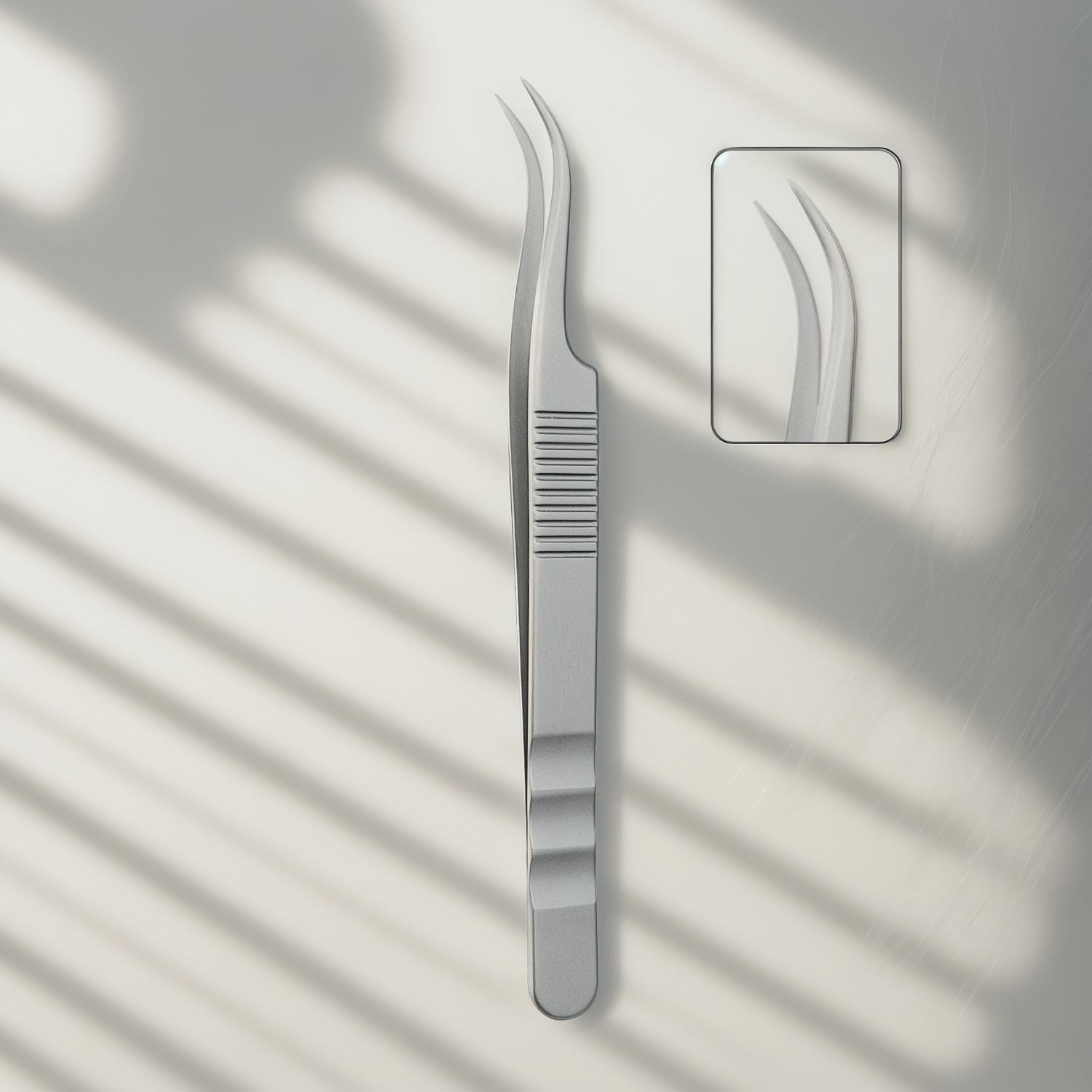
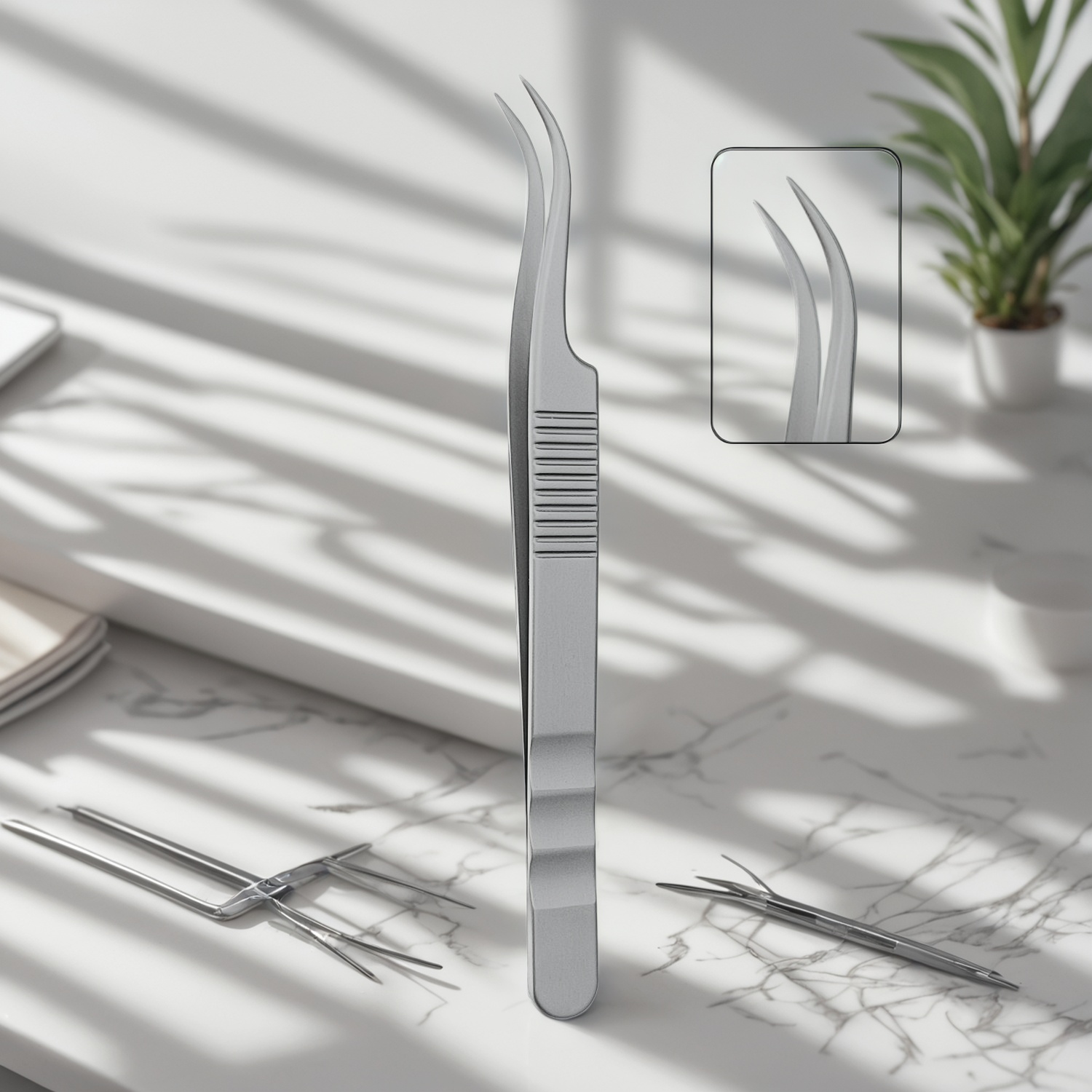
Curved tip precision tweezers are commonly used in lash work because they help technicians approach the lash line with control. However, the shape alone is not enough. A useful evaluation should include the full tool design and the way it performs in a real working position.
- Tip alignment: The tweezer tips should meet evenly without visible gaps. Good alignment supports stable pickup and placement of fine lash extensions.
- Material quality: The original product information highlights high-quality stainless steel, a practical choice for professional beauty tools because buyers often value durability and resistance to rust.
- Grip and tension: The tweezer should close smoothly without excessive force. Too much tension can cause hand fatigue; too little can reduce control.
- Curved tip usability: The curve should support visibility and access near the lash line without blocking the technician’s view.
- Surface finish: A clean finish with no rough edges helps the tool feel comfortable and professional during repeated use.
- Packaging condition: Tools should arrive protected so the delicate tips are not bent or damaged in transit.
These points are especially important for salons purchasing in quantity. A single sample may feel acceptable, but bulk orders need consistent closing action, tip shape and finish. Building a repeatable inspection checklist can help teams identify issues before tools enter service.
How Salon Equipment Suppliers Support Quality Assurance
Salon equipment suppliers play an important role in the eyelash extension supply chain. A professional buyer is not only selecting a tweezer; they are selecting a supplier’s ability to maintain stable quality. The original product information notes that Olimor Beauty emphasizes ergonomic designs, stringent quality checks and inspections from raw materials to final packaging. For a salon or distributor, that type of quality-control mindset helps reduce avoidable tool problems.
Quality assurance should be considered at several stages. Raw material review matters because the base material affects durability and corrosion resistance. Manufacturing checks matter because precision tips require careful shaping and alignment. Final inspection matters because even a well-made tool can be damaged if tips are not protected before shipping. Packaging review matters because professional buyers need products that arrive ready for storage, resale or salon use.
When comparing suppliers, buyers can create a neutral scorecard rather than relying only on product photos. Useful review areas include sample consistency, communication clarity, packaging protection, product finish, labeling requirements and the supplier’s ability to explain inspection steps. If your team is sourcing for a new salon opening, training program or distributor catalog, you can send an inquiry with your intended use and evaluation priorities.
Matching Tools to Different Lash Extension Workflows
Different lash services may require different handling preferences. A technician performing classic lash application may prioritize fine isolation and steady single-extension pickup. A technician working on volume techniques may care more about pickup control and fan handling. Even within the same salon, hand size, grip style and preferred working angle can vary among staff.
This is why one tool should not be selected only because it looks professional. A better approach is to test how the tweezer performs in common service positions. Does it allow the technician to see the natural lash clearly? Does the tip hold the extension securely? Is the closing pressure comfortable after repeated use? Does the tool support clean placement without requiring awkward wrist movement?
Olimor Beauty’s beauty tool range is relevant for buyers who want to review options across salon needs. Some tools may be used for lash application, while other precision beauty tools can support tasks such as shaping brows. Buyers comparing related categories can browse product collections to understand which tool formats may fit their service menu.
A Practical Buyer Checklist for B2B Lash Supplies
Before placing a larger order, salons and distributors can reduce risk by reviewing both the product and the purchasing process. The following checklist is designed for professional sourcing conversations and internal approval meetings.
- Define the service use: Clarify whether the tools are intended for lash extension application, brow shaping, training use or a mixed salon workflow.
- Inspect the sample tips: Check alignment, sharpness of finish, smooth closure and whether the tips remain stable during pickup.
- Evaluate ergonomics: Have technicians test the tool for grip comfort and hand fatigue during a realistic practice session.
- Review material and finish: Confirm that the tool appearance, stainless steel construction and rust-resistant qualities meet your professional expectations.
- Check packaging protection: Make sure the tips are protected well enough for shipping, storage and distribution.
- Compare consistency: If ordering multiple units, review whether samples feel and close in a similar way.
- Confirm communication needs: Prepare any questions about product use, packaging preferences or documentation before purchasing.
This process is more useful than choosing the lowest-cost option without testing. Lash extension tools are small, but they directly affect daily service performance. A better tool can support smoother technique, while an inconsistent tool can create frustration for experienced technicians and beginners alike.
Care and Maintenance for Longer Tool Life
Even well-made stainless steel beauty tools need proper care. Salons should build a tool maintenance routine that fits their hygiene standards and local professional requirements. After use, tools should be handled carefully, cleaned according to the salon’s procedure and stored in a way that protects the tips from impact. Precision tweezers should not be dropped into drawers with heavier metal tools because the fine tips can bend or lose alignment.
It is also helpful to assign inspection responsibility. A senior technician or salon manager can regularly check whether tweezers still close evenly and feel smooth. If a tool no longer grips correctly, it should be removed from active lash work. This protects service consistency and prevents technicians from compensating with extra pressure or awkward technique.
Storage is another simple but important detail. Keep precision tools dry, separated and protected. If tools are transported between stations or classrooms, use cases or protective sleeves where appropriate. For distributors, packaging should preserve the tool’s shape until it reaches the end user.
Choosing a Supplier for Professional Lash Tool Programs
For salon chains, beauty training centers and B2B distributors, supplier selection should include more than product appearance. A strong supplier relationship helps buyers maintain consistent stock, evaluate new tool types and manage quality expectations. Olimor Beauty is positioned in professional beauty tools and highlights quality checks, ergonomic design and durable stainless steel tools for beauty applications.
When building a lash tool program, prepare a short sourcing brief. Include the intended users, service environment, preferred tool shape, packaging expectations and any inspection priorities. This helps the supplier respond with relevant product information and avoids unclear comparisons. For direct questions about available beauty tools or sourcing support, buyers can contact Olimor.
Eyelash extensions remain a detail-focused salon service, and the tools used during application should reflect that level of care. By reviewing tweezer alignment, stainless steel quality, ergonomic comfort, packaging protection and supplier quality-control practices, salons can choose supplies that support accurate work and a reliable client experience. For professional buyers, the best purchasing decision is the one that makes daily service easier, more consistent and easier to maintain over time.
Tag: