

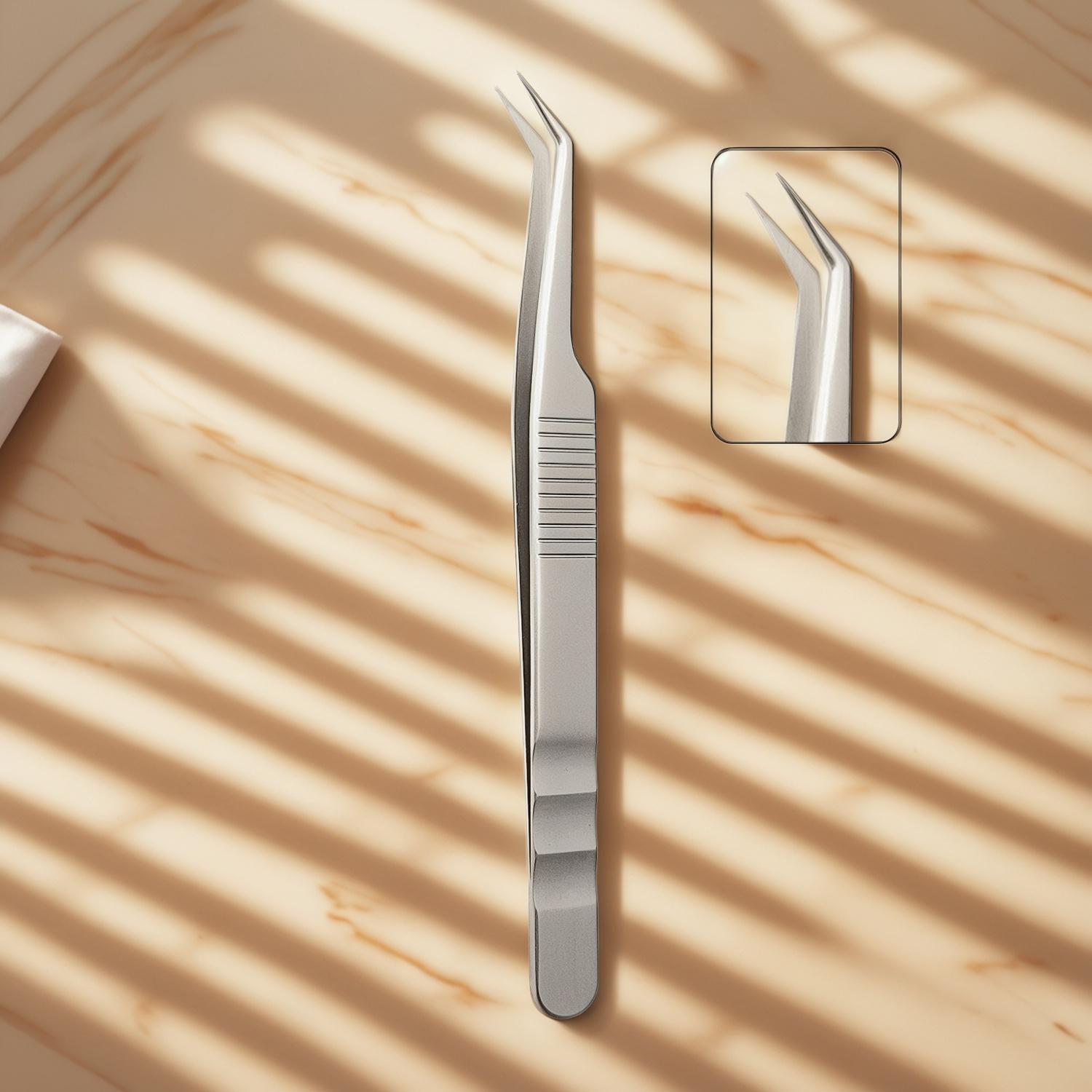
Precision Curved Tip Tweezers for Eyelash Extension Application
Eyelash extensions are detailed work. A single service can involve isolating natural lashes, selecting fibers, controlling adhesive placement, and adjusting angles repeatedly over an extended appointment. For that reason, the quality and handling of lash tools matter as much as product choice or application technique. Precision Curved Tip Tweezers from Olimor Beauty are designed for the careful movements required in eyelash extension work, especially when technicians need a stable grip and clear control around the lash line.
For salon owners, lash educators, distributors, and beauty supply buyers, tweezers may look like a small item in the purchasing list. In practice, they directly affect consistency, technician comfort, and the client’s experience. A well-chosen tweezer can help reduce unnecessary repositioning, support clean pickup of extension fibers, and improve accuracy during isolation or placement. This guide explains how curved tip tweezers fit into professional lash workflows and what B2B buyers should evaluate before adding them to a tool range.
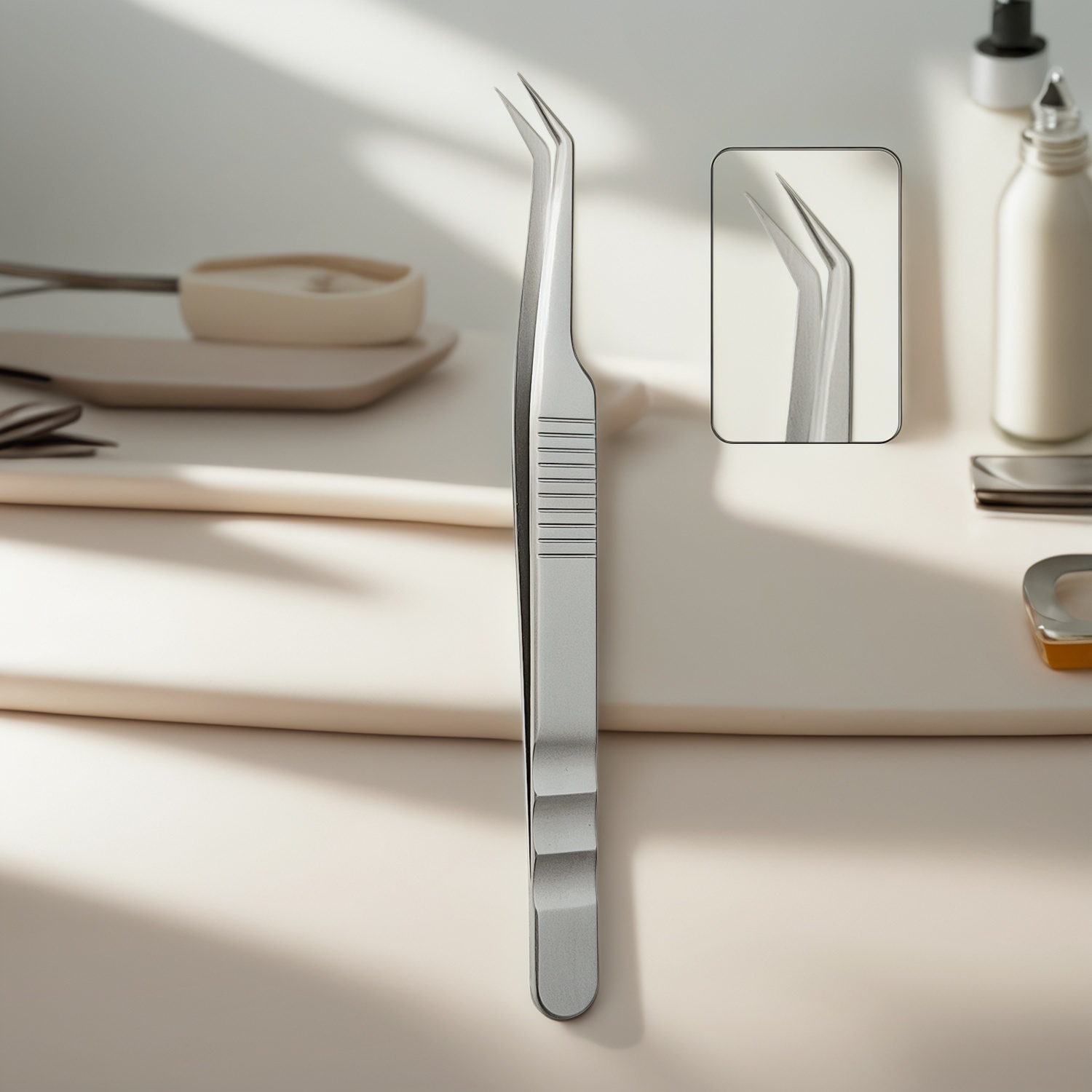
Why Precision Tools Matter in Eyelash Extensions
Eyelash extensions involve attaching synthetic or natural fibers to existing lashes to create a fuller, longer look that can last for weeks with proper care. The service depends on millimeter-level placement. If the tool slips, blocks the technician’s view, or forces an uncomfortable hand position, the quality of the application can suffer. Precision tools help the lash artist work with a more controlled movement pattern, which is important for both classic and volume-style workflows.
Curved tip tweezers are especially useful because the angled working end can approach the lash line without requiring the hand to sit directly above the client’s eye. This helps maintain visibility and can make it easier to work around different eye shapes. The curve also supports a more natural picking and placing motion when handling delicate lash fibers. While technique remains the foundation of a good lash service, the tweezer should support that technique rather than fight against it.
For professional environments, tool consistency is also important. A salon that trains multiple technicians needs tools that feel predictable in daily use. Distributors and B2B beauty supply teams should think beyond appearance and evaluate whether the tweezer supports real service conditions: repeated handling, cleaning routines, and long appointments where hand comfort becomes a practical concern.
What the Curved Tip Design Supports
The curved tip is not only a visual feature. It changes how the technician approaches the lash line and how the tool interacts with extension fibers. During isolation, a curved angle can help separate lashes while keeping the hand in a controlled position. During placement, it can help guide the extension toward the natural lash without excessive wrist rotation.
Olimor Beauty’s Precision Curved Tip Tweezers are described as stainless steel tools with an ergonomic design and secure grip. Stainless steel is valued in beauty tools because it is durable and suitable for repeated professional handling. The ergonomic form is important because lash work often requires fine finger pressure for long periods. A secure grip helps technicians maintain control, especially when working with small fibers or when repositioning an extension before final placement.
Curved tweezers are often selected for tasks such as:
- Separating natural lashes during extension preparation and placement.
- Picking up individual lash fibers with controlled pressure.
- Approaching the lash line from an angle that preserves visibility.
- Reducing excessive wrist movement during detailed work.
- Supporting more consistent handling across repeated appointments.
No tweezer can replace training, hygiene standards, or proper adhesive practice. However, a tool that aligns with the technician’s hand and workflow can reduce distractions and help the artist focus on placement accuracy.
Selection Criteria for Salons and Beauty Supply Buyers
When purchasing lash tweezers for a salon, academy, or wholesale assortment, buyers should compare more than product photos. A tweezer can look refined but still feel unsuitable if the tension, grip area, or tip alignment does not match the intended application. For eyelash extension tools, small handling differences can become significant during daily service work.
The following checklist helps evaluate precision curved tip tweezers before adding them to a professional kit or B2B product range:
- Tip control: Check whether the tips meet evenly and allow accurate contact with lash fibers. Uneven tips can make pickup inconsistent.
- Hand feel: Consider whether the tweezer can be held comfortably for extended periods. An ergonomic design should support stability without forcing the hand into a tense position.
- Grip security: The tool should not feel slippery during controlled movements. A secure grip supports cleaner handling around the eye area.
- Material suitability: Stainless steel construction, as noted for Olimor Beauty’s Precision Curved Tip Tweezers, supports durability for repeated professional use.
- Workflow fit: Decide whether the curved profile is intended for isolation, pickup, placement, or a combination of tasks. Some technicians prefer dedicated tweezers for different steps.
- Cleaning routine compatibility: Confirm that the tool can be maintained according to the salon’s hygiene procedures and local professional standards.
- Packaging and supply needs: For B2B orders, consider how the tweezers will be stored, displayed, or included in salon starter kits.
For buyers building a broader professional assortment, curved lash tweezers can sit alongside other essential beauty tool products used in salons, studios, and training environments. A complete tool range should help technicians perform repeatable work instead of relying on a single all-purpose instrument for every step.
How Lash Artists Use Curved Tweezers in Service Flow
A lash appointment usually follows a sequence: consultation, cleansing, preparation, isolation, fiber selection, adhesive control, placement, checking, and aftercare discussion. Curved tip tweezers are most relevant in the central technical steps, where the artist needs controlled access to the natural lashes.
During isolation, the technician separates one natural lash from surrounding lashes so the extension can be attached cleanly. If the tool blocks the view or feels unstable, the isolation step becomes slower and more tiring. A curved profile can help the hand sit slightly away from the direct sightline while still allowing precise tip contact.
During extension pickup, tweezer pressure matters. Too much pressure can bend or misalign fine fibers, while too little can lead to dropping or repositioning. The secure grip and ergonomic handling described for these tweezers support small, controlled movements. This is especially useful for technicians who complete multiple appointments in a day and need tools that remain comfortable over time.
During placement, the tweezer helps guide the fiber into the desired position on the natural lash. The goal is not simply speed; it is accuracy, repeatability, and comfort for the client. A controlled placement process can help the technician avoid unnecessary contact with neighboring lashes and keep the working area organized.
Maintenance Practices That Protect Tool Performance
Professional lash tools should be treated as working instruments, not disposable accessories unless specifically designed that way. Even durable stainless steel tweezers require careful handling to preserve tip alignment and surface condition. A damaged tip can compromise pickup, while poor storage can lead to contamination risks or reduced tool life.
Salons should create a simple tool care routine that every technician follows. The exact hygiene procedures should align with local regulations and the salon’s professional standards, but the core principles are consistent: clean tools after use, avoid dropping them, and store them so the tips are protected.
- Remove visible residue promptly after service using appropriate salon cleaning procedures.
- Keep tweezer tips protected when stored in drawers, kits, or mobile cases.
- Avoid using precision lash tweezers for non-lash tasks such as opening packaging or handling hard objects.
- Inspect tip alignment regularly, especially after accidental drops.
- Separate clean and used tools clearly to support hygienic workflow in busy salons.
For training centers, tool care should be part of the curriculum. New lash artists often focus on placement technique but may underestimate how easily a precision tip can be affected by careless storage. Teaching maintenance early helps protect the salon’s investment and reinforces professional habits.
B2B Sourcing Questions for Lash Tool Programs
For distributors, salon chains, and private purchasing teams, sourcing lash tools is not only about selecting an attractive item. The product must fit the intended customer: beginner technicians, experienced lash artists, training schools, or salons that need reliable replenishment. Olimor Beauty serves the B2B beauty supplies market with professional tools, and the Precision Curved Tip Tweezers are positioned for detailed eyelash extension work where accuracy and handling matter.
When evaluating a supplier or planning a tool order, consider practical business questions. Will the tweezer be sold individually, included in a starter kit, or paired with other salon equipment? Does the tool presentation match the target market? Are product descriptions clear enough for sales teams and end users to understand the curved tip function? These questions help avoid mismatches between product selection and customer expectations.
Buyers can also compare curved tweezers within broader product collections to create a more complete salon supply offering. For example, a lash-focused purchasing plan may include precision tweezers, hygiene accessories, storage options, and other application tools. The goal is to build a coherent range that supports actual service steps rather than a random assortment of small tools.
If your business is reviewing lash tool options for wholesale, salon supply, or training use, you can send an inquiry with your purchasing requirements. For broader sourcing discussions or questions about available beauty tool categories, contact Olimor directly.
Choosing Tools That Support Better Lash Work
Eyelash extension quality depends on preparation, training, product compatibility, and careful hand technique. Precision Curved Tip Tweezers support that process by giving technicians a tool designed for controlled, close-up work around the lash line. The curved tip can improve approach angle, the stainless steel construction supports professional durability, and the ergonomic design helps technicians maintain a secure grip during detailed application.
For salons, the right tweezer can contribute to smoother appointments and more consistent technician performance. For B2B beauty supply buyers, it is a practical product category with clear professional demand and easy relevance to lash services. By evaluating tip control, comfort, maintenance needs, and service workflow fit, buyers can choose lash tools that support real salon use rather than relying on appearance alone.
Precision tools do not make lash extension work effortless, but they make skilled work easier to control. That is the reason curved tip tweezers remain an important part of the professional lash tool kit.
Tag: