

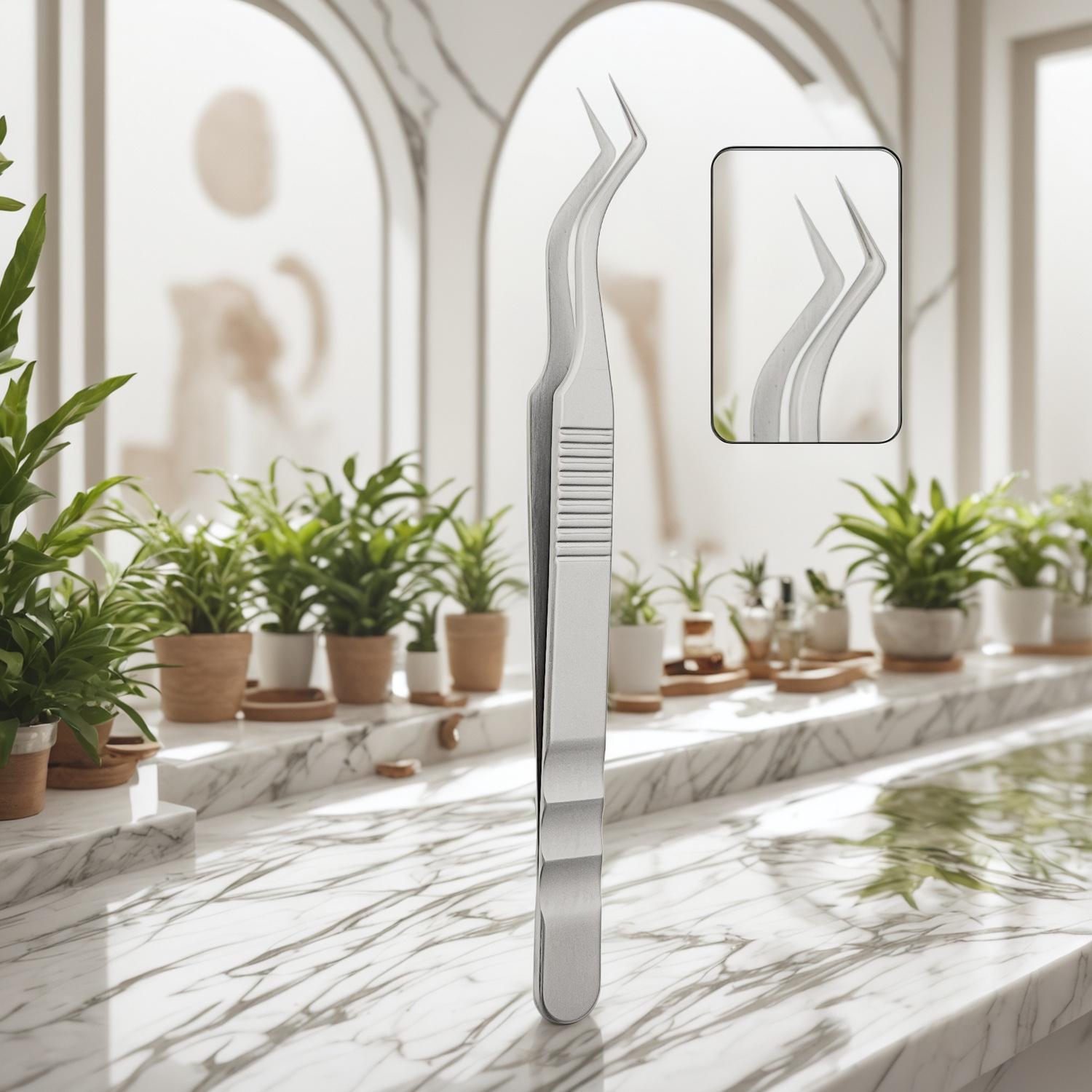
Angled Tweezer for Precise Eyelash Extension Work
Eyelash extension services depend on small, repeatable movements. A lash artist may isolate one natural lash, pick up a fine extension, control adhesive contact and place the extension cleanly within seconds. In that workflow, the tweezer is not a minor accessory. It affects visibility, hand position, comfort, speed and the quality of the finished set.
The angled tweezer from Olimor Beauty is designed for professional eyelash extension work and B2B beauty supply needs. The original product description highlights durable stainless steel construction, an ergonomic grip and a precise curved tip for reaching detailed lash areas. Those qualities make it relevant for salons, lash studios, beauty training programs and distributors that need tools suitable for repeated professional use.
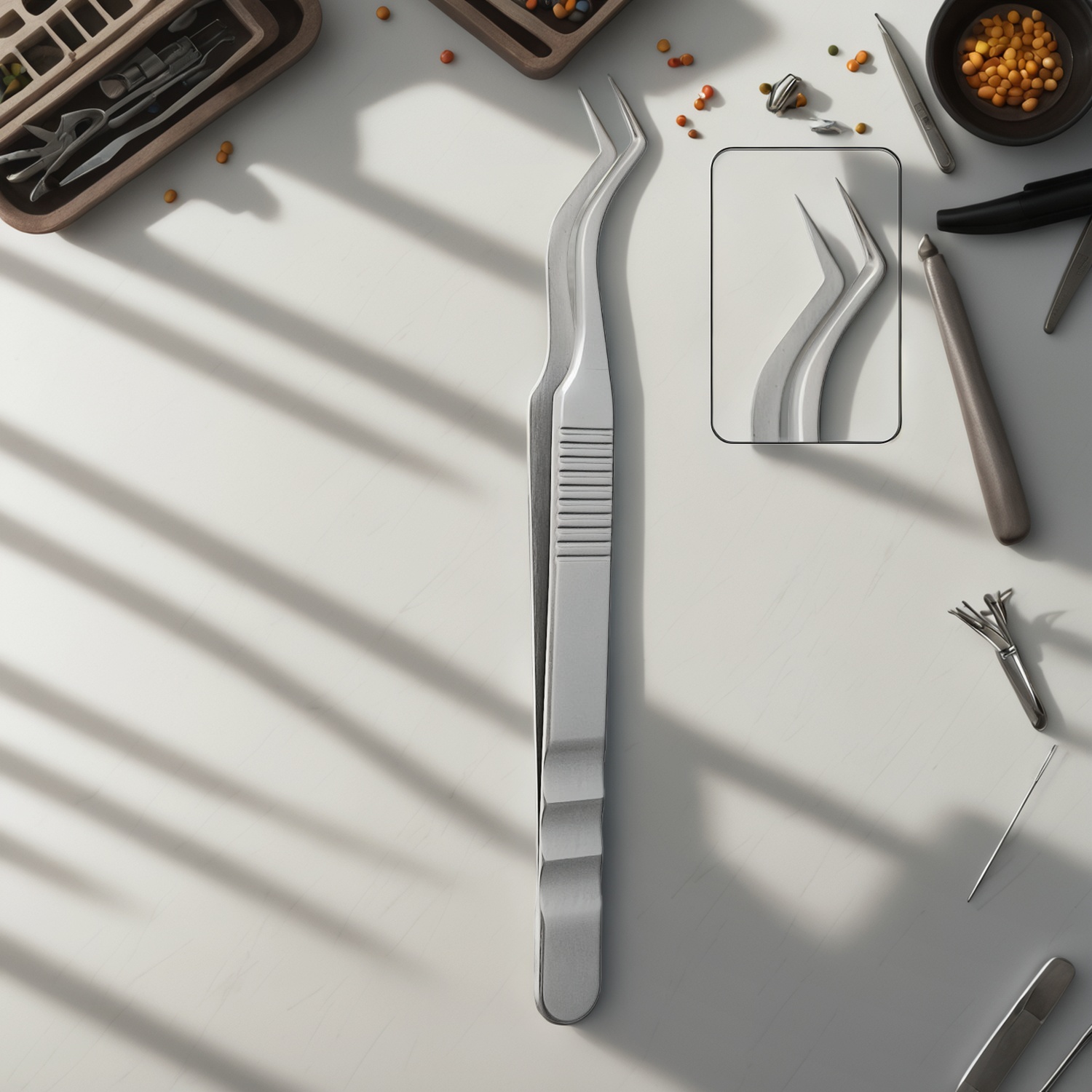
Why an Angled Tweezer Matters in Lash Extension Application
Angled tweezers are commonly chosen for eyelash extensions because the tip angle changes how the hand approaches the lash line. Instead of forcing the wrist into a steep position, the angled form can help the technician work from a more natural direction. This is especially useful when applying extensions near the inner and outer corners, where straight tools may obstruct the view or require awkward finger pressure.
The curved tip also helps with controlled access. During lash placement, the artist needs to see the natural lash, extension base and adhesive contact point at the same time. A well-shaped angled tip can support that visibility by keeping the hand slightly away from the direct line of sight. For busy salons, this is not only about comfort; it can help technicians maintain consistent technique across long appointments.
For buyers comparing beauty tool products, the main question is not whether a tweezer looks professional on the counter. The more important question is whether it supports precise, repeatable service. An angled tweezer should close evenly, feel stable between the fingers and allow the artist to make small adjustments without crushing or dropping the lash extension.
Key Selection Criteria for Salon and B2B Buyers
When sourcing lash tweezers for a salon team, training academy or wholesale beauty supply range, evaluate the tool through the daily tasks it must perform. A tweezer may appear simple, but small differences in alignment, grip and tip shape can change how it performs in real appointments.
- Material: Stainless steel is a practical choice for professional beauty tools because it is durable and suitable for regular cleaning routines.
- Tip precision: The curved tip should be fine enough for detailed lash work but stable enough to hold an extension without twisting.
- Closure feel: The tweezer should meet cleanly at the tip. Uneven closure can lead to poor grip, dropped lashes or excess hand tension.
- Hand comfort: An ergonomic grip helps reduce strain during long lash sets, fills and back-to-back appointments.
- Access to corners: A good angled shape helps technicians reach hard-to-reach areas without blocking their working view.
- Consistency across units: B2B purchasers should look for reliable finishing and packaging consistency, especially when supplying multiple technicians or retail customers.
These points are particularly important for lash businesses that train new staff. A difficult tweezer can make beginner technique problems worse, while a controlled tool supports cleaner habits from the start.
How the Angled Tip Supports Common Lash Tasks
In eyelash extension work, the tweezer may be used for different techniques depending on the artist's style and the service being performed. The angled design is helpful because it provides a balance between reach and control. It can support isolation-adjacent movements, placement adjustments and fine positioning around the lash line.
For classic lash sets, the technician often needs a stable grip on a single extension while placing it accurately on one natural lash. The angled tip can help keep the extension controlled while the artist approaches from a comfortable angle. For volume or more detailed styling work, the exact method varies by technician, but tip alignment and balanced tension remain essential.
The tool is also useful during correction and refinement. After placement, a lash artist may need to separate neighboring lashes, adjust direction or inspect spacing. A precise curved tip helps with these minor corrections without disturbing the surrounding work. In professional settings, these small improvements add up to cleaner-looking lash lines and fewer avoidable service issues.
Comfort, Fatigue and Workflow in a Busy Salon
Lash extension appointments can be lengthy. Even experienced technicians can feel hand fatigue when a tool requires too much pressure or causes the wrist to bend unnaturally. The ergonomic grip described for this angled tweezer is important because it supports a steadier hand position during repeated movements.
Comfort does not mean a soft or loose tool. In lash work, technicians need controlled resistance: firm enough to feel stable, but not so stiff that every pickup requires extra force. Over time, excessive squeezing can affect accuracy, especially near the end of a long appointment. For salon owners, tool comfort can influence service consistency, staff satisfaction and training outcomes.
A practical way to evaluate comfort is to test the tweezer in the same motions used during a real lash service. Hold it under treatment lighting, simulate pickup movements and check whether the hand naturally relaxes or tightens. If the wrist, thumb or index finger feels strained after a short test, the tool may become tiring in regular use.
Care and Cleaning Practices for Stainless Steel Lash Tweezers
Professional lash tools require consistent cleaning habits. Stainless steel supports durability, but it still needs correct handling to protect the tip and maintain performance. The fine tip is the most delicate part of any lash tweezer. Dropping the tool, scraping adhesive aggressively or storing it loose with other metal instruments can affect alignment.
- Remove visible residue promptly: After use, clean away cosmetic or adhesive residue according to the salon's sanitation process and product instructions.
- Avoid tip damage: Do not use the tweezer as a scraper or pry tool. The precision tip is designed for lash handling, not forceful mechanical work.
- Dry before storage: After cleaning, make sure the tweezer is dry before placing it in a case or tray.
- Store separately: Use a protective sleeve, holder or designated tool space so the tips do not strike other instruments.
- Inspect regularly: Check that the tip closes evenly and that no bending, rough edges or residue affects grip.
For salons with multiple technicians, labeling or assigning tools can also help maintain accountability. If a tweezer feels different after being dropped or over-cleaned, remove it from client service until it has been checked.
What B2B Buyers Should Confirm Before Ordering
Distributors, salon chains and beauty academies often need more than a single sample. They need predictable quality, clean presentation and a product that fits their customer base. Before adding an angled lash tweezer to a purchasing plan, review both tool performance and commercial suitability.
| Buyer checkpoint | Why it matters |
|---|---|
| Tip alignment | Clean closure supports secure lash pickup and accurate placement. |
| Grip comfort | Reduces unnecessary hand tension during long extension services. |
| Stainless steel finish | Supports durability and practical salon maintenance routines. |
| Packaging condition | Important for retail presentation, training kits and wholesale orders. |
| Use case fit | Helps match the tweezer to classic, detail, refill or general lash service needs. |
It is also useful to compare the angled tweezer with other items in a broader beauty tool assortment. Buyers can review related product collections to plan a more complete salon supply offer, such as lash tools, brow tools, manicure implements or other professional accessories, depending on the target market.
When This Tweezer Is a Strong Fit
This angled tweezer is a strong fit for professionals who want a stainless steel lash tool with a precise curved tip and comfortable handling. It is particularly relevant for eyelash extension technicians who work around detailed lash areas and need controlled access to inner and outer corners. It can also be appropriate for salon supply buyers building a dependable B2B beauty tool range.
For training environments, angled tweezers can help students understand the importance of approach angle, visibility and pressure control. For established lash studios, they can serve as part of a consistent toolkit that supports high-volume appointment schedules. For wholesalers, the product's practical design and salon-oriented purpose make it easier to explain to professional customers who already understand the importance of accuracy in lash work.
The best tweezer choice ultimately depends on the technician's technique, hand size and service menu. However, the core buying principles remain the same: choose precise tips, durable material, comfortable grip and reliable finishing. Those are the qualities that help a small tool perform well in a demanding beauty service.
Build a More Reliable Lash Tool Supply
Professional eyelash extension results come from technique, training and the tools used every day. An angled stainless steel tweezer cannot replace skill, but it can make precise work easier to repeat. For salons, academies and beauty supply buyers, selecting the right tweezer is a practical decision that affects comfort, control and client-facing service quality.
Olimor Beauty supplies beauty tools for professional and B2B needs. If you are comparing lash tools for a salon supply program or preparing a purchase plan, you can send an inquiry with your application requirements. For additional sourcing questions or product coordination, contact Olimor to discuss suitable beauty tool options.
Tag: