

How to Choose Eyelash Curler Wholesalers for Salon and Retail Supply
Eyelash curler wholesalers serve a practical role in the beauty supply chain: they help salons, retailers, distributors, and private-label buyers source tools in consistent quantity and quality. A lash curler may look simple, but for professional use it needs to feel comfortable in the hand, apply pressure evenly, protect the lash line, and hold up through repeated handling. When buyers select the wrong tool, the result is not only poor curl performance; it can also mean more returns, inconsistent salon service, and lower confidence from end customers.
For businesses purchasing B2B beauty supplies, eyelash curlers are often ordered alongside other daily-use tools because they are compact, familiar to consumers, and easy to demonstrate. The challenge is that many curlers look similar in photographs. A careful wholesale buyer needs to evaluate construction, pad quality, ergonomics, finish, packaging, and quality control before placing repeat orders.
Why Eyelash Curlers Matter in B2B Beauty Supplies
In salons, an eyelash curler is often used before mascara application, makeup services, bridal looks, photography preparation, and daily client demonstrations. In retail, it is a recognizable beauty tool that can be sold as a single item, included in a makeup tool set, or merchandised near eye makeup. For distributors and beauty tool buyers, this makes eyelash curlers a useful product category: they are small, easy to ship, and relevant to a broad customer base.
The business value comes from consistency. A buyer does not simply need an attractive curler; they need a curler that performs the same way across many units. The handles should open and close smoothly. The pad should sit correctly in the channel. The pressure should feel controlled, not sharp or unstable. If a salon buys in bulk and each tool behaves differently, staff members cannot deliver repeatable results.
Wholesale sourcing also affects brand perception. A retailer selling low-comfort tools may see complaints about pinching, weak curl, or pads wearing too quickly. A salon using uncomfortable tools may make clients hesitant during eye-area services. Because eyelash curlers are used close to the eye, even small design details carry more weight than they might with a less sensitive beauty accessory.
Key Product Details to Compare Before Ordering
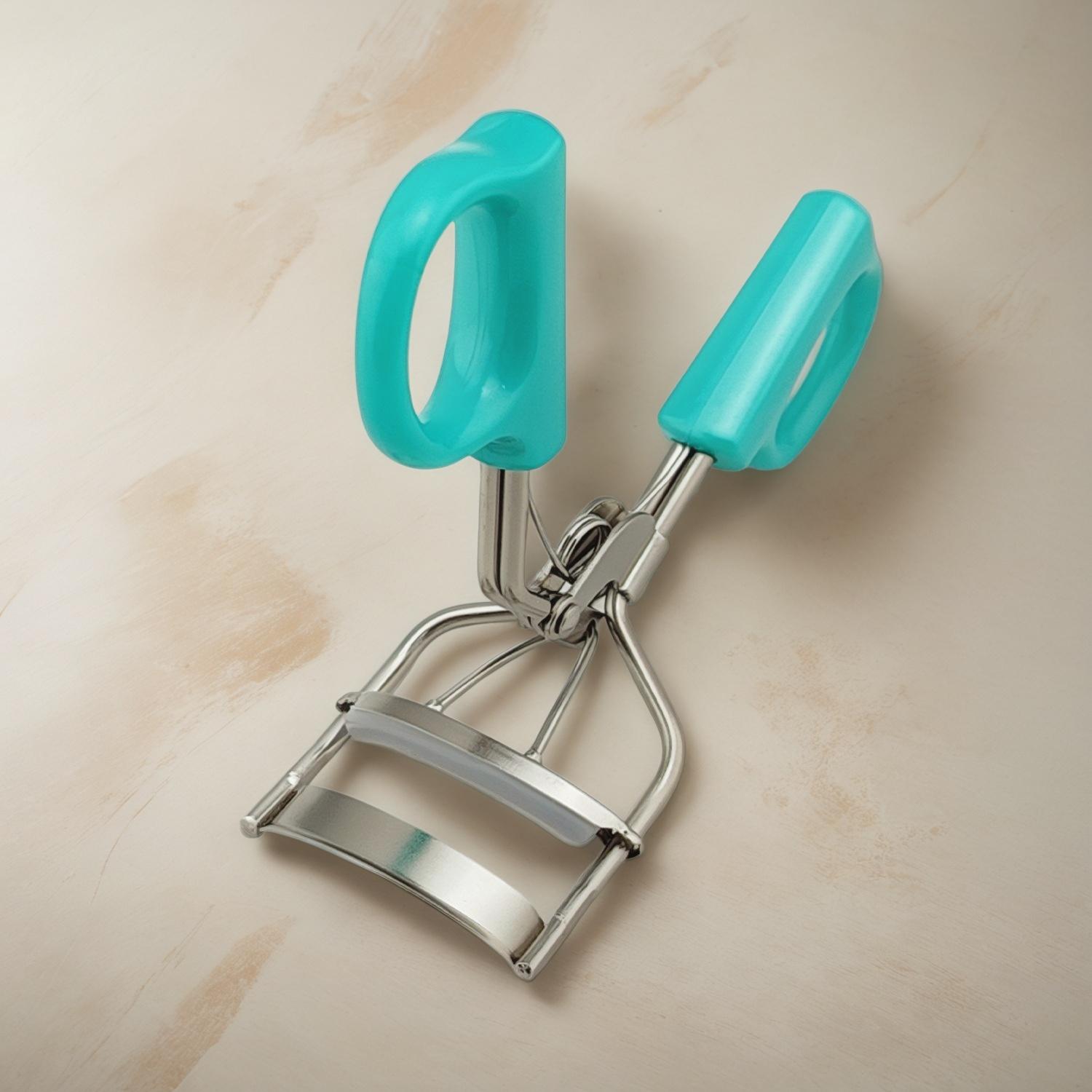
When comparing eyelash curler wholesalers, start with the physical product rather than only the quoted price. A very low unit cost can become expensive if the tool does not meet customer expectations, arrives with inconsistent finishing, or requires replacement pads sooner than expected. The best evaluation is hands-on: open and close the curler several times, check the spring or hinge action if present, and inspect the alignment of the upper bar and lower pad.
Olimor Beauty eyelash curlers are described with cushioned silicone pads and ergonomic designs intended to reduce damage while creating long-lasting curls. Those are the kinds of details buyers should look for when comparing options, because comfort and controlled pressure are central to user satisfaction. The pad should feel resilient rather than overly hard, and it should be seated securely so it does not shift during use.
- Pad material and feel: A cushioned silicone pad can help soften pressure on lashes. Check whether replacement pads are available or can be included in packaging.
- Frame alignment: The top curling edge should meet the pad evenly across the curve. Misalignment may cause uneven curling or pinching.
- Handle comfort: Ergonomic handle design matters for salon workers who repeat the same motion many times a day.
- Opening width: The tool should open enough for easy placement without forcing the user into an awkward angle.
- Surface finish: Look for clean edges, smooth coating, and no rough spots where the tool contacts fingers or skin.
- Packaging readiness: Retail buyers should confirm whether the packaging protects the tool and communicates use clearly.
How Salons, Retailers, and Distributors Evaluate Different Needs
Not every buyer needs the same eyelash curler program. A salon equipment supplier may prioritize durable tools that staff can sanitize and use repeatedly. A retailer may prioritize shelf presentation, barcode-ready packaging, and a design that is easy for consumers to understand. A distributor may care most about carton consistency, labeling, replacement pad options, and how the item fits into a wider catalog of beauty tools.
Salons should focus on practical use. Can makeup artists hold the curler comfortably? Does it feel stable around different eye shapes? Is the action smooth enough to avoid sudden pressure? A salon buying manager may want to test several samples with experienced staff before committing to a larger purchase. Feedback from professional users is especially useful because they notice small performance differences quickly.
Retailers should think about merchandising. A curler may be sold in a hanging card, box, pouch, or other packaging format depending on the store environment. Buyers should review whether the packaging protects the silicone pad from deformation during shipping and storage. They should also consider whether the product instructions are clear enough for first-time users.
Distributors and B2B buyers should evaluate repeatability. If the first sample looks good, the next question is whether bulk production can maintain the same finish, pad fit, and opening tension. A reliable wholesale relationship depends on receiving products that match the approved sample closely. To explore related sourcing categories, buyers can review Olimor beauty tool products or browse broader product collections when planning a coordinated order.
Wholesale Quality Checks That Reduce Returns
Quality control for eyelash curlers should be simple but disciplined. Because the tool has few visible parts, defects can be easy to miss if inspection is only visual. Buyers should define inspection points before bulk shipment and keep a reference sample for comparison. This is especially important when the curlers will be sold under a retailer program or distributed to multiple salon locations.
| Inspection Area | What to Check | Why It Matters |
|---|---|---|
| Frame and curve | Even shape, no warping, smooth edges | Supports consistent lash contact and safer handling |
| Pad placement | Pad sits flat and does not slip out easily | Helps avoid uneven pressure on lashes |
| Opening and closing | Smooth movement without stiffness or wobble | Improves comfort for salon workers and consumers |
| Finish | No scratches, burrs, peeling, or rough surfaces | Protects product appearance and user experience |
| Packaging | Correct item, clean print, protected pad area | Reduces retail complaints and shipment damage |
Olimor Beauty emphasizes technical precision and quality assurance from raw materials to final packaging. For buyers, that approach should translate into practical questions: how are incoming materials checked, how is the pad fit verified, how are finished pieces inspected, and how are cartons packed to protect the product during transit? These questions help move the conversation away from vague quality claims and toward measurable acceptance standards.
Questions to Settle Before Confirming a Wholesale Order
Before placing an order, buyers should clarify the commercial and operational details that affect the final landed value. Price is only one part of the decision. Packaging format, inspection expectations, sample approval, carton information, and delivery planning can determine whether the purchase runs smoothly.
- Confirm the approved sample. Keep a sample that represents the expected frame, pad, finish, and packaging.
- Define acceptable appearance standards. Note what counts as a defect, such as sharp edges, visible scratches, loose pads, or poor hinge movement.
- Review packaging requirements. Decide whether the curler needs retail packaging, bulk packing, insert instructions, or replacement pads.
- Check compatibility with your sales channel. Salon supply, e-commerce, and retail store programs may need different labeling or packing approaches.
- Plan replenishment timing. If the curler becomes part of a regular catalog, consider how repeat orders will be managed.
Buyers who are building a new program may also want to compare eyelash curlers with other beauty tools in the same purchasing cycle. Combining related categories can simplify vendor management, but only if quality standards remain clear for each item. For sourcing discussions, custom requirements, or product availability questions, buyers can contact Olimor or send an inquiry.
Maintenance Guidance for Professional and Retail Customers
A good wholesale program should include basic care guidance because maintenance affects customer satisfaction after purchase. For salon use, tools should be cleaned according to the salon’s hygiene procedure and stored in a dry, protected place. The silicone pad should be checked regularly for wear, cuts, or compression. If a pad becomes damaged or loses resilience, it should be replaced rather than used on clients.
For retail customers, clear use instructions can reduce misuse. Consumers should position the curler carefully at the lash base without pulling the eyelid, apply gentle pressure, and avoid using the tool in a rushed or forceful way. They should also keep the pad clean and avoid using a damaged pad. These simple instructions can be included in packaging copy, online product pages, or staff training notes.
Maintenance is also part of product selection. If the pad is difficult to remove, does not stay seated, or deforms easily, customer complaints may increase. If the frame feels unstable after repeated openings, salon users will quickly lose confidence. Wholesale buyers should therefore treat maintenance as a purchasing criterion, not an afterthought.
Building a Reliable Eyelash Curler Supply Program
Choosing among eyelash curler wholesalers is not about finding the most dramatic product description. It is about matching the tool to the buyer’s channel, confirming that the design is comfortable and consistent, and setting clear standards before bulk production. The most useful suppliers help buyers think through the full path from sample evaluation to retail shelf, salon drawer, or distributor catalog.
For beauty businesses, an eyelash curler can be a dependable, repeat-purchase tool when it is sourced with care. Focus on pad comfort, frame alignment, ergonomic handling, clean finishing, protective packaging, and repeatable quality checks. Those details support better user experience and fewer avoidable problems across salon and retail environments.
Olimor Beauty works within the beauty tools sector as a wholesale source for products such as eyelash curlers, with attention to cushioned silicone pads, ergonomic design, technical precision, and final packaging quality. For buyers evaluating B2B beauty supplies or salon equipment suppliers, the next step is to compare real samples, define acceptance standards, and choose a supply partner that can support consistent product delivery over time.
Tag: