


Eyelash Curler Factory Guide for B2B Beauty Tool Buyers
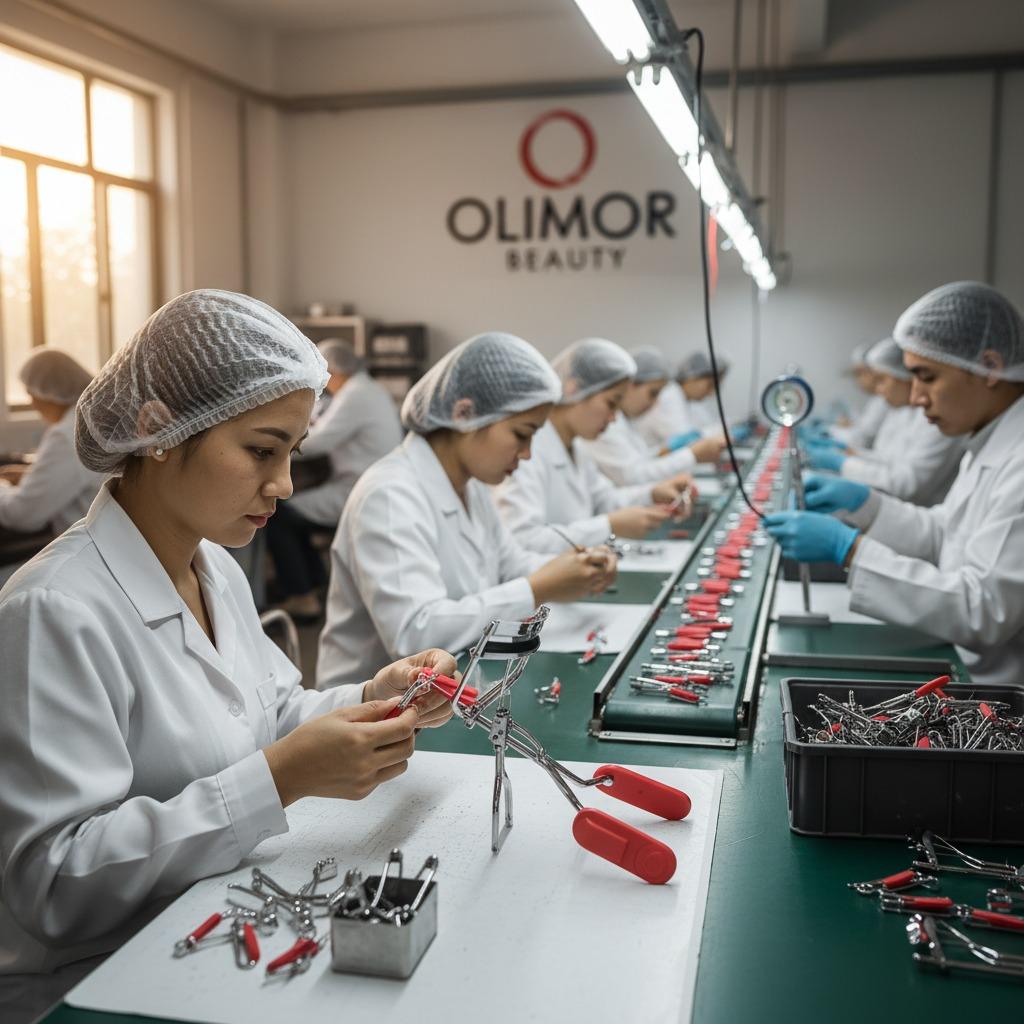
An eyelash curler is a small beauty tool, but it has a big impact on customer confidence. It is used close to the eye, depends on precise pressure, and must feel comfortable from the first squeeze. For beauty retailers, distributors, salons and private-label buyers, the right sourcing decision is not only about finding a curler that looks attractive in photos. It is about choosing a tool that opens smoothly, fits the lash line, cushions the lashes and can be sold with clear use and care guidance.
This guide focuses on how to evaluate factory-direct eyelash curlers for commercial buying. It uses practical product details found in Olimor Beauty eyelash curlers, including stainless steel construction, a curved frame, contoured handles and a bright red cushioning pad. These features are useful reference points when comparing products, reviewing samples or preparing a retail assortment. No single curler fits every market, so buyers should connect design choices with the customer, price position, packaging plan and inspection expectations.
What B2B Buyers Should Expect From a Reliable Eyelash Curler
A reliable eyelash curler should lift lashes without making the user press aggressively. The frame should feel stable, the hinge should move evenly, and the pad should cushion the lashes instead of creating a sharp bend. If a curler pinches, wobbles or leaves users unsure where to place it, it may generate returns even if the finish looks polished.
For retail and distribution buyers, repeatability matters as much as first impression. A beauty tool may pass a quick visual check but fail during daily use if the hinge is loose, the pad shifts, or the handles feel uncomfortable. When reviewing options in a broader beauty tool program, compare the curler with related items in Olimor beauty tool products so the assortment has consistent quality expectations.
The core buyer question is simple: can an average customer use the curler safely, comfortably and consistently? A good answer requires more than a product image. It requires checking shape, pressure control, materials, pad placement, finishing and packaging compatibility.
Key Product Features to Inspect Before Sourcing
Start with the features that directly affect the end user. The Olimor Beauty eyelash curler described here has a stainless steel body, curved shape, contoured handles and red padding on the curling surface. These details are not just cosmetic; they influence strength, handling, visibility and lash contact.
| Feature | Commercial Importance | Buyer Inspection Point |
|---|---|---|
| Stainless steel body | Supports a stable frame and presentable retail appearance. | Check for smooth edges, clean finishing, firm construction and no obvious deformation. |
| Curved frame | Helps the tool sit closer to the lash line for different eye shapes. | Test positioning and confirm the arch feels natural, not too flat or too tight. |
| Cushioning pad | Protects lashes from harsh pressure and affects curl shape. | Press lightly to judge resilience; check that the red pad sits evenly and does not shift. |
| Contoured handles | Improves grip, control and confidence near the eye area. | Confirm finger placement feels stable and pressure can be applied gradually. |
| Hinge action | Controls the smoothness and balance of the squeeze. | Open and close repeatedly to find wobble, scraping, stiffness or uneven movement. |
| Surface finish | Affects perceived value and user comfort. | Inspect for burrs, scratches, sharp contact areas, uneven coating or rough edges. |
This table can be used as a sample approval checklist or adapted for incoming inspection. It helps teams compare products objectively instead of selecting only by price or product photography.
Ergonomics: Why Handle Shape and Pressure Control Matter
Eyelash curlers require precise movement in a sensitive area. Ergonomics therefore becomes a safety-minded and commercial concern. Contoured handles help the user hold the tool with a predictable grip, guide the frame toward the lash line and apply pressure gradually. This matters for beginners, professional makeup artists and customers with limited experience using lash tools.
A curler that feels unstable can cause users to over-squeeze or pull away too quickly. That can create an uncomfortable experience and a poor curl result. A smoother handle and hinge design helps users control the full motion: open, position, press, hold briefly and release. Retail product copy should explain this simple use sequence because many complaints come from incorrect technique, not only product design.
The red pad on the Olimor Beauty curler also supports usability. A visible pad makes the curling surface easier to locate, which is useful when positioning the tool near the eye. The pad should provide cushioning without collapsing completely. If it is too hard, the curl may look sharply crimped; if it is too soft, the tool may not give enough lift. Buyers should test the pad feel during sample review rather than relying on a supplier description alone.
How to Compare Eyelash Curlers for Different Sales Channels
The best eyelash curler for one channel may not be the best for another. A mass retail buyer may prioritize simple use, durable presentation and clear packaging. A salon or makeup studio may focus on repeated handling and fast positioning. A private-label beauty brand may care strongly about the tool’s appearance, packaging compatibility and how it fits into a larger tool line.
Retail and ecommerce
For retail shelves and online listings, the curler must look clean, feel comfortable and be easy to explain. Product pages should show the frame, pad and handle clearly. Packaging should protect the pad and frame from damage during shipping or display. If the curler is positioned as a daily makeup accessory, emphasize control, comfort and simple care instructions.
Salons and makeup studios
Professional users need tools that are fast to position and comfortable through repeated use. Smooth hinge action and stable handles become especially important. Salons should also consider cleaning routines and whether staff can quickly inspect pad condition between uses.
Private-label and gift sets
For branded programs, the curler may be sold alone or as part of a beauty tool kit. Buyers can review related product categories through Olimor’s beauty tool collections to plan a coordinated assortment. When building sets, make sure the curler’s finish, packaging size and user instructions match the overall product concept.
Factory-Direct Sourcing Questions That Reduce Risk
Factory-direct sourcing can provide better visibility into product details, but it should be managed with clear questions. Before placing a bulk order, buyers should ask how the supplier controls material selection, forming, hinge assembly, pad seating, finishing and packaging. The goal is not to request vague promises; it is to define what will be inspected and what will be accepted.
- Target customer: Is the curler intended for beginner retail users, professional makeup kits, travel sets, promotional bundles or premium display?
- Product construction: What materials and components are used for the frame, handle area and pad, and how are they described in supplier documents?
- Functional review: How will hinge smoothness, handle alignment, pad position and frame symmetry be checked?
- Appearance standard: What level of scratches, marks, burrs or finish variation is unacceptable for your sales channel?
- Packaging plan: Will the curler be packed for ecommerce, retail peg display, box sets or private-label presentation?
- Replacement and care information: What guidance will be provided to end users when the pad becomes worn, loose or damaged?
Buyers who need to discuss a specific channel, packaging direction or sample review can contact Olimor Beauty with their product requirements before confirming a sourcing plan.
Quality Inspection Checklist for Samples and Bulk Orders
Inspection should cover both appearance and function because eyelash curlers have moving parts and direct contact with the lash area. A sample that looks good in a closed position may still have problems when opened, pressed or released. Use the following checklist during sample approval and adapt it for pre-shipment review.
Sample and order inspection checklist
- Frame shape: Confirm the curve is even and the two sides are symmetrical.
- Edge comfort: Run a careful visual and touch inspection for burrs, sharp corners or rough surfaces.
- Hinge movement: Open and close the curler repeatedly to check for scraping, looseness or stiffness.
- Handle alignment: Squeeze gently and confirm pressure feels balanced on both sides.
- Pad seating: Make sure the red pad is centered, level and secure in the curling channel.
- Pad feel: Check that the pad cushions the lashes without feeling overly hard or unstable.
- Finish appearance: Inspect visible surfaces for scratches, uneven shine, marks or discoloration.
- Packaging fit: Confirm the tool is protected and does not shift in a way that could damage the pad or frame.
- Instruction clarity: Review use and care text for accuracy, readability and suitability for the sales market.
For regulated consumer markets, buyers should also review applicable safety, labeling and chemical-restriction obligations. Depending on destination and product configuration, public bodies and frameworks such as the U.S. Consumer Product Safety Commission and the European Union General Product Safety Regulation may be relevant. Always verify current versions, local requirements and supplier documents rather than assuming compliance from a product photo or catalog page.
Cost Factors Without Reducing the Decision to Unit Price
Unit price is important, but it should not be the only comparison point. A lower-priced curler can become expensive if the pad shifts, the hinge feels rough, the packaging allows damage, or customers return the product. B2B buyers should compare total commercial suitability rather than only the first quotation.
Several factors can influence cost: frame construction, finishing requirements, handle design, pad quality, packaging format, customization scope, inspection needs and order complexity. Private-label packaging, special presentation requirements or bundled tool sets may also affect the final commercial arrangement. Because these details vary by project, buyers should request a quotation based on actual specifications instead of assuming a standard price.
When comparing suppliers, ask for clear product descriptions, sample availability, packaging options and inspection expectations. A dependable supplier should be willing to discuss what can be customized and what should remain unchanged for function and comfort. If your team is ready to compare options, you can send an eyelash curler inquiry with your target market, packaging needs and intended sales channel.
Use and Maintenance Guidance to Include With the Product
Good after-sales guidance helps customers get better results and reduces avoidable complaints. Because eyelash curlers touch lashes and may contact mascara residue or skin oils, users should understand how to keep the tool clean and when to stop using it. Clear instructions can be added to packaging inserts, product pages or retail training materials.
- Use the curler on clean lashes when possible, before mascara, to reduce residue buildup.
- Position the pad close to the lash base without pressing the eyelid.
- Apply gentle, controlled pressure instead of a sudden hard squeeze.
- Release fully before pulling the tool away from the eye area.
- Wipe the pad and metal frame regularly using a suitable cosmetic tool cleaning method.
- Do not continue using the curler if the pad becomes loose, cracked, damaged or heavily worn.
- Store the curler in a dry place and protect the pad from compression during travel.
These instructions are simple, but they are commercially useful. They set customer expectations, support safer handling and help the buyer present the curler as a practical daily beauty tool rather than a disposable accessory.
How to Evaluate an Eyelash Curler Supplier
A suitable supplier should understand both product function and buyer workflow. Look for clear communication about materials, sample review, packaging, customization, inspection and order documentation. Avoid decisions based only on a low quotation or a polished image. A real sourcing partner should help you confirm whether the curler fits your market and whether the planned presentation is practical.
Supplier evaluation should include responsiveness, sample consistency, willingness to discuss quality points, and ability to support retail or private-label packaging discussions. If customization is required, define which elements are being changed, such as packaging, color presentation or branding details, and confirm whether those changes affect handling, pad placement or inspection criteria. Never assume that a visual change is risk-free.
Olimor Beauty’s eyelash curler offers a practical basis for evaluation: stainless steel body, curved form, contoured handles and visible red cushioning pad. These are the details buyers should test in hand, inspect closely and connect to customer expectations before moving into bulk purchasing.
FAQ for Eyelash Curler Buyers
Can buyers request samples before placing a bulk order?
Sample availability should be confirmed with the supplier based on the product, customization needs and shipping destination. Samples are useful for checking hinge action, pad comfort, handle control, finish and packaging fit before committing to a larger order.
Is there a fixed MOQ for eyelash curlers?
MOQ can depend on product configuration, packaging, customization and current production planning. Buyers should provide the intended sales channel, packaging style and any branding needs so the supplier can confirm the applicable order requirements.
Can the eyelash curler be customized for private label?
Customization may be possible depending on the requested element, such as packaging presentation or branding direction. Functional areas such as pad seating, frame shape and handle usability should be reviewed carefully so customization does not reduce comfort or performance.
How should buyers confirm quality before shipment?
Agree on inspection points before production, including frame finish, hinge movement, handle alignment, pad placement, packaging condition and labeling requirements. Buyers should also verify current market regulations and supplier documents for the destination country.
Choosing the Right Curler With Confidence
A strong eyelash curler sourcing decision balances user comfort, product durability, visual appeal and supplier reliability. Stainless steel construction, a well-shaped curve, smooth hinge action, contoured handles and a secure cushioning pad are practical points to evaluate in every sample. For retail and private-label programs, packaging and instruction quality should receive the same attention as the tool itself.
Buyers who take time to test the full user motion, inspect the pad area and define quality expectations are more likely to select a curler that customers keep using. The result is a more dependable beauty tool program and a stronger foundation for long-term sourcing.
Tag: