

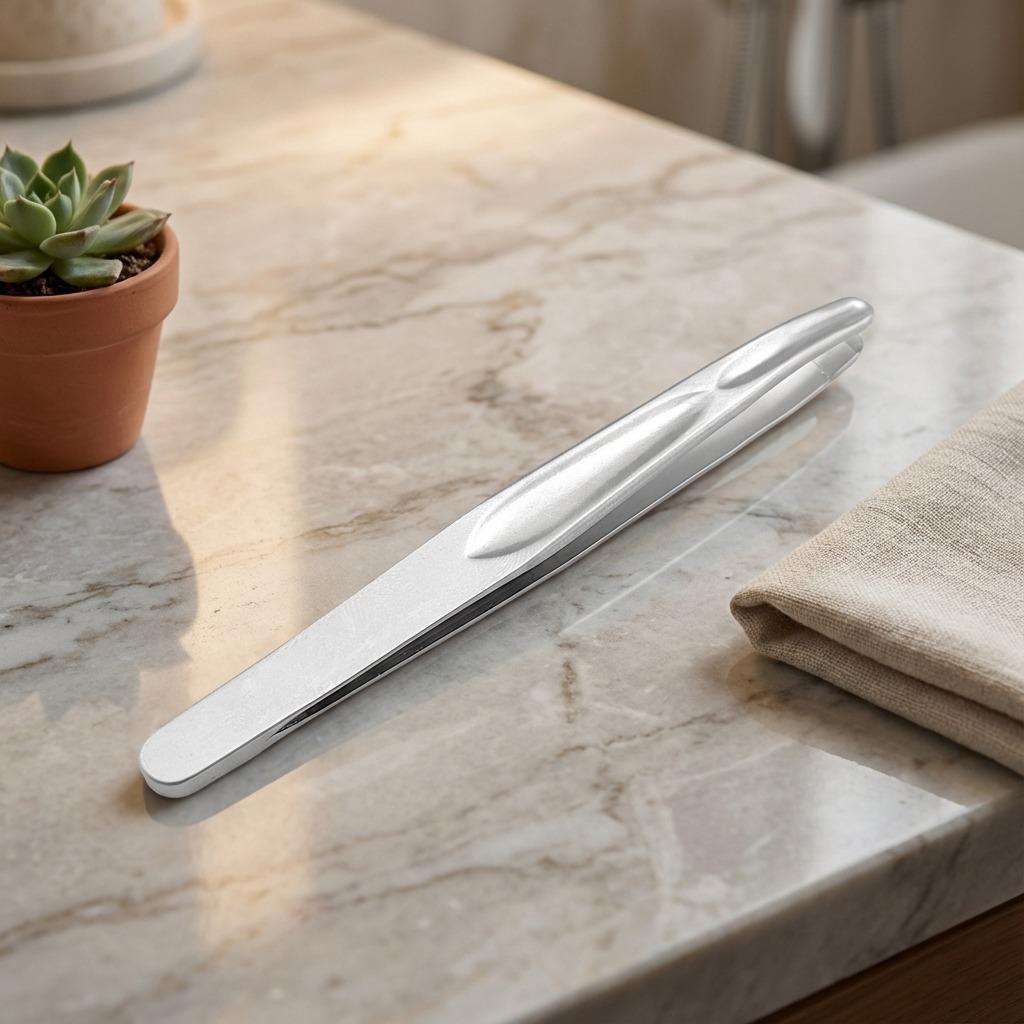
Export Quality Tweezers Supplier: How to Source Reliable Factory-Direct Tools
Export quality tweezers are small products, but they carry large consequences for a beauty brand, wholesaler or distributor. A tweezer that feels poorly balanced, loses alignment quickly or arrives with inconsistent finishing can lead to returns, complaints and weaker repeat orders. For buyers importing grooming tools, the goal is not simply to find a low unit price. The more important goal is to choose a reliable tweezers supplier that can deliver consistent grip, clean finishing, stable quality and packaging suitable for the target market.
Olimor Beauty focuses on stainless steel beauty tools, including tweezers designed for precision grooming and cosmetic use. When evaluating factory-direct sourcing, buyers should look beyond catalog photos and compare the practical details that affect daily use: tip alignment, edge finishing, handle comfort, corrosion resistance, inspection standards and communication during production. This guide explains how to assess export quality tweezers and how to build a long-term sourcing process that reduces risk.
What “Export Quality” Should Mean for Tweezers
The term export quality is often used loosely, so professional buyers need a clearer definition. In practice, export quality tweezers should be manufactured to support consistent performance across a full order, not just a good first sample. The tool should close evenly, grip fine hairs without excessive pressure and maintain its usable shape through normal handling.
Material selection is one foundation. The supplied product information identifies stainless steel construction, with references to high-grade and surgical-grade stainless steel in the manufacturing approach. For buyers, stainless steel matters because beauty tools are frequently exposed to moisture, cosmetics and cleaning. However, the metal alone does not guarantee a good tweezer. Heat treatment, grinding, polishing, tip finishing and final inspection all influence whether the tool works smoothly.
Tip precision is especially important. A tweezer used for eyebrow shaping or detailed cosmetic work must meet accurately at the tips. If one side is longer, rounded unevenly or misaligned, the user may squeeze harder and still fail to grip fine hair. Olimor Beauty describes rigorous alignment processes and microscopic inspection, including tip alignment tolerances as fine as 0.1 millimeters. For importers, this kind of attention is valuable because tip defects are among the most visible and frustrating quality issues in the category.
Key Quality Points to Check Before Placing an Order
A structured inspection checklist helps buyers compare suppliers objectively. Whether you are adding tweezers to an existing beauty tool range or preparing a private-label grooming kit, the following points should be reviewed before confirming bulk production.
- Tip alignment: The two tips should meet evenly without twisting, visible gaps or offset edges.
- Grip performance: The tweezer should catch fine hair or test fibers with controlled pressure, not only thicker material.
- Surface finish: Polishing should be smooth, with no burrs, sharp unintended edges, stains or rough patches.
- Spring tension: The handle should open and close comfortably. Too much resistance can cause fatigue; too little can reduce control.
- Handle comfort: Contoured or ergonomically shaped handles can improve grip during extended use.
- Corrosion resistance: Electro-polished finishes and corrosion-proof treatments are noted in the supplied product description and should be evaluated in samples.
- Packaging condition: Export cartons, inner packing and product protection should help prevent scratches, tip damage and deformation during transit.
- Consistency across samples: Buyers should check several pieces, not only one approved sample, to understand production stability.
These checks are not complicated, but they prevent many avoidable sourcing problems. A tweezer is judged by how it feels in the hand and how precisely it grips. If those basics are inconsistent, branding and packaging cannot compensate for the product experience.
Factory-Direct Sourcing: Benefits and Buyer Responsibilities
Choosing tweezers factory direct can reduce unnecessary intermediaries and create a clearer connection between the buyer and the production process. For importers, this can support better communication about design preferences, packaging requirements and quality expectations. It may also make it easier to discuss varied tip geometries for specialized applications, which the supplied product information identifies as an available direction for customization.
Factory-direct sourcing does not mean buyers should skip due diligence. It means they have a better opportunity to define the product properly before production starts. A useful approach is to create a written specification sheet that includes the tweezer type, finish preference, tip style, packaging method, labeling needs, acceptable cosmetic defects and inspection procedure. This document becomes the reference point for samples, production and final checking.
For companies planning to source beauty tool products, direct communication also helps prevent mismatched assumptions. For example, one buyer may consider a polished surface essential for a premium retail set, while another may prioritize a simple professional-use finish. One market may require individual protective sleeves, while another may sell tweezers inside a larger grooming kit. The clearer the intended use, the easier it is for the supplier to prepare suitable recommendations.
How to Match Tweezer Types to Market Use Cases
Different customers use tweezers in different ways, so the right product choice depends on the sales channel and end user. A professional salon buyer may value balance, fatigue reduction and repeatable grip. A retail beauty brand may focus on appearance, packaging and a tip style that works for common eyebrow grooming. A distributor serving multiple markets may need a practical assortment rather than one universal tweezer.
Although exact model names should only be used when confirmed, buyers can still evaluate general tweezer designs by application:
| Use case | What to prioritize | Why it matters |
|---|---|---|
| Eyebrow shaping | Accurate tip meeting, moderate tension, comfortable grip | Fine hairs require controlled pulling without repeated attempts. |
| Professional salon work | Ergonomic handle, consistent finishing, durable alignment | Tools may be used repeatedly during long service hours. |
| Retail beauty kits | Clean appearance, safe packaging, stable batch consistency | Consumers judge both presentation and performance quickly. |
| Distributor assortments | Reliable core styles, predictable quality, clear specifications | Mixed customers need products with fewer complaint risks. |
When comparing samples, test them in realistic conditions. A tweezer that looks good in a catalog image may not grip well when used for fine hair removal. Similarly, a tool with strong tension may seem durable but become uncomfortable during longer use. The best option is usually the one that balances precision, comfort and stable finishing.
Questions That Help Identify a Reliable Long-Term Supplier
A long-term tweezers supplier should be evaluated on more than a single quote. The relationship must support repeat orders, product adjustments, stable communication and practical quality control. Before moving from sample approval to a larger order, buyers can use the following questions to clarify expectations:
- What stainless steel material options are available for this tweezer style?
- How is tip alignment checked during production and before packing?
- What finishing options are available, and how are surface defects controlled?
- How are tweezer tips protected during packaging and export transport?
- Can the supplier support different tip geometries for different applications?
- What information should be included in the buyer’s specification sheet?
- How are approved samples retained or referenced for repeat orders?
- What inspection steps are practical before shipment?
These questions encourage a technical conversation rather than a price-only negotiation. They also help both sides avoid vague terms such as “good quality” or “premium finish” without measurable expectations. A reliable supplier should be able to discuss the production process in practical terms, including alignment, polishing, handling and packaging protection.
Maintenance Guidance Buyers Can Pass to Customers
Even well-made tweezers need proper care. Importers and brands can reduce customer complaints by including simple maintenance guidance on packaging inserts, product pages or care cards. The advice does not need to be complicated: keep the tool dry after cleaning, avoid dropping it on hard surfaces, protect the tips during storage and do not use the tweezer for tasks that may bend or chip the tips.
For beauty retailers, this information also improves perceived product value. Customers often assume that all tweezers are the same until they experience a tool with cleaner alignment and better tension. Explaining care helps them understand why precision tools should be stored carefully, especially if the tips are finely finished for detailed grooming.
Why Work With Olimor Beauty for Export Tweezers
Olimor Beauty offers factory-direct sourcing for stainless steel tweezers with a focus on precision, ergonomic handling and consistent finishing. The supplied product information highlights stainless steel fabrication, contoured handles, electro-polished finishing, corrosion-proof treatments and automated quality assurance systems with microscopic inspection of tip alignment. These details are relevant for buyers who want grooming tools that can support repeat business rather than one-time purchases.
For importers planning to import tweezers from China, the main advantage of working directly with a factory is the ability to discuss product details early. Buyers can compare samples, define preferred tip styles, review packaging needs and create a repeatable quality reference. If you are building a broader assortment, you can also review Olimor product collections to see how tweezers may fit alongside other beauty tools.
The best sourcing decisions are made before bulk production begins. Prepare target market requirements, desired finish, packaging concept and inspection priorities in advance. Then share those details clearly so the supplier can respond with suitable options. To discuss export quality tweezers for your channel, contact Olimor or send an inquiry with your intended application, order plan and specification needs.
Final Buying Advice
Export quality tweezers should be judged by repeatable performance: precise tips, comfortable handling, stable finishing and protective packaging. A strong supplier relationship should make those qualities easier to control over time. Instead of choosing only by price or appearance, evaluate how the tweezer grips, how consistently multiple samples perform and how clearly the factory communicates about materials, finishing and inspection.
For beauty brands, distributors and importers, that practical approach leads to fewer surprises and a product that customers are more likely to keep using. With careful specification and factory-direct communication, stainless steel tweezers can become a dependable part of a long-term beauty tool assortment.
Tag: