

Export Quality Tweezers: How to Source Precision Beauty Tweezers with Confidence
Export quality tweezers look simple, but buyers quickly learn that small differences in tip alignment, grip texture, finish durability and hand feel can decide whether a tool is useful or frustrating. For brow grooming, facial hair removal, lash application and professional kit building, the tweezer must close evenly, catch fine hairs cleanly and remain comfortable during repeated use.
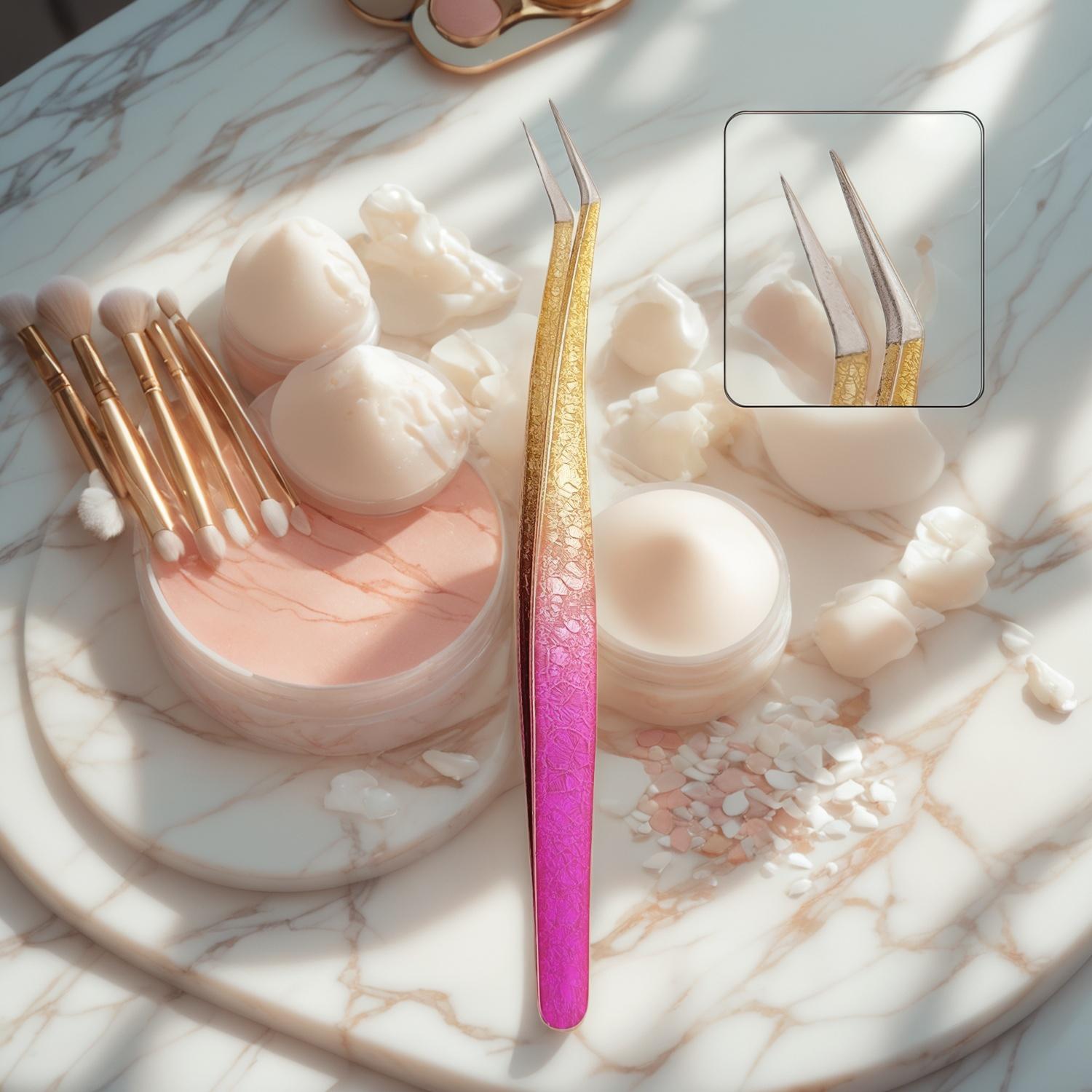
This guide is written for beauty retailers, distributors, salon buyers, private label teams and professional users comparing tweezers for bulk sourcing. It focuses on practical evaluation rather than vague product claims, using the key features associated with Olimor Beauty tweezers: high-grade stainless steel, angled precision tips, an ergonomic curve, a textured surface for a secure grip and a gradient pink-to-gold finish that is easy to spot in a beauty kit.
If you are comparing tweezers alongside other tools, you can browse Olimor beauty tool products or review broader product collections to match tweezers with related grooming and makeup accessories.
What “Export Quality” Should Mean for Tweezers
For tweezers, export quality should mean more than attractive packaging. A buyer should expect repeatable performance across a production run, controlled finishing, clean surfaces, stable closure and a tool that can be inspected consistently before shipment. Because tweezers depend on two metal arms meeting precisely at the tip, quality control must focus on details that are easy to overlook in a catalog photo.
A good pair of beauty tweezers should meet the hair firmly without excessive squeezing force. The tips should not slide past each other, leave a visible gap or pinch only at one corner. When the arms close, the contact should feel controlled and predictable. This matters for professional brow shaping, where repeated inaccurate plucking can slow the service and increase skin irritation.
Material selection also matters. Stainless steel is widely used for beauty tweezers because it supports a clean appearance and resists rust when cared for properly. The supplied product description identifies high-grade stainless steel and rust-resistant performance, both important for tools that may be stored in humid bathrooms, salon drawers or travel pouches. Buyers should still evaluate the finishing, edge smoothness and care instructions because no metal tool performs well if it is stored wet, cleaned harshly or dropped onto a hard surface.
Tip Precision: The First Detail to Inspect
Tip precision is the most important performance factor in tweezers. The original product details describe angled tips honed for firm grip, which makes the tool suitable for detailed beauty work such as brow grooming, small hair removal and lash placement. Angled tips are popular because they give the user both a broad gripping edge and a pointed working corner for more targeted control.
When assessing samples, inspect the tips in several ways. First, close the tweezers slowly and look at whether the two edges meet evenly. Second, test the tool on very fine hair or a thin fiber to see whether it catches without cutting or slipping. Third, check the outer edges for roughness. A tweezer can feel precise at the tip but still be uncomfortable if unfinished edges touch the skin.
For beauty professionals, the best tip shape depends on the task. Slant or angled tips are versatile for brows and general grooming. Very pointed tips can help with isolated work but require more care. Flat tips may grip larger areas but are less useful for fine brow shaping. If you are buying one style for a broad audience, angled tip tweezers are often the practical choice because they balance control and ease of use.
Grip, Ergonomic Curve and Comfort During Repeated Use
A tweezer should not require a hard squeeze to work. If the arms are too stiff, the user’s fingers tire quickly. If the arms are too loose, the tool may feel unstable. The product description highlights an ergonomic curve and a textured surface, both of which contribute to controlled handling during longer grooming sessions.
Grip texture is especially useful in professional and retail environments. Beauty tools may be handled after skincare, moisturizer or makeup products, so a slick surface can reduce control. A textured surface helps the user maintain a secure hold and position the tips accurately. This is not only about comfort; it also affects the precision of each pluck or lash placement.
When evaluating comfort, use the tweezer for several minutes rather than testing it with one quick squeeze. Consider finger placement, spring tension, edge smoothness and whether the body shape feels balanced. A comfortable tool encourages slower, more accurate work, which is important for brow shaping and delicate facial grooming.
Finish and Appearance: Why the Pink-to-Gold Gradient Matters
The gradient finish, shifting from vibrant pink to classy gold, is a visible design feature described in the product information. For retail buyers, finish is not just decorative. A distinctive color can help the product stand out in a display, photograph clearly for online listings and be easier for users to find inside a crowded makeup bag or salon drawer.
However, appearance should not be evaluated separately from durability. Buyers should inspect whether the finish is even, whether the color transition is clean and whether the textured areas remain comfortable to hold. On finished beauty tools, edges, corners and contact points deserve special attention because these areas often reveal inconsistent finishing before flat surfaces do.
Packaging teams should also consider how the finish will look under retail lighting and in product photography. A pink-to-gold gradient can appeal to customers who prefer beauty tools with a polished, decorative look, while still remaining practical for daily use. The key is to maintain a balance: the finish should support the product’s market appeal without hiding flaws in the working tips.
Buyer Checklist for Factory Direct Tweezers
Factory direct sourcing can offer clearer communication around production expectations, inspection points and packaging requirements. It also places more responsibility on the buyer to define what should be checked before approval. The following checklist can help teams compare samples and prepare a more useful purchase discussion.
- Tip closure: Confirm the angled tips meet evenly without a gap, twist or misalignment.
- Grip test: Check whether the tips can hold fine hair or thin fibers without slipping.
- Hand feel: Test spring tension, ergonomic curve and finger comfort during repeated use.
- Surface texture: Make sure the textured area improves control without feeling sharp or abrasive.
- Finish consistency: Inspect the pink-to-gold gradient for even color, clean transitions and neat edges.
- Cleanliness: Look for dust, oil residue, burrs or rough edges before packaging approval.
- Rust resistance care: Confirm that normal care guidance is clear, especially drying after cleaning.
- Packaging fit: Ensure the tweezer is protected so the tips do not bend during storage or transit.
- Batch consistency: Compare multiple pieces, not only one showroom sample.
This kind of checklist is useful whether you are adding tweezers to a grooming set, selecting a standalone retail SKU or comparing suppliers for a long-term program.
Common Use Cases for Precision Beauty Tweezers
Export quality tweezers can serve several customer groups, but each group values different details. Retail customers often respond to appearance, ease of use and clear care instructions. Salon professionals focus more heavily on tip performance, comfort and consistency between pieces. Lash technicians may look closely at control and grip when placing small materials. Distributors and brand owners need both product reliability and a design that can be positioned clearly in the market.
For brow shaping, angled tips allow users to remove individual hairs while maintaining a natural brow line. For general facial grooming, a controlled grip helps catch fine hairs that low-quality tweezers may miss. For kit building, the gradient finish can help distinguish the tweezer from plain metal tools and support a coordinated beauty accessory selection. The tool should be marketed honestly: precision tweezers help improve control, but users still need good lighting, clean skin and proper technique.
Maintenance That Protects Tweezer Performance
Even well-made tweezers lose effectiveness if the tips are damaged or contaminated. Maintenance instructions should be simple enough for retail customers and professional users to follow. Clean the tips after use, dry the tool before storage and avoid leaving it in wet areas. If disinfecting products are used in a salon environment, they should be compatible with the tool’s finish and used according to proper safety guidance.
Storage is also important. The most vulnerable part of a tweezer is the tip. A drop onto tile or a collision with other metal tools can bend the fine contact edge. For retail packaging or professional kits, a sleeve, cap or protective compartment can help maintain alignment during transit and daily storage. Users should not use beauty tweezers as a general-purpose tool for opening containers, scraping labels or handling hard objects, because that can deform the tips and reduce precision.
Questions to Clarify Before Placing a Bulk Order
Before approving a production order, buyers should define what matters most for their sales channel. A salon-focused purchase may prioritize tip alignment and repeat-use comfort. A retail program may need strong visual appeal, consistent finish and packaging that explains the angled tip benefit clearly. A distributor may require a stable supply process and clear inspection criteria across repeated orders.
Useful sourcing questions include: What sample standard will be used for production comparison? How will tip alignment be inspected? What packaging protects the working ends? What finish defects are acceptable or unacceptable? How will color consistency be reviewed across a batch? These questions keep the discussion focused on measurable product quality rather than broad claims.
To discuss available options or share sourcing requirements, buyers can contact Olimor. For a purchasing request, specifications or sample discussion, you can also send an inquiry with your target market, intended use and packaging expectations.
Choosing Tweezers That Balance Precision and Presentation
The best export quality tweezers combine reliable working tips with a design that customers want to keep in their kit. In this case, the angled tips, stainless steel construction, ergonomic curve, textured grip and pink-to-gold gradient finish all support a practical product story: controlled grooming performance with a polished beauty-tool appearance.
For buyers, the goal is not to choose the most decorative tweezer or the lowest-cost option. The goal is to select a tool that performs consistently, feels comfortable in the hand and can be presented clearly to the intended customer. By inspecting samples carefully and defining quality expectations early, you can source precision tweezers that support both daily beauty work and long-term customer satisfaction.
Tag: